
What methods are used in commercial roof tile cleaning?
Commercial roof tile cleaning commonly uses controlled pressure washing, low-pressure soft washing, steam cleaning and manual removal, selected according to the tile material, roof condition and type of contamination. Professional cleaning may also include an appropriate biocidal treatment to help remove moss, algae and lichen while reducing the risk of damage to tiles, coatings and roof components.
Commercial roof tile cleaning is carried out using a combination of controlled pressure washing, low-pressure soft washing, steam cleaning, manual removal and specialist biocidal treatments. The appropriate method depends on the tile material, roof condition, access arrangements and the type of contamination present. A professional clean should remove moss, algae, lichen, dirt and atmospheric deposits without dislodging tiles, stripping protective finishes or forcing water beneath the roof covering.
The process normally starts with a roof survey. This identifies cracked, loose or porous tiles, deteriorated pointing, damaged flashings, fragile coatings, blocked gutters and areas that cannot be safely reached from the roof surface. The survey also establishes whether the roof is made from concrete, clay, slate or another material, as each responds differently to pressure, heat and cleaning chemicals. Cleaning should not begin until unsuitable areas have been isolated and any necessary repairs or access controls have been considered.
Manual moss and debris removal
Large deposits of moss, lichen and accumulated debris are often removed manually before any water-based treatment. Scrapers, brushes and other suitable hand tools can lift organic growth from the tile surface while giving the operative better control around laps, ridges, valleys, flashings and roof penetrations. Manual removal is particularly useful where tiles are aged, brittle or heavily coated, and it reduces the amount of material that could enter gutters and drainage systems during washing.
Manual work must be carried out carefully. Aggressive scraping can mark the surface of tiles, remove granular finishes or disturb overlapping components. Moss should not simply be pulled from areas where its roots have entered joints or lifted tiles, because this can cause further movement or breakage. Removed material should be collected and managed rather than allowed to fall onto paths, vehicles, planting or neighbouring property.
Controlled pressure washing
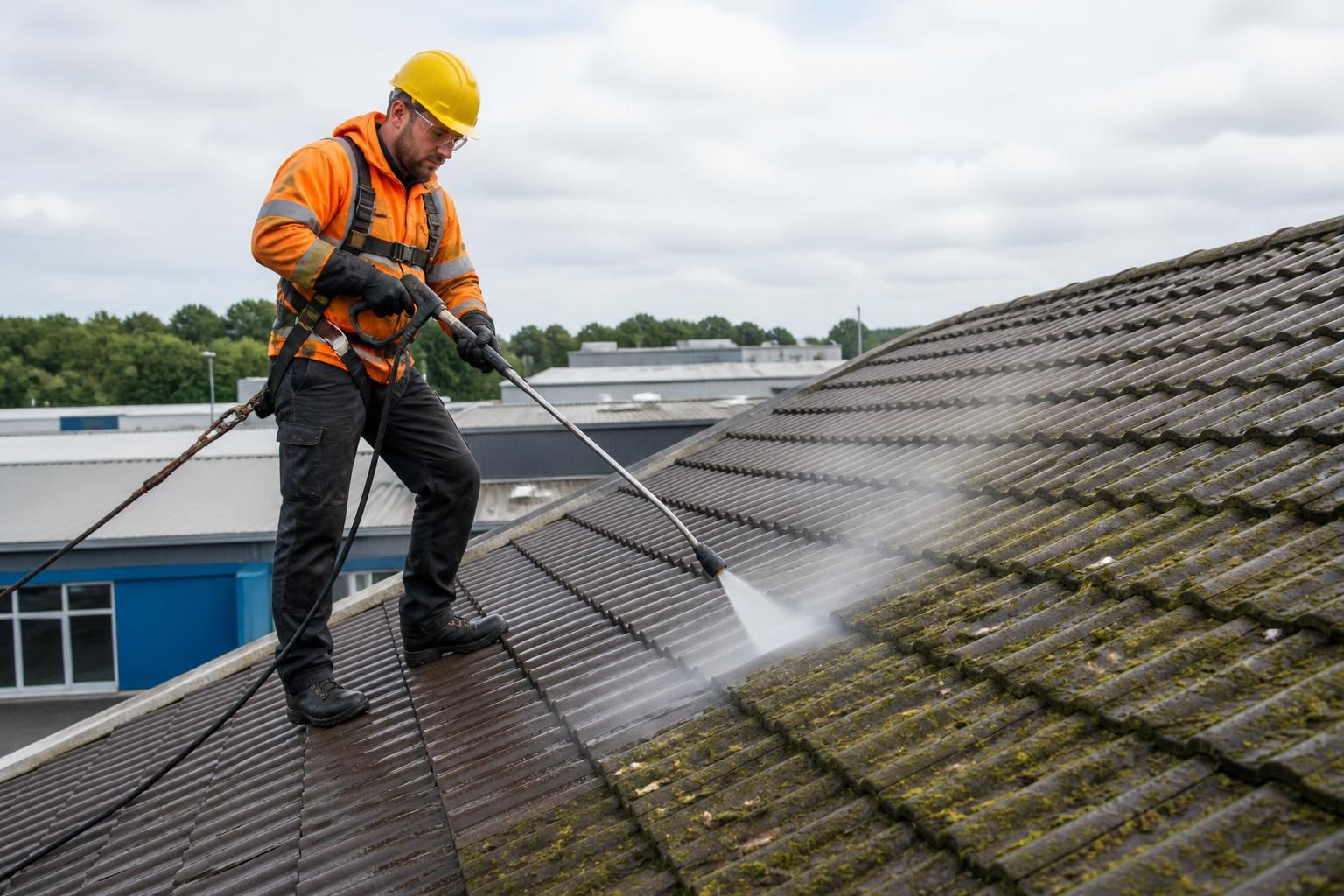
Pressure washing is suitable for some robust commercial roof tiles, particularly where firmly bonded dirt, old organic matter and atmospheric soiling cannot be removed effectively by brushing alone. Professional operators adjust the pressure, nozzle, distance and direction of the water rather than applying maximum pressure indiscriminately. The aim is to clean the face of the tile while avoiding direct water penetration beneath overlaps, ridge units, flashings and other vulnerable details.
Pressure washing is not appropriate for every roof. Excessive pressure can erode concrete or clay tile surfaces, remove coatings, expose the underlying material and drive water into the roof construction. It can also break already weakened tiles or spread contaminated runoff. For these reasons, a test area is normally assessed before the full roof is cleaned, and more delicate sections may be treated using a lower-impact method.
Low-pressure soft washing
Soft washing uses low-pressure application of a cleaning solution, commonly followed by gentle rinsing or natural weathering, to treat algae, lichen, moss staining and other organic contamination. The solution is selected for the surface and applied in a controlled manner so it can work on the growth without relying on force to remove it. This makes soft washing useful for roofs where high-pressure cleaning could damage the tile surface or protective finish.
Soft washing is not a single standard chemical process. The product, dilution, dwell time and rinsing requirements must be suitable for the roof material and the surrounding environment. Operatives should protect roof-mounted equipment, ventilation points, glazing, painted surfaces, vehicles and vegetation from overspray. Runoff must also be controlled so that cleaning products and loosened contamination do not enter drains, watercourses or sensitive landscaping.
Steam cleaning
Steam cleaning uses heated water at controlled pressure to soften and remove organic growth, ingrained dirt and staining. It can provide effective cleaning with less mechanical force than conventional pressure washing and may be appropriate for sensitive or heavily contaminated tiled roofs. The heat can also assist with loosening deposits that are difficult to remove using cold water alone.
Steam is not automatically suitable for every tile or roof assembly. Heat and moisture can affect certain coatings, sealants, membranes and ageing materials, while excessive water can still penetrate defective joints or damaged areas. The method should therefore be selected following an inspection and trial treatment, with particular care around flashings, roof lights, solar equipment and areas where the roof covering is no longer sound.
Biocidal and post-cleaning treatments
After physical cleaning, a suitable biocidal treatment may be applied to remaining microscopic organic growth and staining. This can help reduce the return of moss, algae and lichen, although it is not a substitute for removing heavy deposits or correcting conditions that encourage growth. Shaded roof areas, persistent dampness, overhanging vegetation, blocked gutters and poor drainage can all contribute to recurring contamination.
Biocidal products must be used in accordance with their instructions and relevant environmental requirements. Correct application includes protecting adjacent surfaces, preventing uncontrolled runoff and allowing the treatment to work for the required period. The roof should not be sealed or coated afterwards unless the surface is suitable, fully prepared and the proposed coating is compatible with the tile material.
Cleaning methods by roof material
- Concrete tiles: These may tolerate carefully controlled pressure washing when they are structurally sound, but aged or porous tiles often require lower-pressure treatment, soft washing or steam cleaning.
- Clay tiles: Clay can be durable but may be brittle, weathered or affected by previous treatments. Gentle cleaning and manual methods are often preferred where the surface or finish is fragile.
- Slate: Slate roofs require particular care because individual slates can delaminate, crack or become loose. Cleaning should use minimal force, avoid unnecessary foot traffic and be preceded by a detailed condition assessment.
- Coated or treated tiles: Strong chemicals, abrasive tools or excessive pressure can affect the coating. The cleaning method should be checked against the manufacturer’s requirements where those details are available.
Commercial roof cleaning is also influenced by the building and its surroundings. Large roof areas may need to be divided into manageable sections, with temporary protection for entrances, loading areas, machinery, air-conditioning equipment and customer or staff routes. Gutters and downpipes should be monitored and cleared as cleaning progresses, because loosened moss and silt can quickly restrict drainage. On sites with active operations, the work may need to be coordinated around deliveries, pedestrians, tenants and other contractors.
Access and safety controls are an essential part of the method. Depending on the roof design and condition, work may be completed from suitable access equipment, temporary platforms or other edge-protection systems rather than by walking directly on the tiles. Operatives should account for fragile roof areas, wet surfaces, electrical equipment, skylights, changing weather and falling debris. The safest cleaning method is one that achieves the required result while limiting access over vulnerable sections.
Once cleaning is complete, the roof should be inspected for remaining contamination, displaced tiles, damaged details and blocked drainage points. A professional handover can include photographs, observations about the roof’s condition and recommendations for repairs or future maintenance. Cleaning cannot correct cracked tiles, failed flashing, defective pointing or underlying drainage problems, so these issues should be recorded rather than concealed by the finished appearance.
In practice, the best results usually come from combining methods rather than choosing one technique for the entire roof. Manual removal may be followed by soft washing on delicate areas, controlled pressure washing on sound sections and steam cleaning where heat and reduced mechanical force provide a better option. Selecting the method by material, condition and contamination helps preserve the roof covering, manage environmental risks and maintain safer, more presentable commercial premises.
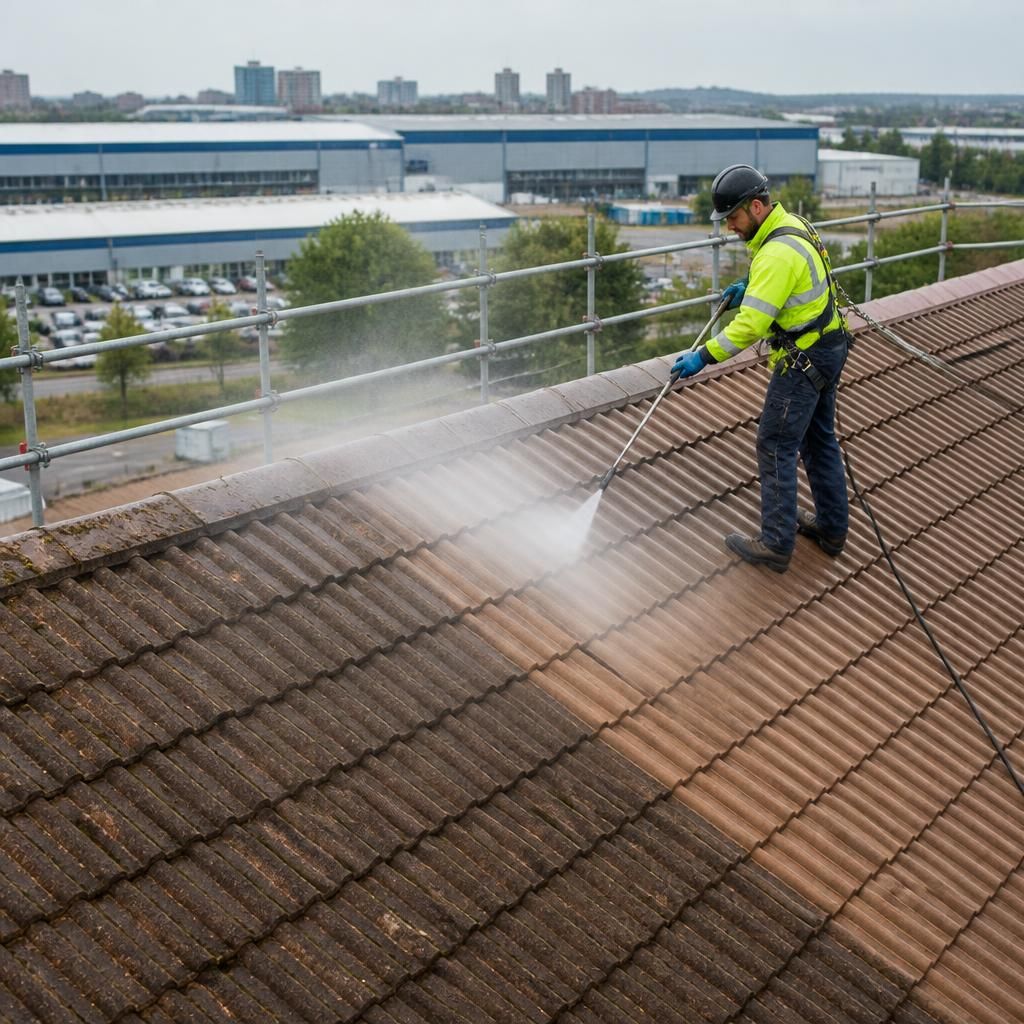
Commercial roof tile cleaning methods must be matched to the tile material, roof condition and type of contamination. Sound concrete tiles may tolerate carefully controlled pressure washing, while aged clay tiles, slate or coated surfaces often require manual removal, low-pressure soft washing or steam cleaning to reduce the risk of cracking, surface erosion and water penetration.
A professional clean should begin with a condition assessment and a small test area. This confirms how the roof responds before work continues across larger sections, allowing the method, pressure, heat and cleaning solution to be adjusted where necessary.