
What are the benefits of using soft wash techniques on roof tiles?
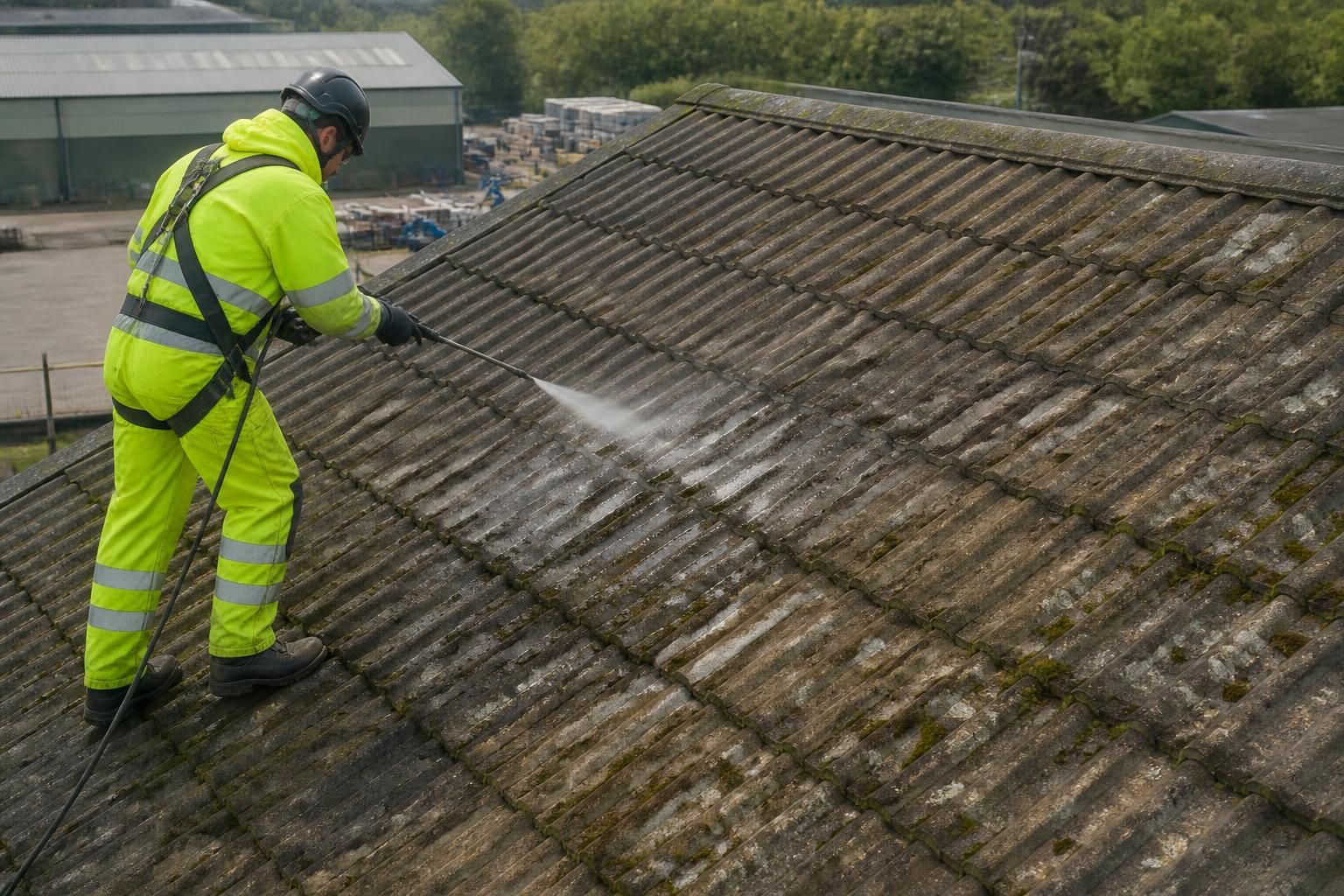
Soft washing uses low-pressure water with carefully selected cleaning treatments to remove moss, algae, lichen and organic staining from roof tiles without the force of high-pressure washing. It cleans more gently, reduces the risk of dislodging or damaging tiles and helps keep the roof surface cleaner for longer when supported by appropriate maintenance.
Soft wash roof tile cleaning uses low-pressure water alongside a suitable treatment to remove moss, algae, lichen and organic staining. Its main benefit is that it cleans the roof without relying on the force of high-pressure water, helping to reduce the risk of dislodging tiles, damaging protective surfaces or driving water beneath the roofing system.
For commercial properties, this gentler approach can provide several practical advantages:
- Reduced risk of physical damage: High-pressure water can loosen aged, cracked or poorly secured tiles and may strip surface coatings or erode vulnerable areas. Soft washing applies considerably less force, which is generally more appropriate for weathered roof tiles and roofs with delicate finishes.
- Effective treatment of organic growth: Moss, algae and lichen are not only surface dirt. Their growth can retain moisture, obscure defects and contribute to the gradual deterioration of tiles and joints. A correctly selected treatment helps break down this growth so it can be removed without aggressive abrasion.
- Longer-lasting results: Pressure washing can make a roof look clean immediately but may leave biological contamination in place, allowing regrowth to return. Soft wash treatments are designed to address the organic matter itself. The roof can therefore remain cleaner for longer, although the duration of the result depends on shade, moisture, nearby vegetation, pollution and the type and condition of the tiles.
- Better protection for roof components: Lower-pressure cleaning can help limit the risk of disturbing ridge tiles, pointing, flashing, membranes, vents and other adjoining components. This does not remove the need for inspection and care, particularly where existing defects are present.
- Suitable for more sensitive surfaces: Clay, concrete, coated and older tiles can respond differently to cleaning. Soft washing allows the method and treatment strength to be adapted to the material, level of contamination and condition of the roof rather than applying the same pressure everywhere.
- Improved appearance and maintenance standards: Removing dark staining and biological growth can restore a more consistent appearance across roof areas. This is particularly useful for commercial buildings where the roof forms part of the visible external envelope and where planned maintenance records are important.
A professional soft wash normally begins with an assessment of the roof covering, access requirements, drainage arrangements and visible defects. Loose material is removed using an appropriate low-impact method, and the cleaning solution is applied in a controlled manner. The solution must be selected for the roofing material and contamination present. Run-off is managed to protect walls, landscaping, vehicles, drainage systems and nearby occupants. Where necessary, affected areas are rinsed carefully without directing water beneath tiles or into vulnerable junctions.
Soft washing is not a substitute for roof repairs. Cracked tiles, defective pointing, failed flashing, blocked gutters and damaged membranes should be recorded and addressed separately. Cleaning a roof with significant defects may worsen an existing problem if the work is not planned properly, so a pre-clean inspection is an important part of the service.
The method also needs to be controlled from an environmental and safety perspective. Treatments should be handled in accordance with their product instructions, with suitable protection for workers and surrounding surfaces. Overspray and contaminated run-off must be minimised, and access should be planned using appropriate equipment rather than requiring operatives to walk unnecessarily across fragile tiles.
Soft washing is often the preferred option when the priority is to remove organic contamination while preserving the condition of the roof. The most suitable method still depends on the roofing material, age, surface coating, accessibility and degree of soiling. A site assessment can confirm whether soft washing alone is appropriate or whether it should be combined with gentle manual removal, controlled rinsing or remedial work.
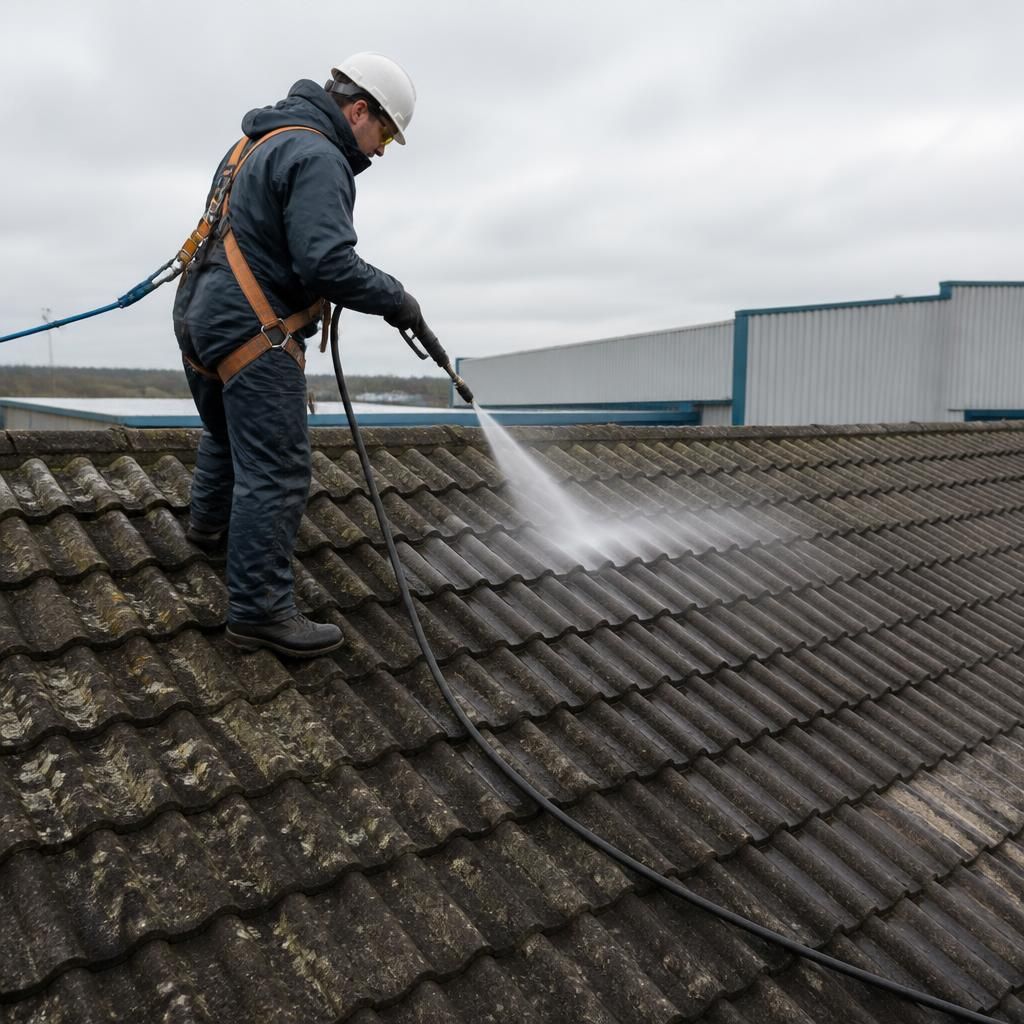
Soft wash roof tile cleaning uses a controlled, low-pressure application of water and a suitable treatment to remove moss, algae, lichen and organic staining without relying on forceful water jets. This reduces the risk of loosening weathered tiles, disturbing pointing or driving water beneath overlapping roof coverings.
The treatment works on the biological growth itself, allowing contamination to be removed with gentle rinsing or manual brushing where appropriate. This is particularly useful on older, coated or fragile tiles, although the solution must be selected for the roofing material and condition. Before cleaning, visible cracks, loose tiles, defective flashing and other faults should be recorded, as soft washing cannot repair existing roof defects.