
How often should commercial roof tiles be cleaned?
Commercial roof tiles should be inspected at least annually and cleaned when moss, algae, lichen, dirt or pollution deposits begin to affect drainage, appearance or the roof’s condition. The cleaning interval varies with the roofing material, surrounding trees, weather exposure, pollution levels and tile condition, so some roofs require maintenance every few years while others need more frequent attention.
Commercial roof tiles should be inspected at least annually and cleaned when moss, algae, lichen, dirt or pollution deposits begin to affect drainage, appearance or the condition of the roof. In practice, many commercial tiled roofs require cleaning every few years, but the correct interval depends on the roofing material, site environment, weather exposure, roof pitch and the amount of organic growth present. Cleaning should be based on the roof’s condition rather than an arbitrary timetable.
A practical maintenance approach
An annual roof inspection helps identify developing problems before cleaning becomes urgent. The inspection should assess the tiles, ridges, valleys, verges, flashings, gutters, outlets and areas around roof-mounted equipment. It should also consider whether deposits are restricting drainage, retaining moisture or making the roof surface slippery for maintenance personnel.
Where a roof is exposed to heavy tree cover, persistent dampness or significant air pollution, inspections may need to be more frequent. A relatively clean, well-drained roof in an open location may need less frequent cleaning. However, even roofs that look clean from ground level can have blocked gutters, lichen growth between tiles or deposits in concealed drainage channels.
Factors that affect cleaning frequency
- Surrounding vegetation: Trees close to a building increase the amount of leaves, seeds and organic matter reaching the roof. Shaded areas also dry more slowly, which can encourage moss, algae and lichen.
- Local weather: Frequent rainfall, prolonged damp conditions and limited sunlight can accelerate biological growth. Wind exposure may also move debris across the roof and into gutters.
- Pollution and airborne deposits: Commercial properties near busy roads, industrial areas or construction activity may accumulate grime and particulate deposits more quickly than buildings in cleaner surroundings.
- Roof pitch and drainage: Low-pitched areas may retain water and debris for longer. Valleys, channels and junctions are particularly vulnerable to blocked drainage and should receive close attention.
- Tile material and surface condition: Clay, concrete and other tiled roofing materials respond differently to cleaning. Weathered, porous, cracked or previously coated tiles may need a gentler method and more frequent monitoring.
- Building use and appearance requirements: Retail, office, hospitality and public-sector premises may need a consistently clean appearance, while industrial buildings may place greater emphasis on drainage, safe access and preventing contamination.
Signs that cleaning is due
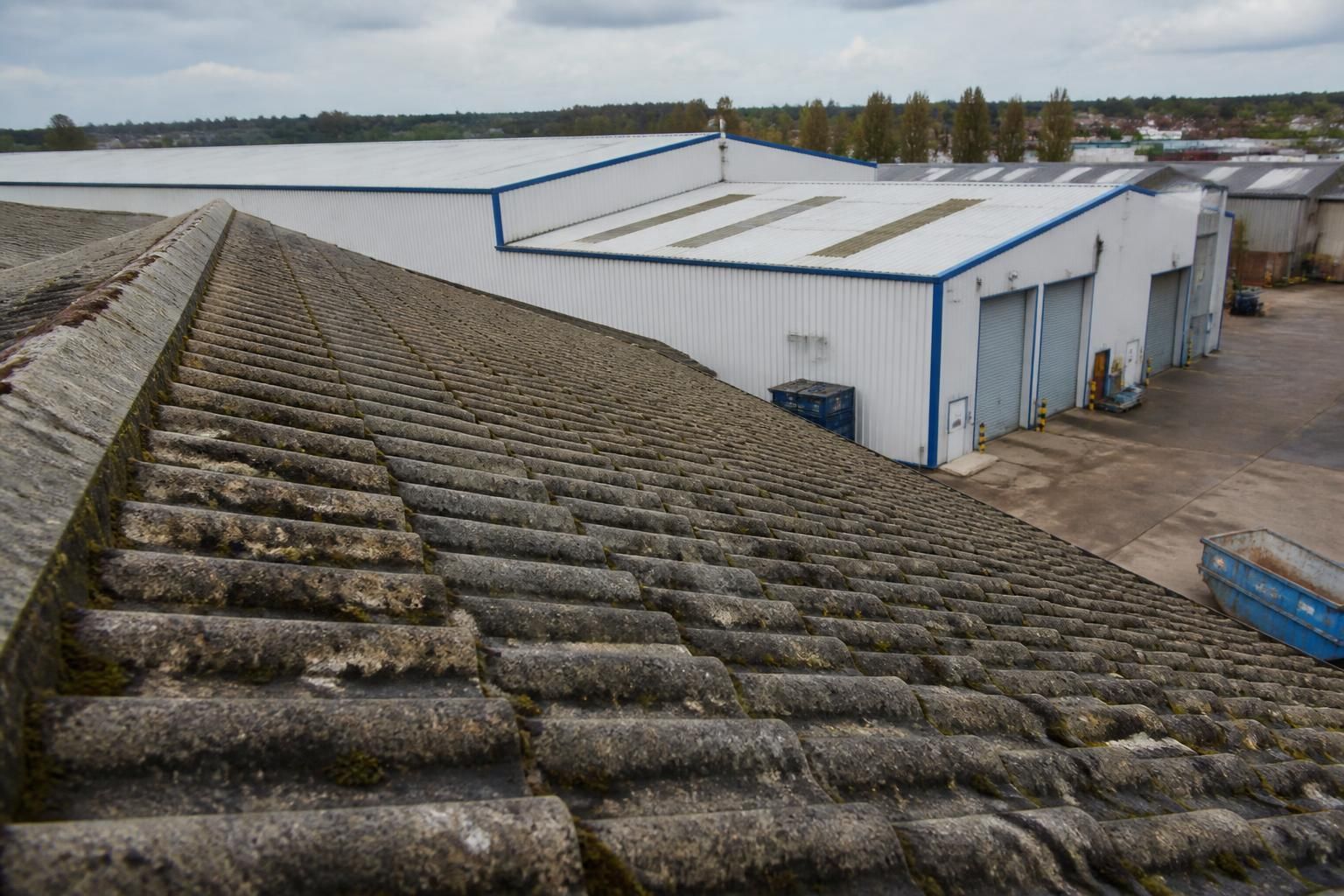
Visible moss, algae, lichen or dark staining are clear indications that the roof needs assessment. Other signs include overflowing gutters, slow-draining outlets, damp patches beneath roof edges, loose debris in drainage systems and vegetation developing around tile laps or ridge lines. A roof can also require cleaning when deposits are beginning to affect the professional appearance of the premises, even if there is no obvious leak.
Cleaning should not be delayed until growth becomes thick or established. Extensive moss and lichen can hold moisture against the tiles, obscure defects and make safe access more difficult. Removing heavy growth may also require additional care to avoid disturbing tiles, fixings, pointing or protective finishes.
How material and condition influence the interval
Sound, well-maintained concrete or clay tiles can often be cleaned as part of a planned exterior maintenance programme. Older or fragile tiles require a condition assessment before any work is specified. Pressure that is suitable for one roof may damage another, particularly where tiles are cracked, porous, loose or already deteriorated. In these cases, a soft wash or low-pressure cleaning system may be more appropriate than aggressive mechanical cleaning.
The cleaning specification should also account for previous treatments. Residual biocide, sealants, coatings or earlier pressure washing can affect how the surface responds. A professional assessment should establish whether the priority is removal of surface dirt, treatment of biological growth, restoration of drainage or a combination of these tasks.
Cleaning as part of planned maintenance
For most commercial properties, the most reliable arrangement is to combine an annual inspection with cleaning when the condition survey shows it is necessary. This allows moss and deposits to be dealt with before they obstruct drainage or conceal defects. It also makes it easier to coordinate roof cleaning with gutter clearance, façade cleaning, cladding maintenance and other access equipment requirements.
After cleaning, the roof should be checked for damaged or displaced tiles, open joints, defective flashings and blocked outlets. Any remedial work should be recorded separately from the cleaning itself. Keeping inspection photographs and service reports provides a useful maintenance history and helps establish a sensible cleaning cycle for the individual property.
Why a fixed interval is not always appropriate
A fixed schedule can result in unnecessary cleaning on one site and delayed maintenance on another. The right frequency may change after nearby trees mature, building works alter the surrounding environment, drainage problems develop or the roof is repaired. It can also change following a period of unusually wet weather or when a building’s use creates stricter presentation or hygiene requirements.
Encanto Exterior Cleaning can assess the roof’s material, condition, access requirements and surrounding environment before recommending a cleaning interval. The resulting programme should balance appearance, drainage, tile preservation and safe working practices, with cleaning carried out when it provides a clear maintenance benefit rather than simply because a set date has been reached.
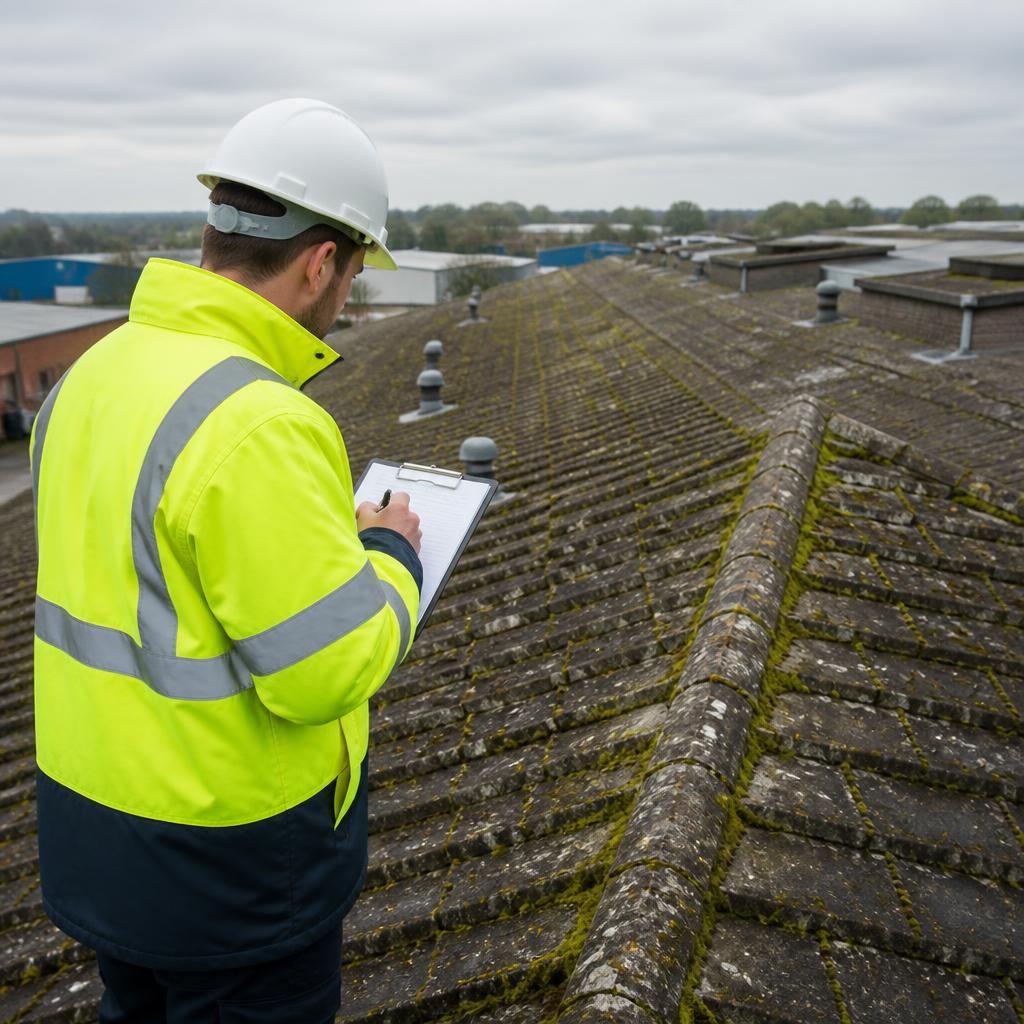
Commercial roof tiles should be inspected at least annually, but cleaning should be scheduled according to their condition rather than a fixed timetable. Moss, algae, lichen, pollution deposits and accumulated debris can retain moisture, restrict drainage and conceal damaged tiles or defective flashings.
Roofs beneath trees, in shaded areas or near busy roads may need more frequent assessment because they collect organic matter and airborne grime more quickly. During each inspection, particular attention should be given to valleys, gutters, outlets, ridge lines and areas around roof-mounted equipment. Cleaning can then be arranged before deposits become heavy enough to affect drainage, safe access or the professional appearance of the premises.
Request a Commercial Roof Tile Cleaning Assessment
Request a commercial roof tile cleaning assessment to establish the condition of your roof and a suitable maintenance interval. Encanto Exterior Cleaning can review access, drainage, tile condition and environmental factors before recommending the appropriate cleaning approach.