
How does the frequency of roof tile cleaning vary based on environmental factors and roofing material?
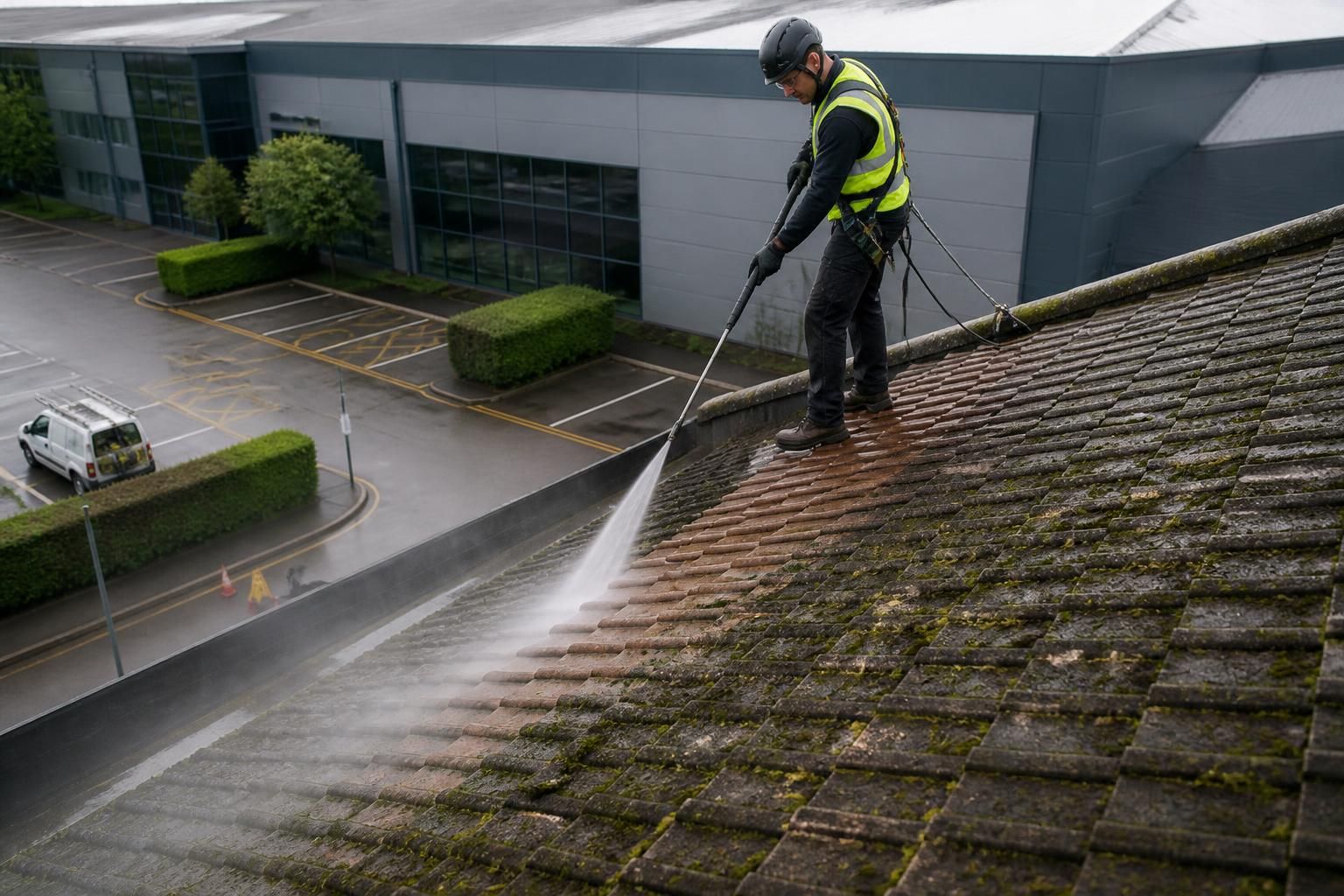
Commercial roof tile cleaning frequency depends on local exposure to moss, algae, pollution, tree debris, moisture and weather, as well as the tile material and its condition. In the UK, vulnerable or heavily exposed roofs may need more frequent inspection and cleaning, while well-maintained concrete or clay tiles in cleaner, drier surroundings may require less frequent attention.
Commercial roof tile cleaning frequency is determined by the level of environmental exposure, the tile material, the roof’s condition and the consequences of allowing contamination to build up. A roof in a shaded, damp or polluted location may need inspection and cleaning more often than a comparable roof in an open, well-drained setting. The appropriate interval should therefore be based on condition surveys rather than a fixed calendar schedule.
In practice, planned inspections help identify when cleaning is becoming necessary. Cleaning may be required when moss, algae, lichen, bird fouling, atmospheric deposits or organic debris begin to retain moisture, obstruct drainage or affect the appearance and condition of the roof. Some commercial roofs need cleaning as part of a planned maintenance programme, while others only require targeted work after inspection.
Environmental factors that increase cleaning frequency
- Moisture and rainfall: Persistent wet conditions encourage moss and algae growth, particularly where water remains on the tile surface or collects in valleys, gutters and roof junctions.
- Shade and limited sunlight: Roofs shaded by neighbouring buildings, parapets or mature trees dry more slowly. North-facing and poorly exposed slopes can consequently develop organic growth sooner than sunnier elevations.
- Trees and vegetation: Overhanging branches deposit leaves, seeds and small twigs. These materials can retain moisture, block outlets and create a suitable surface for moss and lichen. Regular inspection is especially important where trees are close to the building.
- Urban and industrial pollution: Soot, dust, traffic film and airborne industrial deposits can discolour tiles and accumulate on textured surfaces. Pollution can also combine with moisture to form deposits that are more difficult to remove if left untreated.
- Coastal exposure: Salt-laden air can leave deposits on roof surfaces and accelerate corrosion of associated metalwork, fixings and rainwater components. The tiles themselves still require a material-specific assessment, but coastal buildings often benefit from closer monitoring.
- Construction and nearby works: Building projects, quarrying, demolition and heavy traffic can increase dust and debris on a roof. A post-project inspection may be appropriate before returning the roof to its normal maintenance cycle.
- Roof design and drainage: Low-pitched sections, complex roof layouts, valleys, abutments and areas around plant equipment can hold water and debris. These locations may need more frequent attention than steep, open roof slopes.
How the roofing material affects the interval
Concrete tiles are generally robust, but their textured or weathered surface can retain dirt, moss and algae. Older concrete tiles may also become more porous as their original surface protection wears. Cleaning frequency depends on the degree of surface deterioration: aggressive treatment on weakened tiles can cause more harm than the contamination itself, so the method and pressure must be adjusted after inspection.
Clay tiles are often durable, but they can be affected by age, frost damage, surface weathering and existing cracks. Handmade, historic or heavily weathered clay tiles require particular care. Cleaning should remove contamination without stripping the surface, dislodging tiles or damaging adjacent pointing and flashings.
Slate is comparatively thin and can be vulnerable to cracking, delamination and damage from foot traffic or unsuitable equipment. Slate roofs should not be treated as though they were concrete roofs. The condition of the slate, fixings, laps and supporting structure should be checked before cleaning, and lower-impact techniques are normally preferred. A slate roof may need less frequent cleaning if it sheds water effectively, but any developing growth should be assessed before it spreads beneath laps or interferes with drainage.
Coated or surface-treated tiles need a further consideration: the cleaning process must not remove or degrade the protective coating. The manufacturer’s recommendations, the age of the coating and any remaining warranty conditions should be reviewed before work begins. Older or previously treated tiles may need gentler cleaning and closer follow-up inspections.
Condition is as important as appearance
A small amount of surface discolouration does not always justify immediate cleaning. Conversely, a roof can require attention even when it appears reasonably clean if moss is developing in joints, debris is accumulating around outlets or gutters are beginning to overflow. Cleaning decisions should consider water flow, tile stability, slipped or broken tiles, failed mortar, flashing condition and the risk of contamination entering rainwater systems.
Where moss is thick or firmly established, removing the visible growth may not be sufficient. Residual spores and moisture can allow regrowth, particularly on shaded elevations. A suitable treatment programme may therefore combine physical removal, a compatible biocidal or soft-wash treatment where appropriate, and planned inspections. The treatment must be selected for the tile material and used in accordance with safety, environmental and manufacturer requirements.
Typical maintenance approach for commercial premises
- Arrange a condition inspection to identify contamination, vulnerable areas and any defects that should be repaired before cleaning.
- Record the environmental exposure of each roof elevation, including shade, nearby trees, pollution, coastal conditions and drainage issues.
- Choose a cleaning method that suits the tile material, surface condition and access constraints. High-pressure cleaning is not automatically appropriate for every roof.
- Inspect gutters, valleys, outlets, flashings and adjacent surfaces after cleaning, removing displaced debris and reporting defects.
- Review the roof at planned intervals and bring the next cleaning visit forward if regrowth, obstruction or staining returns quickly.
For many commercial properties, a planned inspection at least once a year is a sensible maintenance baseline, with additional checks after severe weather, nearby construction or periods of rapid moss growth. This does not mean every roof should be cleaned annually. A relatively clean, well-drained roof may only need periodic cleaning, whereas a damp, shaded or heavily contaminated roof may require more regular intervention.
The most reliable schedule is therefore a risk-based one: inspect more frequently where environmental exposure is high or the roofing material is fragile, and extend the cleaning interval where the roof remains stable, well drained and free from significant growth. Keeping inspection findings and cleaning records provides a useful basis for adjusting the programme without cleaning sound tiles unnecessarily or allowing avoidable deterioration to develop.
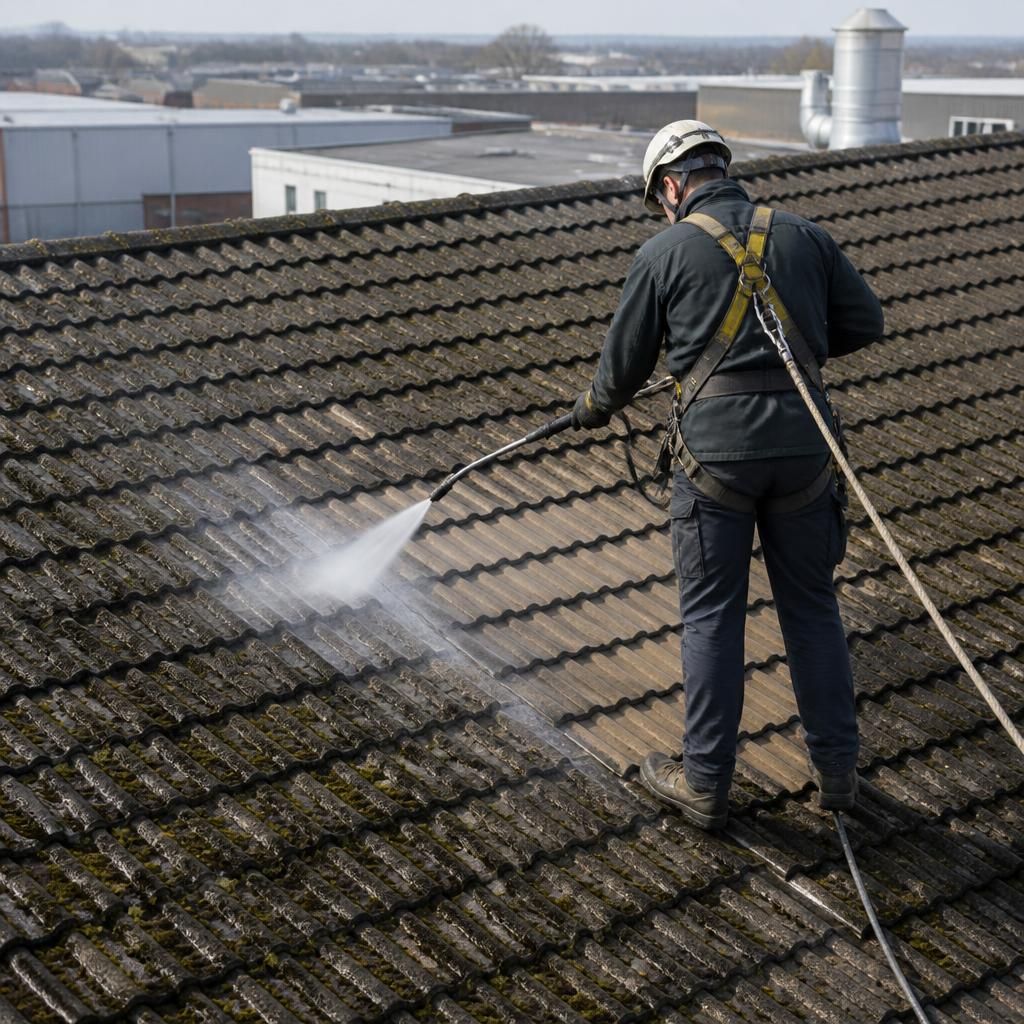
Roof tile cleaning frequency should be based on environmental exposure and the condition of the roofing material, rather than a fixed annual interval. Damp, shaded or polluted roofs usually need closer inspection because moss, algae, debris and atmospheric deposits remain on the surface for longer.
Tile type also affects the cleaning approach and maintenance cycle. Concrete tiles can retain organic growth as they weather, while clay tiles and slate may require gentler treatment because cracking, delamination or surface damage can occur if unsuitable pressure or equipment is used. Coated tiles need additional care to avoid degrading their protective finish.
- Inspect shaded elevations, valleys, gutters and areas beneath trees more frequently.
- Bring inspections forward after severe weather, nearby construction or rapid moss regrowth.
- Use condition surveys to decide when cleaning is necessary, rather than cleaning sound tiles unnecessarily.
Arrange a Roof Tile Condition Inspection
Arrange a roof tile condition inspection to assess environmental exposure, contamination, drainage and tile condition before deciding when cleaning is required. Contact Encanto Exterior Cleaning to plan the appropriate inspection and maintenance approach for your commercial property.