
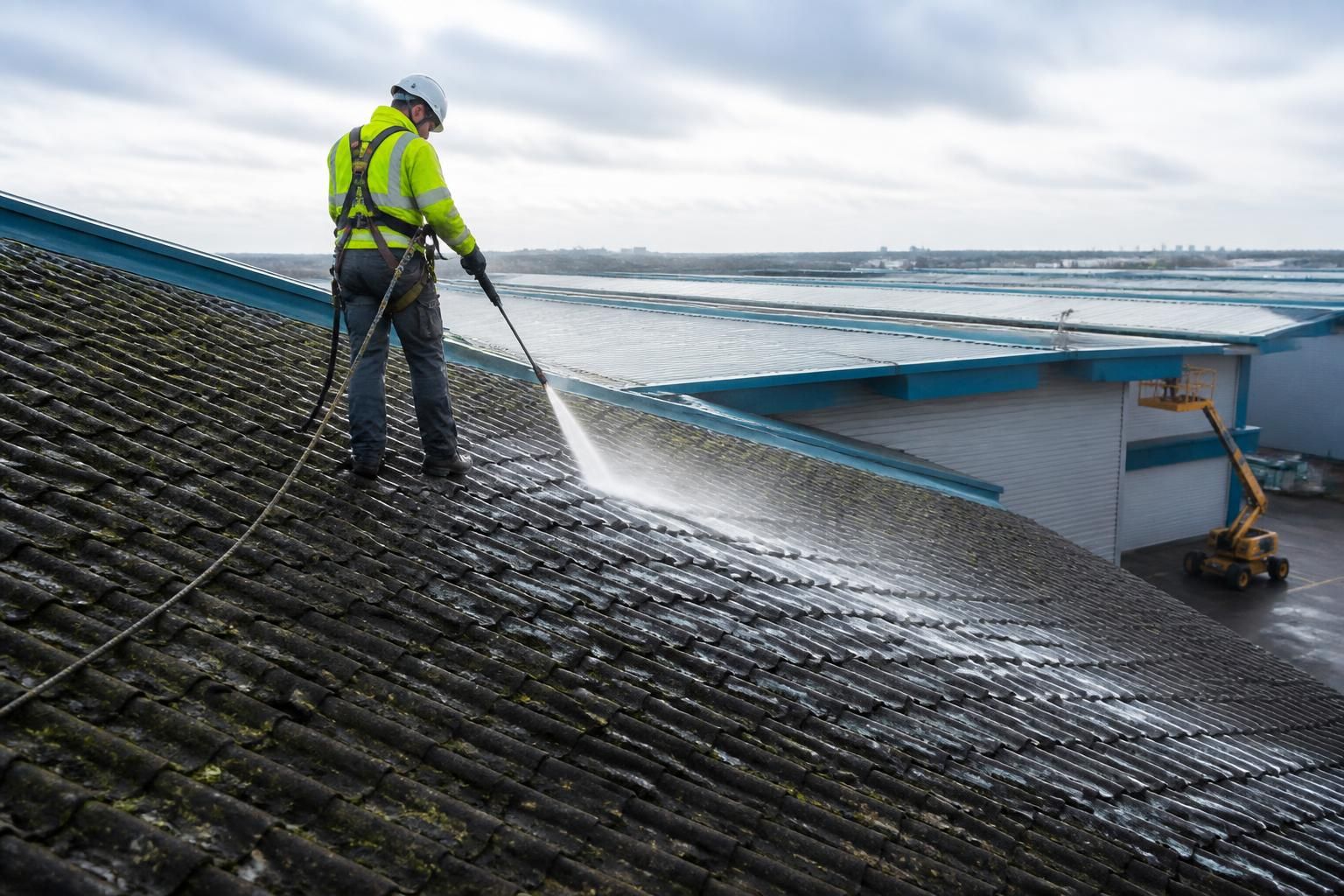
Can roof tile cleaning help improve energy efficiency?
Roof tile cleaning can support energy efficiency indirectly by removing moss, dirt and debris that retain moisture, obstruct drainage and reduce the roof’s ability to perform as intended. It will not replace insulation or correct ventilation problems, but maintaining clean, sound tiles can help protect the roof structure and prevent avoidable heat-loss issues caused by dampness.
Roof tile cleaning can support energy efficiency, but usually indirectly. Removing moss, algae, dirt and accumulated debris helps tiles shed rainwater, reduces persistent dampness and protects the roof’s ability to perform as designed. Cleaning does not replace insulation, repair poor ventilation or resolve heat loss caused by damaged roofing components, so its energy-related benefit depends on the condition and construction of the roof.
Moss and organic growth can retain moisture against the tile surface. On commercial buildings, prolonged dampness may contribute to frost damage, surface deterioration and moisture entering through defective tiles, joints or flashings. A wet roof structure can also increase the risk of damp insulation, timber decay and internal humidity problems. Keeping the tiles clear helps reduce these avoidable risks and supports the wider condition of the roof.
Debris can also obstruct valleys, gutters, outlets and drainage channels. When water cannot drain properly, it may back up beneath overlapping tiles or around roof penetrations. This does not normally create direct heat loss by itself, but water ingress can affect insulation and internal finishes, making the building harder to heat efficiently and increasing the likelihood of disruptive remedial work.
The effect of cleaning depends on the roofing material and the type of soiling present. Clay, concrete and other tile systems should be assessed before work begins, as their condition, coating and fixing method determine which cleaning approach is suitable. A controlled soft wash or low-pressure process is often preferable to aggressive pressure washing where there is a risk of dislodging tiles, driving water beneath overlaps or removing protective surface material.
A professional assessment should consider:
- whether moss, algae or debris is retaining moisture on the roof;
- the condition of tiles, ridge and verge details, flashings, seals and fixings;
- whether gutters, valleys and outlets are allowing unrestricted drainage;
- the condition and continuity of roof insulation;
- ventilation at the eaves, ridge and within the roof space; and
- whether visible dampness is caused by contamination or by a separate roofing defect.
Cleaning should form part of a wider roof maintenance plan rather than being treated as an energy-efficiency measure on its own. Before cleaning, the roof should be inspected for cracked, slipped or fragile tiles and any areas where water may already be entering. Afterward, gutters and drainage points should be cleared, loose material removed safely and any defects reported for repair. This prevents the cleaning process from masking underlying problems.
For commercial properties, the most meaningful energy benefit may come from protecting insulation and preventing moisture-related deterioration over time. If a building remains difficult to heat after the roof has been cleaned, the likely causes may include inadequate insulation, air leakage, poor roof-space ventilation, defective membranes or problems with the heating system. These require separate investigation by the appropriate roofing, building or energy specialist.
In summary, clean roof tiles can help maintain effective drainage, reduce moisture-related damage and preserve the roof system supporting the building envelope. The improvement in energy efficiency is normally supporting rather than dramatic. A suitable cleaning method, combined with inspection, drainage maintenance and timely repairs, gives the roof the best opportunity to perform efficiently and remain serviceable.
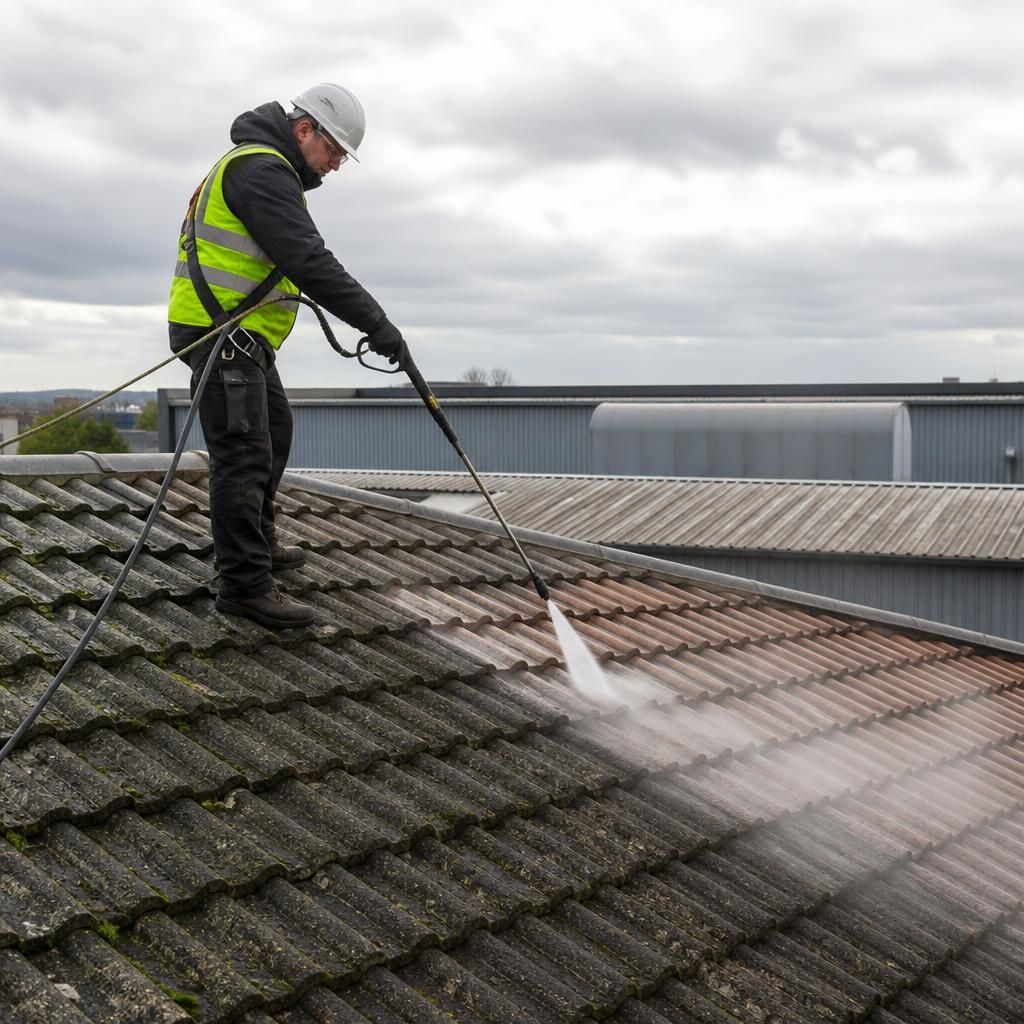
Roof tile cleaning can support energy efficiency by removing moss, algae and debris that retain moisture against the roof surface. Although cleaning will not improve insulation or correct ventilation faults, it helps the roof shed rainwater properly and reduces the risk of dampness affecting insulation, timber and other roof components.
Blocked valleys, gutters and drainage channels can allow water to collect around overlapping tiles and roof penetrations. If moisture enters the roof build-up, damp insulation may perform less effectively and the building can become harder to heat. Cleaning should therefore be combined with an inspection of tiles, flashings, drainage points and visible signs of water ingress.
The energy benefit is usually preventative rather than dramatic. A suitable low-pressure or soft wash method can help preserve the roof system without dislodging tiles or forcing water beneath them, while any damaged roofing, inadequate insulation or poor ventilation should be addressed separately by the appropriate specialist.
Arrange a Roof Tile Cleaning Assessment
Arrange a roof tile cleaning assessment to check whether moss, debris, blocked drainage or roof defects are affecting your building’s roof performance. We can recommend a suitable cleaning approach and identify any issues requiring separate repair or insulation advice.