
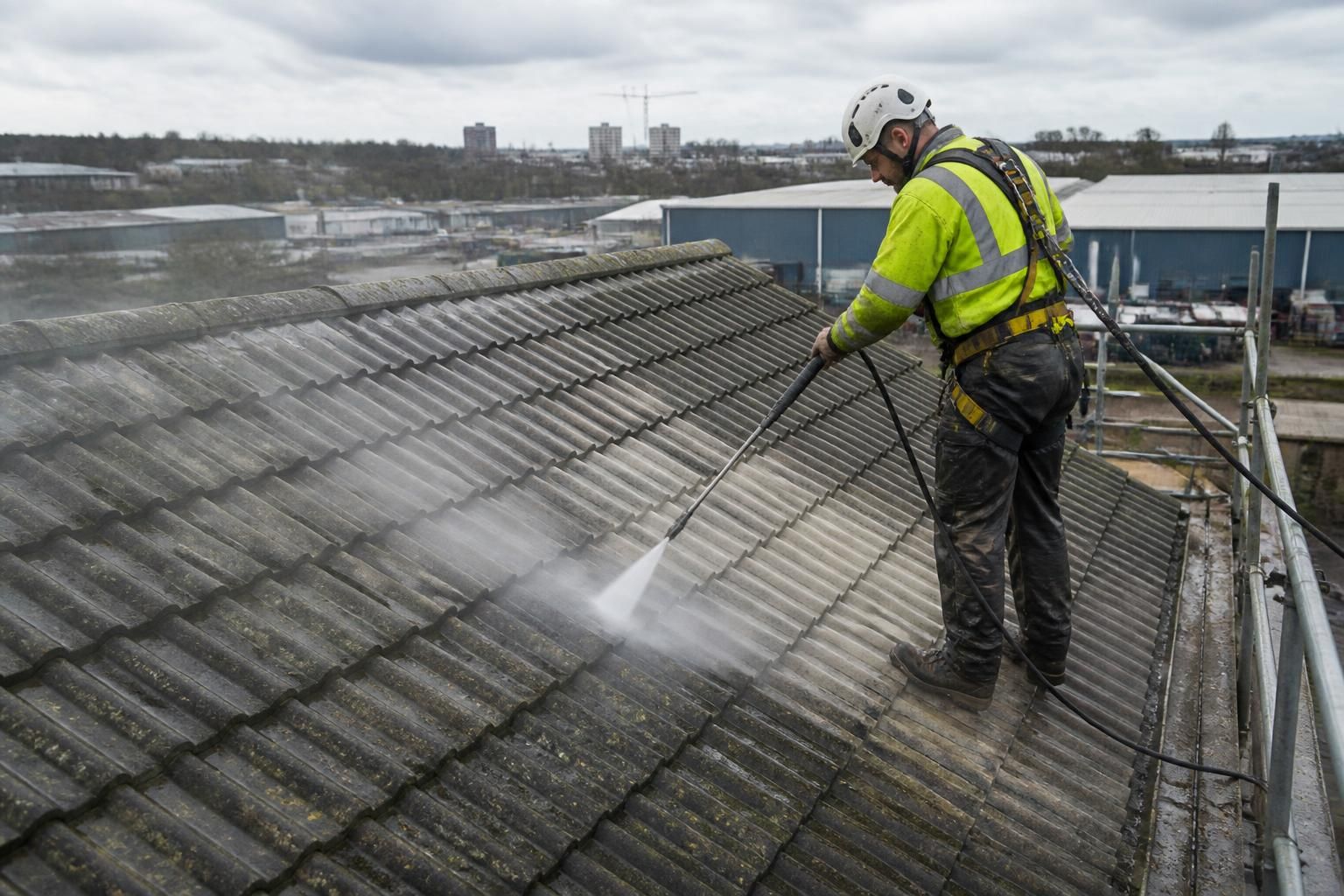
Are there any risks associated with improper roof tile cleaning?
Yes. Improper roof tile cleaning can crack or dislodge tiles, strip protective finishes, force water beneath the roof covering and damage underlying membranes, insulation or guttering, leading to leaks and costly repairs.
Using unsuitable pressure, chemicals or access methods can also reduce the roof’s service life, so cleaning should be matched to the tile material, condition and construction of the commercial roof.
Improper roof tile cleaning can cause cracked or dislodged tiles, water ingress, damaged protective finishes and premature deterioration of the roof structure. Excessive pressure, unsuitable chemicals, careless access or cleaning a roof in poor condition can turn a routine maintenance task into a source of leaks and avoidable repair work.
Damage to the tiles is one of the most immediate risks. Concrete, clay and slate tiles differ in strength, porosity and surface finish, so the cleaning method must be matched to the roofing material. High-pressure water can fracture brittle tiles, remove the surface layer from concrete tiles, erode softer materials or loosen overlapping tiles. Even where damage is not immediately visible, small cracks and displaced edges can allow water to enter during subsequent rainfall.
Pressure can also force water beneath the tile covering rather than removing dirt from the surface. This may wet battens, underlay, insulation and roof decking, particularly where laps, flashings or joints are already compromised. Repeated moisture exposure can contribute to timber decay, corrosion of fixings, mould growth and deterioration of internal finishes. On a commercial property, an apparently minor cleaning error may therefore affect offices, stock, equipment or occupied areas below the roof.
Unsuitable chemicals create a separate set of problems. Strong or incorrectly diluted cleaning products may stain tiles, strip factory-applied coatings, alter the colour of the roof or accelerate corrosion in metal flashings, fixings and adjacent plant. Run-off can also affect façades, glazing, paving, landscaping and drainage systems. Chemical selection should take account of the tile material, existing coatings, surrounding surfaces and how contaminated water will be contained and disposed of.
Biological growth should not simply be removed without considering the condition of the roof. Moss can conceal broken tiles, open joints and defective flashings. Pulling out established growth by hand or with aggressive equipment may lift tiles or disturb bedding and pointing. If roots and deposits are left in gutters, valleys or outlets, they can restrict drainage and increase the risk of overflowing water reaching walls, soffits and internal areas.
Improper access methods can cause both direct and indirect damage. Walking on fragile, aged or unsupported tiles can crack them, while poorly positioned ladders, towers or access equipment may damage gutters, cladding and roof edges. Uncontrolled movement across the roof can also disturb solar panels, rooflights, vents, pipework and other building services. Access planning should identify load-bearing routes and vulnerable features before cleaning begins, rather than relying on the roof surface to support operatives and equipment.
There are safety risks as well as property risks. Wet tiles, moss, algae and cleaning solution can make a roof extremely slippery. Falling tools, debris or contaminated water may endanger people and vehicles below, especially around busy commercial premises. A competent contractor should assess the roof and surrounding work area, select suitable access and fall-protection measures, establish exclusion zones where necessary and plan how equipment, waste and run-off will be controlled.
Improper cleaning may also create compliance and maintenance problems. Blocked outlets, contaminated drainage or damage to fire stopping, roof-mounted equipment and service penetrations can affect the wider building. Where a roof forms part of a managed estate, records of condition, identified defects and completed work are useful for demonstrating that maintenance has been planned and carried out responsibly.
Before cleaning, a professional assessment should normally consider:
- the tile type, age, condition, porosity and any existing coating;
- visible cracks, movement, failed mortar, defective flashings and signs of previous water ingress;
- the condition of underlay, battens, gutters, valleys, rooflights, vents and roof-mounted equipment;
- safe access routes, fragile areas, fall hazards and the working environment below;
- the most suitable combination of low-pressure or soft washing, steam cleaning, manual treatment and controlled rinsing; and
- chemical run-off, drainage protection and the safe removal of loosened moss, dirt and other debris.
Cleaning should be postponed or adapted where tiles are already failing, the roof is saturated, severe weather affects safe access or underlying defects require repair first. Cleaning cannot correct defective flashing, inadequate drainage or a failing roof covering, and attempting to conceal those problems may increase the eventual cost of remedial work.
After cleaning, the roof should be checked for displaced or damaged tiles, exposed joints, blocked outlets, affected coatings and signs of water entering vulnerable areas. Any defects found should be recorded and reported so that repairs can be prioritised. Using a method based on the roofing material and condition, with controlled pressure, appropriate products and properly planned access, substantially reduces the risk of damage while providing a suitable clean for a commercial roof.
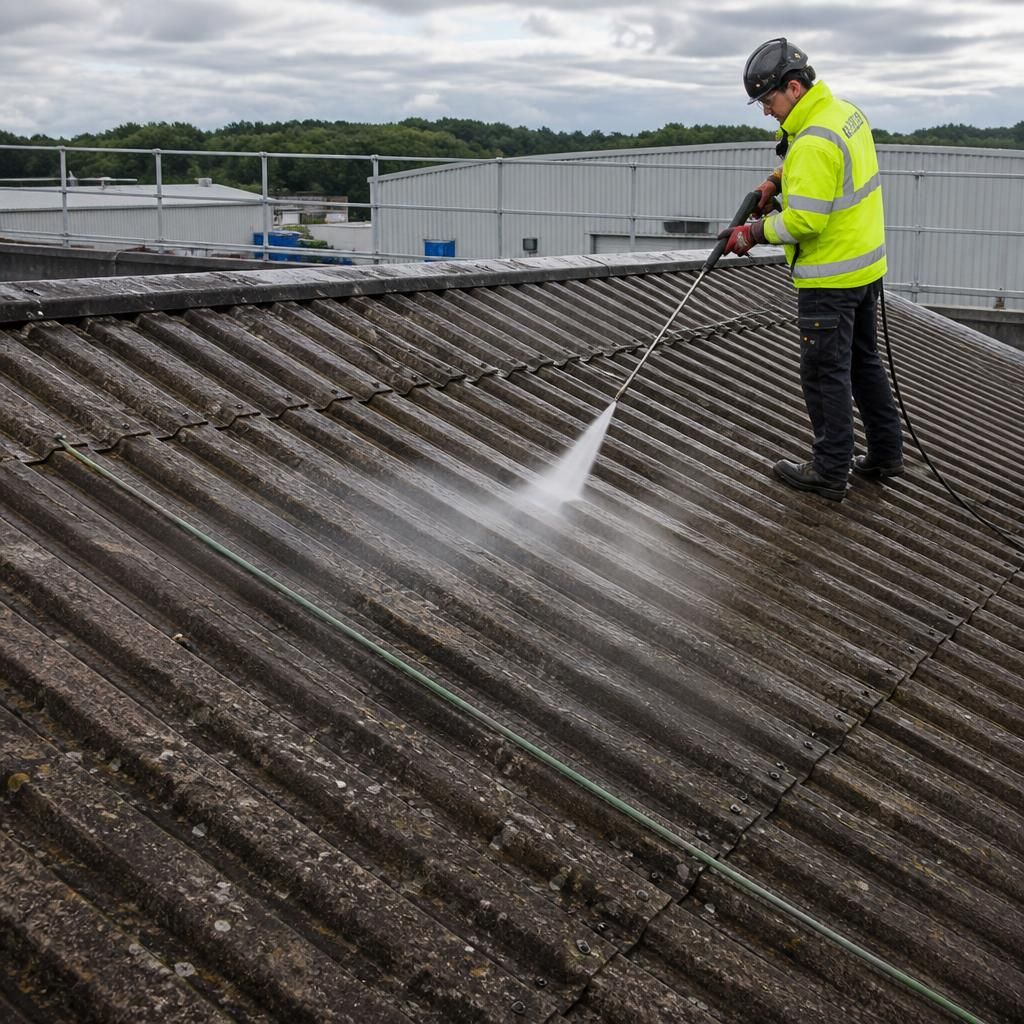
Excessive pressure is one of the main risks of improper roof tile cleaning. It can crack brittle tiles, dislodge overlapping sections and force water beneath the roof covering instead of removing dirt from the surface. Moisture may then reach the underlay, battens, insulation or roof decking, where damage can remain hidden until staining, damp or leaks appear inside the commercial property.
The correct approach depends on the tile material, age, condition and construction of the roof. Concrete, clay and slate tiles respond differently to pressure and cleaning products, while existing cracks, failed pointing or loose flashings increase the risk of water ingress. A careful pre-cleaning inspection should identify these defects and determine whether low-pressure washing, soft washing, steam cleaning or manual treatment is more appropriate.
Cleaning should be adapted or postponed where the roof covering is already deteriorating. After work, the roof should be checked for displaced tiles, blocked outlets and exposed joints so that any defects can be reported before they develop into more costly repairs.
Arrange a professional roof tile cleaning assessment
Arrange a professional roof tile cleaning assessment so the tile material, condition, access requirements and potential risks can be reviewed before work begins. We can recommend a suitable cleaning method and identify any defects that may need attention first.