
What specific methods does your company use for roof moss removal, and how do they ensure long-term protection against regrowth?
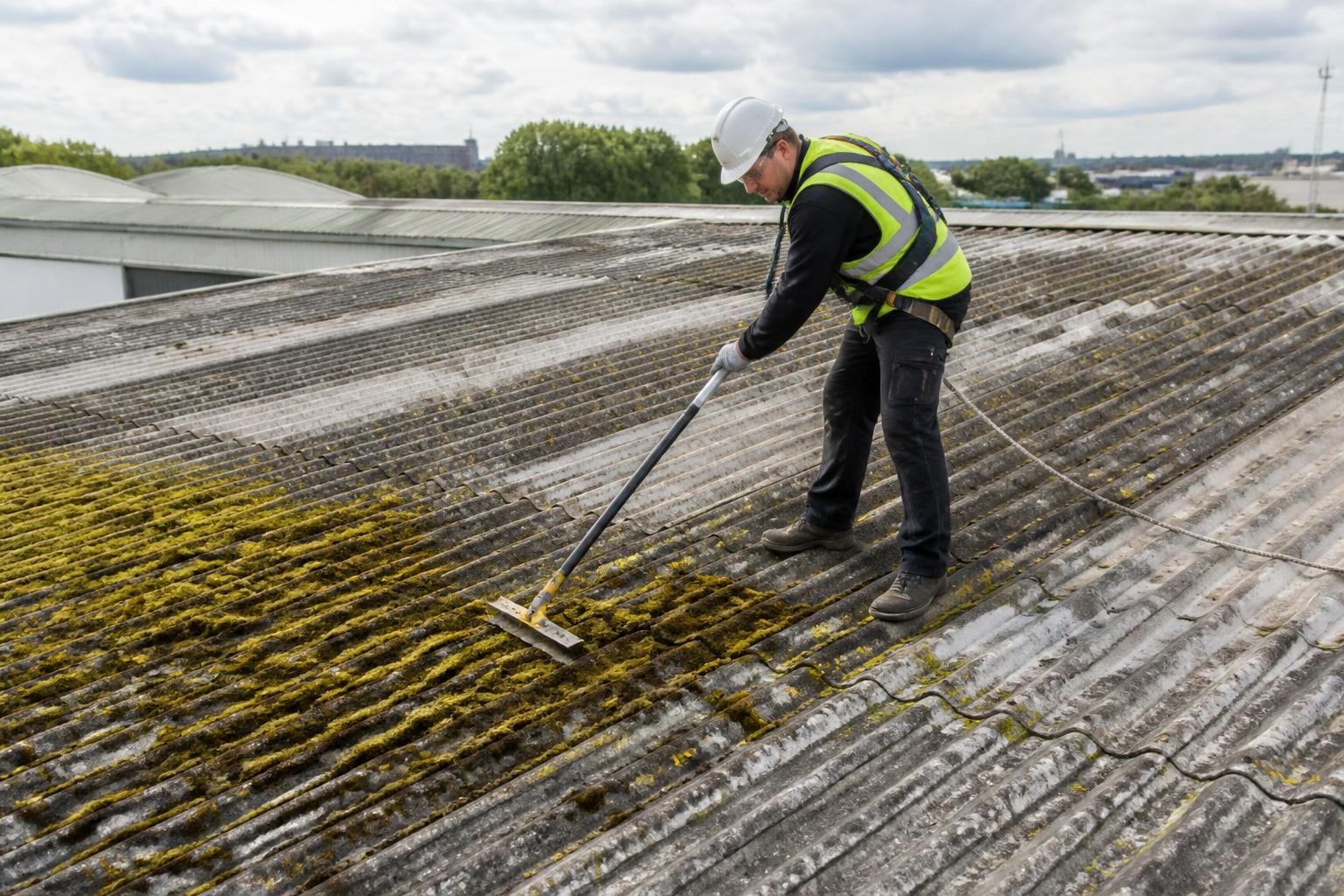
We remove roof moss using controlled manual methods, low-pressure soft washing and, where suitable, steam cleaning, selecting the approach according to the roofing material and condition. After cleaning, we apply an appropriate moss-inhibiting treatment and provide practical maintenance advice to reduce regrowth without compromising the roof surface.
Our roof moss removal process combines controlled manual removal, low-pressure soft washing and, where appropriate, steam cleaning. We select the method after assessing the roof covering, moss growth, surface condition, access requirements and surrounding drainage. Once the visible growth has been removed, we apply a suitable moss-inhibiting treatment and recommend practical maintenance measures to help delay regrowth.
Initial roof assessment
Before cleaning begins, we inspect the roof for moss coverage, lichen, algae, accumulated debris, blocked outlets, damaged tiles, loose roof components and areas where water may be retained. We also consider the construction of the roof, including whether it is tiled, slated, metal, profiled or coated. This assessment determines whether the surface can safely withstand cleaning and which treatment is appropriate.
The inspection also identifies sensitive areas such as rooflights, fragile ageing tiles, sealants, flashing and vulnerable edge details. Access equipment is selected according to the building and roof layout, helping us reach the working area without placing unnecessary load on the roof covering.
Controlled manual removal
Thicker moss is usually loosened and removed manually before any washing takes place. This allows us to lift established growth from the surface and clear moss from laps, joints, valleys and drainage channels without relying on excessive water pressure. Manual work is particularly useful on older or delicate roof coverings where aggressive cleaning could dislodge tiles, strip protective coatings or force water beneath overlaps.
Removed moss and organic debris are collected rather than being allowed to enter gutters, downpipes or surface-water drainage systems. Keeping this material under control is important because moss can continue to hold moisture and may obstruct drainage after the main cleaning work is complete.
Low-pressure soft washing
Soft washing uses a controlled, low-pressure application to treat remaining organic contamination and clean the roof without the impact associated with high-pressure jetting. The cleaning solution is selected for the roof material and the type of growth present. It is applied in a controlled manner, allowed to work for the required time and rinsed or removed in accordance with the product guidance and site conditions.
Low pressure does not mean that the process is unsuitable for substantial contamination. Its purpose is to reduce mechanical stress while allowing the treatment to deal with residual moss, algae and lichen. Pressure, application distance and rinsing are adjusted to avoid damaging coatings, forcing water under tiles or affecting adjacent façades and building services.
Steam cleaning where suitable
Steam cleaning may be used when a lower-chemical approach is appropriate and the roof covering can safely accommodate the equipment and heat. Steam helps break down organic growth and surface staining with controlled application rather than abrasive pressure. It is not suitable for every roof, particularly where heat, moisture or access could affect fragile materials, so it is considered as part of the site assessment rather than applied as a standard treatment.
Post-cleaning moss-inhibiting treatment
Cleaning removes existing growth, but long-term control depends on treating the conditions that allow moss and lichen to return. After the roof has been cleaned, we apply a compatible biocidal or moss-inhibiting treatment where suitable. The treatment is chosen according to the roof material, existing coatings, drainage arrangements and environmental controls. It helps break down remaining organic residue and leaves the surface less favourable to immediate regrowth.
This is a preventative treatment, not a permanent barrier. Moss can return where a roof remains damp, shaded or covered by falling leaves and other debris. We therefore avoid claiming that any treatment can prevent regrowth indefinitely. The expected result depends on the building’s location, nearby trees, roof orientation, ventilation, drainage and the condition of the roof covering.
Protecting the result after cleaning
- Gutters, valleys and outlets should be kept clear so water can drain away quickly.
- Overhanging branches and heavy leaf fall should be managed where they create persistent shade or deposit organic material on the roof.
- Damaged or displaced roof components should be repaired by the appropriate roofing professional before they allow moisture into the building.
- Roof surfaces should be inspected periodically, particularly after prolonged wet weather or nearby building work.
- Any further cleaning should use a method suitable for the roof material rather than automatic high-pressure washing.
For commercial properties, we can align follow-up inspections or cleaning with the wider exterior maintenance programme. This makes it easier to identify early regrowth, drainage problems or surface defects before they develop into a more disruptive issue. The most effective long-term approach is therefore a combination of material-sensitive moss removal, a compatible inhibiting treatment and routine control of moisture, shade and debris.
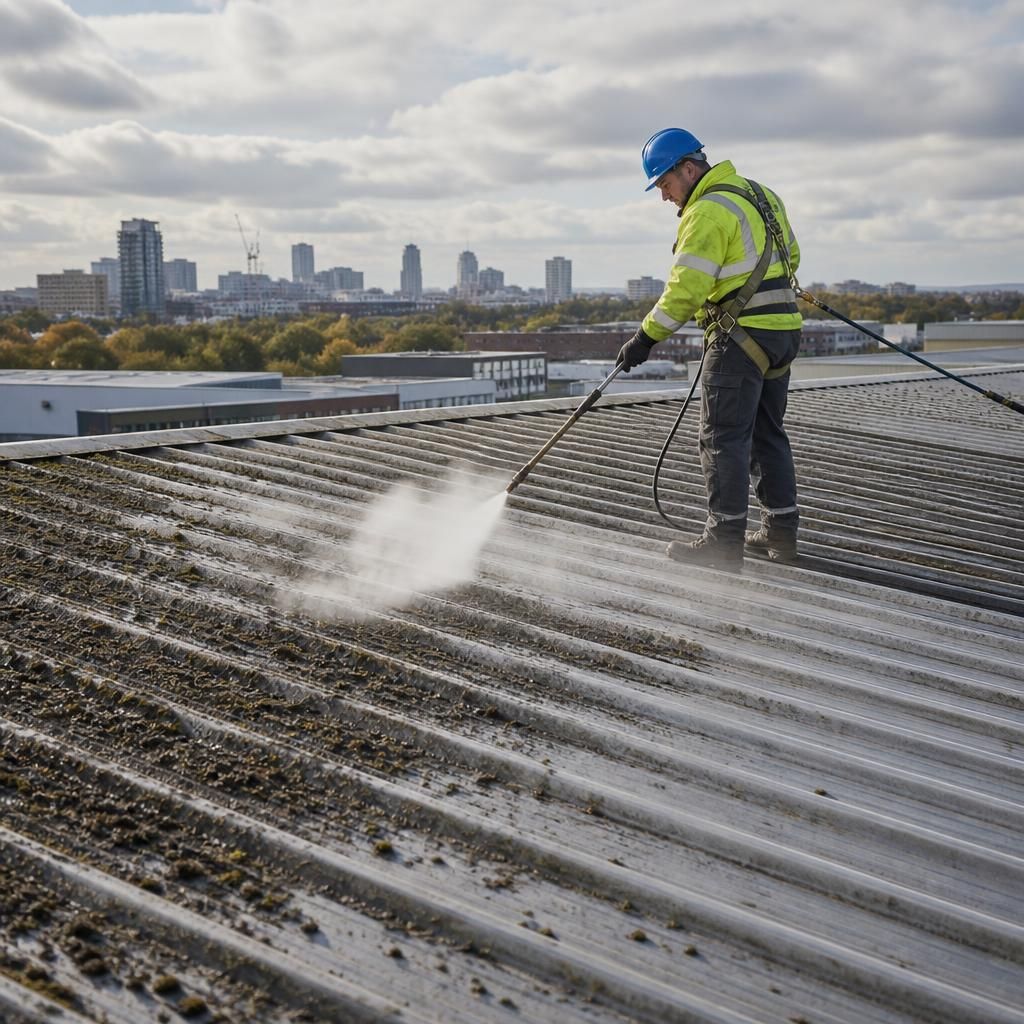
Long-term protection after roof moss removal depends on more than removing visible growth. We use a roof-compatible moss-inhibiting treatment after cleaning to break down remaining organic residue and make the surface less favourable to immediate regrowth, while taking account of the roof material, existing coatings and drainage arrangements.
This treatment is preventative rather than permanent. Shading, trapped moisture, falling leaves and blocked gutters can still encourage moss to return. Keeping drainage clear, managing overhanging vegetation and arranging periodic inspections helps preserve the result and allows early regrowth or roof defects to be addressed before they become more disruptive.