
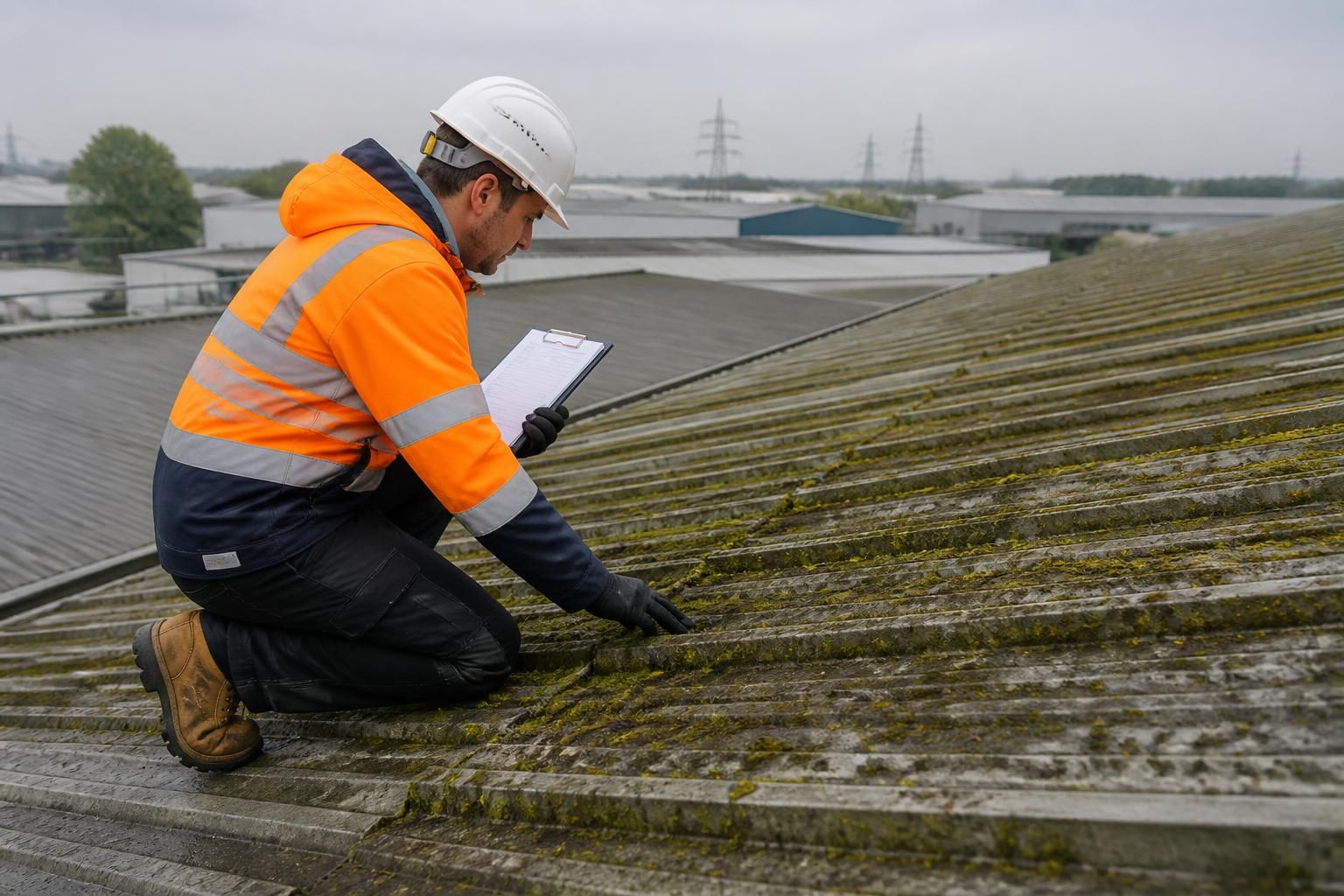
What factors should be considered when determining the frequency of roof moss removal services for a commercial property?
The required frequency of commercial roof moss removal depends on local climate, roof pitch and material, surrounding vegetation, drainage, shading, and the extent of existing moss growth. A professional roof inspection can identify these risk factors and establish a practical cleaning and maintenance schedule for the property.
The frequency of commercial roof moss removal should be determined by the roof’s exposure to moss, its construction and condition, the surrounding environment, and the consequences of leaving growth untreated. There is no universal cleaning interval: some roofs may only require removal when growth is identified during planned inspections, while shaded or heavily vegetated sites may need more frequent monitoring and maintenance.
A professional inspection should establish the initial condition of the roof and identify the factors most likely to encourage regrowth. The findings can then be used to create a proportionate maintenance schedule rather than relying on a fixed calendar interval.
Local climate and weather exposure
Birmingham, the West Midlands and other parts of the UK provide conditions that can support moss growth, particularly where roofs remain damp for extended periods. Frequent rainfall, high humidity and limited drying time can increase the rate at which moss becomes established. A roof in a wet, sheltered location may therefore need closer monitoring than one with good sunlight and airflow.
Weather exposure can vary considerably across the same site. Roof areas beneath parapets, behind plant equipment or close to taller structures may stay damp even when other sections dry quickly. These areas should be considered separately when planning inspections and cleaning.
Roof material, pitch and construction
The type and condition of the roofing material are important when assessing both the risk of moss growth and the appropriate removal method. Moss can retain moisture against tiles, slates and other porous surfaces, while its roots and attached organic matter may worsen existing surface deterioration. Older or weathered materials may require more cautious treatment and closer follow-up.
Roof pitch also affects the likelihood of moss remaining in place. Low-pitched areas can hold moisture and organic debris for longer, whereas steeper surfaces may shed water more effectively. However, steep roofs can present greater access and safety challenges, so inspections and cleaning must be planned using suitable access equipment and safe working procedures.
Shading and surrounding vegetation
Trees, adjoining buildings, boundary walls and rooftop structures can reduce sunlight and airflow. Overhanging branches also deposit leaves, pollen and other organic material, creating a damp surface in which moss can develop. Sites bordered by mature trees or located close to parks, woodland or landscaped areas commonly require more regular checks.
Where practical, controlling the cause of the growth is part of the maintenance plan. This may include clearing gutters and valleys, removing accumulated debris and managing vegetation that overhangs the roof. Tree work should only be undertaken where it is appropriate and by a suitably qualified contractor.
Drainage and debris accumulation
Blocked or slow-draining gutters, outlets and valleys increase the time that water remains on or beside the roof. Moss and organic debris can obstruct drainage routes, while poor drainage can create the damp conditions that encourage further growth. The roof should therefore be assessed alongside its rainwater goods rather than treated as an isolated surface.
If inspections show recurring blockages or standing water, removing moss alone will not resolve the underlying issue. Drainage maintenance, repairs or further investigation may be needed before a long-term cleaning interval can be agreed.
Existing moss coverage and rate of regrowth
The amount, thickness and distribution of existing moss provide useful evidence when determining future frequency. Light, localised growth may be managed during planned maintenance, whereas extensive coverage, heavy moss build-up or growth in drainage channels may require prompt attention and a follow-up inspection.
Regrowth after treatment should also be monitored. Rapid return may indicate persistent shade, moisture, organic debris or a surface condition that supports attachment. A review after cleaning can show whether the roof needs an occasional service or a more structured programme of inspections and maintenance.
Previous cleaning and treatment history
Records of earlier moss removal should be considered, including the methods used, areas treated, any protective treatments applied and the condition of the roof at the time. A roof that has been maintained consistently may need a different approach from one receiving its first substantial clean after prolonged neglect.
Any biocidal or preventative treatment must be selected and applied in accordance with the product instructions, the roof manufacturer’s requirements and relevant environmental controls. Such treatments do not remove the need for inspections, as moss can return when the underlying conditions remain unchanged.
Building use and operational risk
The required maintenance frequency is also influenced by how the property is used. Moss-related debris, blocked drainage or falling material may create additional risks around entrances, walkways, loading areas, car parks and operational yards. Buildings containing plant, stock or sensitive equipment may require more proactive maintenance to reduce the chance of water ingress or disruption.
For managed estates, the roof schedule should be coordinated with other planned exterior cleaning, gutter maintenance and condition surveys. Combining inspections where appropriate can improve access planning and help identify related defects before they become urgent.
Roof condition, warranties and repair requirements
Moss removal frequency should reflect the roof’s overall condition, not just the amount of visible growth. Cracked tiles, displaced slates, damaged membranes, failed seals, corrosion, defective flashings or weakened roof edges may require repair before cleaning takes place. Cleaning a vulnerable roof without addressing these issues can increase the risk of damage or water ingress.
Where the roof is covered by a manufacturer’s warranty or subject to a maintenance agreement, the specified cleaning methods and inspection requirements should be checked first. A specialist contractor should use a method appropriate to the material and avoid unnecessary pressure or abrasion on fragile surfaces.
Access, safety and weather planning
Safe access arrangements can affect when and how frequently work is scheduled. The roof’s height, pitch, edge protection, fragile areas, skylights, plant equipment and adjacent public or vehicle routes must be assessed before any removal work. Wet, icy or high-wind conditions may make access unsuitable, so planned maintenance should allow enough flexibility for safe working.
Where access is complex, it is sensible to combine roof inspections with other planned works, provided this does not delay the removal of growth that is already affecting drainage or roof condition. A written risk assessment and method statement should be prepared for the specific site.
How to establish a practical schedule
- Carry out an initial roof and drainage inspection, recording moss coverage, surface condition, access constraints and areas of concern.
- Remove existing growth using a method suitable for the roofing material and the extent of contamination.
- Correct contributing issues such as blocked drainage, excessive debris or defects requiring repair.
- Record the roof’s condition after cleaning, including photographs where appropriate, so future inspections can be compared accurately.
- Reinspect as part of the property’s planned exterior maintenance and adjust the interval according to the observed rate of regrowth.
For many commercial properties, a routine roof inspection as part of planned maintenance is more useful than waiting until moss becomes widespread. A site with heavy shade, nearby trees, recurring drainage problems or rapid regrowth may need inspections at shorter intervals, while a well-drained, exposed roof with little organic debris may require less frequent intervention.
Signs that the planned frequency should be reviewed include moss spreading across previously clear areas, blocked gutters or outlets, damp patches inside the building, loose or displaced roofing materials, visible water retention and debris accumulating around roof details. These issues should be assessed promptly rather than waiting for the next scheduled clean.
The most reliable approach is an inspection-led programme based on the individual property. This keeps moss removal proportionate to the actual risk, supports the service life of the roofing system and helps maintain safe, presentable commercial premises without unnecessary cleaning.
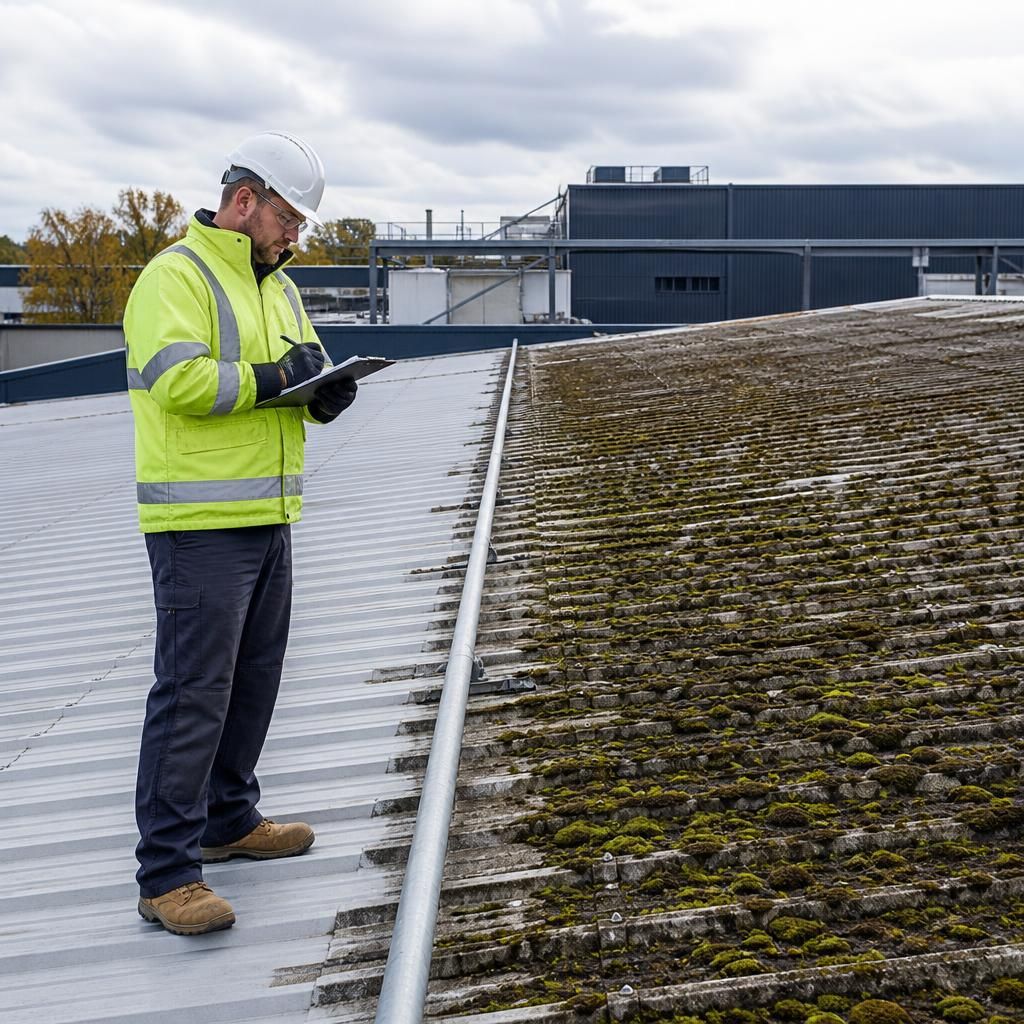
The most reliable way to determine commercial roof moss removal frequency is to use an inspection-led maintenance schedule rather than a fixed annual interval. The roof should be checked for moss coverage, damp areas, blocked drainage, debris, shading and signs of material deterioration, with the findings used to plan any necessary treatment.
Roofs exposed to persistent shade, overhanging vegetation or recurring drainage problems may need closer monitoring because moss can regrow more quickly. After removal, recording the roof’s condition and reviewing it during planned exterior maintenance helps identify the actual rate of regrowth and ensures future cleaning is carried out when it is needed, before moss begins affecting drainage or roofing materials.