
What environmental precautions are taken during the moss removal process to ensure compliance with local regulations and sustainability standards?
During commercial roof moss removal, we assess the site and weather conditions, protect drains and surrounding areas, control debris and runoff, and use cleaning treatments responsibly to reduce risks to wildlife, waterways and roofing materials. Waste is contained and disposed of appropriately, while methods are selected to meet applicable UK environmental requirements, local discharge controls and the property’s sustainability procedures.
Environmental precautions during commercial roof moss removal are designed to prevent contaminated runoff, protect wildlife and vegetation, control waste and ensure that any treatment products are used lawfully. Before work starts, we assess the roof, drainage layout, surrounding land, weather conditions and the client’s environmental procedures so that the removal method is appropriate for the building and its location.
Site and environmental assessment
The initial assessment identifies features that could be affected by moss, debris or cleaning products. This includes rainwater outlets, downpipes, gullies, soakaways, watercourses, planted areas, ponds, neighbouring properties and areas used by people or vehicles. We also consider the roof construction and the condition of its coverings, because unnecessary abrasion or excessive pressure can create additional waste and increase the risk of polluted water leaving the site.
Where a building is close to a river, stream, ditch, pond or other surface water, additional controls may be needed. Local drainage arrangements and the requirements of the site owner, local authority, water company or environmental regulator can vary. We therefore do not assume that runoff can be discharged simply because it appears clean.
Controlling runoff and protecting drains
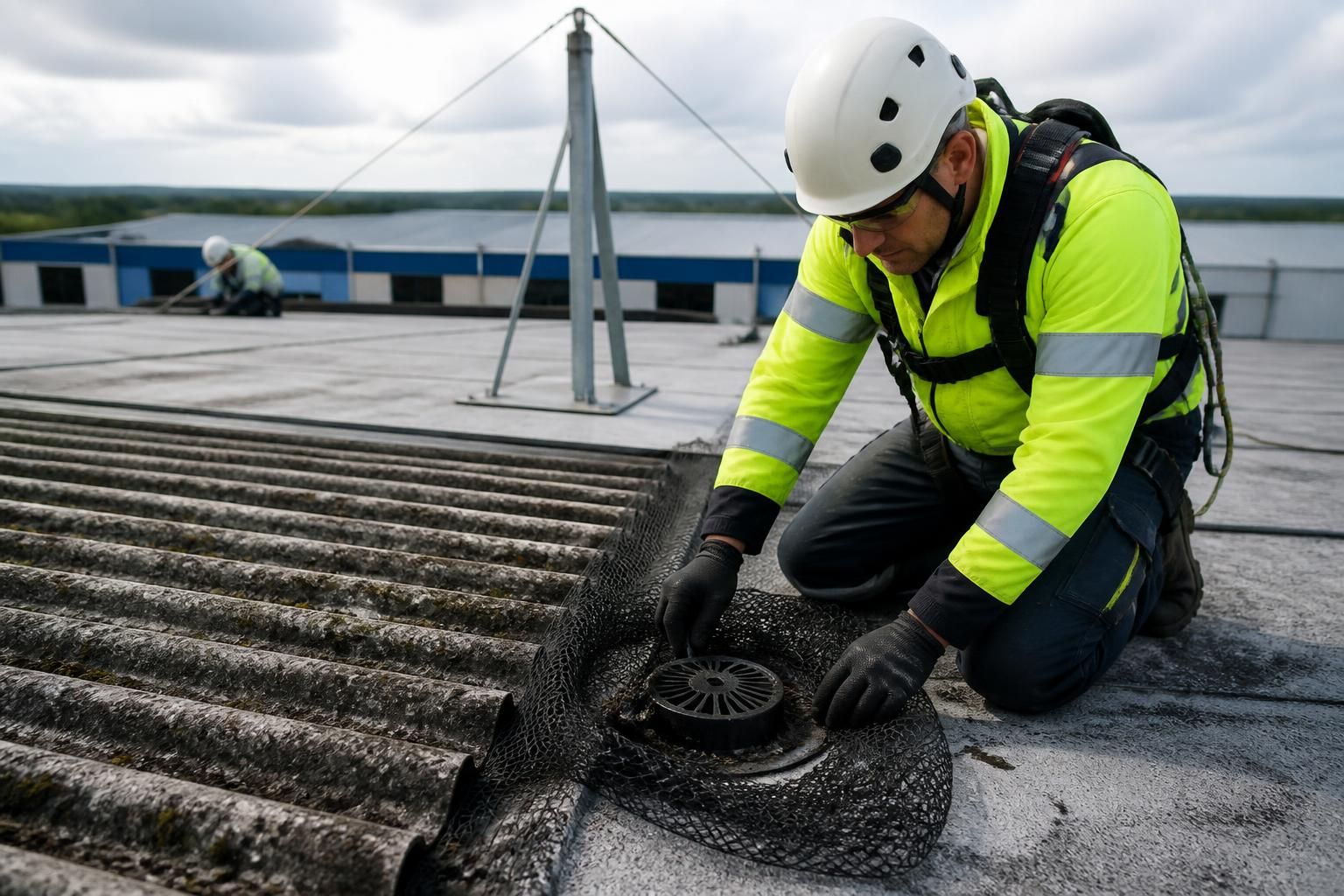
- Rainwater outlets and vulnerable drainage points can be temporarily covered, capped or isolated where this is suitable for the roof and safe for the building.
- Debris is cleared before washing or treatment so that loose moss and silt do not enter the drainage system.
- Ground-level gullies, surface-water drains, planted borders and access routes are protected with appropriate sheeting, drain covers or containment measures.
- Runoff is directed, collected or controlled rather than allowed to flow across neighbouring land or into a watercourse.
- Work is postponed or adapted when forecast rain, strong wind or freezing conditions would make containment ineffective or increase the risk of pollution.
Surface-water drains normally discharge to the environment without the same treatment as foul drainage. For that reason, no chemical solution, dirty wash water or concentrated residue is intentionally released into a surface-water system. If wastewater needs to be removed from site or discharged through a controlled route, the arrangements are considered in advance and any required permission is obtained from the relevant authority or utility provider.
Responsible use of moss treatments
Mechanical scraping, brushing or low-impact washing is considered first where it can achieve the required result without damaging the roof. Where a treatment is necessary to deal with remaining growth or reduce rapid regrowth, the product is selected for the surface, applied at the label rate and used only for its approved purpose. Products are stored, handled and transported in a way that prevents spills, and unused solution is not poured into drains, soil or watercourses.
Product assessments take account of the applicable UK rules for biocidal products, chemical handling and environmental protection. The relevant safety data and label instructions are followed, including requirements relating to dilution, personal protective equipment, weather conditions, storage and disposal. A treatment is not used where site conditions, nearby habitats or the building’s drainage arrangements mean that the risks cannot be adequately controlled.
Wildlife, vegetation and surrounding property
Moss removal is planned to avoid avoidable disturbance to birds, bats and other protected wildlife. Roof voids, ledges, plant growth and building features are considered before access equipment or cleaning begins. If evidence of a protected species, nesting activity or a habitat constraint is identified, work may need to be paused and appropriate specialist advice obtained. Vegetation at ground level is protected from overspray, falling debris and concentrated runoff, particularly where beds, trees or sensitive planting are close to the building.
Neighbours, pedestrians, vehicles and adjacent businesses are also considered. Controlled work areas, sheeting and suitable debris protection help prevent moss fragments, dust and water from reaching public areas or other premises. This is an environmental control as well as a practical safety measure, since it reduces the chance of waste entering drains or being spread beyond the site.
Debris, wastewater and waste disposal
Removed moss, silt, fragments of coating and disposable materials are contained during the work. Waste is not swept into road gullies or left where it can be washed away. It is assessed and handled in accordance with the site’s waste arrangements and the applicable UK duty of care requirements. Where waste is taken away, it is transferred using an appropriate carrier and sent to a suitable, authorised destination. Records may be retained where required by the waste type, the client’s procedures or the contract.
Contaminated water and solid residues are treated according to their composition. They are not automatically classified as hazardous, but they are not assumed to be harmless either. The presence of treatment chemicals, coatings, oils or other contaminants can affect how waste must be stored, transported and disposed of. Spill materials and empty chemical containers are dealt with in line with the product information and the relevant waste requirements.
Weather, application and monitoring controls
Weather is checked before and during treatment. Heavy rain can carry product or loosened material beyond the controlled work area, while wind can cause spray drift and affect nearby vegetation. Work is therefore scheduled for conditions that allow accurate application and effective containment. Operatives monitor outlets, protective coverings and collection points throughout the job rather than relying solely on controls installed at the start.
After removal, the roof and surrounding areas are inspected for loose debris, blocked outlets, staining, spills and signs of uncontrolled runoff. Protective measures are removed only when it is safe to do so, and drainage points are checked to ensure that temporary covers have not been left in place or displaced material has not caused an obstruction.
Compliance and sustainability records
Environmental controls are supported by method statements, risk assessments and, where chemicals are used, relevant COSHH assessments and product information. These documents set out the proposed method, control measures, emergency arrangements and waste route. Site-specific requirements can also be incorporated, such as a client’s environmental management system, construction-site controls, pollution incident plan or sustainability policy.
These precautions support compliance with the general UK requirements governing pollution prevention, chemical use, waste management and protection of wildlife. The exact permissions and controls depend on the site, the product, the drainage system and the proposed discharge route. If a risk cannot be controlled by normal containment and responsible application, the work method is changed rather than proceeding on the assumption that the environmental impact will be acceptable.
The result is a moss removal process based on prevention rather than clean-up: use the least damaging effective method, keep debris and runoff contained, protect sensitive areas, follow product and waste requirements, and verify the site after completion. This approach helps protect the roof and its surroundings while supporting the client’s legal, environmental and sustainability obligations.
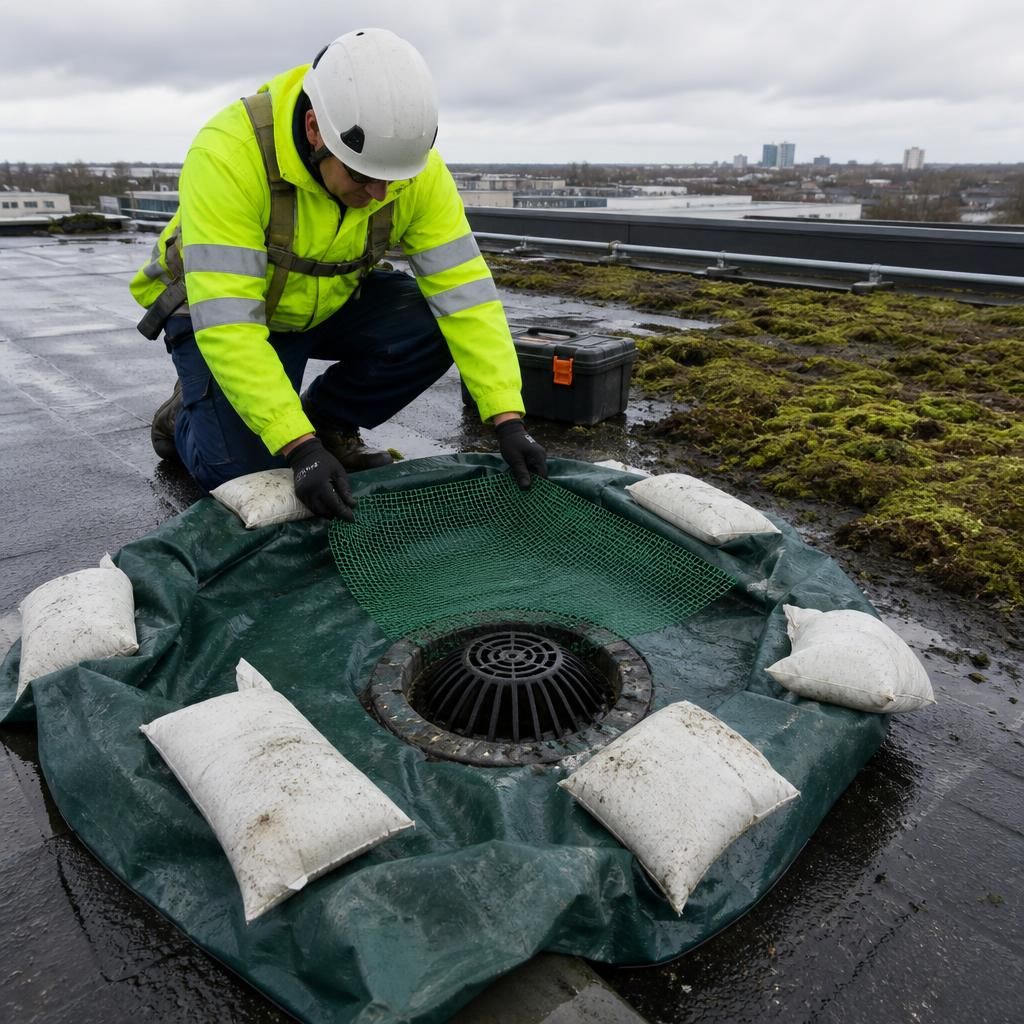
Runoff control is a key environmental precaution during commercial roof moss removal. Loose moss, silt and treatment residues are prevented from entering rainwater outlets, surface-water drains, planted areas or nearby watercourses, where they could cause pollution.
Before cleaning, we identify drainage routes and protect vulnerable outlets with suitable covers or containment measures. Debris is removed first, wastewater is controlled, and work is adapted or postponed if rain or wind could carry material beyond the designated area. No chemical solution or concentrated residue is intentionally released into surface-water drainage; any required disposal or discharge is arranged through an appropriate, compliant route.