
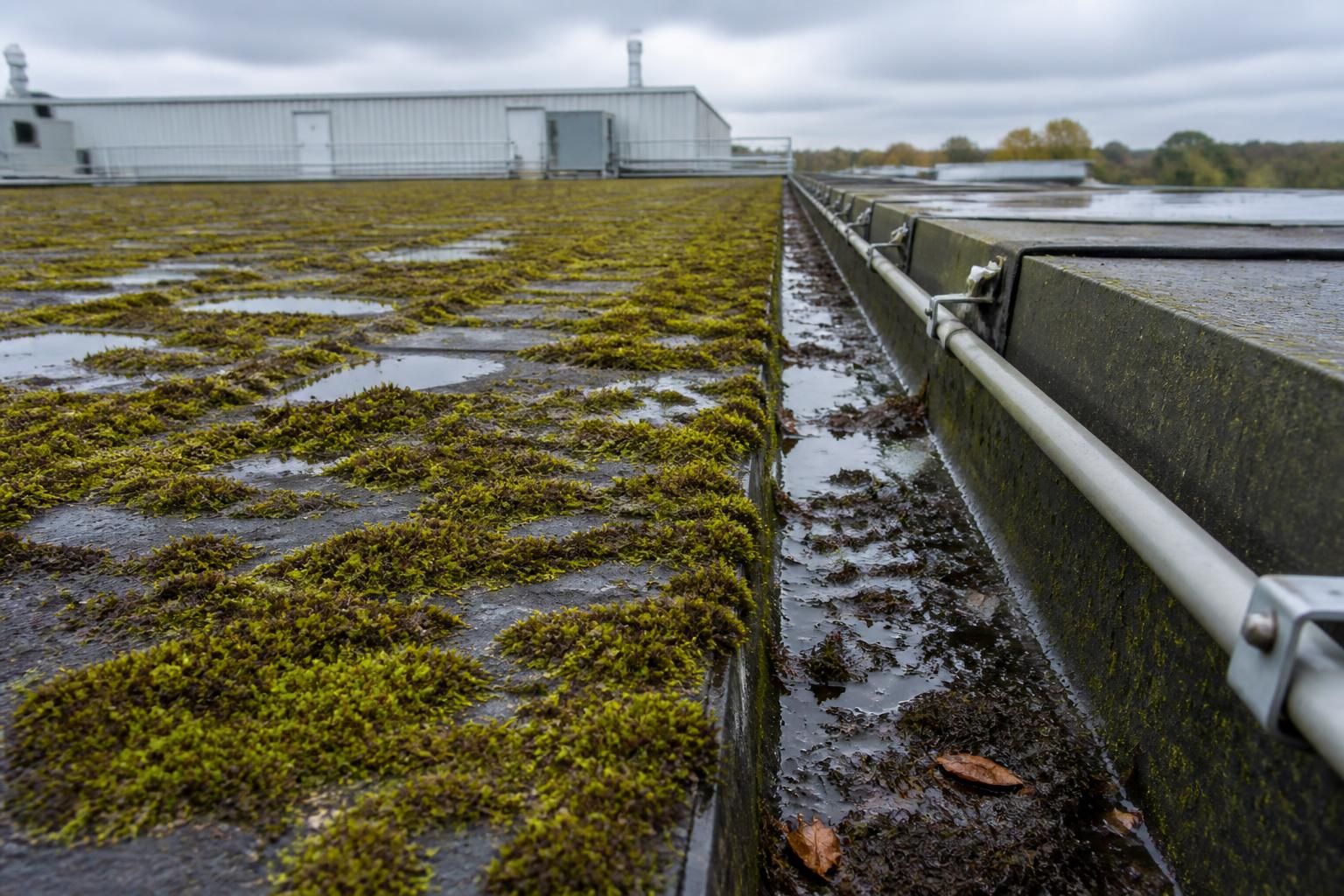
What are the signs that indicate a commercial roof needs moss removal?
A commercial roof may need moss removal when visible moss or algae is spreading across the surface, drainage channels are becoming blocked, or damp patches and staining are appearing inside the building. Loose roof coverings, damaged coatings and persistent moisture around roof edges are further warning signs that professional inspection and cleaning are needed.
A commercial roof needs moss removal when moss is established or spreading, particularly if it is holding moisture against the roof covering, obstructing drainage or contributing to visible deterioration. The clearest warning signs are moss growth across the roof, blocked gutters and outlets, damp-related staining, loose or damaged roof materials, and moisture entering the building. These symptoms should prompt a professional inspection rather than simply brushing or pressure washing the surface without assessing the roofing system.
1. Visible moss is spreading across the roof
Small isolated patches may develop in shaded or persistently damp areas, but spreading moss indicates that the roof is retaining enough moisture and organic matter to support continued growth. Thick cushions of moss can form along joints, laps, roof edges and around rooftop equipment. As the growth expands, it can conceal defects and make it more difficult to identify damaged coverings, open seams or failed seals.
Moss should not be assessed by appearance alone. A roof that looks heavily green may also contain algae or lichen, which require a suitable treatment approach. The type of roof covering, its condition and the extent of growth should be checked before any cleaning method is selected.
2. Gutters, valleys or drainage outlets are becoming blocked
Moss can break away from the roof and collect in gutters, valley channels, outlets and rainwater pipes. Organic debris may restrict the flow of water, causing it to overflow onto façades, walkways or areas around entrances. On flat commercial roofs, moss and debris can also contribute to standing water around outlets and drainage points.
Blocked drainage is a particularly important warning sign because prolonged ponding increases the moisture load on the roof and may expose joints, membranes and edge details to unnecessary stress. Overflowing gutters can also cause staining, damp masonry and damage to external finishes.
3. Persistent damp patches or staining are appearing inside the building
Water marks on ceilings, upper walls or internal plant-room areas may indicate a roof defect, although condensation, plumbing faults and failed flashing can create similar symptoms. Moss does not automatically cause every leak, but dense growth can retain moisture and conceal the points where water is entering.
Internal staining should be investigated promptly. A roof inspection should consider the location of the damp patch, the condition of the roof surface above it, drainage performance and details such as penetrations, parapets, skylights and perimeter seals. Cleaning alone will not resolve a leak caused by a failed membrane or damaged roof component.
4. Roof coverings, coatings or joints appear damaged
Raised, cracked or displaced tiles, deteriorating coatings, open laps, failed sealant and exposed fixings are signs that the roof needs closer assessment. Moss can grow into small gaps and retain water against vulnerable areas, making existing defects more difficult to manage.
On sheeted or coated roofs, growth may obscure corrosion, coating failure or movement around fixings. On tiled or slated roofs, it may conceal cracked or slipped units. Any loose material should be recorded before cleaning so that the work does not worsen an existing defect and so that repairs can be planned separately where necessary.
5. Moss is growing along roof edges, flashing or penetrations
Growth concentrated around parapets, abutments, flashings, rooflights, vents and service penetrations deserves particular attention. These areas contain transitions and joints where water ingress is more likely if detailing has deteriorated. Moss around a penetration does not prove that the seal has failed, but it can hide the condition of the surrounding material.
Roof edges also affect how water is directed away from the building. Moss and debris at these points can interfere with falls, edge drainage and gutter flow, increasing the risk of overflow during wet weather.
6. The roof remains damp or shaded for long periods
Persistent shade from nearby buildings, trees or rooftop structures can slow evaporation and create conditions in which moss, algae and lichen continue to return. Dampness may also result from poor drainage, blocked outlets, inadequate falls or localised ponding. If the surface remains wet after surrounding areas have dried, the underlying cause should be investigated rather than treating the growth as an isolated cosmetic issue.
Tree branches and leaf litter can add organic matter to the roof and gutters. Managing overhanging vegetation, improving drainage and removing accumulated debris may therefore be necessary alongside moss treatment.
7. The roof requires more frequent cleaning or maintenance
Rapid regrowth after previous cleaning can indicate that moisture, shade, organic debris or drainage problems have not been addressed. It may also suggest that the previous method removed visible growth without treating the conditions that support it. Recurring moss should lead to a review of the roof’s condition, drainage, surrounding environment and maintenance schedule.
For commercial premises, repeated regrowth can also interfere with planned inspections and increase the risk of debris reaching occupied areas, loading zones or pedestrian routes. A planned maintenance programme is generally more practical than waiting for heavy growth, blocked drainage or internal damp to develop.
What to do when these signs are present
Arrange a professional roof inspection if moss is extensive, drainage is obstructed, water is entering the building or roof materials appear loose or damaged. The inspection should identify the roof type, access requirements, fragile areas, drainage condition and any defects that need repair before cleaning. Photographs and a condition record can help compare the roof during future maintenance visits.
Moss removal should be carried out using a method suitable for the roofing material and the level of contamination. Mechanical removal, pressure washing, steam cleaning and biocidal or preventative treatments are not interchangeable: the appropriate approach depends on the roof construction, surface condition, access constraints and environmental controls required. Excessive pressure or aggressive scraping can damage coatings, dislodge coverings and force water into vulnerable details.
Before work begins, the contractor should establish safe access and suitable controls for operatives, building users, vehicles and surrounding property. Debris and run-off should be managed so that gutters, drainage systems, landscaped areas and public spaces are not contaminated. Where cleaning reveals cracked coverings, failed flashing or membrane damage, those findings should be reported rather than concealed by the completed clean.
Visible moss is therefore the most obvious sign, but it is not the only one. Blocked drainage, persistent damp, staining, roof deterioration, moisture around roof details, prolonged surface wetness and rapid regrowth all indicate that the roof may need professional moss removal and a wider condition assessment.
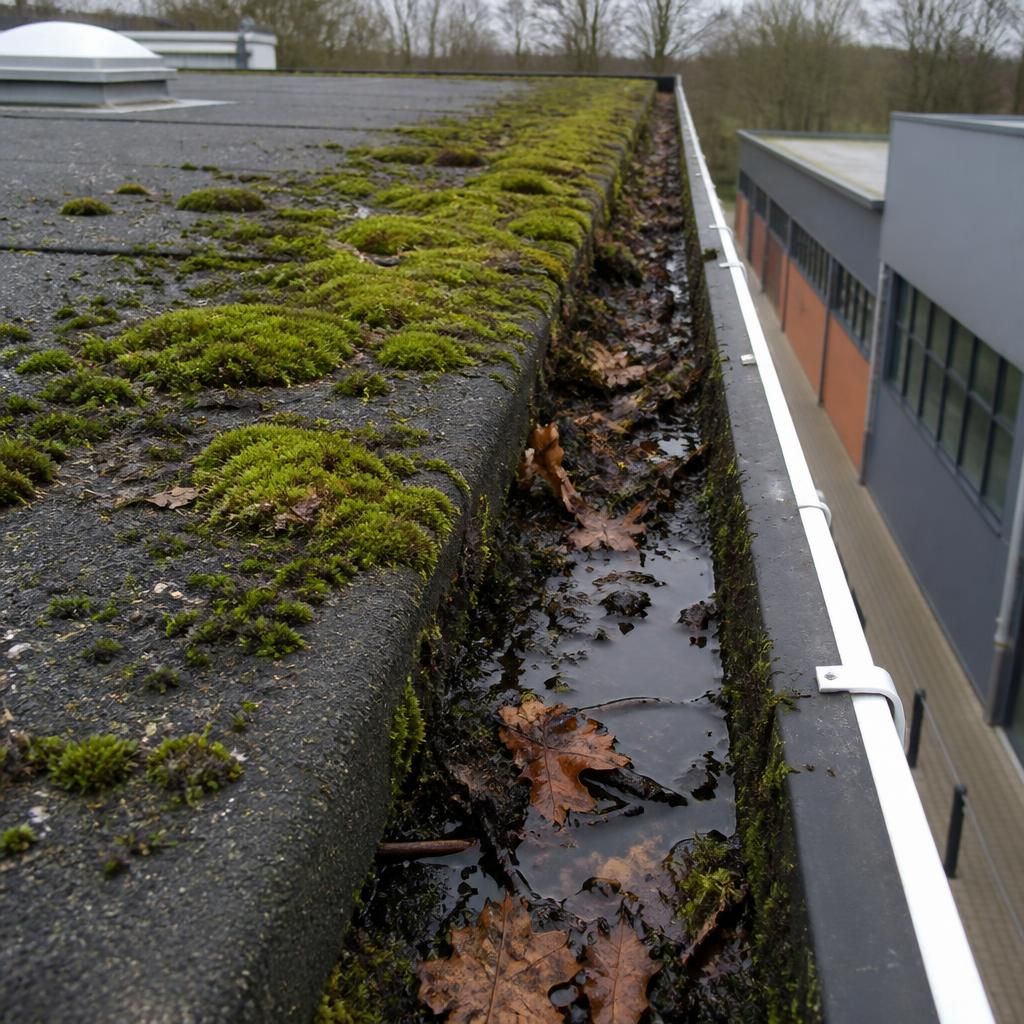
Blocked gutters, valleys and rainwater outlets are a significant sign that a commercial roof may need moss removal. Moss can break away and collect with leaves and other debris, restricting water flow and causing overflow onto façades, entrances and surrounding walkways.
Persistent standing water also keeps the roof surface damp and places additional stress on joints, membranes and edge details. If drainage channels are obstructed, arrange a professional inspection so the moss can be removed using a method suitable for the roofing material and the drainage system can be cleared safely.
Book a Commercial Roof Moss Removal Inspection
If your commercial roof shows spreading moss, blocked drainage, damp staining or damaged coverings, arrange a professional inspection with Encanto Exterior Cleaning. We can assess the roof condition, access requirements and suitable moss removal method before work begins.