
What are the best techniques to prevent moss from growing back on commercial roofs?
The most effective way to prevent moss returning on a commercial roof is to combine thorough moss removal with an appropriate post-cleaning treatment that neutralises remaining spores. Regular inspections, clear gutters and drainage channels, reduced shading from overhanging vegetation, and prompt removal of new growth will help maintain the roof in the long term.
The most effective way to prevent moss returning on a commercial roof is to combine complete moss removal with a suitable post-cleaning treatment and a planned maintenance programme. Cleaning removes established growth, while treatment addresses remaining organic residues and spores. Keeping the roof dry, well drained and free from avoidable shade then reduces the conditions moss needs to establish again.
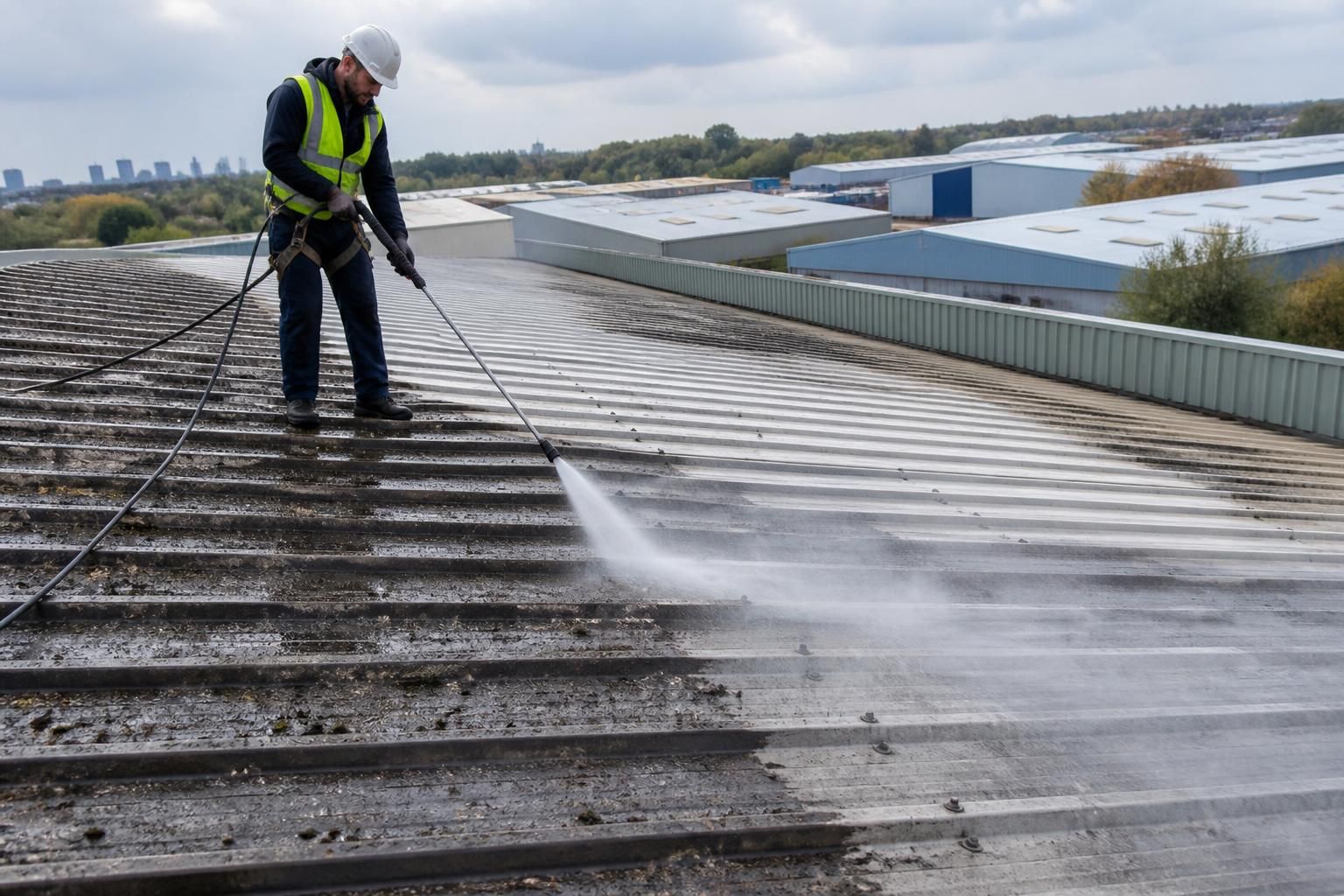
Remove all established moss before applying preventative treatment. Moss should not simply be treated over or left in thick mats. Accumulated growth holds moisture against the roof surface, obstructs drainage routes and can conceal damaged coverings, failed seals or displaced components. The removal method must be matched to the roofing material and its condition. On many commercial roofs, controlled low-pressure cleaning, soft washing or steam cleaning is preferable to aggressive pressure washing, which can strip protective finishes, force water beneath laps or damage ageing surfaces.
Loose moss may be removed mechanically where appropriate, followed by a carefully controlled clean to clear residual growth. The work should be carried out by trained operatives using suitable access equipment and fall protection rather than allowing unprotected foot traffic across fragile roof areas. Before cleaning starts, the roof should be assessed for its covering, pitch, drainage arrangements, access requirements and any areas that could be damaged by water or cleaning products.
Apply a compatible post-cleaning treatment. Once the roof has been cleaned, a suitable biocidal or fungicidal treatment can help control microscopic organic residues that are not removed during the initial process. This is an important part of prevention, but it is not a permanent barrier. Its effectiveness depends on the product, the roof material, the degree of contamination and the weather conditions during application.
Treatments should always be selected in accordance with the roofing manufacturer’s guidance and applied at the correct concentration and coverage. The contractor should also consider nearby watercourses, planted areas, rainwater systems and drainage outlets. Run-off must be managed so that cleaning residues and treatment products do not enter areas where they could cause pollution or damage vegetation. A treatment should never be used as a substitute for proper cleaning, repairs or regular inspections.
Improve drainage and remove moisture traps. Moss is more likely to return where water remains on or near the roof. Gutters, outlets, downpipes, valleys, channels and gullies should be cleared as part of the maintenance plan, particularly where moss or leaf debris has already been found. Blocked drainage can keep roof edges damp and may allow water to back up beneath coverings or into the building.
Any areas of ponding should be investigated rather than repeatedly cleaned. The cause may be blocked outlets, inadequate falls, damaged drainage components or a defect in the roof system. Cleaning alone will not prevent regrowth if the underlying moisture problem remains.
Reduce unnecessary shade and organic debris. Overhanging branches can restrict airflow, reduce drying and deposit leaves or other organic matter onto the roof. Where safe and permitted, suitable vegetation management around the building can reduce these conditions. Trees should not be cut back without considering ownership, planning requirements, nesting wildlife and the risk of debris falling onto the roof.
Nearby construction activity, industrial dust and deposits from surrounding vegetation can also contribute to surface contamination. Roof areas, parapets and rainwater goods should be checked after work on adjacent buildings or during periods when airborne debris is likely to accumulate.
Repair defects that allow water to remain on the roof. Damaged sheets, open joints, failed sealants, defective flashings and deteriorated coatings can create damp points where moss becomes established. During a post-cleaning inspection, newly exposed defects should be recorded and referred to a competent roofing professional where repair work is required. Cleaning should not conceal or postpone essential roof maintenance.
Where a roof has a protective coating, the condition of that coating should be considered before any cleaning or treatment. In some cases, a compatible repair or recoating programme may provide additional protection, but products must be specified for the particular roof system. Incompatible chemicals or coatings can reduce the service life of the material and may affect manufacturer warranties.
Use preventative metal detailing only where it is suitable. Copper or zinc strips are sometimes used near roof ridges to release small amounts of metal during rainfall, which can discourage moss and algae on some roof coverings. They are not suitable for every commercial roof, do not replace cleaning and may create concerns about metal-containing run-off. Their use should therefore be assessed against the roof material, drainage arrangement, environmental requirements and manufacturer’s recommendations.
Schedule inspections rather than waiting for visible regrowth. A commercial roof should be checked at an interval appropriate to its location, covering, age, surrounding vegetation and exposure to debris. Inspections are particularly useful after winter, periods of heavy rainfall and nearby building work. Early patches can often be dealt with more safely and efficiently than thick growth that has spread across the roof and into drainage channels.
- Record the condition of the roof before and after cleaning.
- Check gutters, outlets, valleys, parapets and roof edges for retained moisture or debris.
- Look for small areas of regrowth, damaged coverings and failed details.
- Remove new growth promptly using a method suitable for the roof material.
- Review nearby trees, access arrangements and any changes to the building that may affect drainage or shading.
The right maintenance frequency will vary between properties. A roof beneath trees or in a shaded, damp setting may need more frequent attention than an exposed roof with clear drainage. Keeping inspection records allows the maintenance plan to be adjusted according to observed conditions rather than relying on a fixed schedule.
For commercial premises, the most dependable approach is therefore a documented cycle of roof assessment, controlled moss removal, compatible treatment, drainage clearance, defect reporting and follow-up inspection. This manages the causes of regrowth while protecting the roofing material, building occupants, surrounding environment and ongoing operation of the site.
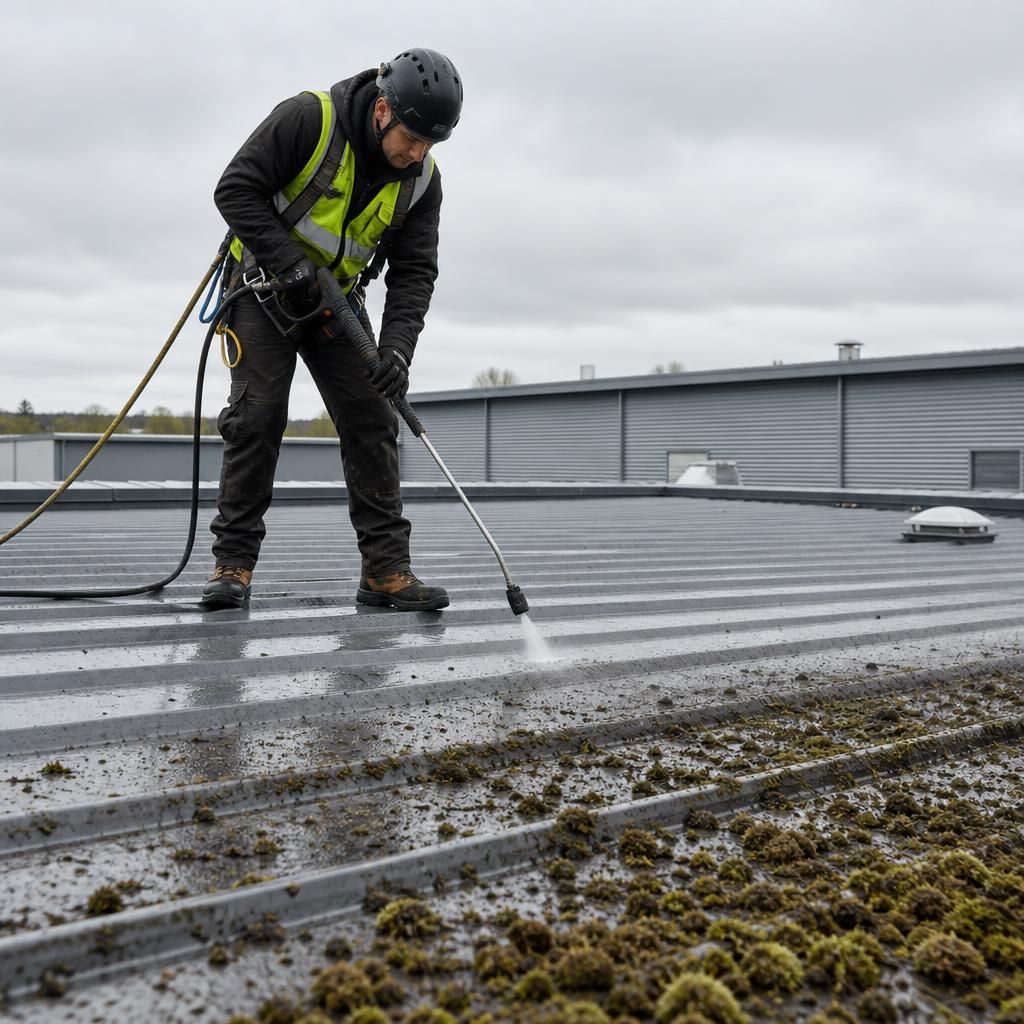
The most reliable way to prevent moss returning on a commercial roof is to combine complete moss removal with a compatible post-cleaning treatment and planned maintenance. Treatment can help control remaining organic residues, but it will not compensate for blocked drainage, persistent shade or defects that keep the roof damp.
After cleaning, inspect gutters, outlets, valleys and roof edges for retained debris or standing water. Clear drainage routes and investigate ponding rather than repeatedly treating the surface. Overhanging vegetation should also be managed where permitted, as branches can reduce drying and deposit organic matter.
Schedule follow-up inspections according to the roof’s material, age, exposure and surrounding conditions. Early regrowth can usually be removed using a method suited to the roof covering, reducing the risk of thick moss mats obstructing drainage or concealing damage. Record findings after each visit so the maintenance plan reflects the roof’s actual condition.