
How does the service provider ensure the safety of the roofing material during moss removal?
Before removing moss, the roof is inspected to identify its material, condition and vulnerable areas. Moss is then removed using controlled, non-abrasive techniques and suitable access equipment, avoiding excessive pressure or scraping that could lift tiles, damage coatings or dislodge roof components.
The roofing material is protected during moss removal through a planned process that matches the cleaning method, pressure level and access equipment to the roof’s construction and condition. Before work begins, the roof is inspected for its covering, age, existing damage, previous coatings, fragile areas and components such as rooflights, flashings, vents and drainage outlets. This assessment determines what can be cleaned safely and which areas require additional precautions.
Removing moss safely is not simply a matter of applying pressure until the growth comes away. Moss can work beneath overlapping tiles, retain moisture against membranes and conceal cracked or displaced materials. Excessive scraping or pressure may lift tiles, remove protective coatings, force water beneath joints or damage seals. The objective is therefore to remove the growth while applying no more force, water or treatment than the roof can tolerate.
Before cleaning, the team identifies vulnerable areas and records visible defects where appropriate. Cracked tiles, loose sheets, deteriorated pointing, exposed membrane, corrosion and damaged flashings may require repair by the relevant roofing contractor before moss removal proceeds. Rooflights and other fragile surfaces are treated as no-go areas unless a suitable method has been specifically agreed. This prevents pre-existing defects from being mistaken for cleaning damage and reduces the risk of avoidable deterioration.
Access is planned to minimise loading on the roof. Suitable access equipment, edge protection and designated working routes are used instead of relying on uncontrolled movement across the roof covering. Operatives avoid standing directly on fragile tiles, rooflights or unsupported sections. Where the roof design, height or condition makes access unsuitable, the work method is reviewed rather than forcing operatives to work from unsafe positions.
The removal technique is selected according to the material:
- Roof tiles: Moss is generally loosened carefully, with controlled hand tools or low-impact equipment suited to the tile type. Tiles are not levered aggressively, and care is taken not to disturb overlaps, ridges, verges or pointing.
- Metal roofs and cladding: Cleaning is controlled to avoid scratching protective finishes, damaging coatings or driving water into laps and fixings. The compatibility of any treatment with the coating and substrate is checked before application.
- Slate and other fragile coverings: The method is adapted to the condition and fixing system. Direct pressure, harsh scraping and unnecessary foot traffic are avoided because individual slates can crack or slip without obvious warning.
- Coated or sealed roofs: The cleaning approach is kept compatible with the existing finish. Abrasive methods or unsuitable chemicals can strip the coating and expose the substrate, so they are not used where they could compromise the roof’s protective layer.
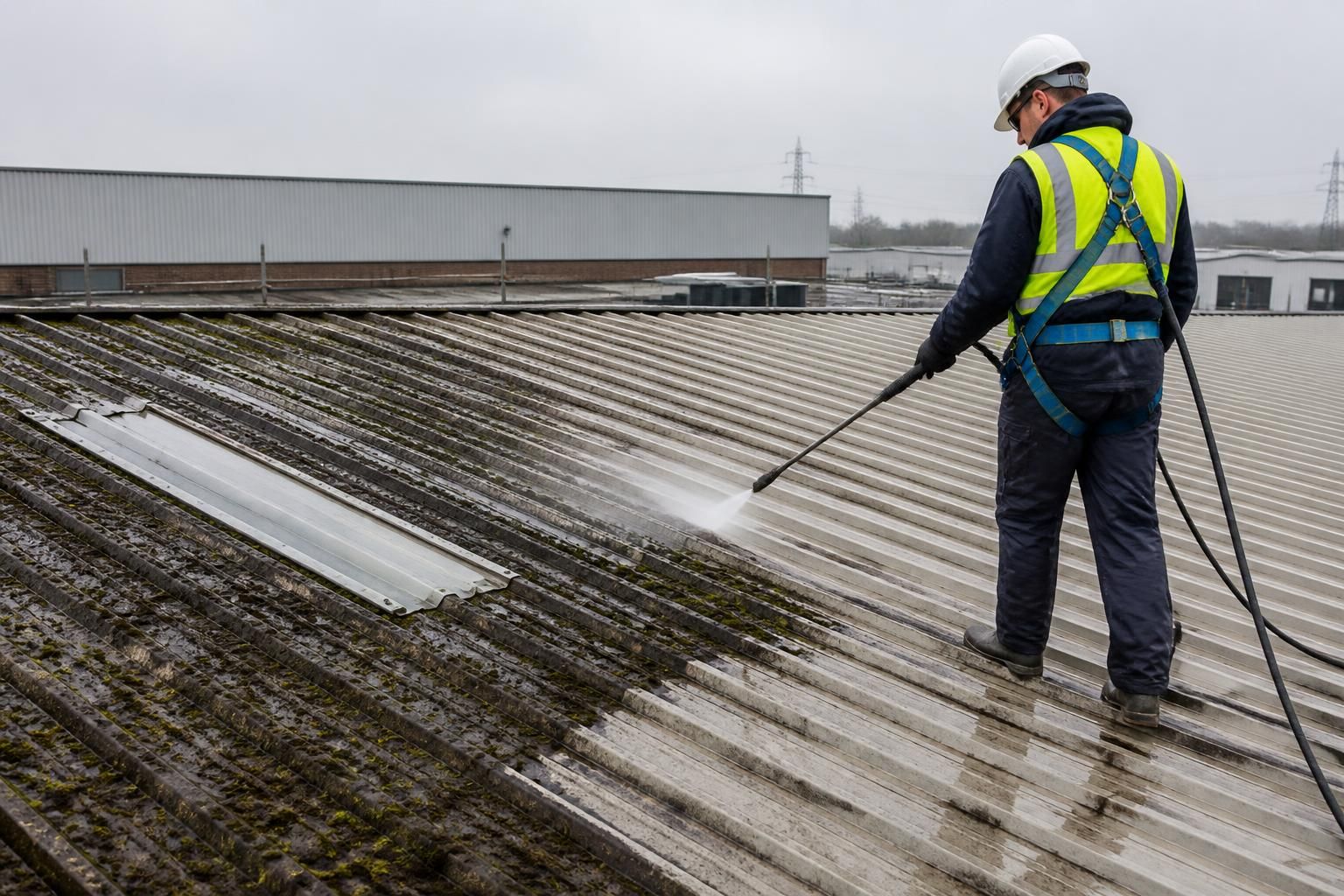
Pressure washing is not automatically suitable for every commercial roof. Where it is appropriate, pressure is kept controlled and directed to avoid forcing water beneath tiles, sheets, flashings or seals. High-pressure cleaning is avoided on vulnerable, aged or poorly bonded surfaces. Steam cleaning or other lower-impact methods may be considered where they provide effective moss removal with less mechanical stress, subject to the roof material and site conditions.
Any treatment used to slow regrowth is selected with the roof covering, surrounding surfaces and drainage system in mind. It is applied at the correct strength and in a controlled manner rather than being allowed to pool or run unchecked. The team protects adjacent façades, vehicles, landscaping and water-sensitive areas from contaminated runoff. Gutters, outlets and downpipes are checked and cleared as necessary so removed moss does not create blockages or place additional weight on the drainage system.
Weather conditions also affect material safety. Work may be postponed where rain, frost, high winds or extreme temperatures could make access unsafe, reduce treatment performance or increase the risk of water entering vulnerable parts of the roof. A dry, stable working environment provides better control over the equipment and allows the roof to be inspected properly as sections are completed.
Cleaning is carried out progressively rather than treating the entire roof without review. This enables the operative to check how the material is responding and adjust the technique if tiles move, a coating begins to fail, or an unexpected defect becomes visible. Areas around ridges, valleys, roof edges, penetrations and drainage points receive particular attention because they are more likely to contain trapped moss or vulnerable joints.
After removal, the roof is inspected again for displaced coverings, exposed defects, damaged accessories and remaining deposits. Waste moss is cleared from the roof and surrounding areas, while gutters and drainage routes are checked to reduce the chance of blockages. Any condition that falls outside the cleaning scope is reported clearly, with repair or further investigation recommended where necessary.
This approach protects the roofing material by combining pre-work assessment, controlled removal, compatible treatments, safe access and a post-clean inspection. It also recognises that moss removal cannot correct an underlying roofing defect. If the covering is already failing, the safest course may be to limit cleaning, isolate the affected area and arrange a roofing assessment before further work is undertaken.
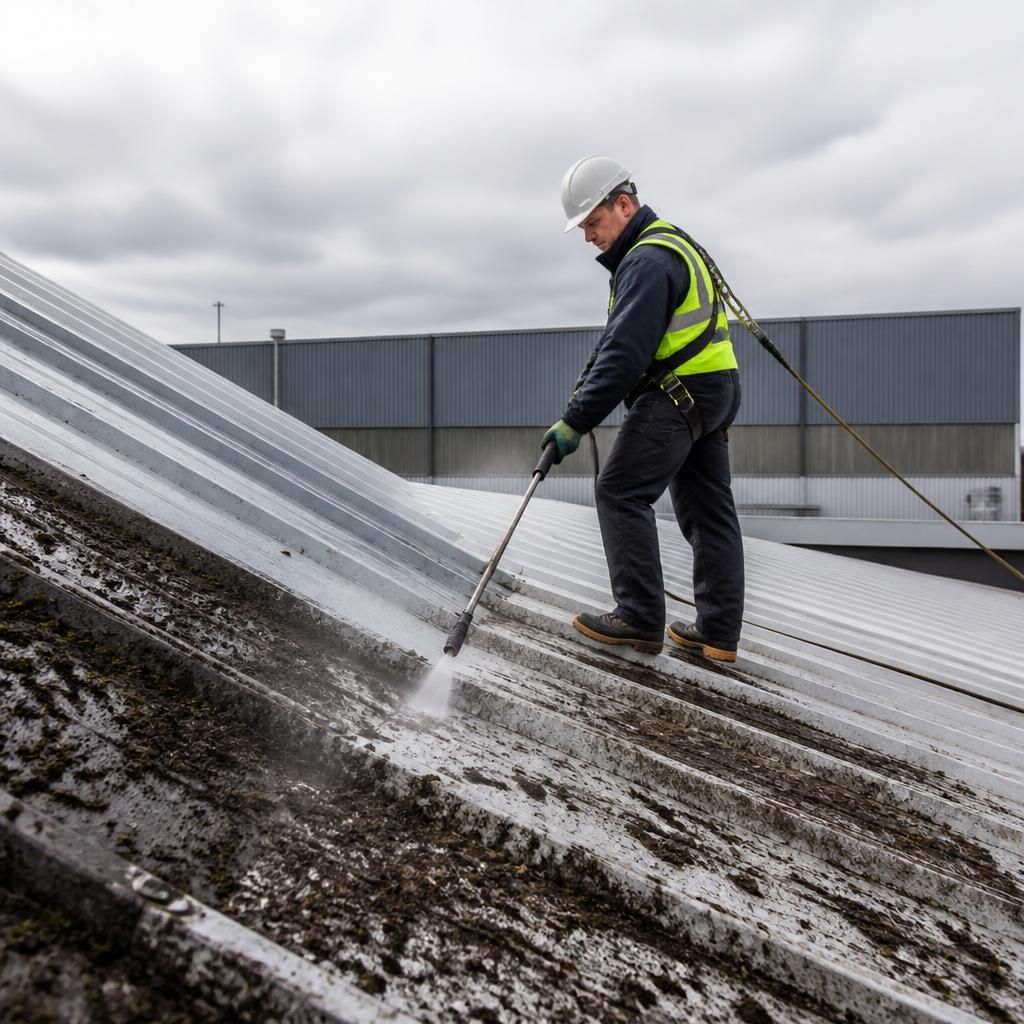
Roofing material is protected during moss removal by matching the cleaning method and access arrangements to the roof’s construction and condition. Before work starts, the roof is checked for loose or cracked tiles, damaged coatings, fragile rooflights, exposed membranes, defective flashings and other areas that could deteriorate under pressure or foot traffic.
Moss is then loosened using controlled, non-abrasive techniques rather than aggressive scraping or unsuitable high-pressure washing. Operatives use planned access routes and avoid standing on fragile coverings. Cleaning is carried out progressively so the roof can be checked as each section is completed, allowing the method to be adjusted if a tile moves, a coating begins to fail or a previously hidden defect becomes visible.