
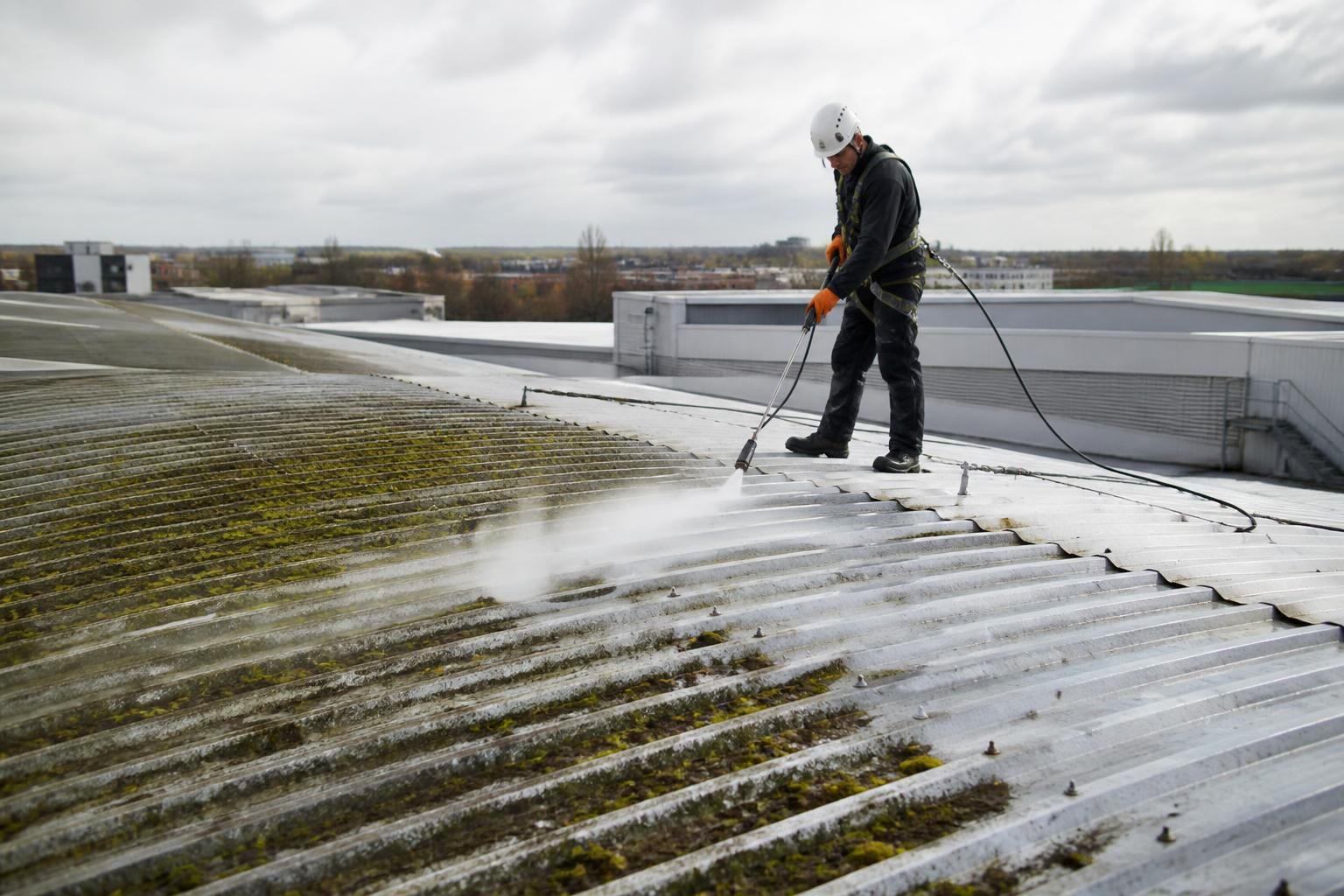
How does roof moss removal impact the longevity of roofing materials?
Roof moss removal can extend the serviceable life of roofing materials by reducing moisture retention, root penetration, blocked drainage and surface deterioration. When carried out using a method suited to the roof’s condition and material, it helps protect tiles, membranes, coatings and fixings from avoidable damage and can reduce the need for premature repairs or replacement.
Roof moss removal can extend the serviceable life of commercial roofing materials by reducing prolonged moisture retention, root penetration, blocked drainage and surface deterioration. Moss does not usually destroy a roof immediately, but an established growth can keep surfaces damp, lift or displace some coverings, restrict water flow and conceal defects. Removing it with a method suited to the roof material and its condition helps prevent avoidable damage and allows repairs to be identified at an earlier stage.
The effect on longevity depends on the roofing system, the extent of the moss growth, the condition of the roof before cleaning and the way removal is carried out. A sound roof that is cleaned carefully and maintained afterwards is more likely to retain its protective performance than a roof where moss is repeatedly scraped away, pressure washed aggressively or left until water ingress has already occurred.
How moss contributes to roof deterioration
Moss behaves like a moisture-retaining layer. Its structure holds rainwater against the roof surface and slows drying, particularly in shaded areas or where air circulation is restricted. Repeated wetting can increase the risk of staining, biological growth and surface degradation. In cold conditions, retained water may freeze and expand within small cracks, porous surfaces or weakened joints, gradually widening existing defects.
Moss can also grow around laps, joints, fixings and the edges of tiles or sheets. As the growth thickens, it may lift coverings slightly or create points where wind-driven rain can enter. On pitched roofs, loose moss can wash into valleys, gutters, outlets and rainwater pipes, restricting drainage. Standing water and overflowing gutters place additional stress on roof edges, fascias, cladding and the building fabric below.
Roots and attached organic matter can work into small imperfections in tiles, mortar joints and coatings. This does not mean that every roof with moss has suffered structural damage, but it does make defects more difficult to see and can accelerate deterioration where the material is already weathered.
Effects on common commercial roofing materials
- Concrete and clay tiles: Moss can retain moisture in the tile surface and around overlapping areas. On weathered tiles, this may contribute to surface erosion, cracking or frost-related damage. Moss may also conceal slipped, broken or poorly bedded tiles, so removal provides an opportunity to inspect the covering and its interfaces.
- Natural slate: Slate is durable, but individual slates, fixings and laps can still be affected by persistent dampness and organic build-up. Mechanical force must be controlled because brittle or weakened slates may crack during careless removal. A condition assessment is particularly important on older roofs.
- Metal roofing: Moss is less likely to root into intact metal than into porous coverings, but trapped moisture and debris can contribute to corrosion at cut edges, laps, fasteners, joints and areas where protective coatings have failed. Cleaning should avoid damaging paint finishes, sealants and corrosion protection.
- Asphalt, felt and other membrane systems: Moss and debris can hold water against the membrane and obscure blisters, open seams, punctures or failed detailing. Aggressive scraping or unsuitable pressure can damage the waterproof layer, so removal should be controlled and followed by an inspection of seams, penetrations and perimeter details.
- Roof coatings: Moss can grow over coatings that are already chalking, cracked or locally detached. Removing the growth helps reveal the actual condition of the coating, but it will not restore a failed finish. Areas with coating loss may require preparation and remedial work rather than repeated cleaning alone.
How removal protects the roof
Careful moss removal reduces the time that water remains in contact with the roof and restores access to drainage channels. It also removes organic material that can hold dirt, seeds and further growth against the surface. Once the roof is clear, defects such as cracked tiles, open laps, failed sealant, corroded fixings, damaged flashings and blocked outlets can be recorded and addressed before they develop into more extensive problems.
The work can therefore protect longevity in two ways: it reduces a direct source of moisture-related wear, and it improves the visibility of maintenance issues. Early remedial action is generally less disruptive than dealing with widespread water ingress, damaged insulation, internal staining or deterioration to the supporting structure.
Why the removal method matters
The cleaning method should be selected after considering the roof covering, age, surface condition, pitch, access arrangements and the location of vulnerable details. Manual removal may be appropriate for established growth on some tiled roofs, while low-pressure washing, steam cleaning or other controlled treatments may be suitable in different circumstances. The objective is to remove moss without dislodging coverings, stripping protective finishes, opening joints or forcing water beneath laps and flashings.
High pressure is not automatically more effective. On aged tiles it can enlarge existing cracks, remove the weathered surface or drive water into the roof construction. On membranes and coated metal, it may damage the waterproofing or finish. Uncontrolled scraping can have similar effects. A competent contractor should use controlled equipment, suitable access methods and collection procedures, rather than applying the same approach to every roof.
Before cleaning, the roof should be assessed for fragile areas, loose coverings, fragile rooflights, plant, cables, outlets and signs of water ingress. Where the roof is too fragile or unsafe to walk on, access equipment and controlled working positions may be needed to reduce both personnel risk and the risk of material damage.
Removal does not repair existing roof defects
Moss removal can slow avoidable deterioration, but it cannot reverse cracked tiles, corroded metal, failed membranes, weakened mortar or damaged structural components. Cleaning may expose these issues, which should be documented and referred for appropriate repair. Painting over defects or applying a treatment without resolving trapped moisture and failed detailing can conceal the problem rather than extend the roof’s life.
After removal, the roof should be checked for displaced or broken coverings, damaged flashings, open seams, blocked rainwater goods and areas where water is not draining correctly. Photographic records and a clear condition report are useful for commercial property managers because they support planned maintenance and provide a reference for future inspections.
Long-term protection after cleaning
The longevity benefit is greatest when moss removal forms part of a planned maintenance programme. Gutters, valleys, outlets and downpipes should be kept clear, overhanging vegetation should be managed where appropriate, and shaded or persistently damp areas should be monitored. Follow-up inspections can identify early regrowth and defects before they become costly.
Preventative treatments may be suitable for some roof types, but they should be compatible with the covering, drainage arrangements and surrounding environment. They should not be presented as a permanent substitute for inspection and cleaning. The expected interval between services depends on local exposure, shade, tree cover, roof orientation, material condition and the level of contamination around the building.
For commercial premises, the practical result of timely, properly controlled moss removal is a roof that remains easier to inspect, drains more effectively and is less exposed to persistent dampness. It cannot guarantee a particular lifespan, especially where the roof is already near the end of its design service period, but it can reduce preventable wear and support informed decisions about repair, refurbishment or replacement.
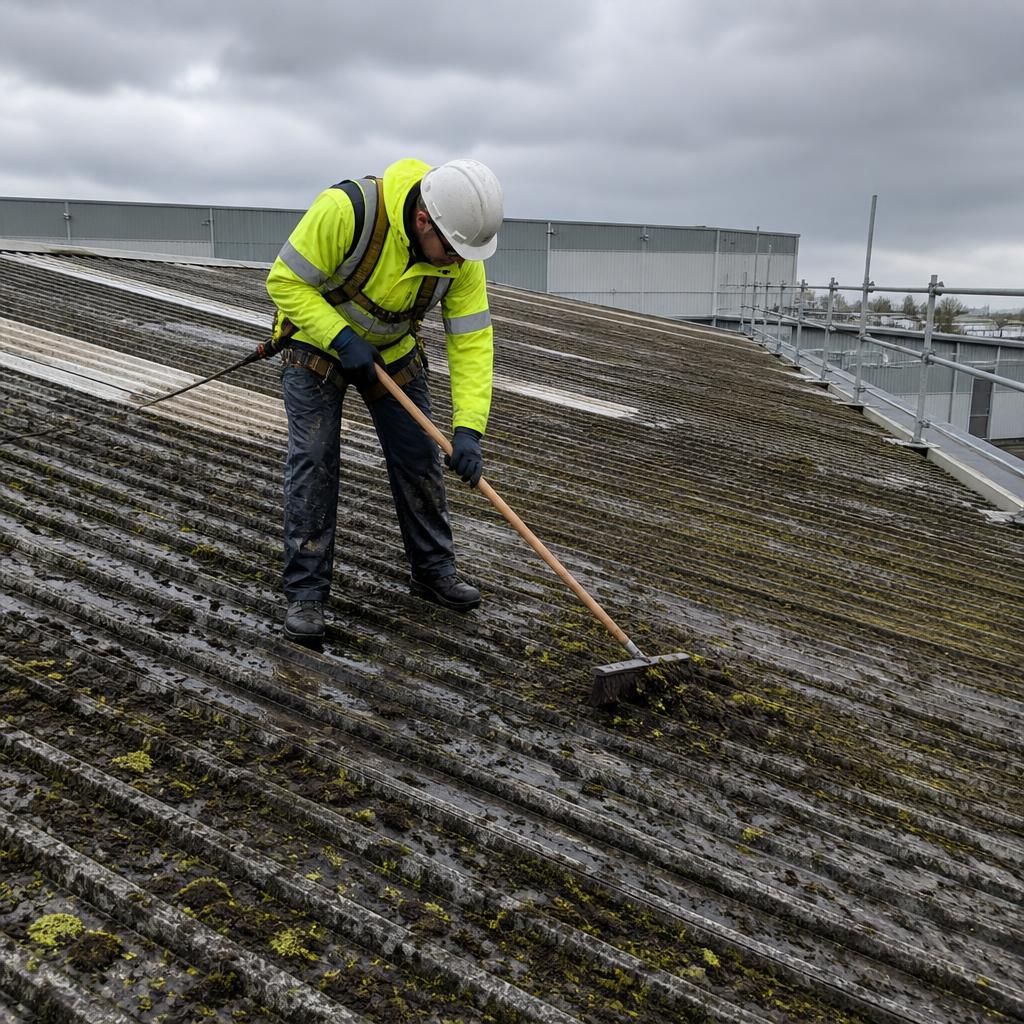
Roof moss removal can extend the serviceable life of roofing materials by reducing prolonged dampness, blocked drainage and the spread of organic growth. The method used is important: controlled manual removal, low-pressure cleaning or steam cleaning should be selected according to the roof covering, its age and its condition.
Avoiding excessive pressure and force helps protect tiles, slates, membranes, coatings, sealants and fixings from damage. Once the moss has been removed, the roof can be inspected for cracked or displaced coverings, open seams, corrosion and blocked outlets. Identifying these defects early allows planned repairs before moisture-related deterioration affects the wider roof construction.