
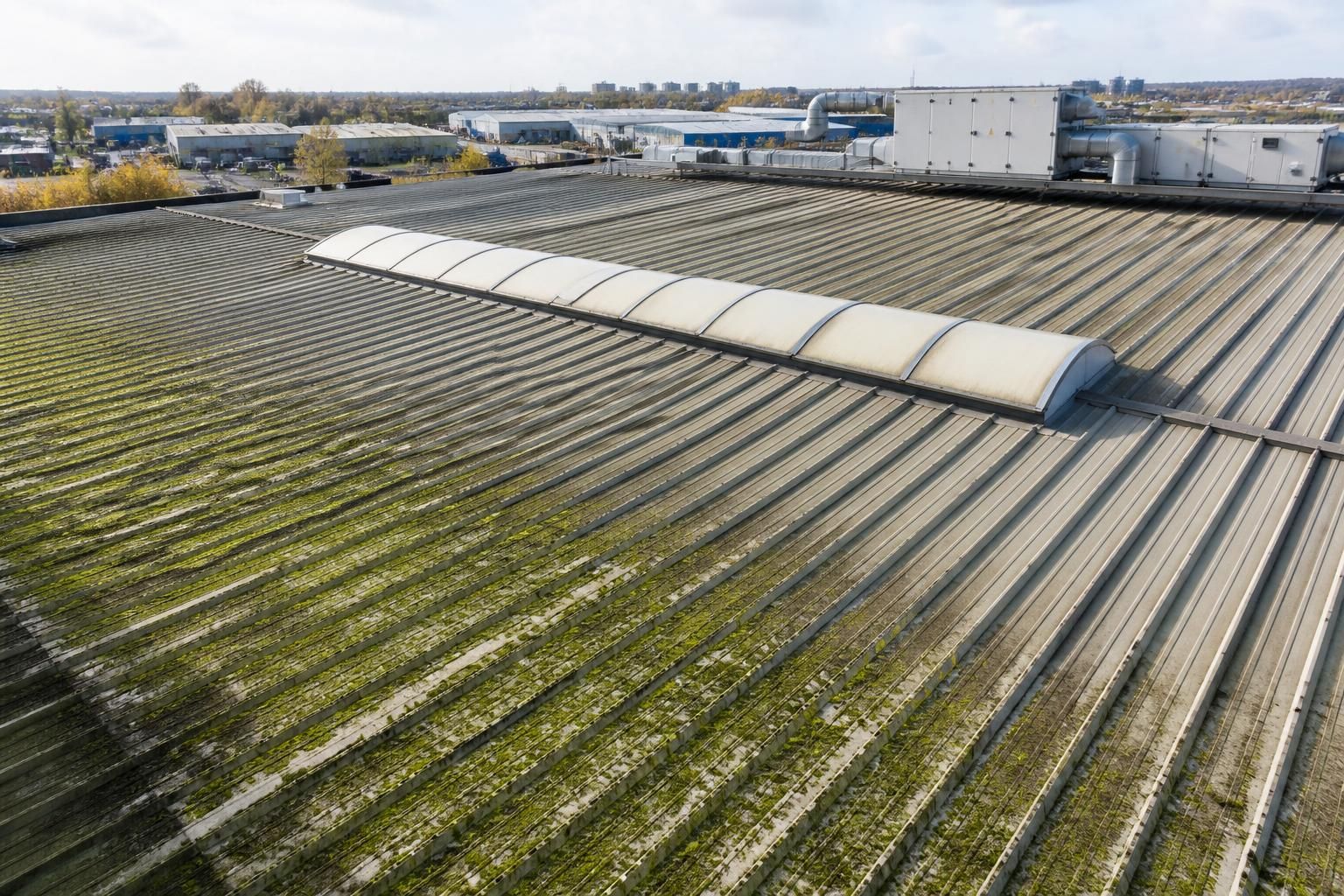
How does moss removal affect the energy efficiency of commercial roofs?
Moss can reduce commercial roof energy efficiency by retaining moisture, shading the roof surface and contributing to blocked drainage, although its effect varies with the roofing system and insulation. Professional moss removal helps the roof shed water and receive its intended solar exposure, while also reducing moisture-related deterioration that can undermine thermal performance over time.
Moss removal can improve the energy efficiency of a commercial roof mainly by preventing moisture retention, protecting the roof covering and helping the system perform as designed. Moss does not usually act as a significant insulating layer; its impact is indirect. Where moss holds water against the roof, blocks drainage or contributes to deterioration, removing it can help preserve the roof’s thermal performance and reduce avoidable maintenance-related costs.
Moisture is the main energy-efficiency concern. Moss and associated organic matter can retain water against roof tiles, membranes, coatings and joints. On a roof with damaged insulation, failed detailing or water ingress, this moisture can increase heat transfer through the building envelope. Damp insulation is generally less effective than dry insulation, so the building may require more heating to maintain internal temperatures in colder weather. In warmer conditions, moisture-related deterioration can also contribute to unwanted heat gain and greater demand on cooling systems.
Removal does not restore wet or damaged insulation by itself. It removes one source of moisture and makes it easier to identify leaks, ponding and defective roof details. Where inspection shows that insulation has become saturated or the roof build-up has been compromised, separate remedial work may be needed before any energy improvement can be achieved.
Clear drainage helps the roof manage water properly. Moss can collect around outlets, gutters, valleys, channels and roof edges, particularly where leaves and other debris are already present. Restricted drainage increases the time that water remains on the roof and can contribute to ponding, leaks, biological growth and deterioration of protective finishes. Keeping the roof surface and drainage routes clear allows rainfall to discharge as intended and reduces the likelihood of moisture reaching the insulation or internal areas.
Roof surface condition also affects solar heat gain. On some commercial roofs, a healthy, clean reflective finish helps limit the amount of solar radiation absorbed by the roof. Moss, dirt and organic deposits can obscure that finish and may retain additional moisture at the surface. However, the effect depends on the roof’s colour, coating, construction, orientation and the building’s insulation and ventilation. Moss removal should therefore be regarded as part of roof maintenance, not as a substitute for a certified cool-roof coating or an insulation upgrade.
Removing moss can protect energy performance over the longer term by reducing conditions that accelerate roof deterioration. Persistent moisture can contribute to corrosion of metal components, breakdown of coatings, degradation of joints and movement of roof materials during freeze-thaw conditions. As defects develop, the roof may become less weather-tight and the building envelope may lose thermal performance. Early cleaning, followed by appropriate repairs and maintenance, helps retain the original performance of the roof system.
The direct energy saving from moss removal may be limited where the roof is sound, well insulated and has only light surface growth. A clean roof will not compensate for inadequate insulation, air leakage, poor mechanical ventilation or inefficient heating and cooling equipment. Conversely, where moss is associated with blocked drainage, damp insulation or deteriorating roof coverings, removal can form an important part of a wider programme to control building energy use.
A sensible assessment should consider:
- the roofing material and whether it is designed to be cleaned by pressure washing, soft washing or steam cleaning;
- the condition and moisture content of the insulation and roof deck;
- blocked outlets, gutters, valleys, channels and downpipes;
- ponding water, failed laps, open joints, cracked coatings and areas of corrosion;
- the roof’s colour, reflectivity, exposure and orientation;
- internal signs of water ingress, including staining, condensation or localised temperature differences; and
- the roof’s access requirements and the risk of damage from unsuitable equipment or excessive pressure.
Professional moss removal should be carried out using a method appropriate to the roof system, with care taken around membranes, coatings, flashings, seals and drainage fittings. Removing the growth, collecting loosened debris and clearing the drainage system are important parts of the work. A follow-up inspection can then identify defects that were hidden by the moss and establish whether repairs, treatment against regrowth or insulation investigation is required.
For commercial premises, the most reliable way to verify an energy-related benefit is to compare roof condition, moisture findings and building energy records before and after remedial work, while accounting for occupancy, weather and changes to heating or cooling operation. In practice, the primary benefits are often the prevention of moisture-related thermal losses, protection of the roof asset and reduced risk of unplanned repairs. Moss removal supports energy efficiency when it is integrated with drainage maintenance, roof inspections and any necessary fabric repairs.
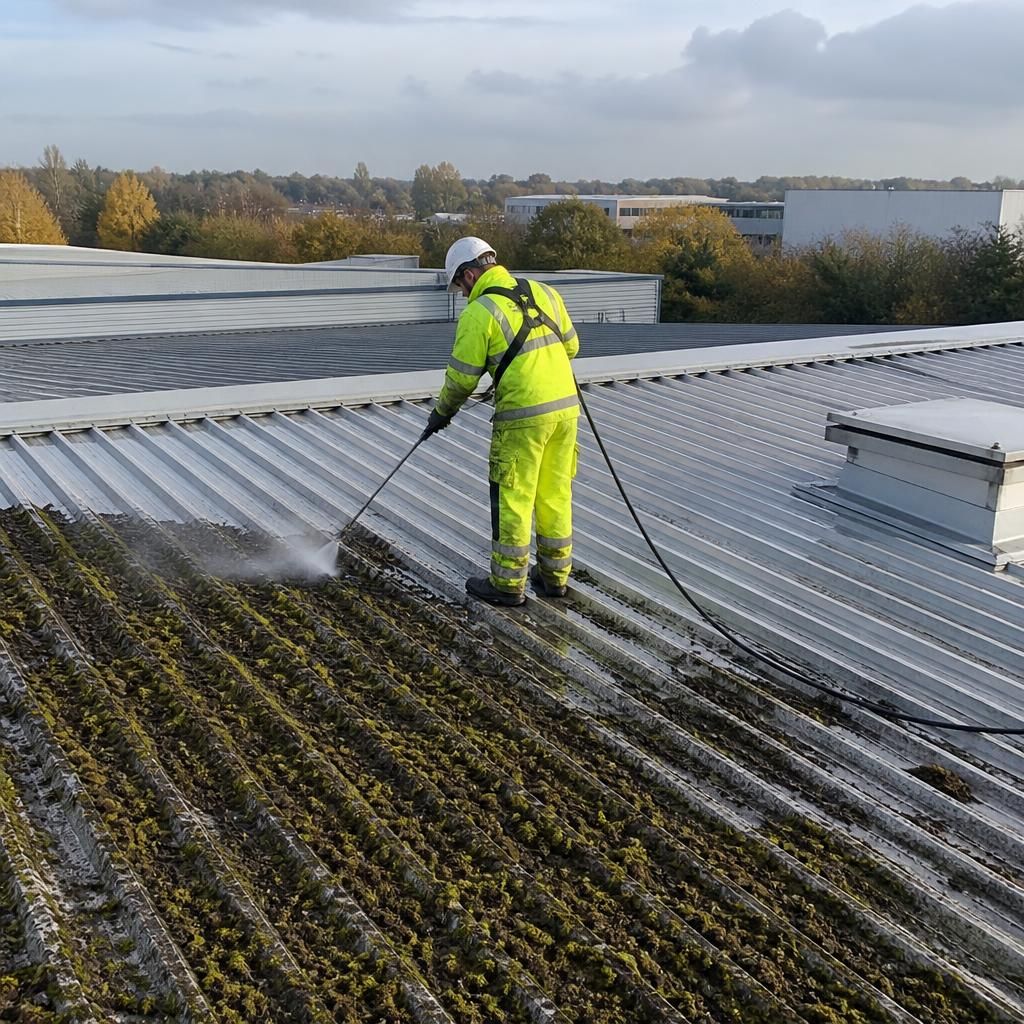
Moss removal can support commercial roof energy efficiency by reducing moisture retention against the roof covering and drainage details. When moss holds water around joints, outlets or damaged areas, it increases the risk of leaks and damp insulation, which transfers heat more readily than dry insulation.
Removing the growth and clearing associated debris helps the roof shed rainwater as intended and makes defects easier to identify. It does not, however, restore saturated insulation or improve inadequate insulation by itself. Any damp or damaged roof build-up should be assessed and repaired separately to achieve a lasting improvement in building energy performance.