
How often should commercial roofs be cleaned?
Commercial roofs should usually be professionally inspected at least annually and cleaned when inspection identifies moss, algae, dirt, bird fouling, blocked drainage or other contamination. Buildings in shaded, tree-lined, coastal or heavily polluted locations may need more frequent cleaning, while a sound roof in a relatively clean environment may require less frequent work.
Commercial roofs should be professionally inspected at least annually and cleaned when the inspection identifies moss, algae, dirt, bird fouling, blocked drainage or other contamination. In practice, many commercial buildings benefit from a planned cleaning review each year, although the interval between actual cleaning visits depends on the roof material, surrounding environment, drainage design and level of contamination.
A suitable cleaning schedule is condition-based rather than calendar-based. Cleaning too frequently can add unnecessary cost and activity on the roof, while leaving contamination in place for too long can contribute to blocked outlets, moisture retention, surface deterioration and avoidable maintenance problems. The most reliable approach is to combine routine inspections with cleaning when contamination begins to affect the roof’s performance, appearance or safe maintenance.
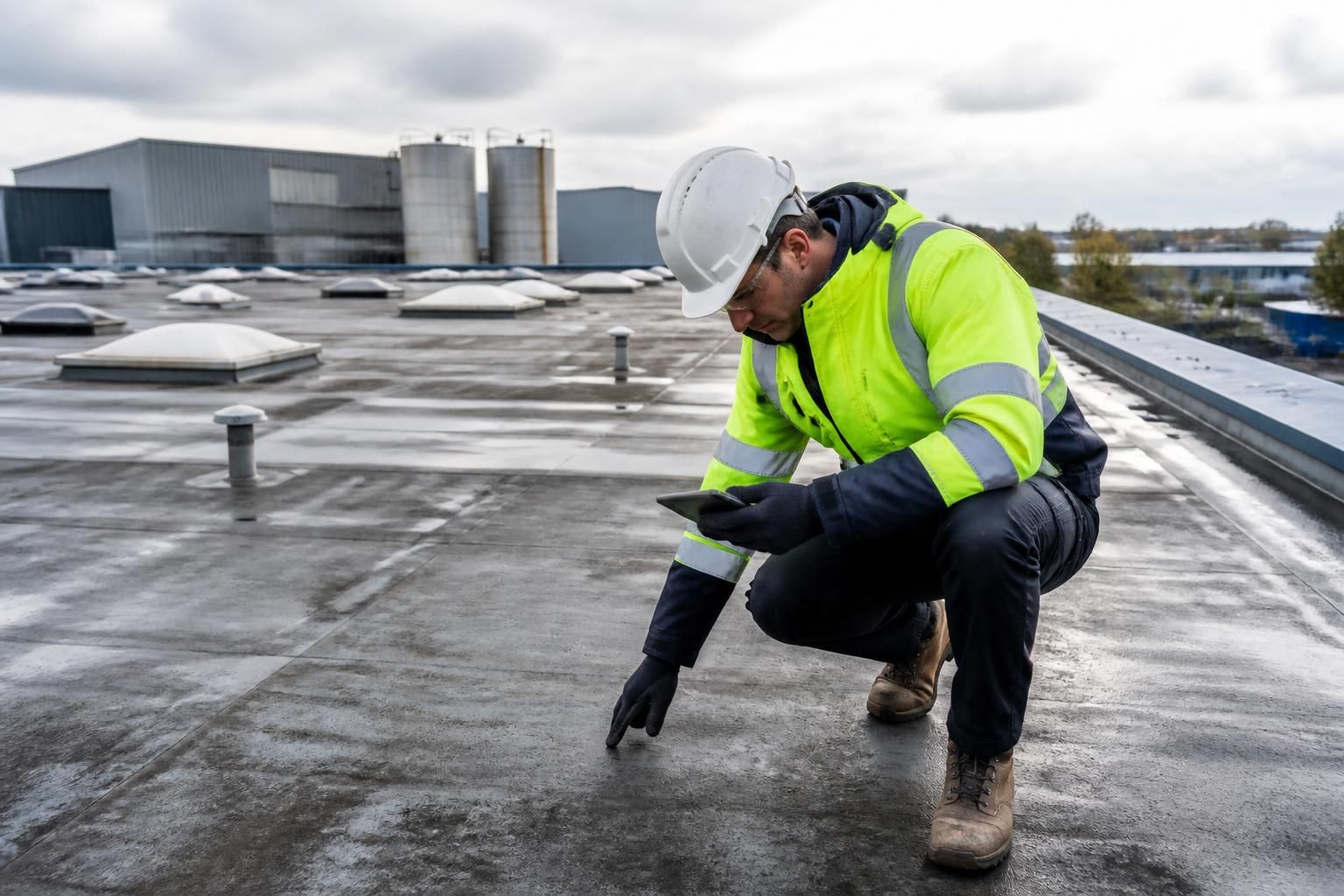
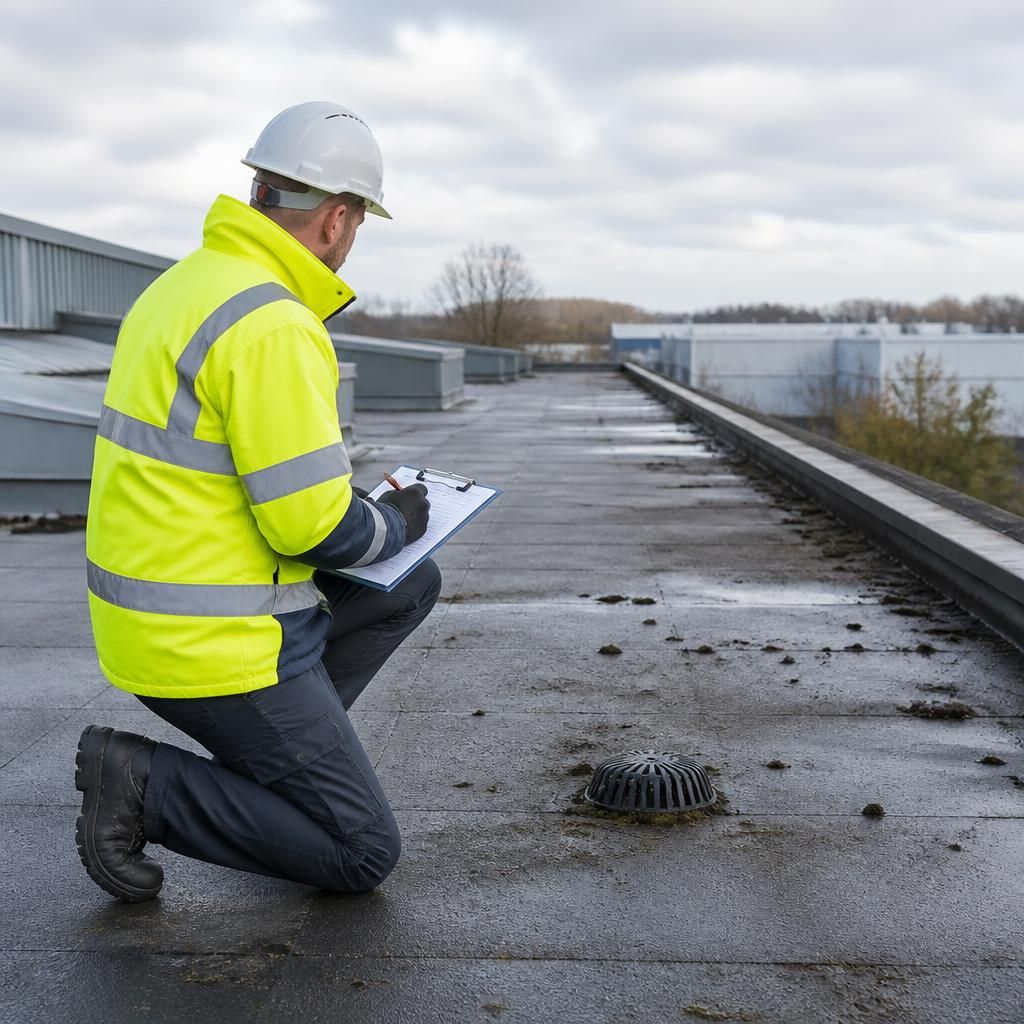
Annual inspections are particularly important. An inspection should assess the roof covering, flashings, gutters, outlets, valleys, roof lights, access routes and areas beneath overhanging trees or nearby equipment. It should also record moss growth, biological staining, accumulated silt, leaves, bird fouling, industrial deposits and any areas where water is not draining correctly. Cleaning can then be planned alongside other maintenance, reducing the need for reactive work.
Some roofs need more frequent cleaning or monitoring. This may apply where a building is:
- Located beneath or close to mature trees, which can deposit leaves, seeds and organic debris.
- In a shaded or damp position where moss and algae remain wet for longer.
- Close to busy roads, industrial activity or construction work that generates dust and airborne deposits.
- Exposed to significant bird activity, particularly around ledges, plant areas and sheltered roof spaces.
- Designed with shallow falls, complex drainage or outlets that are vulnerable to blockage.
- Situated in an area where windblown debris regularly collects.
For these buildings, inspections may need to be scheduled more often than the standard planned review, with localised cleaning carried out when deposits begin to accumulate. A roof does not always need to be cleaned in its entirety if contamination is limited to particular elevations, drainage runs or sheltered areas.
The roof material also affects the recommended frequency and method. Metal cladding and coated systems may collect atmospheric dirt, algae or bird fouling without requiring aggressive treatment. Concrete and clay tiles can support moss and lichen growth, especially where moisture is retained. Single-ply membranes, felt systems and other specialist coverings may require a lower-impact approach to protect the surface and avoid damage to laps, seams, coatings or details. The cleaning interval should therefore be agreed after identifying the roof system and checking its condition, rather than based solely on its appearance.
Cleaning should be brought forward when contamination creates a specific risk. Warning signs include gutters or outlets beginning to block, moss spreading across walkways or access areas, persistent green or black staining, bird fouling around entrances or plant equipment, standing water, debris collecting behind roof fixtures and organic growth taking hold around joints or edges. These issues can increase maintenance requirements and may make inspections or future repairs more difficult.
It is also sensible to arrange a roof condition review before planned remedial work, the installation of new plant, a change of occupier or the handover of a construction project. Cleaning a roof before inspection or repair can reveal defects that were hidden by deposits, but cleaning should not be used to conceal damage. Cracked coverings, failed sealants, corrosion, loose components and defective drainage require suitable repair or further investigation.
Timing within the year can influence the result. Cleaning is generally easier to plan during settled weather, when surfaces can dry and access equipment can be used safely. However, seasonal conditions, business activity, roof access restrictions and the cleaning method all need to be considered. Moss and algae treatments may require suitable dwell time and controlled rinsing, while steam or low-pressure work may have different weather and water-management requirements. The planned date should always be confirmed through a site-specific risk assessment.
A typical maintenance plan may include a documented annual inspection, routine checks of gutters and drainage, additional monitoring of high-risk areas and a full or localised clean when contamination reaches an actionable level. Properties with heavy tree cover, persistent dampness or high levels of bird activity may need a shorter review cycle, whereas a well-drained roof in a relatively clean, open setting may remain suitable for longer between cleaning visits.
Do not rely on visual appearance alone. Some contamination is concentrated around outlets, laps, parapets and roof-mounted equipment, where it may affect drainage or retain moisture without being obvious from ground level. Conversely, light staining on a sound roof may not justify intensive cleaning. A professional assessment should consider the roof’s construction, condition, access requirements, drainage performance and the consequences of disturbing the surface.
Keeping inspection and cleaning records helps establish the right interval for each property. Records should note the date, areas inspected, contamination found, photographs, drainage condition, cleaning method, access arrangements and any recommendations for follow-up work. Over time, this provides evidence of changing site conditions and supports planned maintenance, budgeting and communication with landlords, facilities teams and contractors.
For most commercial premises, the practical answer is to inspect the roof every year and clean it whenever contamination is affecting drainage, surface condition, hygiene, safety or the professional appearance of the building. Buildings exposed to shade, vegetation, pollution, bird fouling or windblown debris should be reviewed more frequently, while the cleaning method and interval should always be matched to the specific roofing material and its condition.
Commercial roofs should generally be inspected at least annually, but they should be cleaned when contamination begins to affect drainage, surface condition, hygiene, safety or the appearance of the premises. The correct interval is therefore condition-based rather than determined by a fixed cleaning cycle.
Buildings beneath trees, in shaded or damp locations, near industrial activity or exposed to heavy bird fouling may need more frequent checks. During each inspection, particular attention should be given to gutters, outlets, valleys, roof lights, access routes and areas around plant equipment, as debris and organic growth often accumulate in these less visible locations.
Keeping inspection and cleaning records helps establish the most suitable schedule for each property. A professional assessment can determine whether the entire roof needs cleaning or whether localised work around drainage runs, parapets or sheltered areas is sufficient, while ensuring that the cleaning method is appropriate for the roof material.
Arrange a Commercial Roof Cleaning Assessment
Arrange a commercial roof cleaning assessment with Encanto Exterior Cleaning to review contamination, drainage, roof condition and the most suitable cleaning interval. We can recommend whether your property needs a full clean, localised treatment or continued monitoring.