
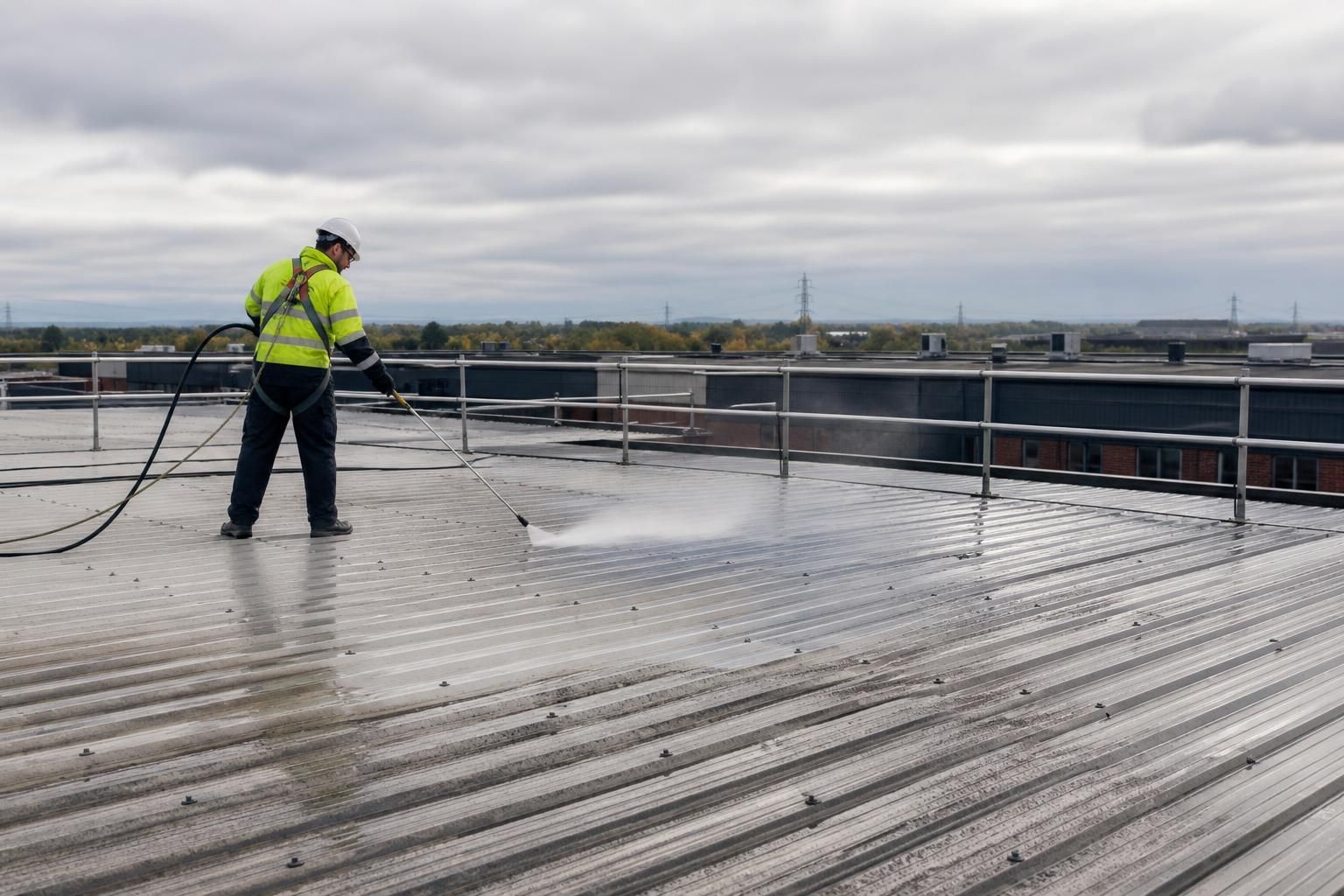
How long does the commercial roof cleaning process typically take?
Commercial roof cleaning may take from part of a day to several days or longer, depending on the roof area, surface condition, access requirements, cleaning method and weather. A site assessment and method statement provide the most reliable timescale, while larger or more complex premises are normally planned in phases to minimise disruption.
Commercial roof cleaning typically takes from part of a working day to several days, with larger, heavily soiled or difficult-to-access roofs sometimes requiring phased work over a longer period. The most reliable timescale can only be confirmed after assessing the roof area, condition, access arrangements, cleaning method, weather exposure and the operational requirements of the site.
Cleaning a straightforward, accessible roof with light surface dirt may be completed relatively quickly. By contrast, a large industrial roof with moss, algae, staining, built-up deposits or areas that require careful treatment will take longer. The work may also need to be divided into sections so that the premises can continue operating safely while cleaning takes place.
Typical stages of the process
- Initial inspection and planning: The roof, surrounding areas, drainage points, access routes and any fragile or vulnerable surfaces are assessed. This may be completed before the cleaning date or as part of the site mobilisation process.
- Preparation: Equipment, access systems, edge protection, water supplies and ground protection are arranged. The team may also protect vehicles, stock, entrances, plant and areas where run-off could cause a problem.
- Removal of loose debris: Leaves, moss, nesting material and other loose deposits are cleared before the main treatment. Blocked gutters and outlets may need attention to prevent water and debris from accumulating during cleaning.
- Main cleaning: The selected process could involve controlled pressure washing, soft washing, steam cleaning, chemical treatment or a combination of methods. The cleaning rate depends on the roof material and the level of contamination.
- Rinsing, treatment and inspection: Some roofs require additional rinsing or a biocidal treatment. Where a treatment is designed to continue working after application, the roof may not appear fully clear immediately and a gradual improvement should be expected.
- Clean-down and handover: Access equipment is removed, surrounding areas are checked, waste is cleared and drainage points are inspected. The finished work is then reviewed against the agreed scope.
Factors that can extend the timescale
- Roof size and layout: Extensive roofs, multiple roof levels, plant areas, roof lights and numerous sections take longer to clean and inspect than a simple single-level roof.
- Surface condition: Heavy moss, lichen, algae, bird fouling, oil-related deposits and long-established staining usually require slower, more controlled cleaning. Loose growth may need to be removed by hand before washing or treatment.
- Roof material: Metal cladding, concrete tiles, coated surfaces, membranes and other systems have different tolerances. A gentler method may be required to protect finishes, joints, seals and waterproofing details.
- Access and safety requirements: Restricted loading areas, fragile roofs, limited parking, adjoining properties and difficult edges can increase preparation time. Scaffolding, mobile access equipment, temporary barriers or additional protection may also be needed.
- Cleaning method: Pressure washing can be efficient on suitable robust surfaces, whereas soft washing, steam cleaning or chemical treatment may involve preparation, controlled application, dwell time and repeat treatment. The quickest method is not necessarily the appropriate method for the roof.
- Weather: Strong wind, heavy rain, freezing conditions and unsuitable temperatures can delay work or affect the safe application and performance of treatments. Wet conditions may also make access surfaces unsafe.
- Water management and environmental controls: Run-off may need to be contained, filtered or directed away from sensitive drainage systems. These controls are part of responsible commercial cleaning and can add time to the programme.
- Business activity: Deliveries, customer access, vehicle movements, production areas and occupied offices may require the work to be scheduled in stages or during quieter periods.
How the work can be scheduled around your business
A commercial roof cleaning programme does not always require the whole building to be taken out of use. Work can often be planned by elevation, roof zone or building section, with exclusion areas maintained below the active work area. Where access or noise could affect operations, the programme may be arranged outside peak periods, subject to suitable lighting, staffing and safe working conditions.
For larger premises, the agreed schedule should identify the order of work, access arrangements, delivery and collection requirements, welfare provisions, emergency procedures and any areas that must remain available. A method statement and risk assessment help establish whether the proposed sequence is suitable and what controls are required.
What happens if the roof is treated rather than visibly restored immediately?
Some chemical or biocidal treatments are intended to kill organic growth and reduce its return rather than remove every mark during the first visit. In these cases, the roof may look cleaner after application but continue to improve as remaining growth breaks down and weathering removes it. The expected appearance and timescale should be explained before work begins, particularly where the roof has deep staining or widespread moss.
The completion date may therefore refer to the end of the active cleaning operation, not necessarily the point at which every stain has disappeared. If physical removal, repeat treatment or follow-up inspection is recommended, these requirements should be included in the proposed programme.
How the timescale is confirmed
Encanto Exterior Cleaning can establish a practical programme through a site survey, available roof information and discussion of your operating constraints. The quotation or work plan should set out the areas included, proposed cleaning method, access arrangements, preparation requirements, expected working windows and any conditions that could cause delay.
Allowing flexibility for weather and site conditions is important. A responsible contractor should not rush work on a fragile or contaminated roof simply to meet an arbitrary date. The priority is to clean the roof using a method that protects the building, controls run-off, maintains safe access and causes as little disruption as reasonably possible.
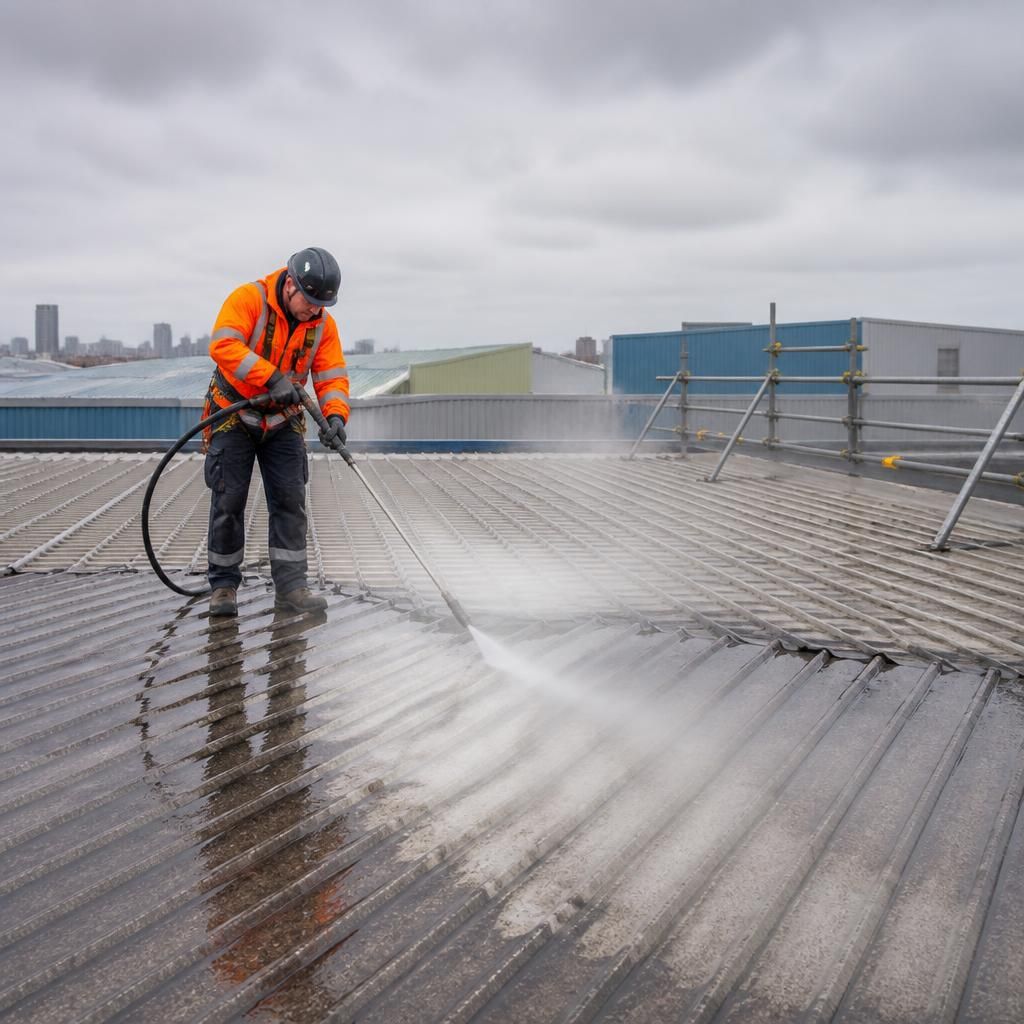
The most reliable commercial roof cleaning timescale is confirmed after a site assessment, because roof size, contamination, access, safety controls, cleaning method and weather can all affect the programme. A straightforward, accessible roof with light soiling may be completed within part of a working day, while a larger or heavily contaminated roof may require several days.
Where the premises must remain operational, Encanto Exterior Cleaning can plan the work in roof zones, elevations or building sections. This allows exclusion areas, deliveries, staff access and customer movements to be managed while cleaning progresses. The agreed method statement should set out the planned sequence, preparation, access equipment, run-off controls and any weather-related contingencies.
It is also important to distinguish between the end of active cleaning and the time needed for a treatment to produce its full visual effect. Biocidal or chemical treatments may continue breaking down organic growth after the team has left, so the roof may improve gradually rather than appear completely restored immediately.
Arrange a Commercial Roof Cleaning Site Assessment
Arrange a commercial roof cleaning site assessment with Encanto Exterior Cleaning to confirm the expected timescale, access requirements and suitable cleaning method for your premises. We can also discuss how to schedule the work around your business operations.