
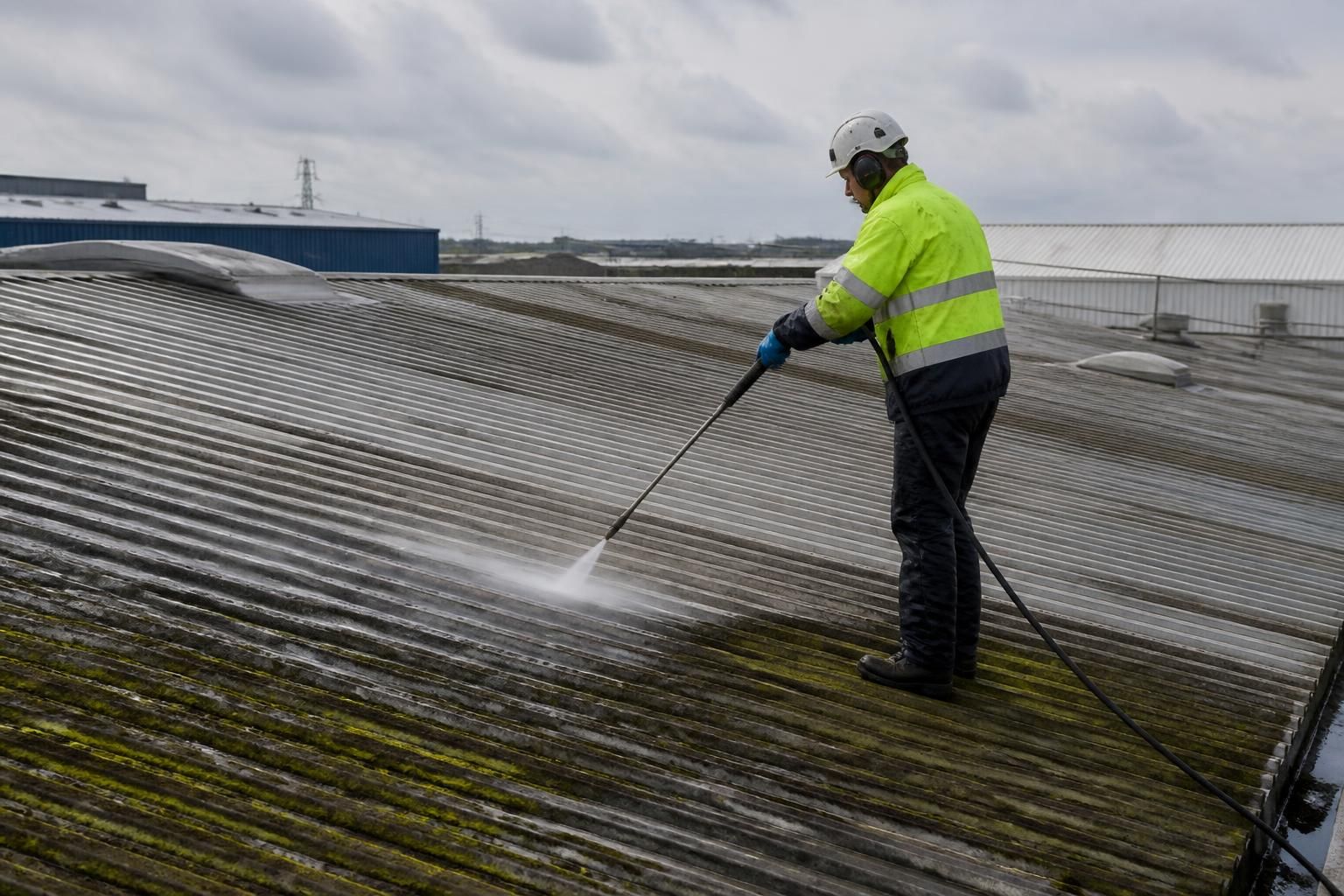
How does the chosen cleaning method impact the roof's long-term durability and maintenance costs? The correct method removes dirt, moss and pollutants without damaging the roofing material, helping prevent premature repairs and reducing long-term maintenance costs.
The correct roof cleaning method removes moss, dirt and pollutants without damaging the roofing material, helping preserve its protective surface and extend its service life. Choosing an unsuitable or overly aggressive method can cause surface damage, premature repairs and higher long-term maintenance costs.
The cleaning method directly affects a commercial roof’s service life and maintenance cost because each approach places a different level of mechanical, thermal and chemical stress on the roofing material. A suitable method removes moss, algae, dirt, pollution and organic growth while preserving the roof’s surface, coatings, joints, fixings and drainage. An unsuitable method may cause immediate damage or shorten the period before repairs, recoating or replacement is required.
Mechanical pressure and washing methods can remove substantial deposits quickly, particularly from robust surfaces such as concrete roof tiles, paved roof areas and some external hardstanding. However, pressure that is too high, a nozzle held too close to the surface, or incorrect technique can erode weathered finishes, dislodge tiles, drive water beneath laps and damage sealants, flashings or membrane details. On coated metal roofing, aggressive washing can expose the substrate or lift an already weak coating. On single-ply membranes and other flexible systems, excessive pressure can stretch, puncture or separate the surface from its backing.
Pressure washing is therefore not automatically unsuitable, but it must be selected and controlled according to the roof construction, condition and manufacturer’s requirements. Low-pressure application, suitable spray patterns and careful work around joints and penetrations reduce the risk of damage. Where the roof is already brittle, heavily weathered or poorly repaired, a less forceful method is normally more appropriate.
Soft washing and biocidal treatment rely on controlled application of cleaning solutions, dwell time and gentle rinsing rather than high mechanical force. This can be beneficial where moss, algae and lichen are attached to delicate or textured surfaces. Removing the organic growth without aggressive scraping helps avoid lifting protective granules, breaking tiles or disturbing roof coatings. A suitable biocide can also help control residual biological growth, although the choice, concentration, application method and rinsing process must be appropriate for the roofing material and surrounding environment.
Chemical cleaning still carries risks if it is poorly controlled. Some solutions can discolour coatings, affect metals, damage vegetation or enter surface-water drainage if run-off is not contained. Chemical residues may also create future problems where they are allowed to dry on glazing, cladding, painted surfaces or rainwater goods. Professional application should include a material compatibility assessment, protection of adjacent areas and appropriate collection or management of run-off.
Steam cleaning uses heat and controlled water flow to loosen contamination and reduce reliance on stronger chemicals. It can be useful for certain roofs and for areas where biological deposits, grease or embedded pollution are difficult to remove with cold water. The lower chemical requirement may support a more controlled cleaning regime, but heat and moisture must still be managed carefully. Excessive temperature can affect coatings, membranes, sealants or adhesive details, while trapped moisture can worsen defects that are not identified before cleaning.
Manual removal and low-impact cleaning are often the safest choices for isolated moss, loose debris, fragile tiles, aged coatings and vulnerable roof details. They may take longer and may not be suitable for removing every type of staining, but limiting force can protect the existing surface and reduce the likelihood of remedial work. A combined approach is frequently more effective than applying one aggressive method across the entire roof: deposits can be removed manually, compatible areas treated with a biocide, and sound hard surfaces cleaned using carefully controlled pressure.
The roof material is a primary factor in method selection. Concrete and clay tiles require attention to surface weathering, brittleness and the condition of their laps. Metal roofs need protection for coatings, fasteners, seams and corrosion-prone areas. Single-ply membranes, liquid-applied systems and built-up roofing require particularly careful control around punctures, welds, joints, outlets and perimeter details. Green roofs, insulated roof systems and roofs containing vulnerable plant or equipment require a separate assessment before any water or chemical application takes place.
The condition of the roof before cleaning also affects long-term cost. Cleaning can reveal cracked tiles, open laps, failed sealant, corrosion, blocked outlets, loose fixings and areas of ponding water. These defects should be recorded and assessed rather than concealed by subsequent treatment. Cleaning a roof without addressing a known leak, failed flashing or defective drainage may make the surface look improved while allowing deterioration to continue beneath it.
Maintenance costs are influenced by more than the initial cleaning charge. A method that is inexpensive to apply but damages a coating or membrane may lead to additional inspection, emergency repairs, water ingress, re-coating or premature roof replacement. Conversely, a carefully selected lower-impact method may require more preparation or slower application but help retain the roof’s existing protection and reduce avoidable remedial work. The most economical approach over the roof’s life is usually the one that balances effective contamination removal with the least material stress.
Cleaning frequency should also be based on the roof’s exposure and rate of contamination. Regular, planned cleaning can prevent moss roots, lichen and accumulated pollutants from becoming firmly established. It can also keep gutters, outlets and drainage routes clear, making defects easier to identify during routine inspections. Cleaning too frequently, or repeating an unnecessarily aggressive process, can itself increase wear. The maintenance plan should therefore distinguish between routine inspection, light debris removal, biological treatment and more intensive restoration cleaning.
Before work begins, the cleaning contractor should:
- identify the roofing system, surface finish, age and known manufacturer restrictions;
- inspect for fragile areas, leaks, damaged coatings, loose components, failed joints and drainage problems;
- test the proposed method on a discreet area and check the result after drying;
- select water pressure, temperature, chemical concentration and dwell time appropriate to the material;
- protect rooflights, plant, ventilation equipment, façades, vehicles and surrounding landscaping;
- plan safe access and working methods so that operatives do not create unnecessary loading or foot traffic; and
- agree how waste, contaminated water and chemical run-off will be contained and managed.
After cleaning, the roof should be checked for remaining contamination, disturbed components, blocked outlets and areas requiring repair. Photographic records and a clear report help the building owner or facilities team plan remedial work before minor defects become more expensive failures. Where a coating or membrane warranty applies, the proposed process should be checked against its terms before cleaning takes place.
In practical terms, the best method is not the most powerful one. It is the method that achieves the required level of cleanliness while maintaining the roof’s protective layers and critical details. For commercial premises, a material-specific assessment, controlled application, suitable access equipment and follow-up inspection provide the strongest protection for long-term durability and maintenance budgets.
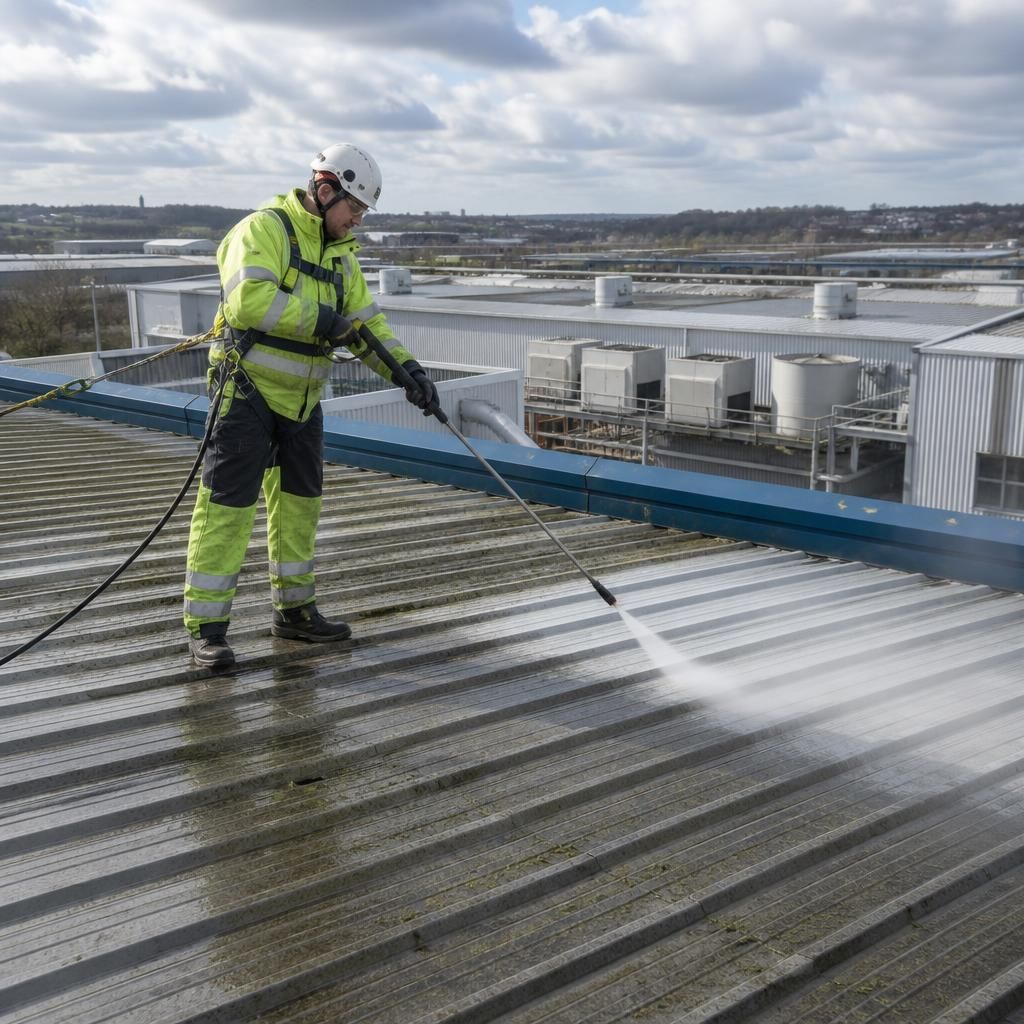
The cleaning method affects a commercial roof’s durability by determining how much mechanical, thermal and chemical stress is placed on its surface. A material-specific, low-impact approach can remove moss, algae and pollution while preserving coatings, membranes, sealants, fixings and protective finishes.
Using excessive pressure, heat or unsuitable chemicals may create damage that is not immediately visible, including eroded finishes, disturbed laps, weakened coatings or failed joints. These defects can lead to water ingress, additional inspections and premature repairs, increasing the roof’s whole-life maintenance cost. Before cleaning, the proposed method should therefore be tested on a discreet area and checked against the roof manufacturer’s requirements and any applicable warranty.