
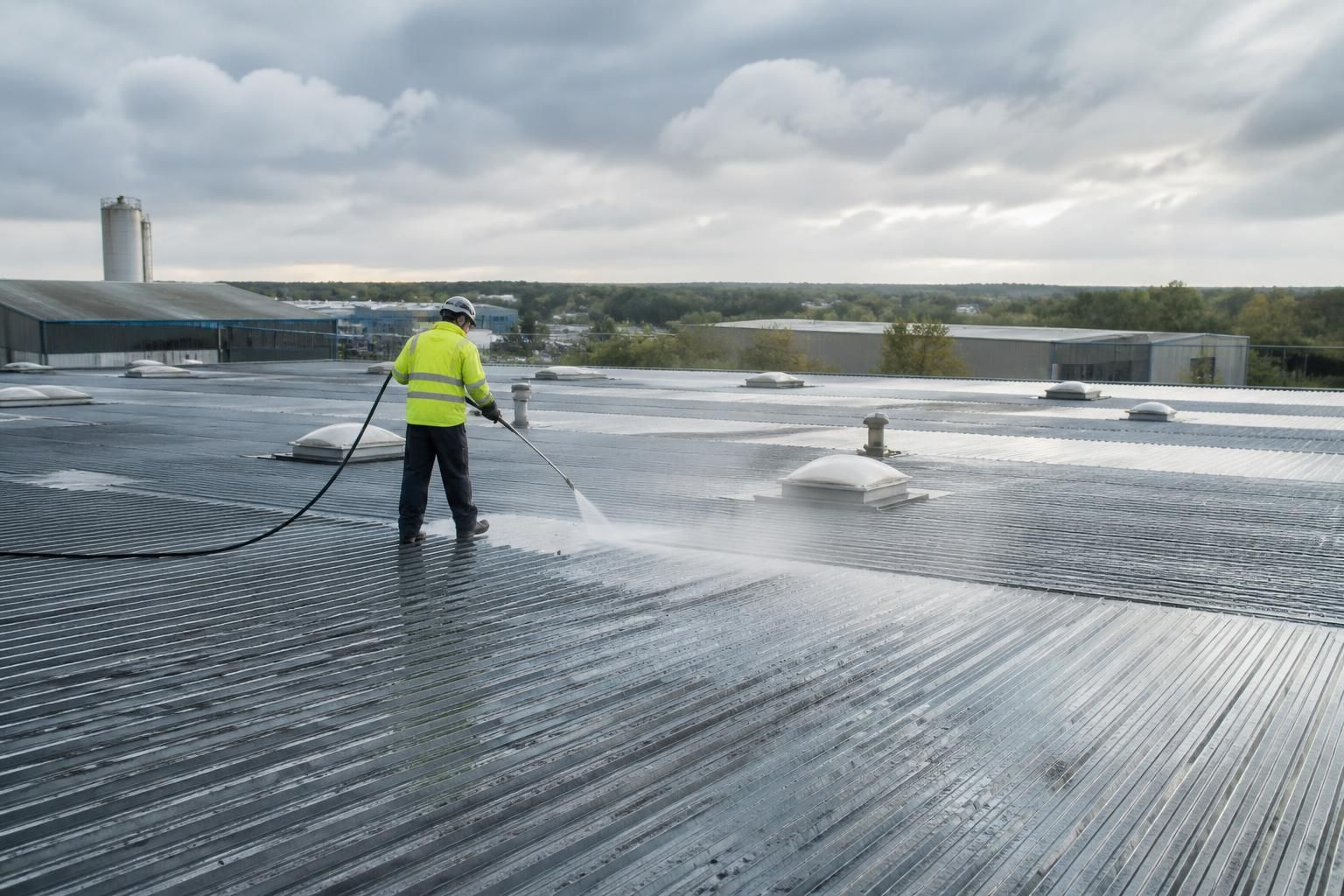
How do commercial roof cleaning services ensure minimal disruption to business operations during the cleaning process?
Commercial roof cleaning services minimise disruption by planning around your operating hours, coordinating access and deliveries, and selecting a suitable cleaning method for the roof and site. Work can be phased into manageable areas, with controlled water use, safe exclusion zones and thorough clean-up so normal business activities can continue wherever practicable.
Commercial roof cleaning services minimise disruption by planning the work around the way your site operates, agreeing access arrangements in advance and using a cleaning method suited to both the roof and the surrounding premises. A properly managed project typically combines a pre-clean survey, phased work areas, controlled access, coordinated deliveries, safe management of water and debris, and clear communication with the site contact.
Planning starts with a site assessment. Before work begins, the contractor should review the roof construction, access points, fragile areas, drainage arrangements, nearby entrances, vehicle routes, plant and equipment, and any activities that must continue during the clean. The assessment should also identify sensitive areas such as food preparation zones, occupied offices, customer entrances, loading bays and ventilation intakes. This information is used to prepare a suitable method statement and risk assessment rather than applying the same process to every commercial building.
It is also important to establish how the site operates. The cleaning team should discuss opening hours, delivery schedules, shift changes, visitor movements, tenant requirements and any restricted areas with the responsible facilities or property manager. Where practical, noisier or more intrusive activities can be scheduled outside peak operating periods, while quieter preparation or inspection work can take place during normal hours.
- Coordinate access in advance: agree where operatives, access equipment, hoses, water supplies and waste containers will be positioned, and keep fire exits, emergency routes and essential vehicle access clear.
- Schedule around critical activities: avoid clashes with deliveries, customer traffic, maintenance work, public events and other contractors using the premises.
- Use phased work areas: divide a large roof or complex site into manageable sections so that only the necessary area is affected at any one time.
- Confirm daily arrangements: provide the site contact with the planned work area, access requirements, expected activities and any temporary restrictions before cleaning starts.
The cleaning method has a direct effect on disruption. Soft washing, low-pressure cleaning, steam cleaning and controlled pressure washing each create different levels of noise, water use, access demand and runoff. The selected approach should remove the actual contamination without using unnecessary pressure, chemical treatment or water. For example, a low-pressure or soft wash process may be more appropriate where a roof is vulnerable to damage or where excessive spray could affect nearby areas. Steam cleaning can be useful for targeted treatment, but the equipment, water recovery arrangements and access requirements still need to be assessed.
Pressure should never be increased simply to shorten the cleaning time. Excessive pressure can damage roof coverings, dislodge pointing or coatings, drive water into vulnerable details and create additional remedial work. Choosing an appropriate method helps prevent unexpected interruptions caused by leaks, damage or repeat cleaning.
Work can be controlled through defined exclusion zones. Barriers, signs and temporary restrictions keep staff, visitors and vehicles away from active cleaning areas without closing more of the site than necessary. The size and position of the exclusion zone will depend on the roof, access equipment, spray pattern, falling debris risk and the presence of the public. Where a pedestrian route or entrance is affected, the contractor should agree a safe alternative route or arrange short, supervised pauses rather than leaving access arrangements to chance.
Access equipment should be selected for the building and the working area. The position of mobile elevating work platforms, scaffold, towers or other equipment must account for ground conditions, overhead obstructions, loading restrictions and vehicle movements. A competent team will plan setup and removal so that equipment is not left blocking operational areas unnecessarily. Where roof access is possible from an existing safe route, this may reduce the need for equipment at ground level, although the roof itself must still be assessed before use.
Water and runoff require particular control on occupied commercial sites. Hoses should be routed to avoid trip hazards and protected where they cross unavoidable routes. Drainage points, outlets and downpipes should be checked before cleaning, especially where moss, silt or loose material could obstruct them. Runoff must be contained, directed or recovered in accordance with the agreed method and applicable environmental requirements. This prevents dirty water from reaching entrances, neighbouring property, public pathways, surface-water drains or areas where it could create a slip hazard.
Where cleaning products or biocides are required, the team should use them only where suitable for the roof and site. Product handling, dilution, storage, application and rinsing should follow the relevant safety information and the agreed environmental controls. Nearby air intakes, planted areas, vehicles and sensitive surfaces may need protection. These measures reduce the risk of odour, overspray, staining and unplanned closure of occupied areas.
Phasing is especially useful for larger premises. A commercial roof can be divided according to building elevation, tenant area, drainage zone or operational importance. One section can be cleaned, checked and cleared before the team moves to the next. This approach allows the business to retain access to unaffected areas and makes it easier to identify any roof defects, blocked drainage or surfaces requiring follow-up attention.
Phasing should be agreed before mobilisation, but it may need to change if weather, site activity or roof conditions differ from the original assessment. A reliable contractor should communicate changes promptly and should not continue when wind, rain, frost, poor visibility or other conditions make the work unsafe or likely to affect the quality of the clean.
Good housekeeping prevents avoidable interruptions. At the end of each work period, operatives should remove loose moss, dirt, packaging and equipment from working routes, check that drains and access points remain clear, and leave the area in a condition that is safe for staff and visitors. The site contact should be told about any remaining restrictions, wet surfaces, equipment awaiting removal or roof defects that need attention. A final inspection helps confirm that the agreed areas have been cleaned and that no cleaning materials or debris have been left behind.
Communication continues throughout the project. The site manager or facilities contact should have a clear point of contact for operational queries, access changes and urgent issues. Brief updates are useful when the team moves between areas, encounters unexpected contamination, identifies fragile roof sections or needs to pause work. For multi-occupancy buildings, information may also need to be shared with tenants, security staff and reception teams.
Minimal disruption does not mean removing every temporary control. It means keeping restrictions proportionate, predictable and limited to the areas and times genuinely affected by the work. The most effective commercial roof cleaning plans therefore combine:
- a pre-clean survey and documented risk controls;
- an agreed programme that reflects the site’s operating hours;
- appropriate access equipment and clearly marked exclusion zones;
- a roof-specific cleaning method with controlled pressure, water and chemical use;
- planned management of runoff, moss, debris and waste;
- phased cleaning where the building or roof is large or operationally sensitive;
- regular communication with the responsible site contact; and
- a final inspection and thorough clean-up before each area is returned to normal use.
For a commercial property in Birmingham, the West Midlands or elsewhere in the UK, these arrangements should be confirmed during the quotation or site-survey stage. Providing details of operating hours, access restrictions, tenant activity, drainage and any sensitive areas enables the cleaning plan to be built around the business rather than imposed on it. This reduces avoidable downtime while preserving the safety of people on site and the condition of the roof.
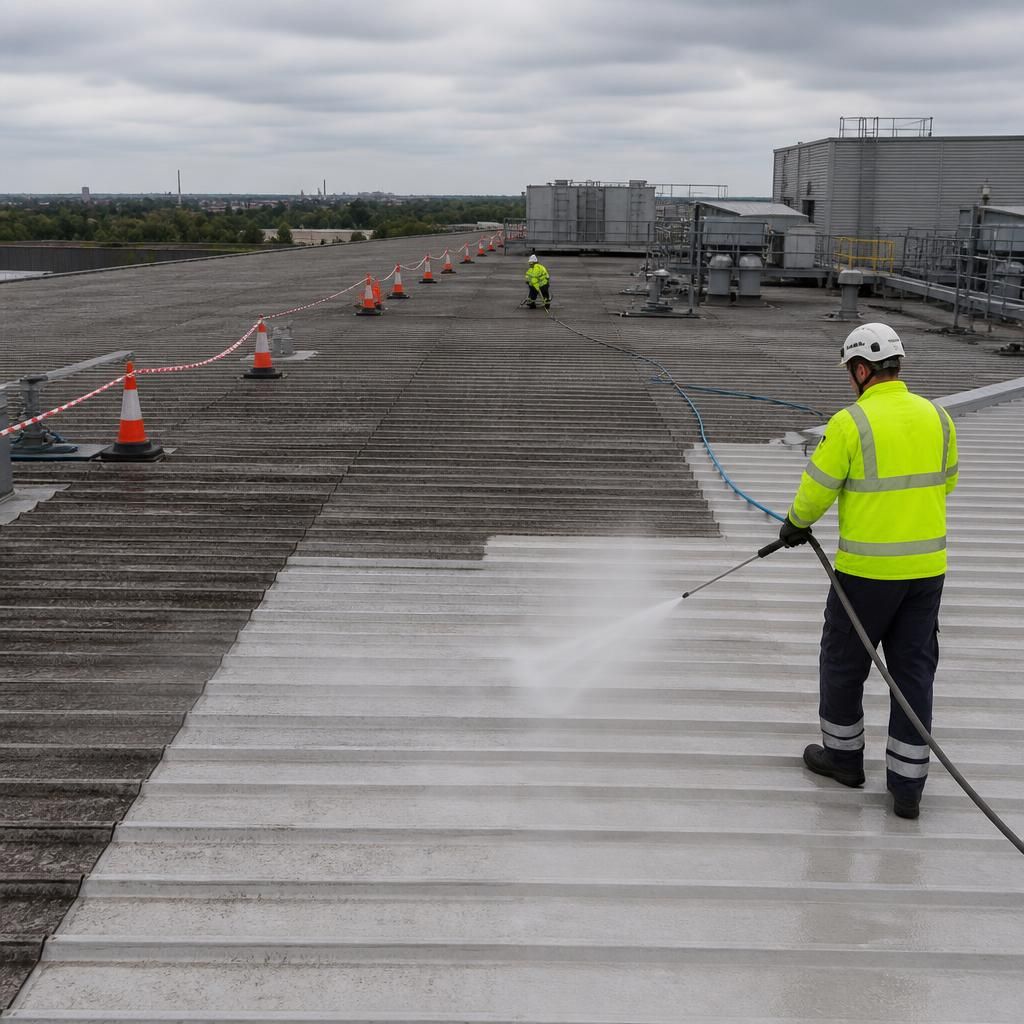
Phased roof cleaning reduces disruption by limiting active work to a defined section of the building at any one time. The cleaning team can work around opening hours, deliveries, shift changes and tenant access, while unaffected areas remain available for normal business use.
Before work starts, the site contact and cleaning team should agree the sequence of areas, access routes, temporary exclusion zones and daily activities. Each section can then be cleaned, checked and cleared before the team moves on. This approach also allows hoses, equipment, runoff and debris to be managed locally, reducing the risk of blocked entrances, unsafe walkways or unexpected interruptions.