
What specific safety measures are implemented during commercial roof washing?
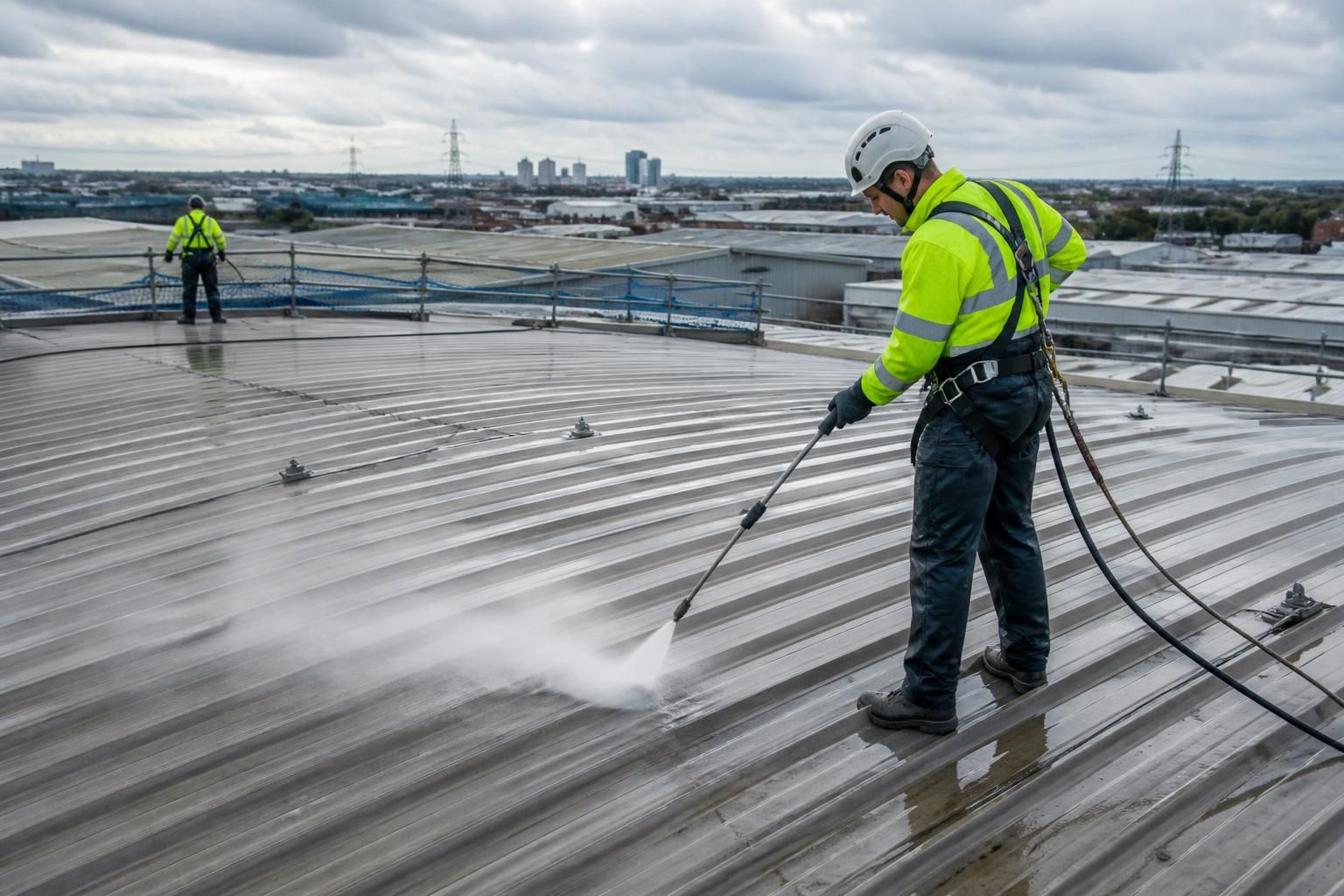
Commercial roof washing is carried out using a documented risk assessment, controlled access equipment, fall-protection systems, suitable PPE and trained operatives. Work areas are isolated from staff and the public, while electrical hazards, fragile surfaces, falling debris, equipment movement and cleaning run-off are controlled before and throughout the clean.
Commercial roof washing is managed through a planned system of risk assessment, controlled access, fall protection, suitable personal protective equipment (PPE) and continuous supervision. Before work starts, the cleaning team identifies hazards affecting workers, building occupants, visitors, vehicles and surrounding property, then selects equipment and methods that control those risks rather than relying on operatives to work cautiously alone.
Site-specific risk assessment and method statement
A site assessment is completed before washing begins. It considers the roof construction and condition, access points, roof pitch, fragile areas, skylights, rooflights, edges, parapets, weather exposure, nearby roads and pedestrian routes. The assessment also reviews the proposed pressure, temperature and cleaning chemicals to ensure the method is appropriate for the roof covering and the building.
The findings are recorded in a method statement, which explains how the work will be carried out, what equipment will be used, who is responsible for each task and how foreseeable emergencies will be handled. The control measures are reviewed if conditions change, such as deteriorating weather, unexpected roof damage, changes to the work area or the discovery of hazardous materials.
Safe access and work-at-height controls
Roof washing is not started until a suitable means of access has been established. Depending on the building and roof layout, this may include properly positioned access towers, scaffold, mobile elevated work platforms, roof access systems, edge protection, walkways or other specialist equipment. Ladders are used only where they are suitable for the specific access task and do not replace a more appropriate work platform.
Where there is a risk of falling, collective protection such as guardrails and protected platforms is prioritised. Harnesses, lanyards, lifelines and other fall-arrest or restraint systems are used where required, with suitable anchorage and a planned rescue procedure. Equipment is inspected before use, and operatives must be trained and competent in the systems provided. Roof access is controlled so that unauthorised staff and visitors cannot enter the work area.
Protection of fragile roofs and roof openings
Many commercial roofs contain fragile rooflights, ageing sheets, concealed voids or areas that cannot safely support a person’s weight. These hazards are identified before access is permitted. Operatives do not treat rooflights or translucent panels as safe footholds, and designated walkways, crawling boards, platforms or other controls are used where appropriate.
Openings, access hatches and vulnerable sections are guarded, covered or otherwise isolated. If the roof condition cannot be confirmed or the required controls cannot be installed, the work method is changed or the area is excluded from the clean. This is particularly important when cleaning involves hoses, steam equipment or pressure-washing tools, as these can affect balance and visibility.
Control of plant, hoses and cleaning equipment
Pressure washers, steam cleaners, pumps, access equipment and electrical tools are selected for the site and maintained in safe working order. Pre-use checks look for damaged hoses, couplings, cables, guards, controls and signs of leakage. Equipment is operated in line with the manufacturer’s instructions and applicable work-equipment requirements.
Hoses and cables are routed to reduce trip hazards, avoid sharp edges and prevent them from interfering with access equipment or emergency routes. Connections are secured, and equipment is positioned so that it cannot move unexpectedly or place excessive strain on the roof, parapets or building services. Operatives maintain a stable working position and do not use high-pressure equipment in a way that could cause loss of balance or damage the roof surface.
Personal protective equipment
PPE is selected after the risks and cleaning products have been assessed. Depending on the task, this may include safety footwear with suitable grip, protective gloves, eye or face protection, waterproof clothing, hearing protection, head protection and respiratory protection where the risk assessment requires it. Harnesses and other fall-protection equipment are additional controls, not a substitute for safe access and edge protection.
PPE is checked before use, kept clean and replaced when damaged or no longer provides adequate protection. Operatives are trained to wear, adjust and store it correctly, particularly where chemical-resistant gloves, face protection or respiratory equipment is needed.
Electrical and building-services precautions
Water, steam and electrical systems create a specific risk during roof cleaning. The team identifies overhead cables, rooftop electrical installations, lighting, solar panels, ventilation equipment and other services before work begins. Power supplies may need to be isolated or protected by a suitably authorised person, and electrical equipment is kept away from water wherever practicable.
The cleaning plan also accounts for roof-mounted plant, vents, air intakes and drainage systems. These are protected or isolated to prevent water, debris or cleaning solution entering the building. Any suspected asbestos-containing materials, damaged electrical installations or other specialist hazards are referred for appropriate assessment rather than disturbed as part of routine cleaning.
Exclusion zones and protection of people and property
Ground-level areas beneath and around the work face are assessed for falling tools, loose roof material, water, debris and overspray. Barriers, warning signs and controlled access points are used to create an exclusion zone where necessary. A banksman or another designated person may be used to manage vehicle movements, deliveries, public access and the movement of lifting or access equipment.
Windows, doors, vents, signage, vehicles, landscaping and vulnerable external finishes are protected from spray, debris and cleaning chemicals. Work is coordinated with the customer so staff, tenants and visitors know which areas are restricted and when entrances or parking spaces may need to remain clear.
Chemical, wastewater and slip-risk controls
Cleaning products are assessed under the Control of Substances Hazardous to Health requirements. Operatives follow the product safety information, use the stated dilution and application method, and prevent incompatible substances from being mixed. Containers are labelled, secured and stored safely, with spill-response materials available where needed.
Run-off is controlled so that it does not create a slip hazard, enter occupied areas or contaminate surface-water drains. Drainage routes may be protected or temporarily blocked, and dirty water, loosened coatings and residues are collected or directed for appropriate disposal in accordance with the site’s requirements. Ground-level surfaces are monitored during the clean and left safe for normal use once the work area is released.
Weather monitoring and communication
Wind, rain, ice, poor visibility, lightning and extreme temperatures can affect roof access, equipment stability, chemical performance and drying times. Conditions are checked before and during the work, and operations are paused if the controls in the risk assessment are no longer effective. Wet or contaminated surfaces are treated as increased slip hazards, particularly on sloped or metal roofs.
Clear communication is maintained between the supervisor, cleaning operatives, the customer and other contractors on site. A pre-start briefing covers the work sequence, restricted areas, hazards, emergency arrangements and stop-work conditions. Operatives are expected to report defects, near misses, changing conditions and unsafe behaviour immediately.
Emergency planning and final checks
The work team confirms how to raise an alarm, contact emergency services, provide first aid and recover a person after a fall. A rescue plan is important because a suspended worker may require prompt recovery; simply relying on emergency services is not an adequate substitute for site-specific planning.
At completion, the area is checked for remaining debris, unsecured equipment, wet or slippery surfaces, blocked drains and damage to roof components or surrounding property. Barriers are removed only when the area is safe, and the customer is informed of any defects or maintenance concerns identified during the wash. These measures help ensure that commercial roof cleaning is controlled from initial access through to site handover, rather than treating safety as limited to the time spent on the roof.
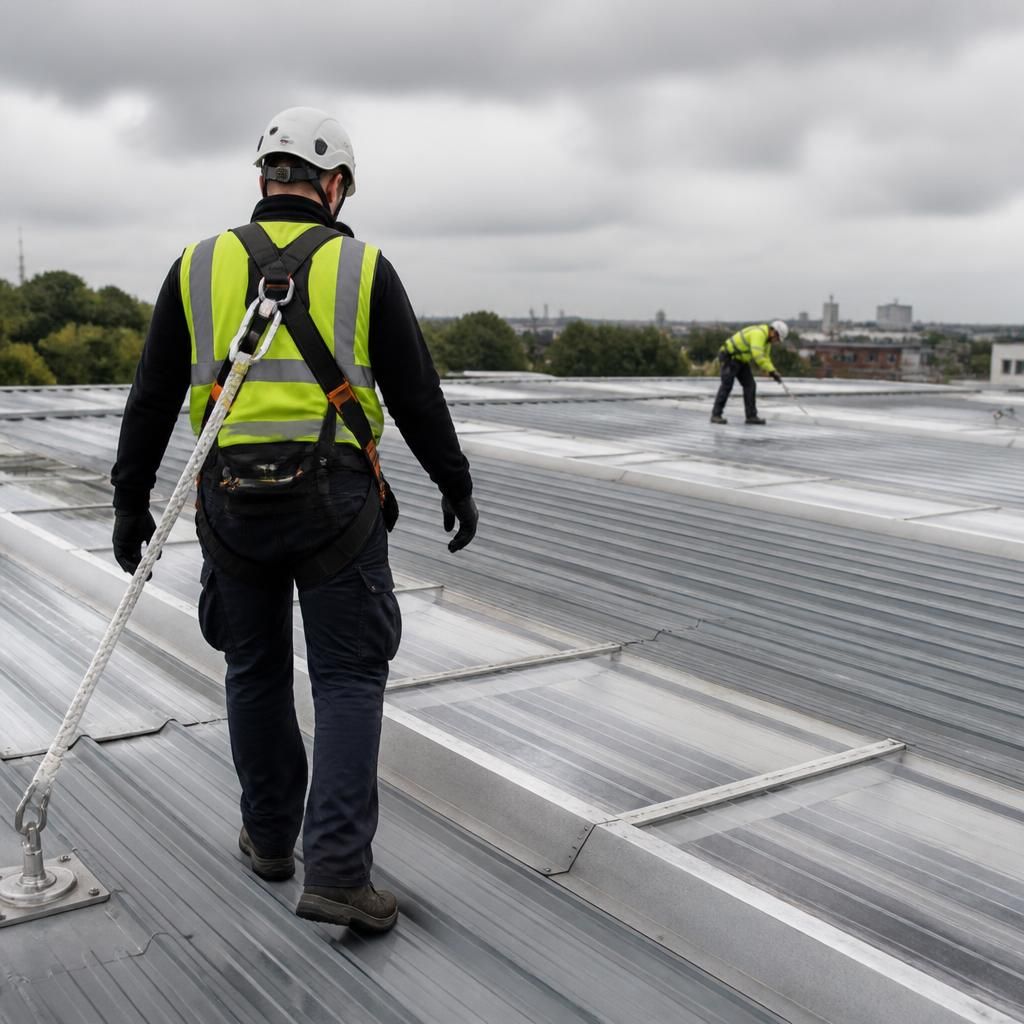
Fall protection is a core safety measure during commercial roof washing, particularly where roofs contain fragile panels, rooflights, steep sections or unprotected edges. Before access is permitted, the team assesses the roof structure and establishes a safe route using suitable platforms, walkways, edge protection or access equipment.
Where a fall risk remains, trained operatives use correctly fitted restraint or fall-arrest systems with suitable anchor points and a planned rescue procedure. Fragile rooflights and openings are identified, guarded or avoided rather than treated as load-bearing surfaces. Access is restricted to the work team, while equipment, hoses and run-off are managed to reduce slips, trips and falling-object risks.