
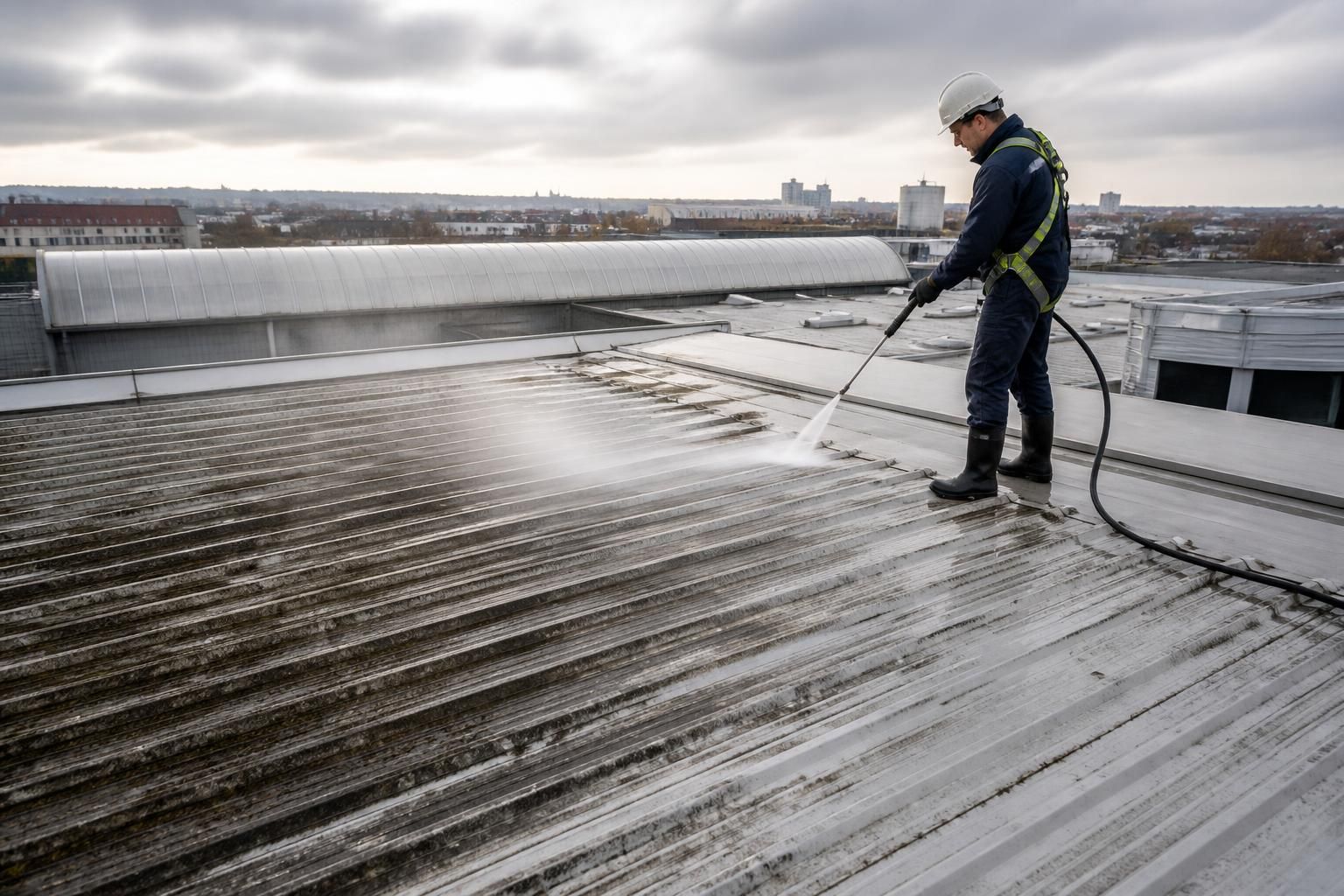
What factors influence the cost of commercial roof washing services?
The cost of commercial roof washing is mainly influenced by the roof’s size, material and condition, along with access, required cleaning method, site safety requirements and the amount of preparation or remedial work involved. A site assessment is therefore needed to provide an accurate quotation, particularly where specialist access equipment or sensitive cleaning techniques are required.
The cost of commercial roof washing is primarily influenced by the roof’s size, material, condition and accessibility. The cleaning method, the level of site safety required, the amount of preparation involved and how wastewater is managed can also affect the quotation. A site survey is the most reliable way to assess these factors and price the work accurately.
Roof size and layout
Larger roofs generally require more labour, water, cleaning solution and operating time. However, the total area is not the only consideration. A roof divided into multiple sections, containing numerous plant installations or featuring complicated levels and elevations may take longer to clean than a larger, unobstructed surface.
Roof plans, site drawings or previous maintenance records can help establish the approximate area, but these documents may not show every obstruction or access restriction. A physical assessment allows the contractor to identify features that could affect the work and avoid relying on an inaccurate area estimate.
Roof material and construction
Different roof materials require different cleaning pressures, temperatures and treatments. Metal cladding, coated panels, concrete tiles, fibre cement and membrane systems can all respond differently to water pressure, agitation and chemical products. Delicate coatings or ageing surfaces may need a slower, lower-impact process to prevent damage.
Where the roof material is unknown, samples, manufacturer information or an inspection may be needed before selecting a method. This additional assessment helps ensure that cleaning removes contamination without affecting protective coatings, seals, joints or drainage components.
Existing dirt, staining and biological growth
The type and severity of contamination affect the time and equipment required. Light surface dirt may be removed through a straightforward wash, while heavy moss, algae, lichen, bird fouling, oil deposits or ingrained atmospheric staining can require pre-treatment, manual preparation and more than one cleaning stage.
Some contamination may leave staining behind even after the surface has been cleaned. Where a customer requires a particular visual finish, additional treatment or stain reduction may be considered separately from the main wash. Moss and other growth may also need to be removed from gutters, valleys and drainage outlets to prevent blockages.
Access to the roof and the building
Access is often one of the most significant cost factors. A roof that can be reached safely from an existing access point may require less preparation than one that needs specialist equipment. The quotation may need to account for mobile elevated work platforms, scaffold, edge protection, roof access systems or other arrangements, depending on the building and the work area.
Ground conditions, restricted vehicle access, nearby structures, overhead services and the position of loading bays can affect the choice and placement of equipment. Internal access may also be relevant where external routes are unavailable. Equipment hire, delivery, set-up and relocation can all contribute to the overall cost.
Height, roof pitch and working conditions
Height and pitch influence both the access solution and the time needed to complete the work safely. Steeper or fragile roofs may not be suitable for routine foot traffic, requiring work from an elevated platform, specialist access system or other controlled position. Roofs with limited walkways, fragile rooflights or concealed hazards also demand more careful planning.
Weather and site conditions can affect productivity. Wind, rain, frost and poor visibility may make certain activities unsafe or prevent equipment from being used. A responsible contractor may need to reschedule part of the work rather than proceed in unsuitable conditions.
Cleaning method and equipment
The selected method is based on the roof material, contamination and required finish. Options may include controlled pressure washing, steam cleaning, soft washing, manual treatment or a combination of techniques. Steam or low-pressure processes may be more suitable for sensitive surfaces, whereas robust surfaces with heavy deposits may need a different approach.
Equipment requirements vary between projects. Pumps, heated systems, long-reach equipment, water storage, filtration or specialist attachments may be needed where ordinary equipment would be unsuitable. The method should be chosen for effectiveness and surface protection rather than simply selecting the highest pressure available.
Health and safety requirements
Commercial roof washing is work at height and must be planned around foreseeable risks. The site assessment may consider fragile areas, rooflights, skylights, electrical services, access routes, falling objects, nearby members of the public and the presence of other contractors.
Where the building is occupied or located in a busy area, additional controls may be required, such as exclusion zones, signage, traffic management, pedestrian protection or coordination with the site manager. The cost may therefore include risk assessment, method statements, equipment inspections and the labour needed to establish and monitor safe working arrangements.
Water supply and wastewater management
The availability of a suitable water supply can affect the practical arrangements and duration of the work. If an on-site supply is unavailable or inadequate, water storage or alternative arrangements may be required.
Run-off must also be managed responsibly. Wash water may contain dirt, cleaning products, biological material or other contaminants. Drain protection, collection, filtration, recovery or controlled disposal may be necessary, particularly where the site has surface-water drains or where the work is close to roads, watercourses and neighbouring properties. These requirements can add preparation time and equipment costs, but they are important for compliant site management.
Preparation and protection of surrounding areas
Before washing begins, the team may need to protect windows, doors, vents, air-conditioning units, electrical equipment, stock, vehicles, landscaping and neighbouring surfaces. Loose items may need to be moved, gutters cleared and vulnerable areas covered or isolated.
Commercial sites often continue operating during planned maintenance. Coordinating access around staff, visitors, deliveries and production activities can require phased working, out-of-hours attendance or additional preparation. The quotation should reflect the actual operating conditions rather than assuming the roof is available without interruption.
Roof condition and minor associated work
A wash may reveal damaged coatings, failed sealant, loose fixings, blocked outlets or defective roof components. Cleaning does not normally include repairs unless these have been specifically agreed. If minor preparation, vegetation removal or making safe is required before washing, it may be priced as an additional item.
Where significant defects are identified, the contractor should report them rather than attempting unplanned repairs. This helps separate cleaning costs from remedial work and allows the building owner or facilities manager to obtain appropriate advice.
Location, scheduling and contract arrangements
Travel, parking, equipment delivery and local site restrictions can influence the quotation, particularly for projects requiring large access machinery or several visits. The timing of the work may also matter. Out-of-hours or weekend cleaning can help minimise disruption but may involve different labour and access arrangements.
For a programme of planned maintenance, the cost per visit may differ from a one-off clean because access, mobilisation and site familiarisation can be planned more efficiently. The scope should still state what is included, such as roof areas, gutters, associated cladding, stain treatment, wastewater controls and any follow-up visit.
What should be included in a quotation?
A useful commercial roof washing quotation should identify the areas to be cleaned, the proposed method, access equipment, safety controls, preparation, wastewater arrangements, exclusions and any optional remedial work. It should also explain whether the price includes cleaning surrounding surfaces, removing loose debris, protecting site assets and returning the area to normal operation.
Providing photographs, roof plans, access details, the roof material and information about known contamination can help with an initial assessment. An on-site survey is still recommended before a firm price is issued, particularly for high, fragile, heavily contaminated or difficult-to-access roofs. Encanto can assess these conditions and recommend a proportionate cleaning approach for the building and its operating requirements.
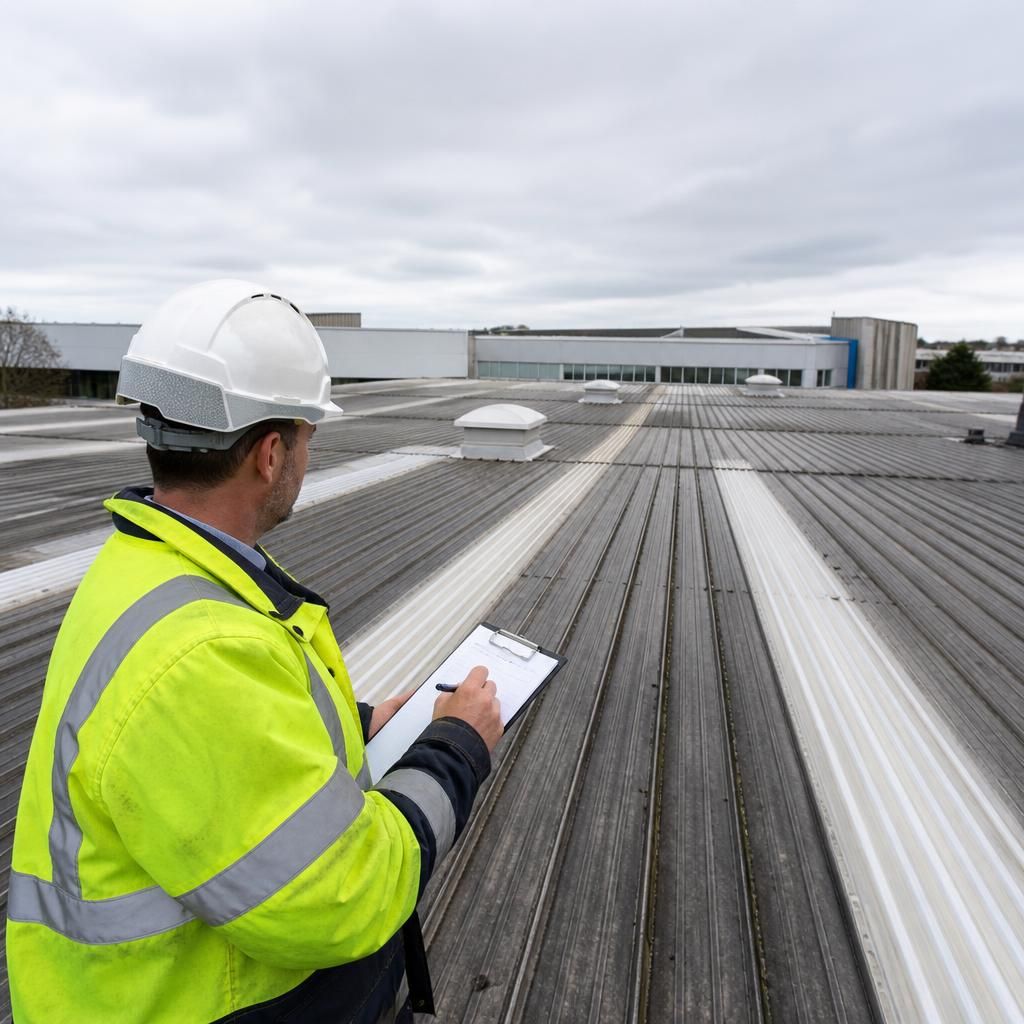
Roof access can significantly influence the cost of commercial roof washing because specialist equipment, additional safety controls and longer preparation may be needed before cleaning can begin.
A site assessment helps identify whether the roof can be reached from existing access points or whether a mobile elevating work platform, scaffold, edge protection or another controlled access system is required. The quotation should also allow for ground conditions, equipment delivery, restricted vehicle access, rooflights, fragile areas and nearby public or pedestrian routes.
Providing roof plans, access details and photographs can support an initial estimate, but an on-site assessment is recommended before a firm price is agreed. It ensures that the proposed method reflects the building’s actual layout and that access and safety requirements are included rather than added unexpectedly.