
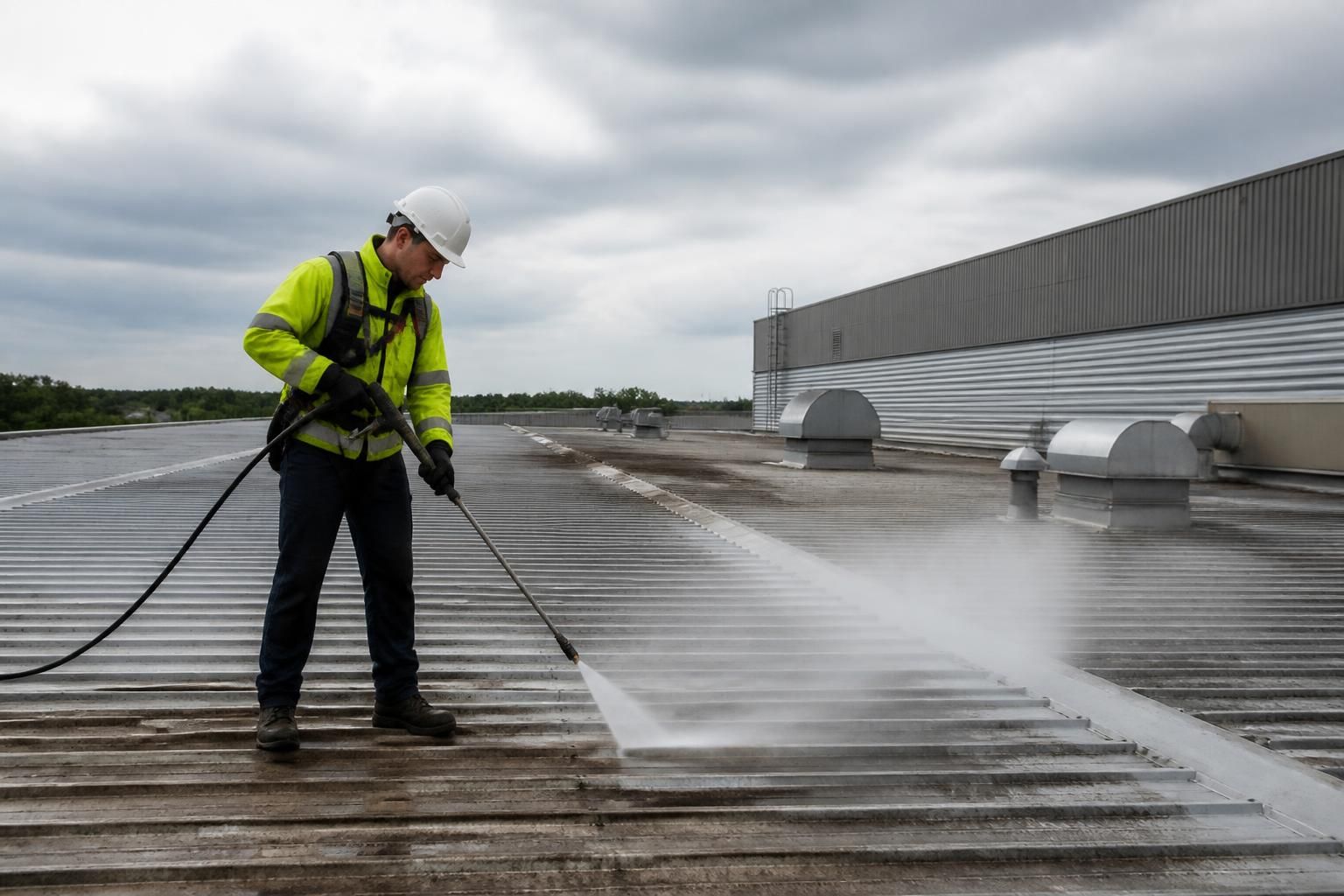
What environmental factors should be considered when choosing a cleaning method for commercial roofs?
When choosing a commercial roof cleaning method, assess the roof material and condition alongside weather, temperature, drainage, surrounding vegetation, pollution and the risk of contaminated runoff. These factors determine whether pressure washing, soft washing or steam cleaning can remove deposits effectively without damaging the roof or affecting people, property and the environment.
The main environmental factors are weather, temperature, rainfall, wind, drainage, surrounding vegetation, pollution and the risk of contaminated runoff. These should be assessed alongside the roof material and condition before selecting pressure washing, soft washing, steam cleaning or a combination of methods. The correct approach must remove deposits effectively without damaging the roof, spreading pollutants or creating risks for people, property and the surrounding environment.
Weather and short-term conditions
Weather affects both the safety of the work and the performance of cleaning chemicals or water-based methods. Rain can dilute cleaning solutions, reduce dwell time and carry loosened dirt towards drains or neighbouring areas. High winds can create spray drift, affect access equipment and make it harder to control runoff. Cleaning should therefore be planned for a suitable weather window, with the forecast reviewed before work begins and conditions monitored throughout the task.
Extreme heat can cause water and cleaning solutions to dry too quickly, potentially leaving residues or reducing the effectiveness of the treatment. Very cold conditions may create slippery surfaces and can cause standing water or wet equipment to freeze. Where frost, ice or rapidly changing conditions are present, postponing the work may be safer and produce a better result.
Roof material and environmental exposure
The roof material determines how much pressure, heat and chemical treatment it can tolerate. Coated metal, membrane systems, fibre cement, concrete tiles and other commercial roofing materials may respond differently to abrasion, heat and cleaning agents. The age of the roof, existing damage, exposed fixings, failed coatings and previous repairs are also relevant.
Environmental exposure can accelerate deterioration. Coastal or heavily industrial locations may leave salt, soot or chemical deposits on the surface, while areas beneath trees may have leaf debris, moss, algae and bird fouling. A method that is suitable for removing loose organic growth may not be appropriate for baked-on pollution or fragile surface coatings. A roof inspection helps establish whether low-pressure cleaning, a controlled soft wash, steam cleaning or limited mechanical action is most suitable.
Pollution and the type of deposit
Deposits should be identified before treatment because they have different environmental and cleaning requirements. Organic growth such as algae and moss may respond to an appropriate biocidal treatment, whereas traffic film, atmospheric soiling and oily residues may require different detergents or hot-water cleaning. Bird fouling can present hygiene concerns and should be handled in a way that limits dust, spray and contact with adjacent areas.
Where pollution is embedded in a coating or surface, increasing pressure is not always the safest solution. Excessive pressure can strip finishes, force water beneath laps or seals and spread contaminated material. Controlled pressure, suitable cleaning agents and sufficient dwell time often provide better control than simply using more force.
Drainage and contaminated runoff
Before cleaning starts, identify roof outlets, downpipes, gullies, surface-water drains, soakaways and nearby watercourses. Cleaning water can contain detergents, loosened coatings, oils, organic matter and heavy deposits. If it enters a surface-water drainage system without suitable controls, it may affect the local environment or breach site requirements.
Runoff should be managed through measures appropriate to the site, such as protecting or isolating vulnerable drains, collecting contaminated water, using temporary bunding and directing water to an approved disposal route. The correct controls depend on the building, the deposits being removed and local drainage arrangements. Cleaning should never assume that all drains lead to foul sewer systems.
Water consumption is another consideration. Pressure washing can remove large amounts of loose material quickly, but it may generate substantial runoff. Steam cleaning generally uses less water than conventional high-volume washing, although its suitability depends on the roof material, the deposit and the required level of treatment. Water use should be balanced against cleaning effectiveness and runoff control rather than considered in isolation.
Nearby vegetation, wildlife and water bodies
Trees, planted areas, ponds, streams and other sensitive features near the building need protection from overspray, falling debris and cleaning residues. Wind direction and spray pattern should be considered when choosing equipment and positioning access systems. Vegetation may need temporary shielding, and loose debris should be contained rather than allowed to fall into planted areas or water.
Birds, nesting areas and other wildlife can also affect the timing and method of the work. A pre-clean inspection should identify active nests or other protected features, particularly around roof edges, plant rooms and sheltered cladding details. Where necessary, the work should be adjusted to avoid disturbance and comply with relevant wildlife protection requirements.
Site location and surrounding activity
Urban buildings may be close to public footways, roads, neighbouring premises, ventilation intakes and occupied offices. Pressure washing can create spray, noise and airborne debris, while steam equipment may produce visible vapour and require controlled operating areas. Industrial sites may have additional hazards from dust, chemicals or vehicle movements.
The cleaning method should limit disruption and prevent water or debris entering doors, loading bays, air-handling systems and electrical equipment. Where a quieter or more controlled process is needed, steam cleaning or low-pressure methods may be preferable to high-pressure washing. The choice should be based on the building’s surroundings as well as the roof itself.
Access, ground conditions and seasonal timing
Environmental conditions at ground level influence the safe use of mobile elevating work platforms, scaffolding and other access equipment. Soft ground, standing water, slopes and restricted routes may affect where equipment can be positioned. Wind limits, overhead obstructions and nearby power supplies also need to be considered before work begins.
Seasonal timing can influence the result. Organic growth may be heavier in shaded or damp areas, while dry periods can increase dust and cause treatments to dry quickly. Scheduling should allow enough time for the roof and surrounding areas to be inspected, cleaned and left in a controlled condition without exposing the site to avoidable runoff or slip hazards.
Choosing the method
- Pressure washing: useful for robust surfaces and heavy loose deposits when pressure, nozzle selection and spray distance can be controlled. It may be unsuitable for fragile coatings, aged membranes, open joints or areas where runoff is difficult to contain.
- Soft washing: uses low pressure with an appropriate cleaning solution and can be effective for organic growth and general soiling. Chemical selection, dwell time, overspray prevention and thorough control of runoff are essential.
- Steam cleaning: applies heated water at controlled pressure and can reduce water use for some types of soiling. It still requires an assessment of heat sensitivity, surface coatings, drainage and the handling of loosened contaminants.
- Combined methods: may be appropriate where a roof has different deposits or materials. For example, a controlled treatment may remove organic growth before low-pressure rinsing, while steam may be reserved for localised pollution.
The final method should follow a documented inspection and, where appropriate, a small test area. This confirms how the surface reacts to pressure, heat and cleaning agents before the full roof is treated. A suitable commercial roof cleaning plan should also set out weather limits, runoff controls, protection for nearby features, access arrangements and any requirements for waste-water disposal. Considering these environmental factors in advance produces a safer, more controlled clean and helps preserve the roof and its surrounding site.
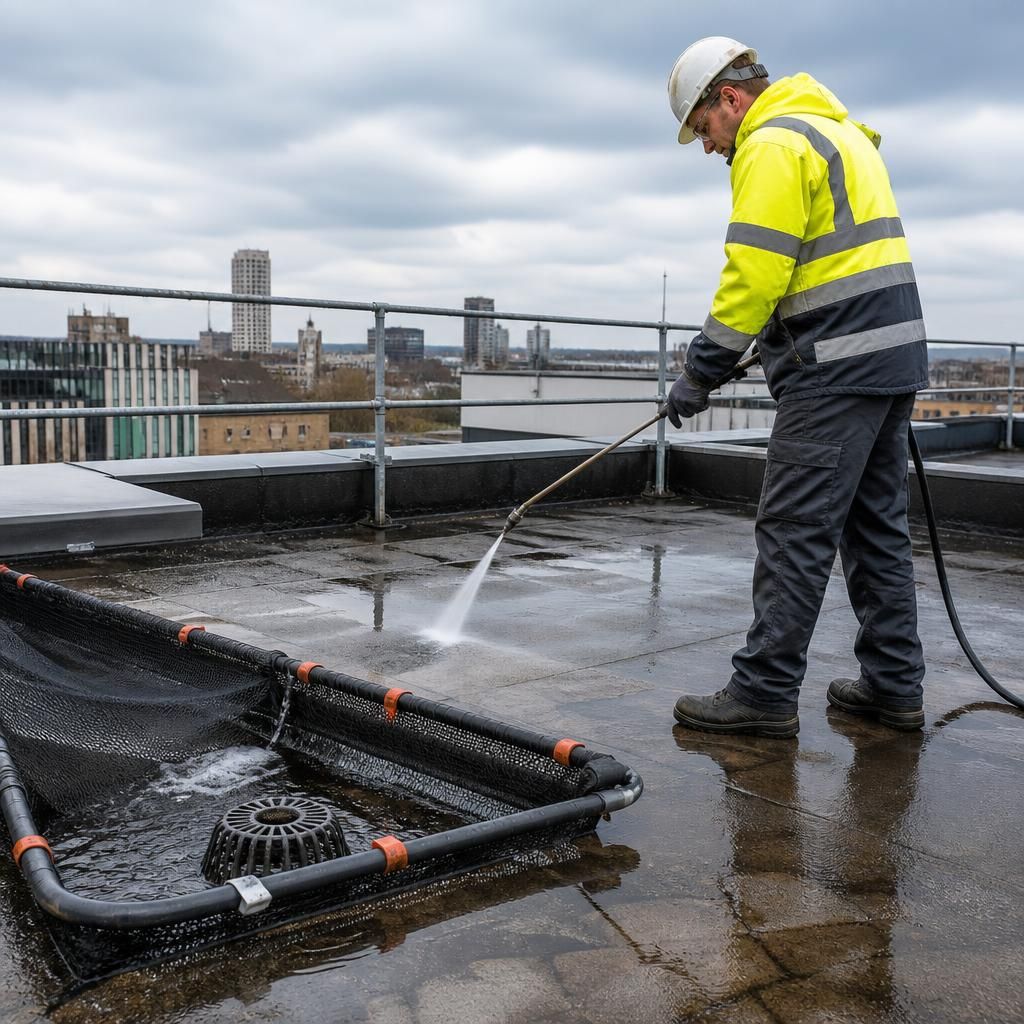
Controlling contaminated runoff is a key environmental consideration when selecting a commercial roof cleaning method. Wash water can contain detergents, oils, organic growth, bird fouling, loosened coatings and accumulated pollution, so it must not be allowed to enter surface-water drains, planted areas or nearby watercourses without suitable controls.
Before work begins, the cleaning plan should identify roof outlets, downpipes, gullies and drainage routes. Depending on the site, this may involve protecting vulnerable drains, using temporary bunding, collecting wash water and arranging approved disposal. Low-pressure or steam cleaning may help reduce uncontrolled runoff in suitable conditions, but neither method removes the need to manage wastewater. Weather, wind direction, nearby vegetation and the type of deposit should also be checked so that the chosen process remains controlled throughout the clean.