
What cleaning methods are suitable for different types of commercial roofs?
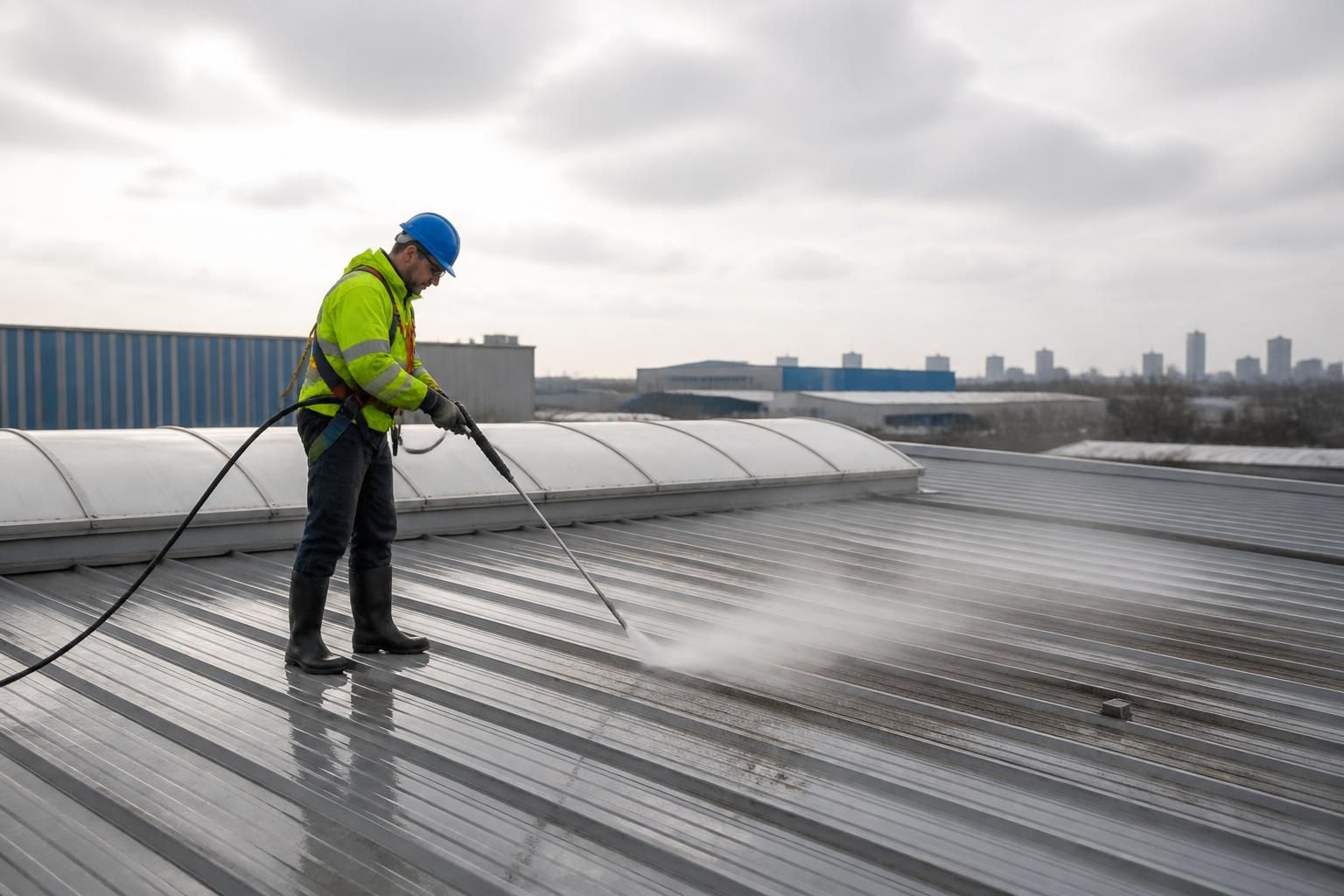
Suitable commercial roof cleaning methods depend on the roof material, condition and extent of soiling: low-pressure soft washing is generally appropriate for membranes and coated surfaces, while controlled pressure washing may suit robust metal, concrete or clay-tiled roofs. Steam cleaning can be useful for localised deposits or sensitive areas, but every method should be selected after assessing the roof, drainage and manufacturer’s requirements.
The suitable cleaning method for a commercial roof depends on its material, surface condition, coating, drainage arrangement and manufacturer’s requirements. Low-pressure soft washing is generally the safest starting point for single-ply membranes, coated systems and fragile surfaces. Controlled pressure washing can be appropriate for robust metal, concrete and tiled roofs, while steam cleaning is useful for localised deposits and areas where minimal water or chemical use is preferred. The method should always be selected following a site inspection rather than applied as a standard treatment to every roof.
Before cleaning, the roof should be assessed for damaged membrane, loose fixings, open joints, failed sealant, corrosion, exposed insulation and areas of ponding water. The inspection should also identify roof lights, vents, plant, solar equipment, fragile coverings and access restrictions. This determines both the cleaning technique and the level of protection needed for vulnerable areas. Manufacturer and warranty requirements are important, particularly on newer membrane and coated roofing systems.
Single-ply membrane roofs
PVC, TPO and EPDM membranes are commonly cleaned using a low-pressure soft-washing process. A compatible cleaning solution is applied to loosen atmospheric grime, algae, moss and other organic deposits, followed by a controlled rinse that does not force water beneath laps, flashings or perimeter details. High-pressure cleaning is usually unsuitable because it can lift seams, damage the membrane surface, disturb bonded details or drive water into the roof build-up.
Particular care is needed around aged or weathered membranes. A surface that appears intact may have weakened seams or brittle edges that cannot withstand aggressive agitation. Soft brushes, suitable low-pressure equipment and localised treatment are generally preferable to abrasive methods. Any cleaning solution must be checked for compatibility with the membrane and surrounding materials, as some chemicals can affect plasticisers, surface finishes or protective coatings.
Bitumen felt and modified bitumen roofs
Built-up felt and modified bitumen systems can often be cleaned with a gentle low-pressure rinse and a carefully selected treatment for biological growth. The aim is to remove dirt and organic contamination without disturbing mineral surfacing, seams, chippings or edge details. Pressure washing should be avoided or tightly controlled where the felt is aged, blistered, delaminating or losing its surface granules.
Heavy moss should not simply be blasted away. Its removal may expose defects or pull at the upper surface of the felt. Loose growth can be removed carefully before treating the remaining staining, with particular attention to outlets and gutters where displaced material may collect. If the inspection identifies blisters, splits or significant surface loss, cleaning should not be used as a substitute for repair.
Metal roofs and cladding
Sound profiled metal roofs can usually tolerate controlled pressure washing, provided the pressure, nozzle selection and spray direction are suitable for the coating and profile. Low-pressure soft washing may be preferable where the roof has a delicate paint finish, heavy oxidation or extensive biological staining. Cleaning should follow the direction of laps and avoid forcing water beneath joints, flashings and fasteners.
Corrosion must be assessed before work begins. Aggressive pressure, abrasive tools and unsuitable chemicals can remove protective coatings and accelerate deterioration. Rust staining may require a separate treatment, but the correct approach depends on whether the staining is superficial or linked to failed coating, damaged fixings or underlying corrosion. Rinsing should be controlled so that contaminated water does not enter sensitive areas or stain façades and paving below.
Concrete roofs and concrete tiles
Concrete tiles and robust concrete roof surfaces can often be cleaned using controlled pressure washing, sometimes combined with a suitable treatment for algae, moss and lichen. The operator must adjust the process for the age and condition of the concrete, as worn surfaces can become more porous and vulnerable to surface erosion.
Where biological growth is established, removing the visible growth and treating the remaining spores can provide a more complete result than pressure alone. Care is required around tile laps, ridge details, mortar joints and flashings. Water should not be directed upwards beneath overlapping tiles, and gutters and outlets should be protected from excessive sediment.
Clay tiles and slate
Clay tiles and natural slate require a more conservative approach. Sound, robust surfaces may accept carefully controlled low-pressure cleaning, but aggressive pressure can chip tiles, erode slate, remove weathered surfaces or damage mortar and bedding materials. On older roofs, manual removal of larger growth followed by a compatible low-pressure treatment may be safer than extensive pressure washing.
Slate can vary considerably in strength and condition. Delamination, cracking or loose fixings are warning signs that the roof may need repair or a specialist assessment before cleaning. Clay tiles can also become brittle with age. The cleaning method should therefore reflect the condition of the individual roof, not just its general material category.
Coated, insulated and specialist roofing systems
Roof coatings, liquid-applied systems and insulated panels need cleaning methods that preserve the coating and prevent water reaching joints or insulation. Low-pressure washing with a manufacturer-compatible detergent is often more appropriate than strong pressure or abrasive cleaning. Any chalking, flaking or failed coating should be recorded, as cleaning may reveal defects that need remedial work.
Roofs containing asbestos cement require additional controls. They should be identified before work starts, and cleaning must follow the applicable UK asbestos requirements and the condition of the material. Abrasive methods and uncontrolled high-pressure water can release hazardous fibres and are not appropriate. Where the roof is fragile or significantly deteriorated, a competent asbestos specialist may need to advise on the work.
When steam cleaning is appropriate
Steam cleaning can be useful for localised moss, algae, grease or ingrained deposits, particularly where a lower-volume process is beneficial or where chemical use needs to be reduced. It can also help clean sensitive details, façade junctions and areas around roof-mounted equipment. However, heat and moisture still need to be managed carefully: some membranes, sealants, coatings and plastics may be affected by elevated temperatures.
Steam is not automatically suitable for every roof, and it may be less efficient for large areas with heavy loose debris. Its use should be based on the roof material, contamination and the condition of seams, coatings and detailing.
How the method is selected and controlled
- Inspect the roof, access routes, drainage, plant and fragile areas before work begins.
- Confirm the roof material, coating and any relevant manufacturer or warranty restrictions.
- Carry out a small test area to check cleaning performance and surface compatibility.
- Use the lowest effective pressure and the least aggressive agitation needed for the deposits.
- Protect roof lights, vents, electrical equipment, solar installations, façades and landscaping.
- Prevent loosened moss, sediment and cleaning solution from entering drainage systems or uncontrolled discharge points.
- Collect or manage wastewater in accordance with site requirements and applicable environmental controls.
- Inspect the finished roof for remaining deposits, blocked outlets, displaced materials and previously hidden defects.
In practical terms, soft washing is usually the preferred method for fragile or coated commercial roofs; controlled pressure washing is more suitable for sound, robust surfaces; and steam cleaning is best used selectively. A combination of methods may be appropriate on one building, provided each roof section is treated according to its material and condition. This approach removes contamination while reducing the risk of membrane damage, coating loss, water ingress and avoidable repair costs.
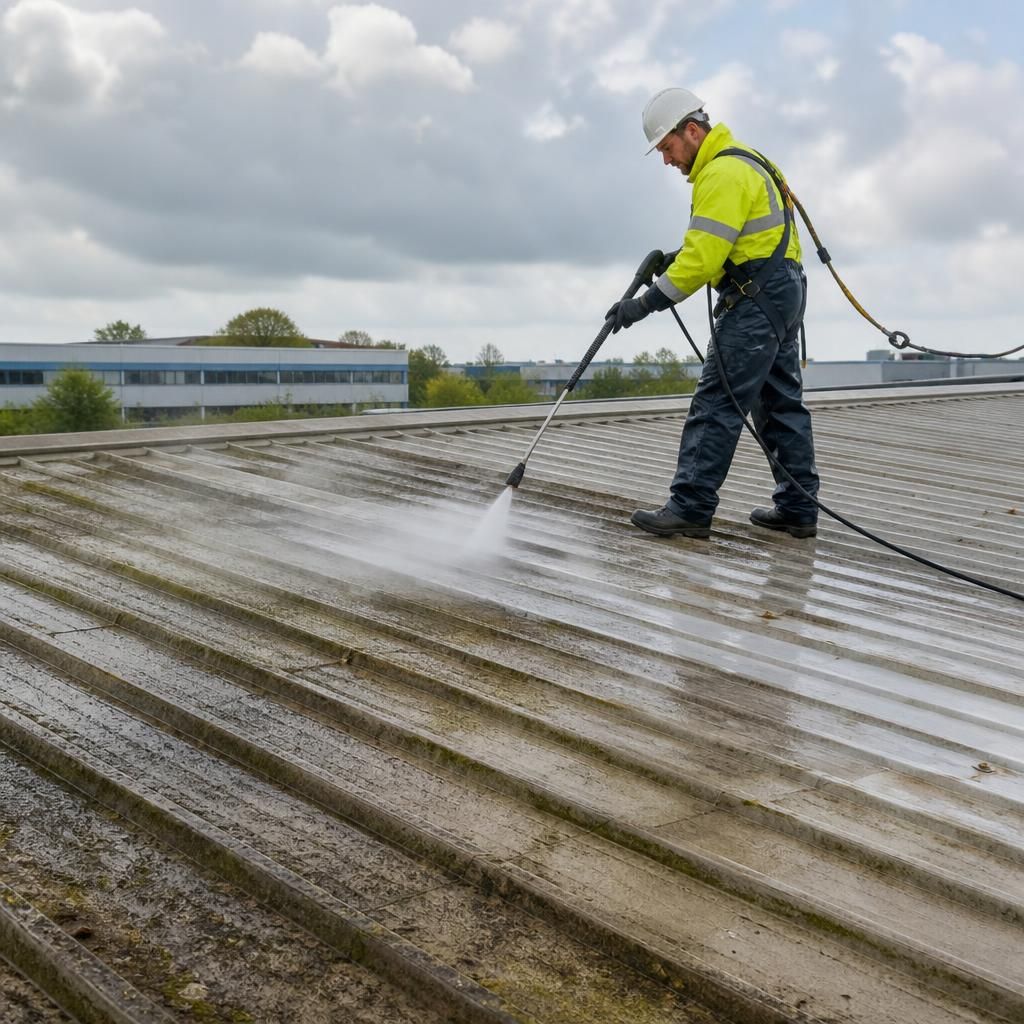
The safest commercial roof cleaning method is determined by the roof material, its condition and the type of contamination. Soft washing is generally suitable for membranes, coatings and fragile surfaces, while controlled pressure washing may be appropriate for sound metal, concrete or tiled roofs. Steam cleaning can be used selectively for localised deposits where reduced water or chemical use is beneficial.
Before cleaning, the surface should be inspected and a small test area checked for compatibility. Using the lowest effective pressure helps protect seams, coatings, fixings and roof details, while drainage, roof lights, plant and vulnerable areas must be protected from water, chemicals and loosened debris.