
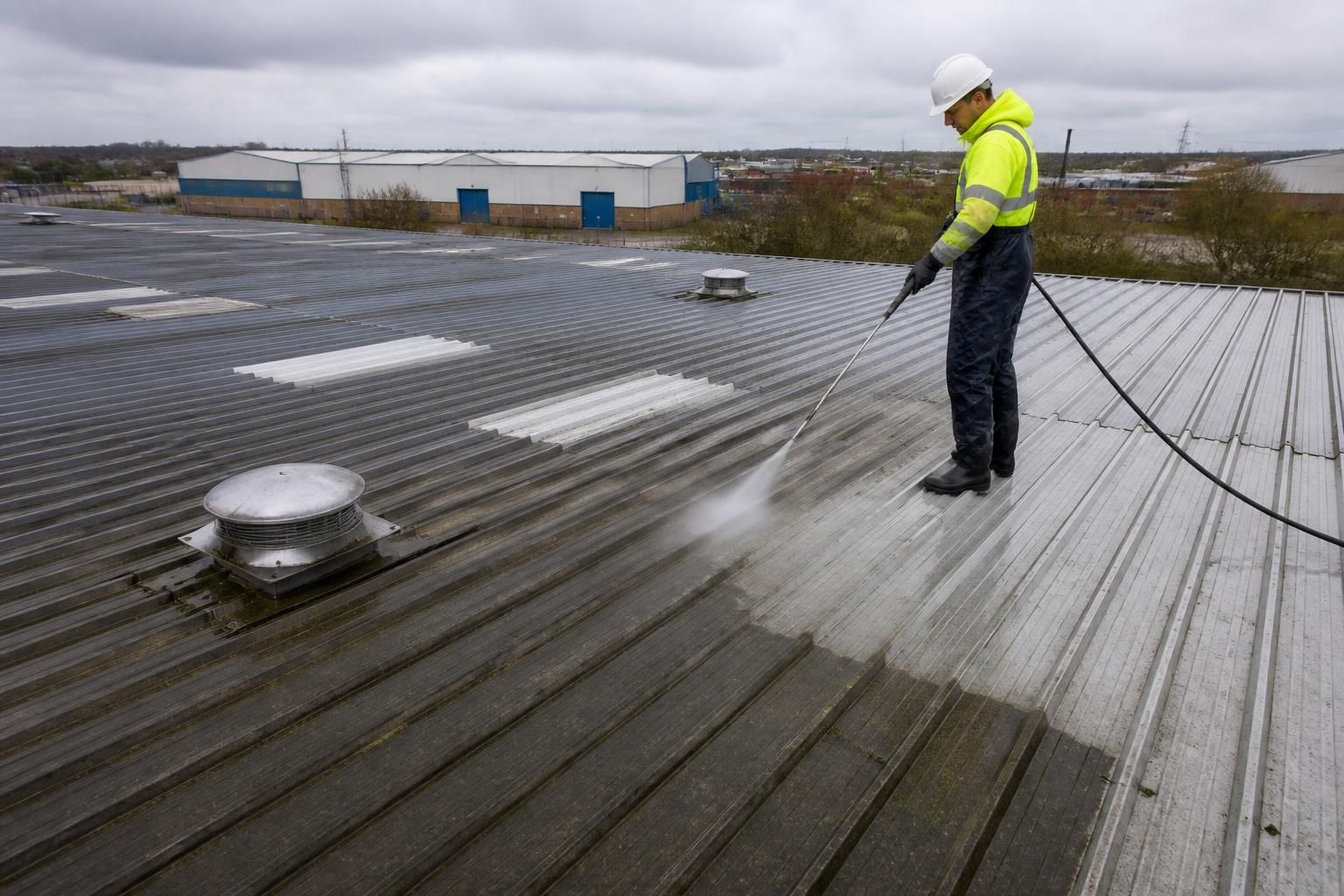
What are the long-term benefits of incorporating commercial roof washing into a regular maintenance schedule?
Incorporating commercial roof washing into a regular maintenance schedule helps remove moss, algae, dirt and other contaminants before they contribute to blocked drainage, moisture retention or surface deterioration. Over time, this can extend the roof’s serviceable life, reduce the risk of unexpected repair costs, protect the building and its contents, and maintain a clean, professional appearance.
Incorporating commercial roof washing into a planned maintenance schedule helps preserve the roof’s surface, drainage system and supporting components over the long term. Regular removal of moss, algae, dirt, atmospheric deposits, bird fouling and other contaminants reduces moisture retention and blockage risks, helping to prevent avoidable deterioration, extend serviceable roof life and control maintenance costs.
Commercial roof washing is most effective as part of a wider inspection and maintenance programme rather than as an isolated cleaning exercise. The appropriate process depends on the roof material, coating, age, condition, access arrangements and the type of contamination present. Washing should therefore be planned and carried out using methods that remove deposits without damaging membranes, joints, coatings, seals or drainage details.
Key long-term benefits include:
- Reduced surface deterioration: Moss, algae, organic matter and accumulated dirt can hold moisture against the roof surface. Some deposits may also encourage biological growth around laps, joints, fixings and drainage channels. Removing them reduces prolonged damp exposure and helps the roof remain in better condition.
- Lower risk of blocked drainage: Loose vegetation and debris can collect around outlets, gutters, downpipes and valley channels. If water cannot drain correctly, it may pond on the roof or overflow onto façades and surrounding areas. Regular cleaning helps maintain clear drainage routes, although outlets should still be inspected and cleared as a separate maintenance task where necessary.
- Extended serviceable life: Keeping contaminants under control can reduce the stresses associated with persistent dampness, organic growth, staining and blocked drainage. This does not make a roof last indefinitely, but it can help delay avoidable deterioration and support the performance of the existing system.
- Fewer unexpected repairs: A clean roof is easier to inspect. During scheduled cleaning, early signs of failed sealant, damaged sheets, corrosion, loose flashings, cracked coatings or defective drainage may become visible. Identifying these issues promptly can allow targeted repairs before they develop into more extensive problems.
- Better protection for the building and its contents: Roof defects and overflowing drainage can contribute to water ingress, damp internal areas and damage to stock, equipment, ceilings or electrical installations. Washing does not replace roof repairs or waterproofing work, but it forms part of a preventative approach to reducing these risks.
- More consistent appearance: Staining, moss and biological growth can make a commercial property appear neglected, particularly on visible roof areas, entrances, retail premises, offices and managed estates. A planned cleaning schedule helps maintain a consistent external appearance across the site.
- More effective budgeting: Planned maintenance makes cleaning, inspections and minor remedial work easier to schedule. This can reduce reliance on reactive call-outs and help property managers distinguish routine maintenance from repairs requiring specialist roofing input.
- Improved maintenance records: Regular visits provide an opportunity to record contamination, drainage condition, visible defects, access requirements and work completed. These records support asset management, contractor coordination and future decisions about repairs, coatings or eventual roof replacement.
The financial benefit comes primarily from preventing avoidable deterioration, not from treating roof washing as a substitute for roof renewal. Cleaning cannot correct defective membranes, failed waterproofing, structural movement, corrosion that has already weakened components or serious water ingress. Where these conditions are found, they should be assessed and repaired by an appropriately qualified roofing professional before or alongside further cleaning.
Frequency should be based on the site rather than a fixed calendar rule. Factors include the roof material and design, surrounding trees, airborne pollution, nearby construction, bird activity, coastal or industrial exposure, the amount of organic growth and the effectiveness of the drainage system. Roofs beneath trees or in areas with heavy contamination may need more frequent attention, while cleaner sites may be suitable for a less intensive programme following inspection.
A suitable maintenance visit normally involves assessing the roof and access arrangements, identifying sensitive areas, removing loose debris, selecting a compatible cleaning method and controlling run-off. Low-pressure washing, soft washing or steam cleaning may be appropriate in different circumstances; aggressive pressure can damage coatings, force water beneath laps or disturb fragile materials. Any biocidal or treatment product must also be suitable for the roof and managed in accordance with relevant environmental and site requirements.
Safety remains essential throughout long-term roof maintenance. Commercial roofs may contain fragile sheets, rooflights, uneven surfaces, plant, electrical equipment and difficult access points. Cleaning should be planned with suitable access equipment, edge protection, fall-prevention measures, exclusion zones and controls for water, chemicals and run-off. A competent contractor should assess these risks before work begins and avoid relying on the roof surface itself as a safe working platform.
For existing maintenance clients, the most useful approach is to combine scheduled roof washing with visual inspections and clear reporting. This creates a practical record of changing roof conditions, identifies areas requiring attention and allows cleaning intervals to be adjusted as the site develops. In this way, commercial roof washing contributes to longer roof performance, fewer preventable problems and more predictable building maintenance.
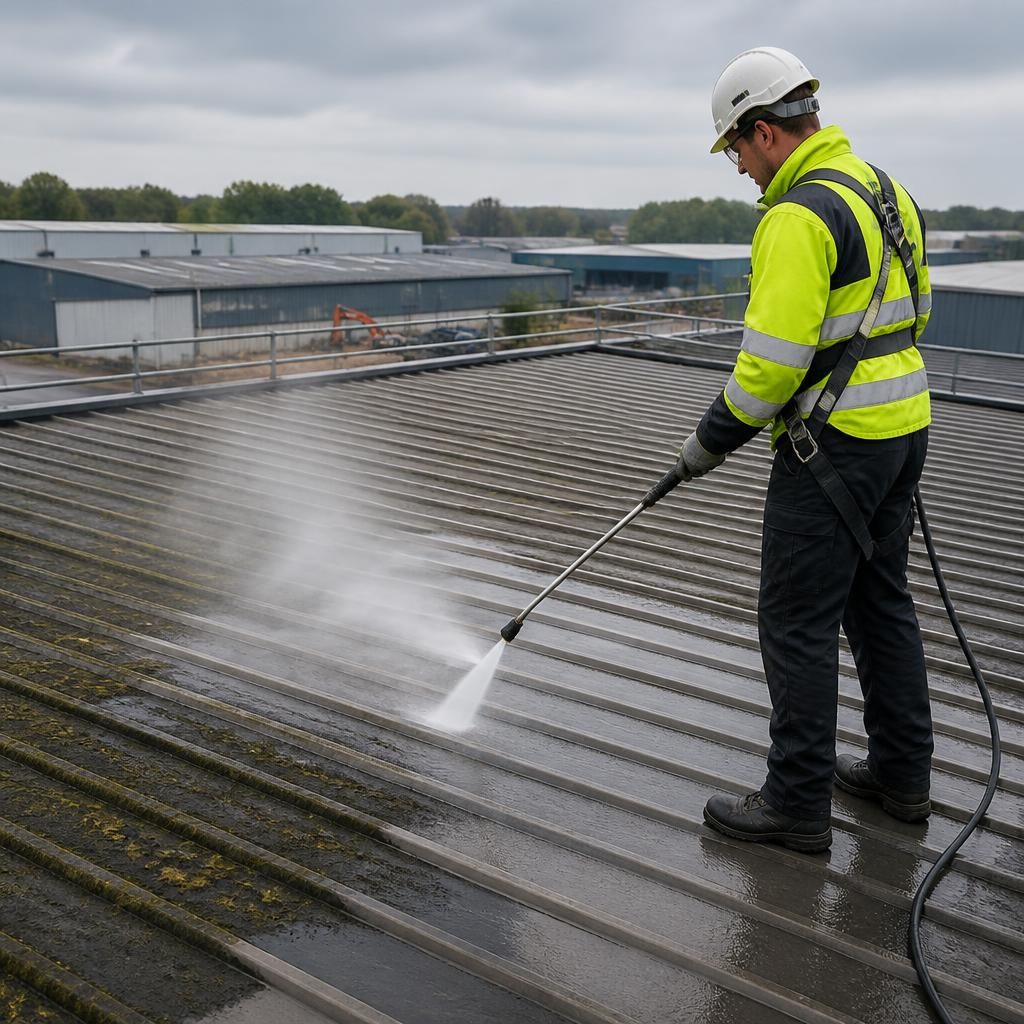
Regular commercial roof washing supports long-term roof maintenance by removing moss, algae, dirt and debris before they retain moisture, obstruct drainage or conceal developing defects. Keeping the surface clean helps preserve roof materials and makes inspections more effective.
When washing is combined with planned inspections, issues such as damaged sheets, failed sealant, loose flashings, corrosion or blocked outlets can be identified earlier. This allows property managers to arrange targeted repairs, reduce reliance on emergency call-outs and make better-informed decisions about future maintenance or roof replacement.