
What are the best cleaning methods for my specific commercial roof material?
The best commercial roof cleaning method depends on the material, coating, age and condition of the roof. Metal and coated systems typically need low-pressure washing with a compatible detergent, while membranes, tiles and fragile surfaces may require soft washing, steam cleaning or carefully controlled manual treatment to prevent damage.
The best commercial roof cleaning method depends on the roof material, its surface coating, age, condition and the type of contamination present. Metal and coated roofs usually respond well to controlled low-pressure washing with a compatible cleaning solution. Single-ply membranes, aged felt, tiles and other vulnerable surfaces generally require soft washing, steam cleaning or carefully controlled manual treatment. The objective is to remove dirt, algae, moss, bird fouling and atmospheric deposits without damaging the waterproofing layer, protective finish, joints or drainage system.
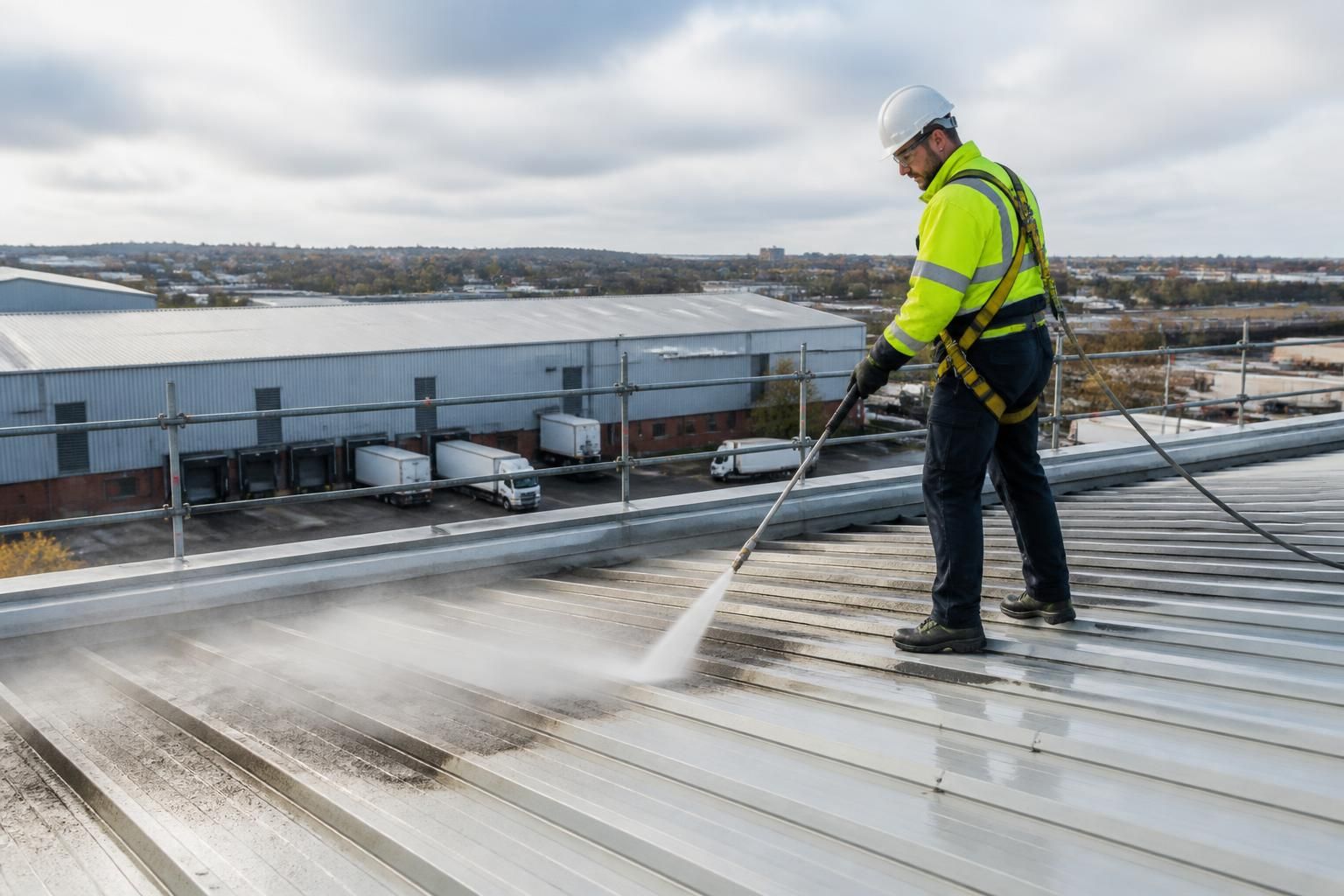
Metal roofs can usually be cleaned using low-pressure water and a detergent selected for the coating and contamination. This removes general dirt, organic growth, traffic film and some staining while limiting the risk of forcing water beneath laps, flashings or seals. More stubborn deposits may need agitation with soft brushes or a controlled steam-cleaning process. High pressure should be avoided because it can strip paint, expose metal, damage sealants and drive water into joints. After cleaning, the roof should be checked for corrosion, failed fixings, open laps and damaged coating.
Coated steel and aluminium systems need particular care because the finish is part of the roof’s protection against weathering and corrosion. Cleaning products must be compatible with the coating, and abrasive pads, harsh chemicals and aggressive rotary equipment should not be used unless the manufacturer has confirmed that they are suitable. Where the coating is chalking, peeling or already damaged, cleaning should be treated as a maintenance preparation exercise rather than a way to restore the finish. Any remedial coating or corrosion treatment should follow the cleaning work once the surface has been inspected and allowed to dry.
Single-ply membranes such as PVC, TPO and EPDM are generally cleaned with a low-pressure or soft-washing method. A suitable detergent can loosen algae, grime and atmospheric deposits, followed by a controlled rinse that does not lift the membrane, disturb edge details or flood outlets. EPDM and other rubber-based membranes can be affected by incompatible solvents, oils and strong chemicals, while some plastic membranes may be vulnerable to excessive heat or abrasion. Cleaning should therefore be carried out with products and equipment appropriate to the specific membrane, particularly around seams, penetrations, upstands and termination bars.
Built-up felt and bitumen roofs should be treated as waterproofing systems rather than ordinary washable surfaces. Low-pressure cleaning, soft brushes and carefully selected detergents are normally safer than high-pressure washing. Excessive pressure can loosen mineral surfacing, expose the bitumen, disturb laps and cause water to enter beneath the felt. Moss should not simply be blasted away, as its roots may already have affected the surface. Where contamination is heavy, controlled manual removal followed by a suitable treatment is often more appropriate. The roof should then be examined for blistering, splits, exposed felt, loose chippings and deteriorated junctions.
GRP and fibreglass roofs can often be cleaned with low-pressure water and a non-abrasive detergent. Care is needed around translucent panels, joints, trims and areas where the surface has become brittle or weathered. Abrasive cleaning can dull the finish and remove protective layers, while excessive pressure may damage seals or create leaks around fixings. If the surface is crazed, cracked or delaminating, cleaning should be limited to what can be safely achieved until the roof’s condition has been assessed.
Concrete and clay tiles may be suitable for soft washing, low-pressure rinsing and manual removal of heavier moss. The correct method depends on the tile’s age, porosity, surface finish and fixing condition. High-pressure washing can erode concrete, remove protective finishes, break older tiles and force water beneath overlaps. Clay tiles can be particularly vulnerable when aged or frost-damaged. Cleaning should be followed by an inspection for cracked, slipped or loose tiles, deteriorated mortar, damaged flashings and blocked valleys or gutters.
Slate roofs require a conservative approach because slate can fracture under concentrated pressure and its fixings may have weakened over time. Loose growth should be removed carefully, with low-pressure or manual methods used according to the condition of the slates. Aggressive scraping can break edges, while walking directly on the roof can cause damage. Access should be planned from suitable roof equipment or adjacent structures wherever possible, and any fragile or defective areas should be identified before cleaning begins.
Asbestos-cement roofing must not be treated as a standard roof-cleaning surface. The age and condition of the material should be established before work is planned. Abrasion, drilling, cutting and high-pressure washing can damage asbestos-cement and release hazardous fibres. Where asbestos may be present, the work must follow the relevant UK health and safety requirements, with an appropriate assessment, controls and competent personnel. In some cases, cleaning may not be the safest or most suitable option.
Green or biodiverse roofs need a different maintenance plan from conventional roofs. Cleaning should not remove planted areas, growing medium or habitat features. The work is normally limited to clearing outlets, gutters, inspection zones, walkways and roof-edge details by hand or with equipment that will not disturb the planting system. Water, detergents and access routes must be controlled so that the drainage layer, waterproofing and vegetation are not contaminated or damaged.
The condition of the roof is as important as its material. A relatively robust material may still require gentle treatment if it has open seams, failing sealants, corrosion, loose coverings, damaged insulation or poor drainage. Before selecting equipment or chemicals, the cleaning plan should consider:
- the roof construction, manufacturer and surface finish;
- the location and severity of algae, moss, bird fouling, oil, soot or other deposits;
- the condition of seams, laps, fixings, flashings, rooflights, penetrations and edge details;
- the position and capacity of gutters, outlets and internal drainage points;
- nearby façades, vehicles, machinery, pedestrian areas and sensitive landscaping;
- weather conditions, access arrangements and safe methods of working at height; and
- how dirty water, removed growth and cleaning residues will be contained and disposed of.
A practical commercial roof-cleaning process normally begins with a visual inspection and, where necessary, a closer survey of representative areas. A small test patch can confirm whether the proposed detergent, dwell time, pressure and rinsing method are suitable without committing the whole roof to an unsuitable treatment. The work can then proceed in manageable sections, keeping outlets clear and preventing loosened contamination from spreading across clean areas. Final checks should confirm that the roof, drainage system, surrounding property and access equipment have been left in a safe condition.
Steam cleaning can be useful where lower water use or controlled removal of stubborn organic growth is required, but heat must be managed carefully around membranes, sealants, coatings and rooflights. Soft washing is often effective for biological growth because the cleaning solution does more of the work, reducing the need for pressure. Neither method is automatically suitable for every roof: the material, age, coating and condition must determine the approach.
Cleaning alone will not correct structural or waterproofing defects. If inspection identifies leaks, failed joints, corrosion, loose tiles, damaged membrane or deteriorated flashings, those issues should be recorded and referred for repair before they become worse. A suitable maintenance schedule can then combine cleaning with routine inspections, gutter clearance and prompt remedial work, helping to protect the roof system without using a more aggressive cleaning method than the material can safely tolerate.
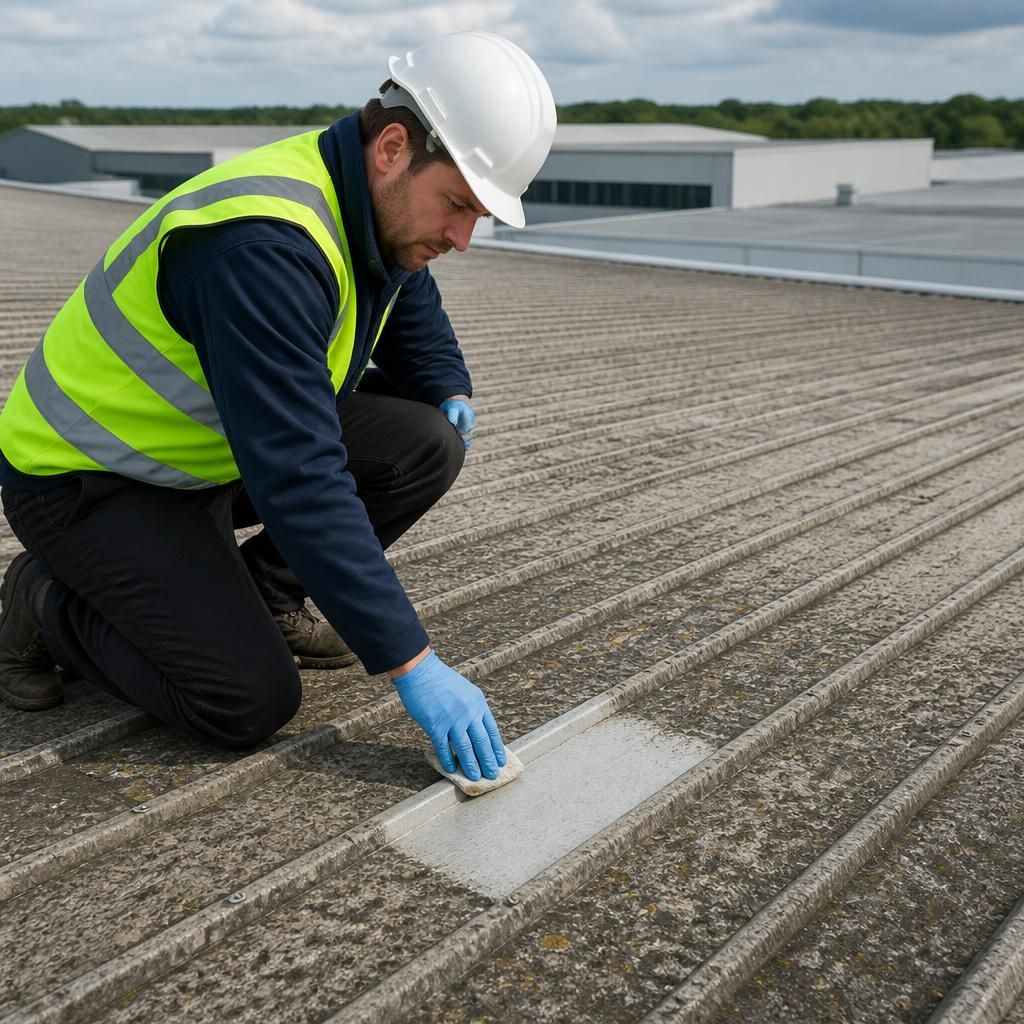
A small test patch is an important part of choosing a safe cleaning method for a commercial roof. It shows how the material, coating and existing contamination respond to the proposed detergent, heat, agitation and water pressure before the full area is treated.
The test should be carried out in a representative location, including an area with typical staining or organic growth. The surface can then be checked for changes such as coating loss, colour variation, softening, fibre release, disturbed seams or water entering beneath laps. The result also helps determine the required dwell time and rinsing method.
If the test reveals that the proposed treatment is too aggressive, the method can be adjusted by reducing pressure, changing the cleaning solution, using manual agitation or selecting controlled steam cleaning. This is particularly important for aged membranes, coated metal, bitumen felt, tiles, rooflights and surfaces with visible defects.