
What are the benefits of regular commercial roof washing?
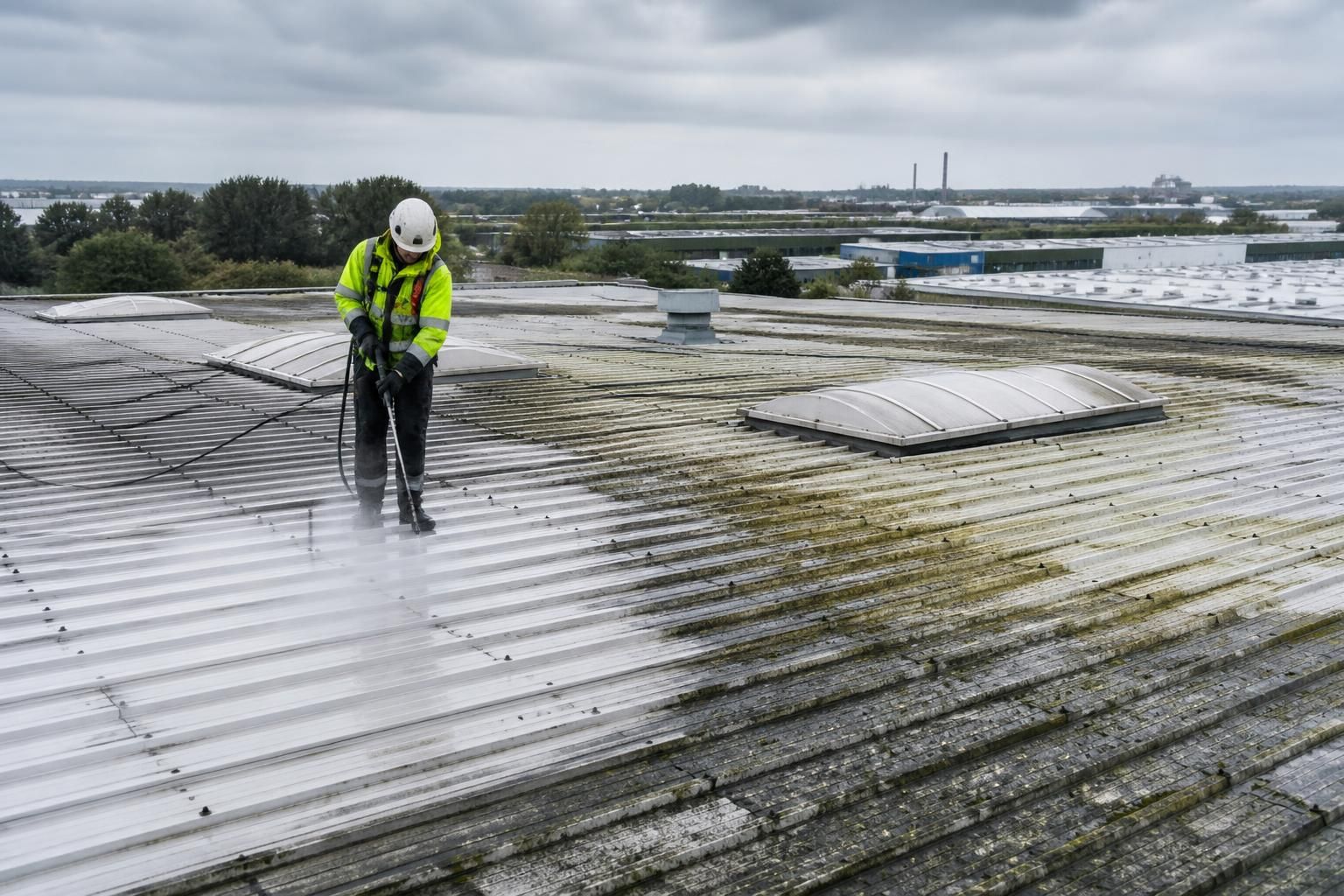
Regular commercial roof washing removes dirt, moss, algae, pollutants and other build-up that can retain moisture and accelerate roof deterioration. It helps prevent avoidable damage, supports safe drainage, improves the appearance of the premises and can extend the serviceable life of the roof when carried out using a method suited to its materials.
Regular commercial roof washing removes dirt, moss, algae, bird fouling, atmospheric pollutants and other deposits before they retain moisture or contribute to material deterioration. For businesses, this supports roof longevity, reduces the likelihood of avoidable repairs, helps maintain effective drainage and keeps the building looking presentable. The work must be planned around the roof material, construction, access requirements and condition; an unsuitable pressure or chemical treatment can cause damage rather than prevent it.
It can help prevent moisture-related deterioration. Organic growth and accumulated debris can hold water against roofing materials, joints, fixings and edge details. Persistent dampness may encourage corrosion, surface degradation and the deterioration of sealants or protective coatings. Moss can also work into laps, seams and drainage channels as it grows. Removing these deposits as part of a planned maintenance programme helps the roof dry more effectively and allows defects to be identified before they become more serious.
It supports drainage and reduces blockages. Leaves, moss, silt and general debris can collect around outlets, gutters, valleys and rainwater channels. If this material is left in place, water may drain slowly or overflow onto façades and access areas. Washing should be coordinated with inspection and clearance of associated drainage components, rather than treating the roof surface in isolation. Keeping drainage routes clear helps limit standing water and reduces the risk of water staining or ingress around vulnerable details.
It can extend the serviceable life of the roof. Cleaning does not make an old or defective roof new, but it can reduce the exposure of its surfaces to contaminants that accelerate wear. A clean roof is also easier to inspect, maintain and repair. Early identification of cracked sheets, failed laps, damaged flashings, corrosion, loose fixings or deteriorated coatings gives the responsible person an opportunity to arrange remedial work before a minor defect affects a larger area.
It helps protect roof coatings and finishes. Many commercial roofs rely on protective coatings or factory-applied finishes to resist weathering and corrosion. Dirt, biological growth and industrial deposits can obscure the surface and, in some cases, contribute to the breakdown of that protection. A compatible cleaning method removes contamination without stripping sound coatings. Where recoating is being considered, thorough preparation is particularly important because loose deposits and residues can prevent a new coating from bonding properly.
It improves the appearance of commercial premises. Roofs are visible from neighbouring buildings, roads, car parks and surrounding properties. Dark streaks, green growth and heavy soiling can make a building appear neglected even when other areas are well maintained. Cleaning the roof can improve the consistency of the external appearance and support the presentation of offices, retail units, industrial estates, managed properties and public buildings. It is especially useful before planned property inspections, refurbishment works or changes of occupancy.
It contributes to a safer site. Organic growth and wet deposits can make roof surfaces, walkways, loading areas and adjacent hard surfaces slippery. Cleaning can reduce this risk, although it is not a substitute for a formal roof risk assessment or suitable access controls. Commercial roof washing should be completed by trained operatives using appropriate edge protection, access equipment, fall-prevention measures and exclusion zones. Where runoff reaches ground-level areas, those surfaces may also need to be managed and rinsed to prevent temporary slip hazards.
It supports planned maintenance and budgeting. A clean roof is easier to survey, photograph and assess. This gives facilities teams, property managers and building owners clearer information when prioritising repairs, arranging coating work or planning capital expenditure. Regular cleaning can also form part of a wider maintenance schedule that includes gutter clearance, roof inspections, drainage checks and minor remedial work. Planned maintenance is generally easier to control than responding to leaks or damage after they have disrupted occupants or operations.
It can help reduce disruption caused by leaks. Blocked drainage, accumulated organic matter and neglected defects can contribute to water entering the building or affecting internal areas. The source of a leak is not always directly above the visible staining, so washing alone should not be presented as a leak repair. However, cleaning combined with a condition inspection can expose likely entry points and help identify where specialist repair or further investigation is required. Any known leak, fragile area or structural concern should be reported before cleaning begins.
The correct method depends on the roof construction. Low-pressure washing, soft washing, steam cleaning or carefully controlled chemical treatment may be suitable in different circumstances. Metal cladding, coated profiled sheets, concrete tiles, fibre cement, membranes and other systems have different tolerances for pressure, heat, chemicals and mechanical agitation. The condition of the coating, the presence of fragile fixings and the risk of water entering laps or penetrations must also be considered. High pressure should not be used simply because it removes contamination quickly; excessive force can lift coatings, drive water into joints and damage vulnerable surfaces.
Before work starts, the roof should be assessed for access, loading, fragile surfaces, skylights, rooflights, plant, electrical equipment, drainage routes and nearby pedestrian or vehicle movements. Operatives should use a method statement and suitable risk controls, protect sensitive equipment where necessary and prevent contaminated runoff from entering inappropriate drains or watercourses. Cleaning agents should be selected and handled in line with the roof manufacturer’s guidance and relevant environmental requirements. Removing loosened material from gutters and the surrounding site is an important part of completing the work properly.
Regular washing is most effective when it is based on the building’s exposure and condition rather than an arbitrary timetable. Coastal or industrial environments, overhanging trees, shaded elevations, persistent dampness, heavy bird activity and nearby construction can increase the rate of soiling. A roof with recurring moss or blocked outlets may need more frequent attention than a clean, well-drained roof in a sheltered location. The maintenance interval should be reviewed after each inspection and adjusted when the roof’s condition or surrounding environment changes.
Roof washing should therefore be viewed as preventative maintenance, not a replacement for inspection, repair or eventual renewal. When the work is carried out with a suitable method and sensible safety controls, the main benefits are a cleaner and more professional building, better visibility of defects, improved drainage performance, reduced contamination-related wear and a stronger basis for managing the roof over its serviceable life.
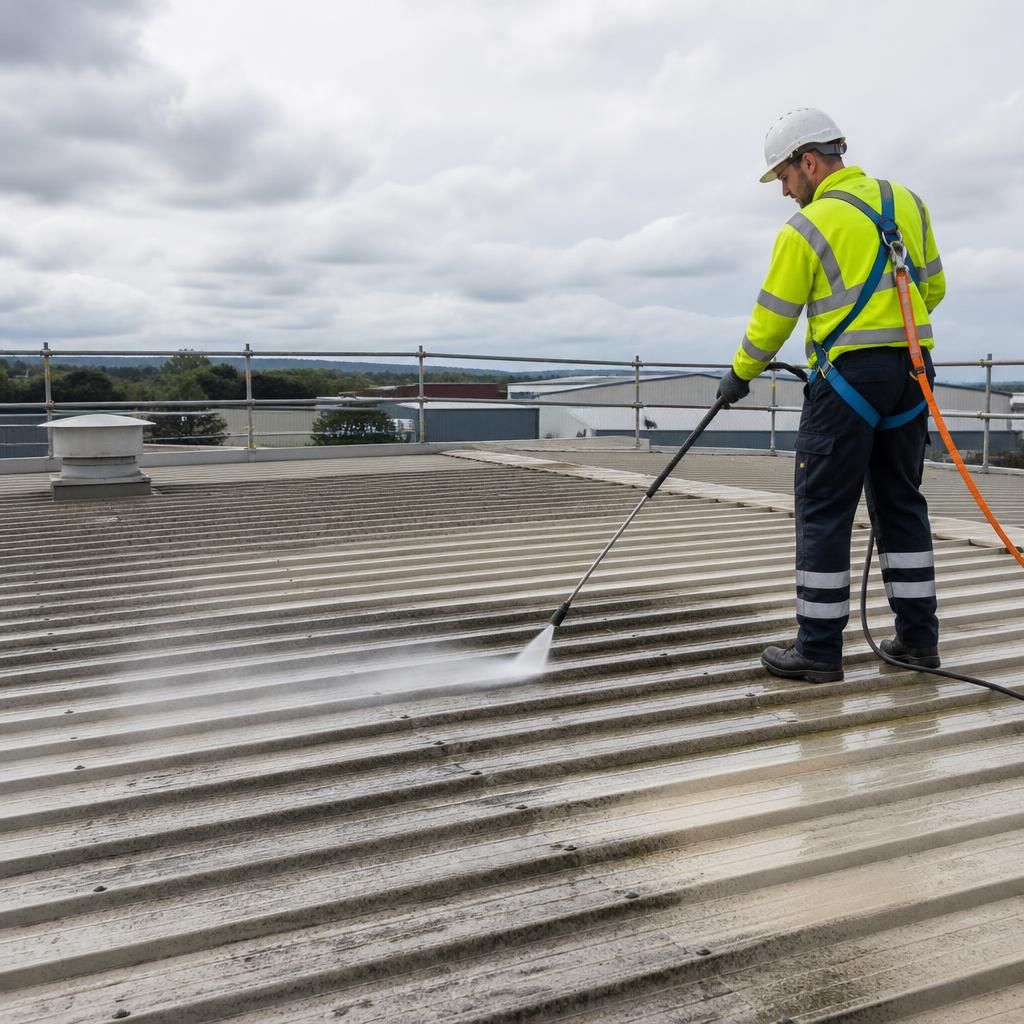
Regular commercial roof washing helps extend the roof’s serviceable life by removing moss, algae, dirt, bird fouling and other deposits that can retain moisture against roofing materials. Persistent dampness may contribute to corrosion, surface deterioration and the breakdown of sealants or protective coatings, particularly around laps, fixings and drainage details.
Cleaning also makes the roof easier to inspect. Once contamination has been removed, defects such as damaged sheets, failed seals, loose fixings, cracked tiles, worn coatings and blocked outlets are easier to identify and address before they contribute to more extensive damage. Washing should therefore form part of a planned maintenance programme, alongside roof inspections, gutter clearance and appropriate repairs.
The cleaning method must suit the roof construction and its condition. Excessive pressure, unsuitable chemicals or uncontrolled runoff can damage coatings, force water into joints or create hazards around the building. A professional assessment should consider the roofing material, access requirements, fragile areas, drainage and nearby occupants before work begins.