
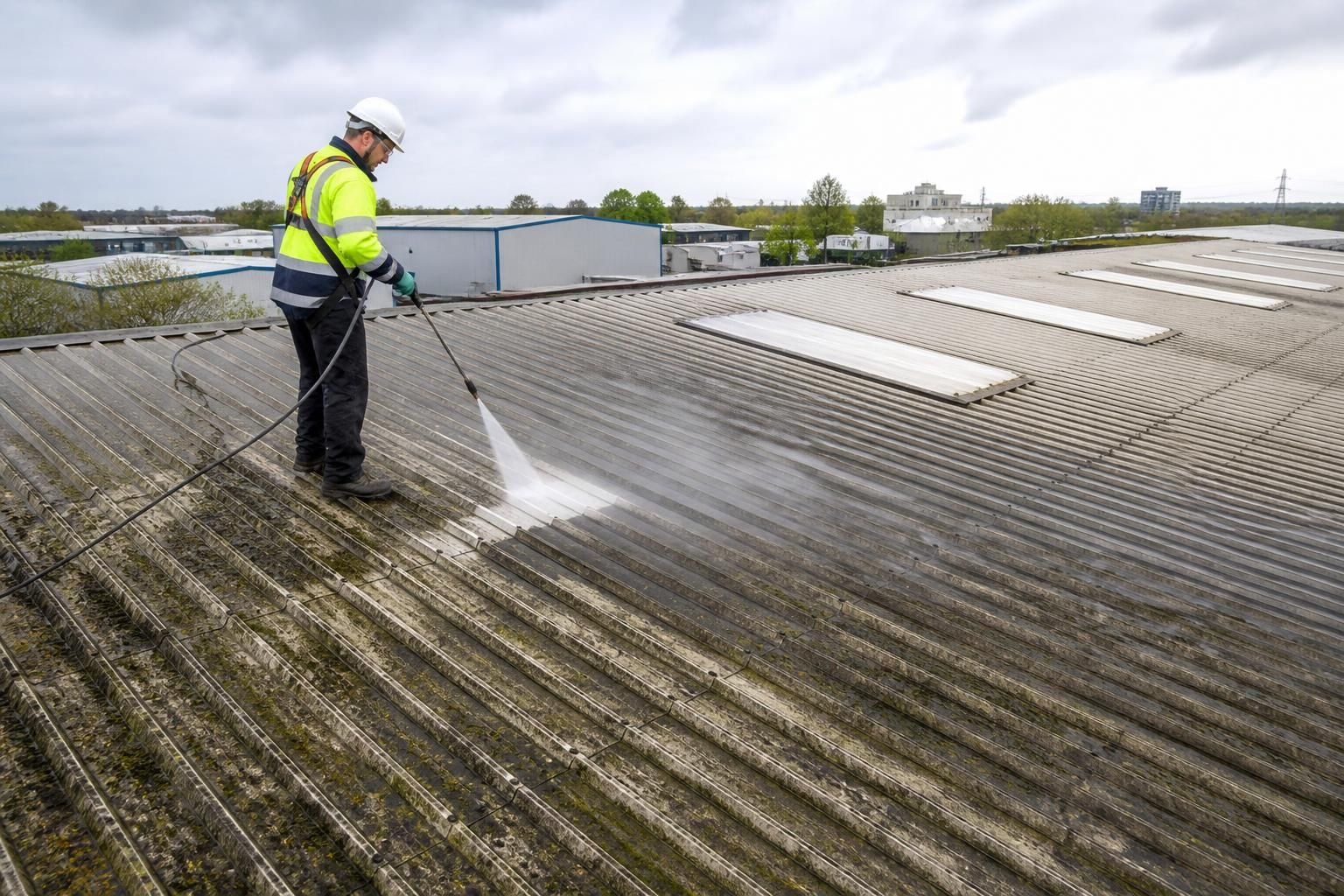
How often should my commercial roof be cleaned to ensure optimal maintenance and longevity?
Most commercial roofs should be professionally assessed at least annually and cleaned when moss, algae, bird fouling, debris or surface staining begins to build up; many properties require cleaning every one to three years. The appropriate interval depends on the roof material, surrounding trees, local weather, drainage and the level of contamination, so a site assessment should determine the maintenance schedule.
Most commercial roofs should be professionally inspected at least annually, while cleaning is commonly required every one to three years. This is a planning guide rather than a fixed rule: the correct interval depends on the roof material, surrounding environment, drainage performance and the type and amount of contamination present. A roof should be cleaned sooner if moss, algae, bird fouling, leaves, silt or industrial deposits begin to affect its surface or drainage.
Regular inspection is more frequent than cleaning because early checks can identify problems before washing is needed. An inspection should assess the roof covering, flashings, joints, outlets, gutters, downpipes, rooflights, access routes and any areas where water or debris collects. Cleaning should then be scheduled according to the findings, the roof manufacturer’s requirements and the building’s maintenance plan.
Annual inspection is particularly important for commercial premises because small defects can allow water into insulation, ceilings and internal areas. A blocked outlet or concealed build-up of organic matter may not be obvious from ground level. Keeping the roof clear also makes it easier to identify failed sealants, corrosion, damaged coatings and loose components during routine maintenance.
A one-to-three-year cleaning interval may be suitable where the roof is in sound condition and contamination develops slowly. More frequent cleaning may be appropriate where the building is:
- Close to mature trees, woodland or areas with heavy leaf fall;
- Exposed to persistent dampness, shade or limited sunlight, which encourages moss and algae;
- Near roads, construction activity or industrial processes that produce dust and airborne deposits;
- Used by birds or affected by significant bird fouling;
- Surrounded by buildings or equipment that restrict airflow and slow drying;
- Known to have drainage problems, ponding water or recurring debris accumulation; or
- Located in an area where severe weather regularly deposits dirt and organic material.
The roof material also affects the suitable frequency and method. Metal cladding and coated metal roofs can be vulnerable to corrosion where dirt, moisture and pollutants remain in contact with the surface. Single-ply membranes, liquid-applied systems and coated roofs may be damaged by unsuitable pressure or aggressive chemicals, so cleaning should follow the manufacturer’s guidance. Concrete and clay tiles can retain organic growth in shaded conditions, while asbestos-containing materials require specialist assessment and legally compliant handling rather than routine pressure washing.
Cleaning should not be delayed until growth is extensive or gutters are visibly overflowing. Moss can retain moisture against the roof surface and may obstruct outlets; bird fouling can be corrosive and create hygiene concerns; and accumulated silt can conceal deterioration. Early removal is generally easier to control and less disruptive than attempting to restore a heavily contaminated roof.
There are several signs that a roof may need attention before its planned cleaning date:
- Visible moss, algae, lichen, staining or dark organic growth;
- Leaves, silt or other debris collecting around outlets, valleys and roof edges;
- Blocked or overflowing gutters and downpipes;
- Standing water that remains after normal rainfall;
- Bird fouling or nesting material on the roof or around drainage points;
- Water marks, dampness or leaks inside the building; or
- Corrosion, coating breakdown, loose components or damaged roof finishes.
The cleaning method should be selected after assessing the roof rather than applying the same pressure or treatment to every surface. Low-pressure washing, soft washing or steam cleaning may be preferable where the roof covering, coating or insulation could be harmed by high pressure. Localised treatment may be sufficient for isolated staining, whereas extensive contamination may require a planned clean followed by gutter and drainage clearance. Any chemical treatment should be compatible with the roof system and controlled to prevent damage to vegetation, surrounding surfaces and rainwater systems.
Seasonal planning can help maintain a consistent schedule. Cleaning before periods of heavy rainfall can reduce the risk of blocked drainage, while inspections after storms can identify movement, impact damage and debris before it causes further problems. Work should only proceed when weather conditions, roof access and surface conditions allow safe control of people, equipment and runoff.
For most sites, the practical approach is to arrange an annual professional roof condition review, record the findings and set the next cleaning date based on the rate of contamination. A lightly affected roof may remain suitable for cleaning every few years, whereas a shaded or heavily contaminated roof may need a shorter interval and additional checks between cleans. Cleaning frequency should also be reviewed after refurbishment, changes in nearby land use, new tree growth, recurring drainage blockages or any significant leak.
A documented maintenance record should include inspection findings, photographs, areas cleaned, products or methods used, defects identified and recommendations for the next visit. This provides evidence of planned maintenance, supports budgeting and helps distinguish new defects from existing conditions. It also allows the cleaning interval to be adjusted using the roof’s actual performance rather than relying on a generic timetable.
In summary, annual inspection is the baseline for most commercial roofs, but cleaning should be condition-led. Scheduling professional cleaning when contamination first becomes established—often within a one-to-three-year cycle—helps protect drainage, coatings and roof components while avoiding unnecessary or overly aggressive cleaning. A site-specific assessment is the most reliable way to determine the interval for your Birmingham, West Midlands or wider UK premises.
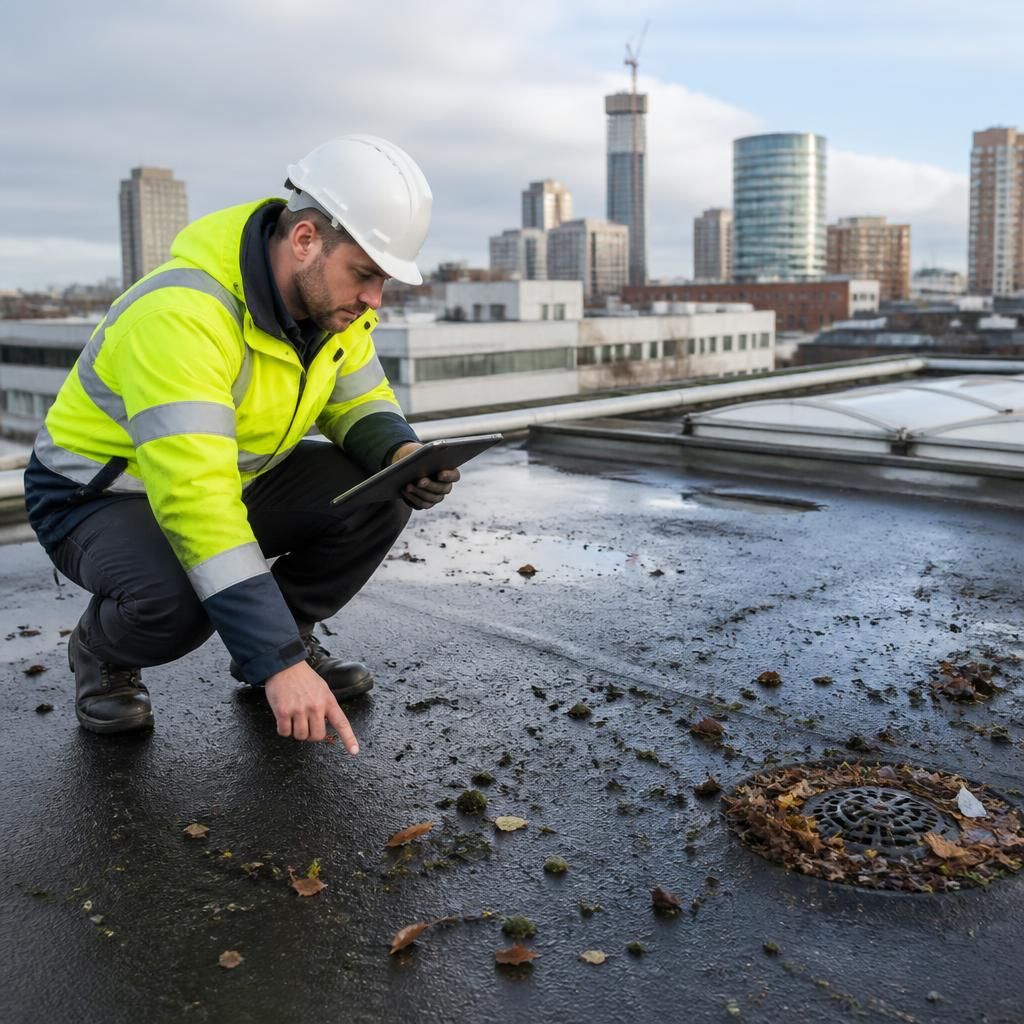
Commercial roof cleaning should be condition-led rather than based on a fixed timetable. Arrange a professional inspection at least annually, then schedule cleaning when moss, algae, bird fouling, leaves, silt or industrial deposits begin to affect the roof surface or drainage.
Cleaning may be needed sooner where a roof is shaded, close to mature trees, exposed to pollution or prone to standing water. Early removal is generally safer and less disruptive than dealing with extensive growth, blocked outlets or concealed deterioration. The inspection should also check gutters, downpipes, flashings, rooflights, coatings and signs of water ingress, so the cleaning method and future interval are suitable for the roof system.