
How often should commercial roofs be washed to maintain their condition?
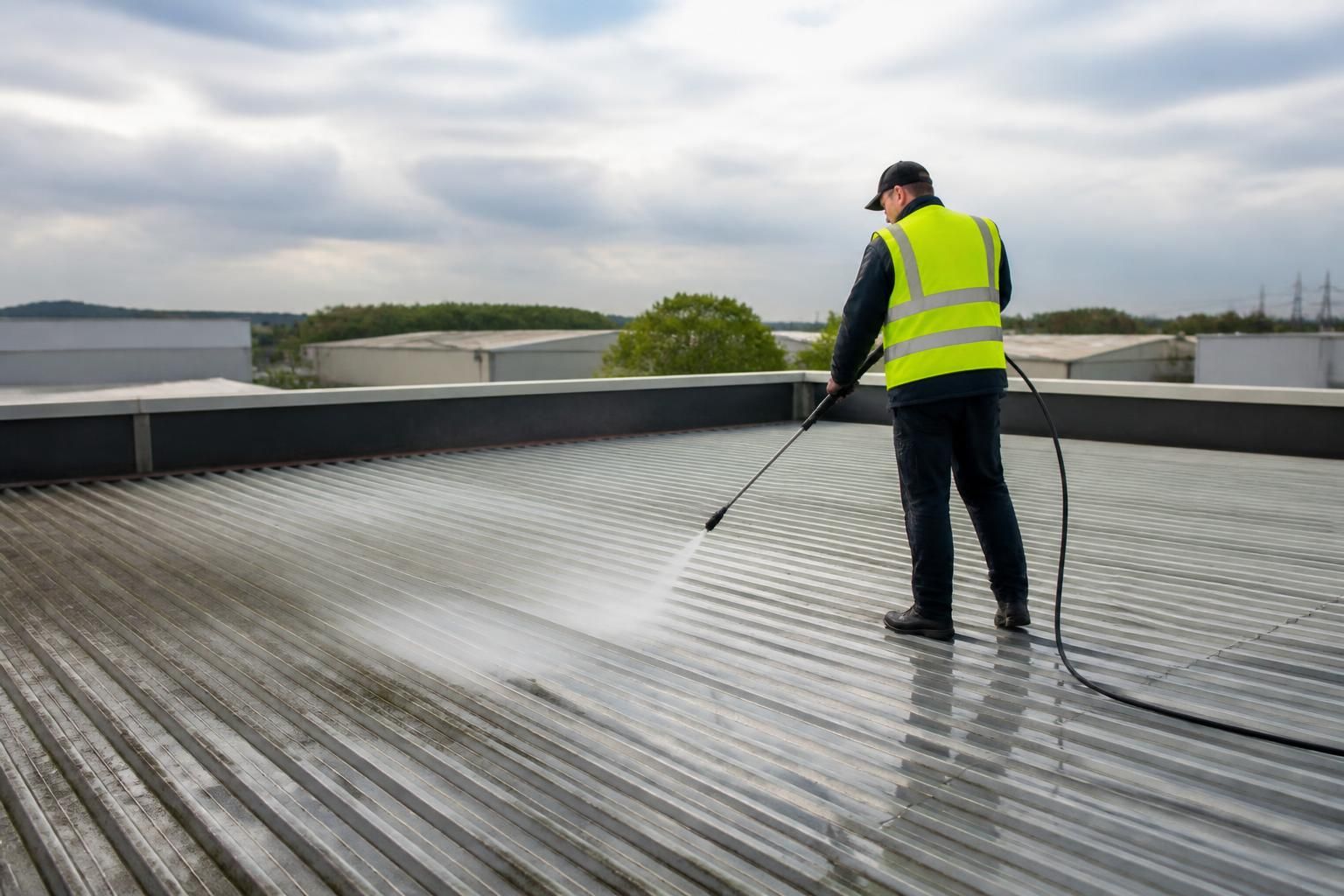
Commercial roofs should usually be professionally washed as part of a planned maintenance programme, with the exact interval determined by the roof material, level of soiling, surrounding environment and drainage condition. An annual inspection helps identify when washing is needed, while roofs exposed to heavy pollution, tree debris, algae or industrial contaminants may require more frequent cleaning.
Commercial roofs should generally be professionally assessed at least annually and washed when inspection shows accumulated dirt, organic growth, pollution or blocked drainage. Many premises benefit from cleaning on an annual or twice-yearly maintenance cycle, while roofs in cleaner, less exposed locations may need washing less often. The appropriate interval depends on the roof material, surrounding environment, level of soiling and the manufacturer’s maintenance guidance.
Annual inspection is the starting point. A roof inspection should check the roof covering, edges, joints, outlets, gutters, rainwater goods, plant areas and access routes. Washing can then be scheduled before contamination becomes difficult to remove or begins to affect drainage and the roof surface. Cleaning should be treated as part of planned maintenance rather than delayed until the roof looks heavily soiled.
Some commercial roofs need more frequent cleaning. A shorter interval may be appropriate where the building is:
- Close to busy roads, industrial activity or areas with airborne dust and pollution
- Surrounded by trees that deposit leaves, pollen and organic debris
- Located in a damp or shaded position where algae, moss or lichen can establish
- Near manufacturing, construction or food-processing operations that produce residues
- Subject to frequent bird fouling or other local contamination
- Designed with shallow falls or drainage points that readily collect debris
Roofs beneath trees and roofs exposed to industrial contaminants may require cleaning more frequently than those on open, less polluted sites. The aim is not to wash to a fixed calendar regardless of need, but to prevent deposits from becoming a maintenance or safety problem.
Roof material also affects the cleaning interval and method. Metal cladding and coated panels can collect atmospheric grime, bird fouling and organic growth around laps, fixings and drainage areas. Membrane roofs, including some single-ply systems, may require careful low-pressure cleaning to avoid damaging the surface or seams. Concrete or fibre cement surfaces can retain dirt and biological growth, but aggressive pressure can cause surface deterioration. Older, fragile or previously repaired roofs need a condition-led approach and may be unsuitable for standard pressure washing.
The roof manufacturer’s instructions should be checked before work begins. These may specify acceptable cleaning products, pressure limits, methods of application and restrictions around warranties. Where the roof covering is damaged, loose or nearing the end of its serviceable life, cleaning should be preceded by a condition assessment rather than treated as a substitute for repairs.
Visible signs that cleaning is due include:
- Dark staining, green growth, moss or lichen on the roof surface
- Leaves, silt or other debris collecting around outlets, gutters and valleys
- Water remaining on the roof after rainfall because drainage is restricted
- Bird fouling or industrial deposits that are becoming established
- Dirty run-off marks on façades, cladding or around rainwater goods
- Slippery surfaces or contamination affecting safe inspection and access
These signs should be investigated promptly. Moss and debris can retain moisture, obstruct drainage and conceal defects. Contamination may also make faults harder to identify during routine inspections. Cleaning should be coordinated with any necessary repairs, gutter clearance and checks to flashings, seals, joints and roof-mounted equipment.
Commercial roof washing should be planned around the building’s use. Cleaning may be scheduled during quieter operating periods to reduce disruption and to control access beneath the work area. Occupied premises may also need precautions around entrances, deliveries, ventilation intakes, sensitive equipment and areas where cleaning water or loosened debris could fall. A suitable contractor will assess access, weather conditions, water management and the risk of damage before selecting the cleaning method.
Pressure washing is not automatically suitable for every commercial roof. Excessive pressure can damage coatings, force water beneath laps or membranes, disturb seals and increase the risk of leaks. Soft washing, controlled low-pressure cleaning or steam cleaning may be more appropriate, depending on the material and contamination. Any treatment should be tested or assessed in an inconspicuous area where necessary, and run-off should be managed in accordance with site and environmental requirements.
A practical maintenance programme normally combines an annual roof condition inspection with routine checks after severe weather and periodic cleaning based on the site’s exposure. High-risk or heavily contaminated premises may need inspections and cleaning more frequently, whereas a well-maintained roof in a sheltered environment may only require occasional washing. Keeping records of inspections, contamination, cleaning methods and observed defects makes it easier to refine the interval over time.
For most commercial properties, the best approach is to arrange an initial assessment and establish a site-specific cleaning schedule rather than rely on a universal frequency. This helps maintain drainage, protect roof finishes, identify defects early and extend the useful life of the roof without exposing the covering to unnecessary cleaning.
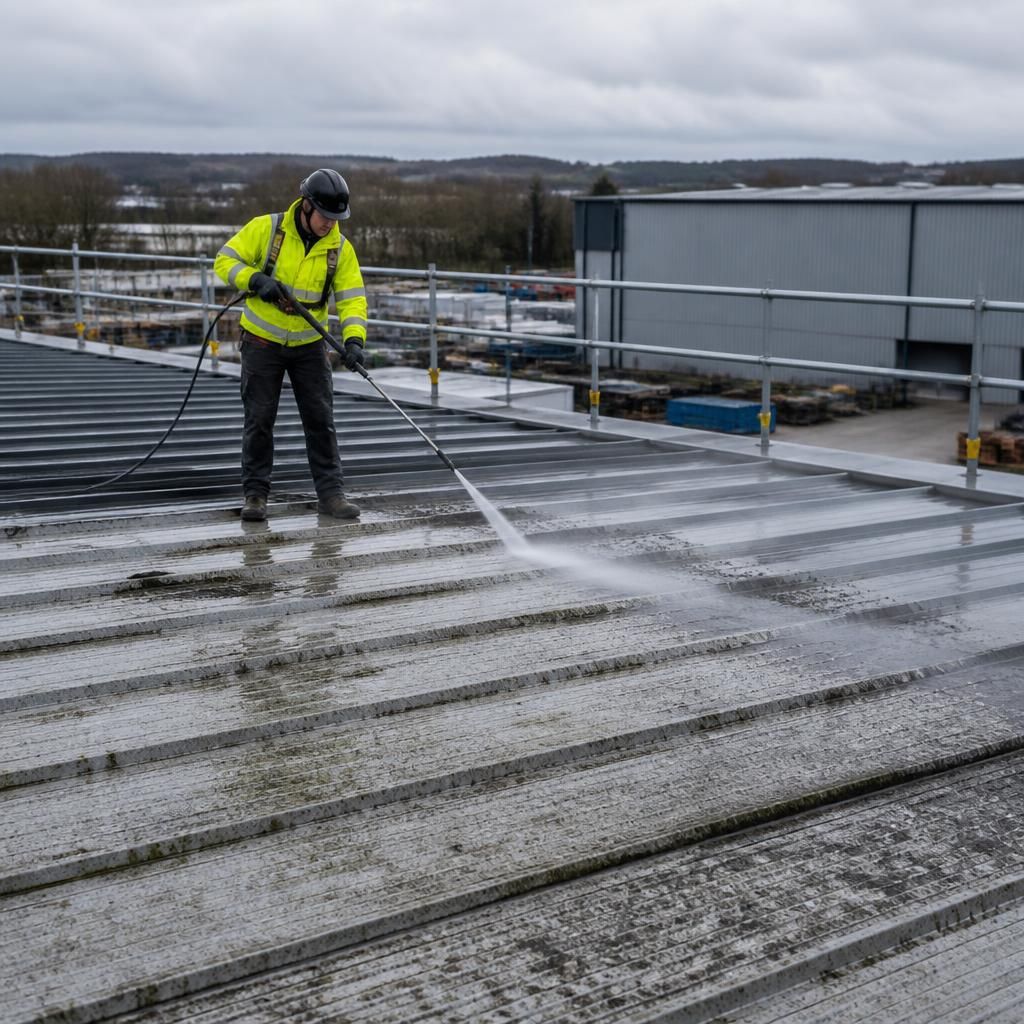
Commercial roof washing should be scheduled according to the roof’s condition and exposure, rather than a fixed interval that applies to every building. An annual inspection can identify whether accumulated dirt, organic growth, bird fouling or industrial deposits require cleaning before they affect drainage or conceal defects.
A shorter cleaning cycle may be appropriate for roofs near busy roads, manufacturing sites, construction activity or mature trees, and for shaded roofs where moss or algae remain damp. Roofs in cleaner, more open locations may need less frequent washing. Each assessment should also consider the roof material, drainage, manufacturer’s guidance and any existing damage, so the cleaning method does not place unnecessary pressure on the covering or its seals.
Arrange a Commercial Roof Washing Assessment
Arrange a commercial roof washing assessment with Encanto Exterior Cleaning to establish the right cleaning interval for your roof’s material, condition and site exposure. We can also identify drainage issues, contamination and defects that may require attention before washing.