
What precautions should be taken to prevent damage to roof materials during the cleaning process?
Preventing damage during commercial roof cleaning requires a material-specific assessment, controlled water or steam pressure, compatible chemical and biocide treatments, and careful use of access equipment. The cleaning team should inspect the roof first, test products on an inconspicuous area, protect vulnerable details, and stop if the surface shows signs of deterioration.
Preventing damage during commercial roof cleaning depends on matching the cleaning method to the roof material, controlling water and steam pressure, using compatible chemicals, and protecting vulnerable details before work begins. The roof should be inspected and tested before full-scale cleaning, with access, drainage, weather conditions and the condition of existing coatings taken into account.
A suitable cleaning plan should be prepared after identifying the roof construction and its current condition. This may include concrete or clay tiles, slate, metal sheet, coated steel, single-ply membranes, built-up felt systems, liquid-applied coatings or insulated panels. The same treatment cannot safely be applied to every surface. The cleaning contractor should record areas of cracking, loose fixings, failed sealant, blistering, corrosion, exposed reinforcement, open laps and fragile or degraded coatings before starting.
Where the roof is already damaged or deteriorating, cleaning should not be used as a substitute for repair. Loose tiles, defective flashings, failed membrane joints and corroded metal may need attention before cleaning takes place. Cleaning a weak surface can allow water to enter the roof build-up or worsen an existing defect, particularly around penetrations, rooflights, outlets and perimeter details.
- Identify the material and coating: Confirm the roof specification where possible, including any manufacturer restrictions, previous treatments and warranty requirements.
- Inspect the surface closely: Look for cracks, delamination, corrosion, exposed substrate, loose components and areas that cannot tolerate routine foot traffic.
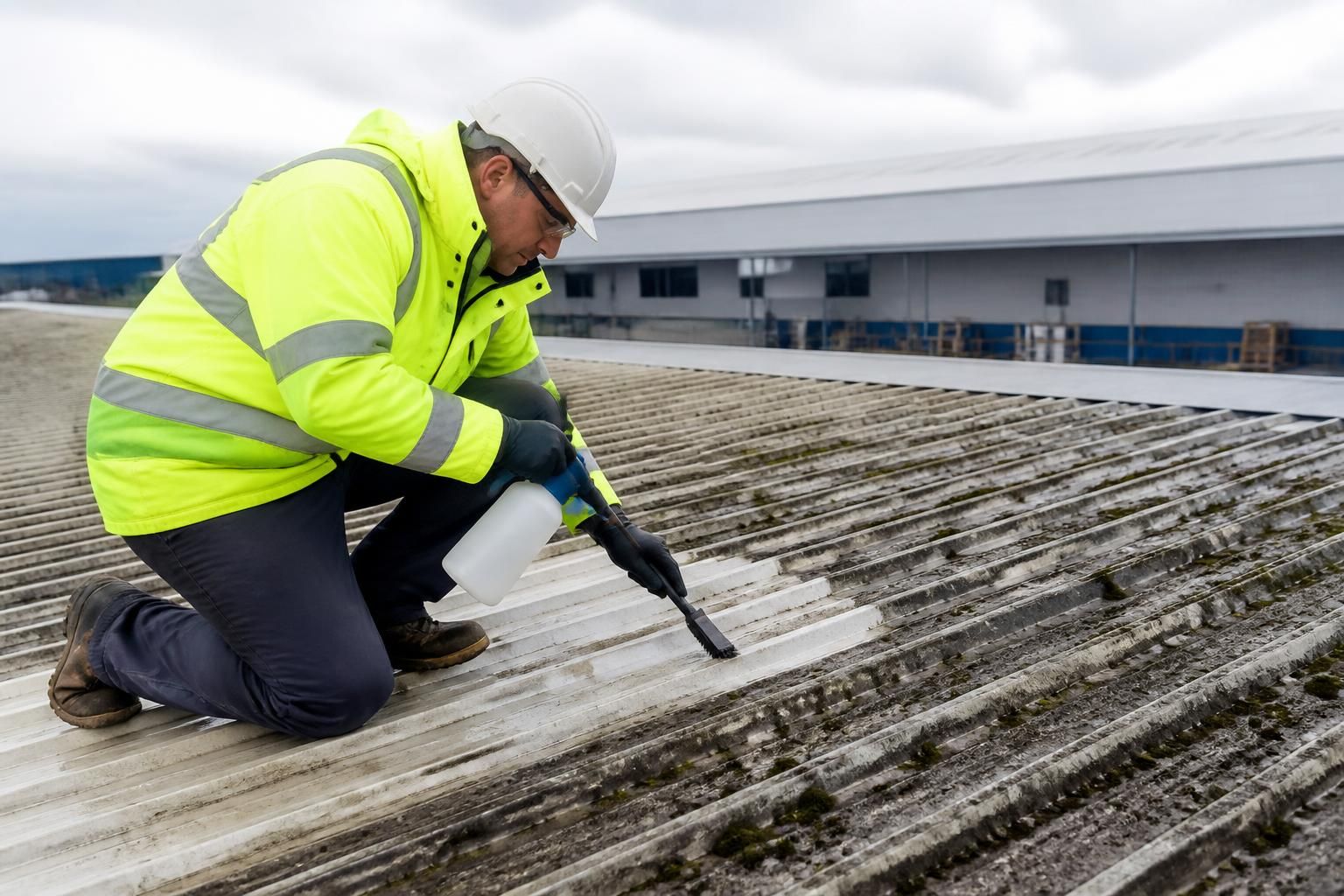
- Test the proposed treatment: Apply the chemical, biocide, steam or low-pressure cleaning process to a discreet area and inspect the result before proceeding.
- Check the surrounding details: Protect rooflights, vents, solar equipment, signage, cladding, windows, door seals and other components that may be affected by water, heat or chemicals.
Water pressure should be kept only as high as necessary to remove the contamination. Excessive pressure can strip protective coatings, drive water beneath tiles or sheet laps, damage pointing and erode fragile surfaces. It can also force moisture into membrane joints and service penetrations. Fan-pattern nozzles, suitable stand-off distances and controlled working techniques are generally preferable to directing a concentrated jet at the roof.
Pressure washing is not automatically suitable for every roof. Delicate tiles, aged coatings, slate, asphaltic materials and single-ply membranes may require a gentler approach, such as soft washing, controlled chemical treatment, low-pressure rinsing or steam cleaning. The chosen method should be based on the surface condition as well as the roof type, because a sound material may tolerate a process that would be unsuitable for a weathered or previously repaired area.
Steam cleaning must also be controlled carefully. Steam operates at high temperature and can affect aged coatings, sealants, plastic components and membrane details if the equipment is held too close or used for too long in one place. The operator should regulate the temperature, flow and dwell time, keep the nozzle moving and avoid concentrating heat around laps, joints, flashings and penetrations. Steam should not be assumed to be risk-free simply because it may use less water or reduce the need for aggressive pressure.
Chemical and biocide treatments require compatibility checks before application. The product should be suitable for the roof material and used in accordance with its technical and safety information. Over-concentration, excessive dwell time or repeated application can affect coatings, metals, sealants, membranes and adjacent finishes. Products should be applied evenly, prevented from drying where the method requires rinsing, and removed or neutralised as specified by the treatment instructions.
Particular care is needed around drainage. Gutters, outlets, downpipes and internal drainage points should be checked before cleaning and protected from blockages caused by moss, silt or loosened debris. Run-off containing sediment or treatment residue must be managed so that it does not stain façades, enter sensitive areas or discharge improperly. The team should monitor water movement throughout the work and clear drainage routes as part of the process.
Access arrangements are another important precaution. Operatives should use designated walkways, edge protection, temporary boards or other suitable measures where required, rather than placing repeated loads on fragile roof areas. Rooflights can be difficult to distinguish from other panels and must be clearly identified and protected. Equipment, hoses and containers should be positioned so they do not drag across coatings, obstruct drainage or impose unnecessary loads on the roof.
Weather conditions should be assessed before and during cleaning. High winds can cause spray drift, move equipment or make access unsafe. Rain can dilute treatments and carry run-off to areas that were not intended to receive it, while excessive heat may cause chemicals to dry too quickly. Cold conditions can affect rinsing and create slip hazards. Work should be postponed or paused when conditions prevent proper control of the treatment or create a risk to the roof, building or people below.
Adjacent surfaces and building occupants should be protected before work starts. Windows, vents, air-intake systems, vehicles, pedestrian routes, planted areas and sensitive equipment may need temporary covering or isolation. The cleaning team should use controlled application methods to minimise overspray and should rinse or inspect affected surfaces where the treatment instructions require it.
During the work, operatives should monitor the surface rather than continuing to a fixed programme if the roof responds unexpectedly. Signs that require the process to be stopped and reassessed include coating softening or lifting, colour change, exposed substrate, unusual water penetration, movement of tiles or sheets, excessive corrosion, damaged sealant or staining that does not respond as expected. A small test area should be treated as an assessment, not as permission to use the same method regardless of what is observed.
After cleaning, the roof should be inspected for displaced materials, blocked outlets, residual chemical, damaged coatings and areas where contamination remains. Drainage should be checked and any protective coverings removed carefully. A completion record can include photographs, the areas treated, the products and methods used, observed defects and recommendations for repairs or future maintenance. This information is useful for facilities teams and may help demonstrate that cleaning has been carried out in accordance with the roof system requirements.
For roofs covered by a manufacturer or installer warranty, the proposed method should be checked against the warranty conditions before treatment. Some warranties restrict pressure washing, chemical use, access methods or alterations to protective coatings. If the roof is fragile, heavily weathered or technically complex, a specialist roof survey or written approval may be appropriate before cleaning proceeds. A material-specific plan, controlled application and careful post-clean inspection provide the best protection against avoidable damage.
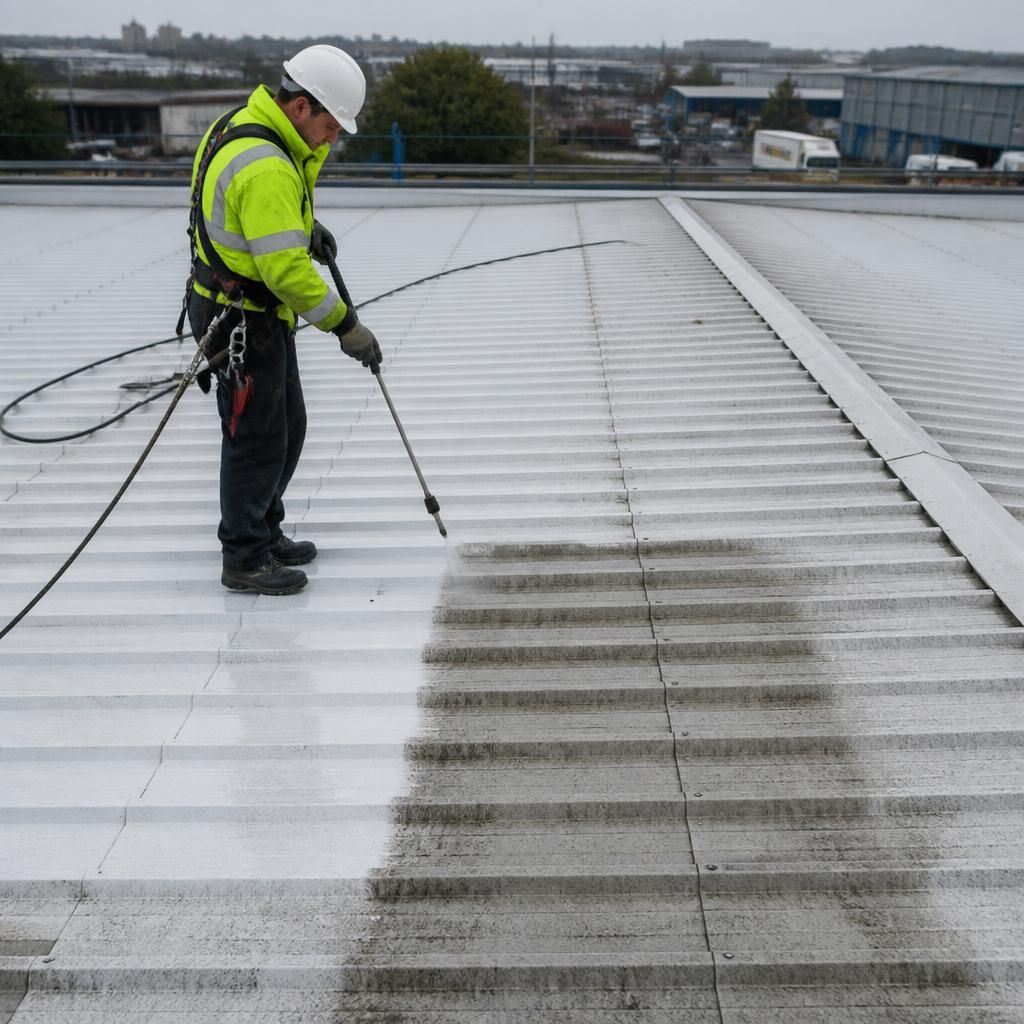
A discreet test area is an essential precaution before full-scale roof cleaning. It confirms that the proposed chemical, biocide, steam or low-pressure treatment is compatible with the roof material and existing coatings.
The test should be inspected for colour change, coating softening, surface erosion, staining, sealant damage and water penetration before work continues. If any adverse reaction appears, the method, product concentration, temperature or pressure should be reassessed rather than applied across the rest of the roof.