
What are the environmental impacts of the chemical and biocide treatments used in roof cleaning?
Chemical and biocide roof treatments can affect the environment if they enter drains, soil, surface water or surrounding vegetation through uncontrolled runoff. Their impact depends on the product, dilution, application method and disposal arrangements, so responsible roof cleaning requires suitable treatments, careful containment and compliant collection or discharge of residues.
The environmental impact of chemical and biocide roof treatments depends on the active substance, dilution, application method, weather conditions and how contaminated water and residues are controlled. If a treatment or its runoff reaches surface water, soil, drains or surrounding vegetation, it can harm aquatic organisms, affect plants and contribute to pollution. Used with suitable controls, authorised products can remove algae, moss, lichen and other organic growth while keeping environmental risks to a practical minimum.
How environmental harm can occur
Roof treatments are usually applied to break down or suppress biological growth. Some formulations contain oxidising agents, disinfectants, surfactants or other biocidal active substances. These ingredients are selected for their ability to affect microorganisms, but the same properties can be harmful to non-target organisms if the product is misapplied or discharged without control.
- Surface water pollution: Runoff entering a stream, river, pond, ditch or surface-water drain can expose aquatic plants, invertebrates and fish to substances that were intended for the roof surface.
- Soil and vegetation damage: Overspray or uncontrolled discharge can scorch grass, damage ornamental planting and affect soil organisms, particularly where concentrated product is used or runoff collects in one area.
- Drainage contamination: A roof outlet may connect to a surface-water system rather than a foul-water sewer. It should never be assumed that a drain is suitable for chemical discharge without checking the drainage arrangement and applicable requirements.
- Airborne spray and drift: Wind can carry fine droplets beyond the roof area, affecting nearby planting, vehicles, building surfaces and people. This is one reason weather conditions and application equipment matter.
- Packaging and waste impacts: Unused product, contaminated containers, absorbent materials and collected sludge require appropriate storage and disposal. Empty packaging should not automatically be treated as ordinary waste.
The treatment is not the only potential source of contamination. Roof cleaning can also mobilise silt, moss, bird fouling, atmospheric deposits, decaying organic matter and residues from roofing materials. Older roofs may release particles or metals, while cleaning around plant and equipment can introduce oils or other contaminants. A responsible assessment therefore considers the complete wash-water stream rather than looking only at the labelled chemical.
Product choice makes a significant difference. There is no single category of “roof cleaning chemical” with one predictable environmental profile. Products differ in active ingredients, concentration, biodegradability, persistence, aquatic toxicity, required contact time and whether they are intended to remain on the surface or be rinsed away. The product label and safety data sheet should be reviewed before work begins, and any biocidal product should be authorised for the intended use under the applicable UK requirements. More product does not necessarily mean better cleaning; over-application increases residue and disposal risks without necessarily improving the result.
Weather and site conditions must be assessed. Treatment should not proceed where rain is likely to wash product from the roof before the required contact time has been achieved, or where wind could create unacceptable drift. The condition of gutters, downpipes, outlets, roof edges and nearby drains should be checked in advance. Sensitive planting, ponds, watercourses, air intakes, pedestrian areas and adjacent vehicles may need protection or temporary exclusion.
Typical environmental controls include:
- selecting the least harmful effective product and using it only at the label-specified dilution and application rate;
- carrying out a site-specific assessment covering drainage, weather, roof condition, neighbouring land and sensitive receptors;
- isolating or protecting outlets where appropriate, without creating a risk of flooding or unsafe water accumulation;
- using controlled application equipment rather than excessive spray or uncontrolled hose application;
- preventing overspray and protecting planting, water features, vehicles and occupied areas;
- collecting, containing, filtering, treating or disposing of contaminated wash water in accordance with the site arrangements and applicable requirements;
- keeping chemicals secured, labelled and separated from incompatible materials; and
- recording the product, dilution, weather conditions, controls and waste arrangements so that the work can be reviewed.
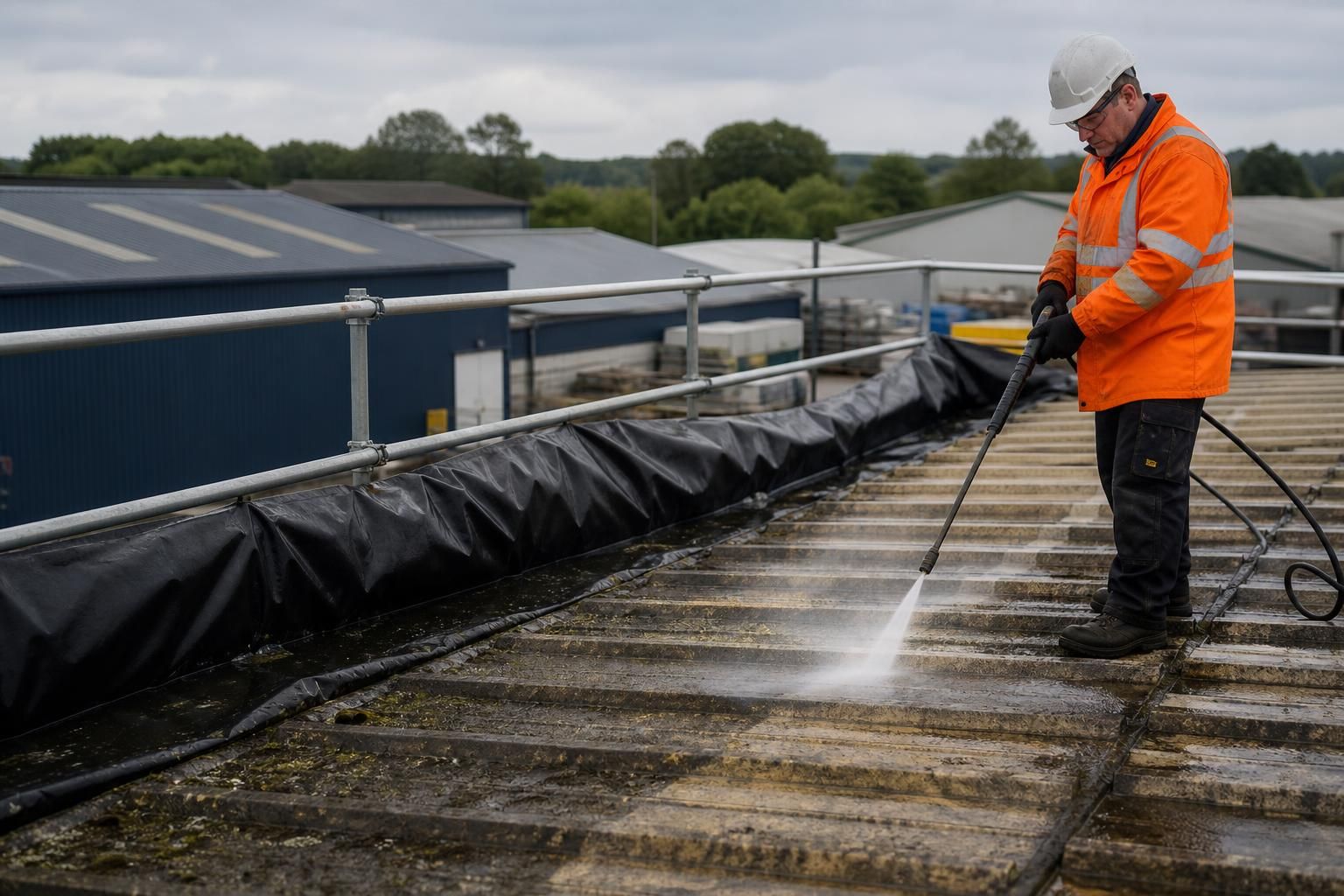
Where runoff cannot be safely managed, the cleaning method or sequence may need to change. For example, a contractor may use dry removal and localised treatment before controlled rinsing, or recommend steam cleaning where that is technically suitable for the roof and the required result. Steam cleaning is not automatically impact-free: it uses energy, can still mobilise contaminated debris and may generate wastewater. Its environmental suitability must therefore be judged against the roof material, level of growth, access arrangements and runoff controls.
Commercial sites require particular attention to drainage and site operations. Large roofs, warehouses, retail premises, schools, public buildings and industrial sites may have complex drainage networks, interconnected yards and sensitive neighbouring areas. Before work starts, the responsible person should identify discharge points, confirm whether drains carry surface water or foul water, and agree how access, pedestrian routes, vehicles and business operations will be managed. If a discharge is proposed, it should be checked against the requirements of the relevant water and environmental regulator rather than relying on an assumption that dilution makes it acceptable.
In England, environmental responsibilities may involve the Environment Agency, the local water and sewerage provider and the relevant local authority. Different arrangements apply in Wales, Scotland and Northern Ireland. The applicable product instructions, waste requirements, drainage permissions and site-specific controls should be confirmed for the location. A contractor should also provide suitable chemical information, including product labels and safety data where relevant, and explain any restrictions that affect the client’s premises.
Clients can help reduce the environmental risk by providing drainage plans where available, identifying ponds and planted areas, disclosing previous treatments, notifying the cleaning team about sensitive occupants or operations, and ensuring that roof access and outlet locations are known. After cleaning, gutters and collection points should be checked, residues should not be swept into surface-water drains, and any signs of unexpected vegetation damage or discharge should be reported promptly.
The most responsible approach is not to avoid every chemical treatment automatically, but to match the treatment to the roof, use only the amount required, prevent contact with sensitive receptors and manage all residues properly. Encanto Exterior Cleaning can assess the roof and surrounding site conditions, explain the environmental controls required and identify whether chemical, biocide, steam or a combination of methods is the most appropriate option for the premises.
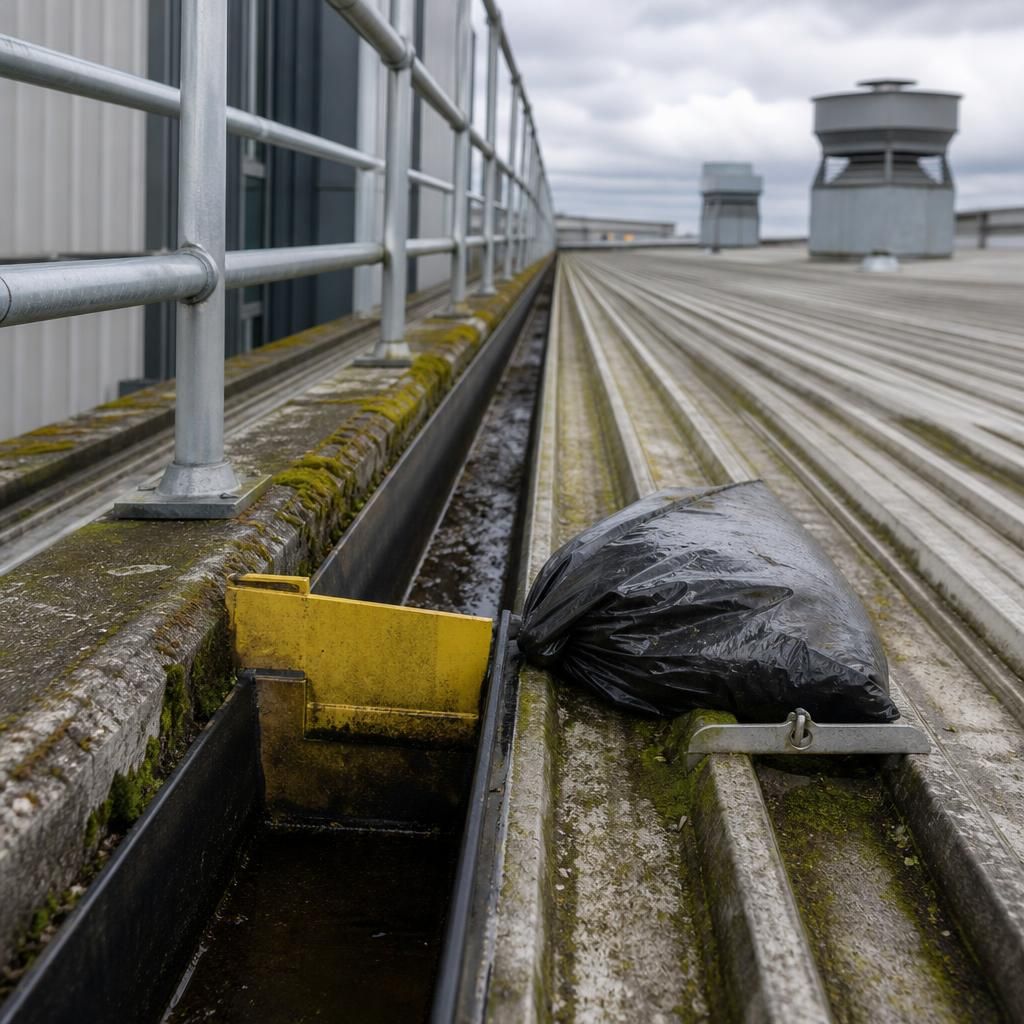
Runoff control is the most important environmental safeguard during chemical and biocide roof cleaning. Treatment residues, loosened moss, silt and organic matter can enter surface-water drains, soil or nearby ponds if roof outlets and wash water are not managed correctly. The risk depends on the product used, its dilution, weather conditions and the site drainage layout.
Before work starts, outlets, gutters, downpipes, planted areas and water features should be identified and protected where appropriate. Application should be avoided during unsuitable weather, particularly when rain or wind could carry treatment away from the roof. Any contaminated water or collected debris must then be contained and handled through an appropriate disposal route rather than being swept or rinsed into a surface-water drain.