
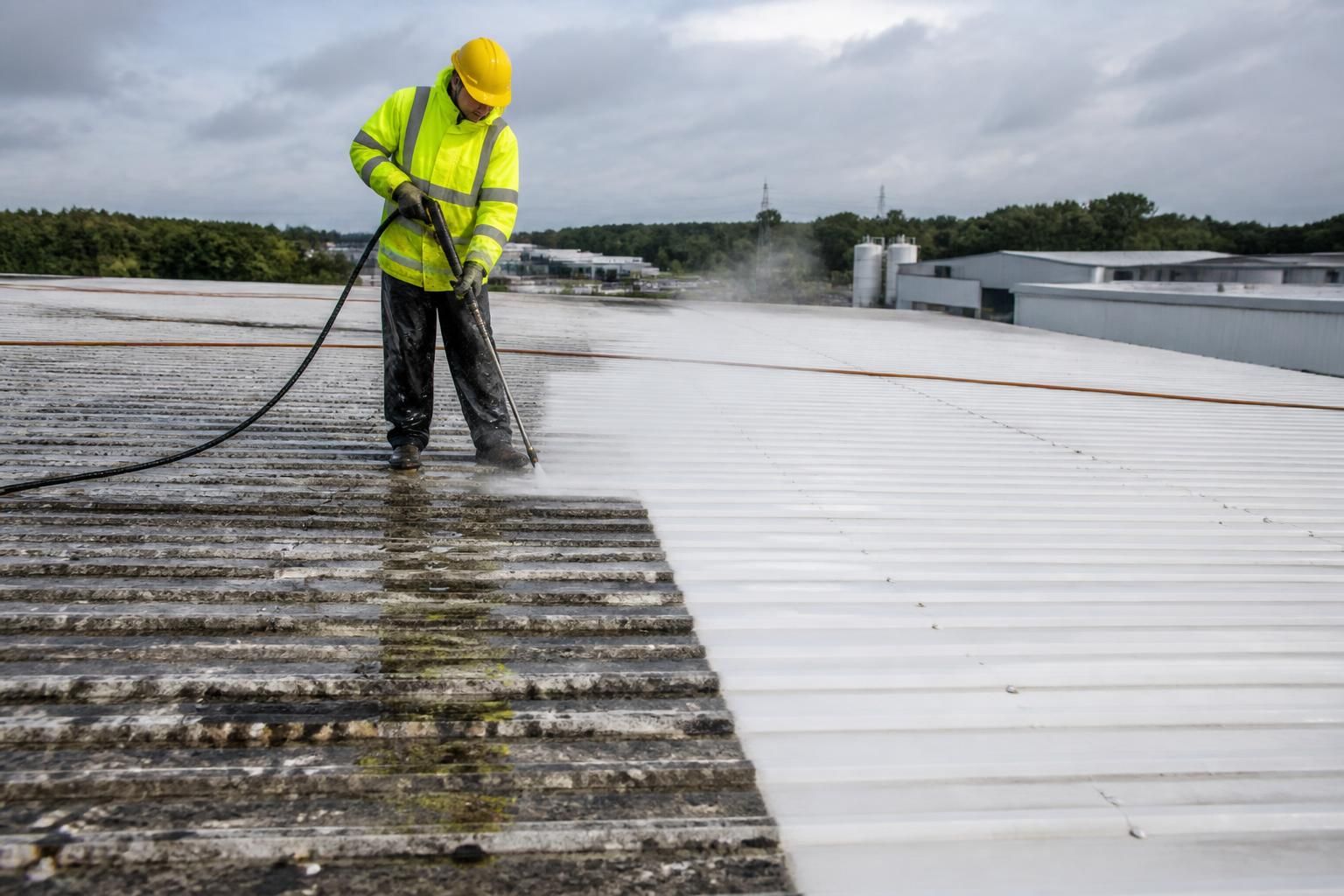
What are the environmental impacts of chemical and steam roof cleaning?
Chemical roof cleaning can create environmental risks if treatment residues and contaminated runoff enter drains, soil or watercourses, while steam cleaning generally reduces chemical pollution but uses energy and water. The overall impact depends on the treatment selected, containment and recovery of runoff, responsible waste disposal, and the efficiency of the cleaning equipment.
Chemical and steam roof cleaning have different environmental impacts. Chemical or biocide treatments can introduce active substances and contaminated residues into runoff, soil and drainage systems, whereas steam cleaning usually avoids chemical pollution but requires energy and water. The overall environmental outcome depends on the product selected, application method, equipment efficiency, weather conditions, and how runoff, residues and waste are contained and disposed of.
Chemical roof cleaning commonly uses a biocide, detergent or other treatment to break down moss, algae, lichen, dirt and organic staining. These products can be effective at low mechanical pressure, which may reduce the risk of damaging roofing materials. However, the treatment itself can present environmental risks if it is over-applied, allowed to run from the roof uncontrolled, or washed into surface-water drains, soil, planting beds or watercourses.
- Runoff contamination: Rain or rinsing can carry treatment residues, loosened organic matter, metals and dirt from the roof. Surface-water drainage may discharge directly to a stream, river or other watercourse rather than passing through a sewage treatment works.
- Effects on aquatic life: Some cleaning ingredients and biocides can harm aquatic organisms if they enter water at unsuitable concentrations. This is why products must be selected and used in accordance with their label instructions and safety data sheet.
- Soil and planting risks: Uncontrolled overspray or runoff can affect grass, planted areas, trees and soil microorganisms. Sensitive vegetation should be protected, and contaminated water should not be directed towards landscaped areas.
- Packaging and waste: Empty containers, absorbent materials, filters and collected sludge may require controlled handling. They must not be abandoned, burned or placed in general waste unless the disposal route permits it.
- Airborne release: Spraying can create mist or droplets that travel beyond the treatment area. Using suitable application equipment and controlling wind conditions reduces this risk.
A chemical treatment is not automatically environmentally unacceptable. Its impact can be controlled through accurate dilution, targeted application, prevention of overspray, protection of drainage points, and recovery of contaminated water where necessary. Contractors should also check whether the product is appropriate for the roof material, surrounding environment and intended use. A treatment designed for one surface or purpose should not be substituted casually for another.
Steam roof cleaning uses heated water, often at controlled pressure, to loosen and remove organic growth and surface contamination. Because it can be carried out without a biocide or detergent, it generally reduces the risk of introducing chemical residues into the environment. This is particularly relevant where a roof is close to a watercourse, sensitive landscaping, food-related premises or other areas requiring careful control of contamination.
- Energy consumption: The equipment must heat water, so fuel or electricity is required. The environmental impact depends on the machine’s efficiency, the energy source, operating time and the amount of cleaning required.
- Water use: Steam systems can use less water than some conventional washing methods because water is delivered at high temperature and controlled flow. They still produce wastewater, however, and that water may contain dirt, moss, algae, coatings or roof debris.
- Runoff and sediment: Steam does not make runoff harmless. Suspended solids, organic material, corrosion products and existing roof contaminants can still enter drainage systems or soil if the work area is not managed properly.
- Localised heat: Excessive heat or poor technique may affect membranes, coatings, sealants, plastics or other heat-sensitive components. Avoiding damage is an environmental consideration because it prevents premature replacement and the waste associated with discarded roofing materials.
- Noise and access impacts: Steam and associated equipment can create noise and may require generators or access machinery. These effects should be considered around occupied buildings, neighbouring premises and sensitive sites.
Steam cleaning is therefore often the lower-chemical option, but it is not impact-free and is not suitable for every roof. The correct temperature, pressure, nozzle, distance and cleaning sequence must be selected for the roofing system. On some roofs, a controlled chemical treatment may be more appropriate than prolonged heating or mechanical work. The least damaging method is the one that achieves the required result without unnecessary product use, water consumption, energy use or replacement of materials.
Runoff control is central to both methods. Before work starts, drainage outlets, gullies, downpipes and discharge points should be identified. Where appropriate, they can be isolated or protected, while temporary bunding, drain covers, collection systems, wet vacuums or other recovery measures are used to prevent uncontrolled discharge. Collected water should be assessed and disposed of through an appropriate route rather than released to a surface-water system without consideration of its contents.
Roof cleaning can also disturb accumulated moss, silt, bird fouling, flakes of coating and other debris. This material should be gathered and removed from the roof and surrounding hardstanding. It should not be swept into drains. Where hazardous or potentially contaminated material is present, the handling and disposal arrangements should be agreed before cleaning begins.
Weather and site conditions affect the environmental risk. Heavy rain can dilute or spread a treatment before it has worked and can increase runoff. Strong wind can carry spray onto neighbouring land, vehicles or water. Work should be planned around suitable conditions, with extra protection where the building is near open drains, ponds, rivers, planted areas or public spaces.
For commercial properties, the method statement should explain the products and quantities proposed, the controls for overspray and runoff, the protection of drains and vegetation, the arrangements for wastewater and waste, and the response to an accidental spill. Product labels and safety data sheets should be available, and operatives should follow the relevant control measures for handling and storage. Environmental requirements may also vary according to the site, drainage arrangements and local regulatory conditions.
The most sustainable approach is usually to:
- inspect the roof first and clean only the areas that require treatment;
- select the least aggressive effective method for the roofing material and level of contamination;
- avoid unnecessary biocide or detergent use;
- use efficient equipment and controlled water flow;
- prevent spray, sludge and wash water from entering unprotected drains or watercourses;
- recover and dispose of contaminated water and solid waste responsibly;
- protect roofing materials so that cleaning does not shorten their service life; and
- record the products, controls and disposal arrangements used on the project.
In practical terms, steam cleaning can offer a lower chemical burden, while chemical cleaning may provide effective organic-growth control with potentially lower heat and mechanical impact. Neither option should be judged on the cleaning method alone. A carefully contained chemical treatment can have less overall impact than poorly controlled steam washing, and an efficient steam clean can be preferable where chemical runoff would create a greater risk. A site-specific assessment is needed to balance water, energy, chemical use, waste, drainage and the long-term condition of the roof.
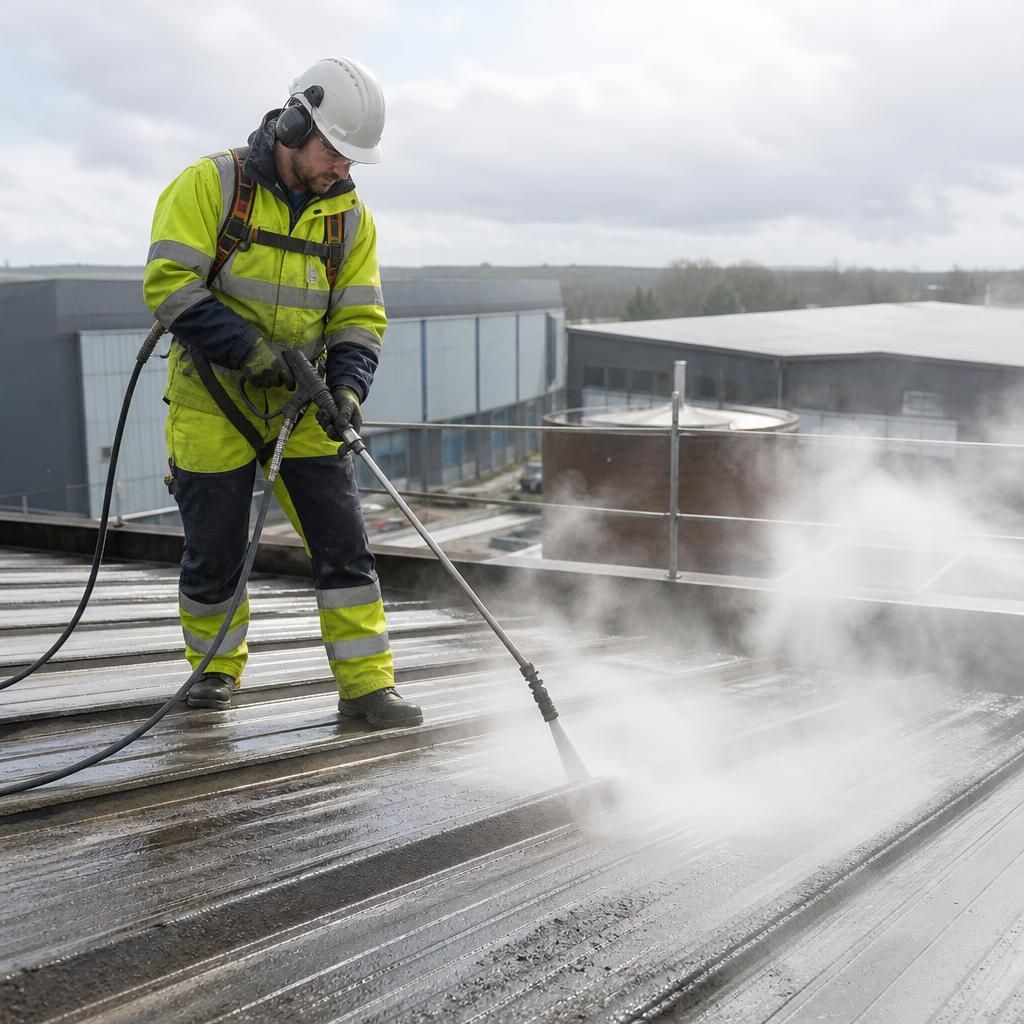
Steam roof cleaning usually reduces chemical pollution because it can be completed without biocides or detergents, but its wastewater can still contain moss, algae, silt, coating fragments and other roof contaminants. Steam cleaning should therefore be treated as a lower-chemical method, not a discharge-free process.
Before work begins, drainage outlets and downpipes should be identified and protected where necessary. Loose debris should be collected rather than swept into gullies, while contaminated wash water should be contained, recovered and disposed of through an appropriate route. This runoff control is often more important environmentally than the choice between steam and chemical cleaning alone.