
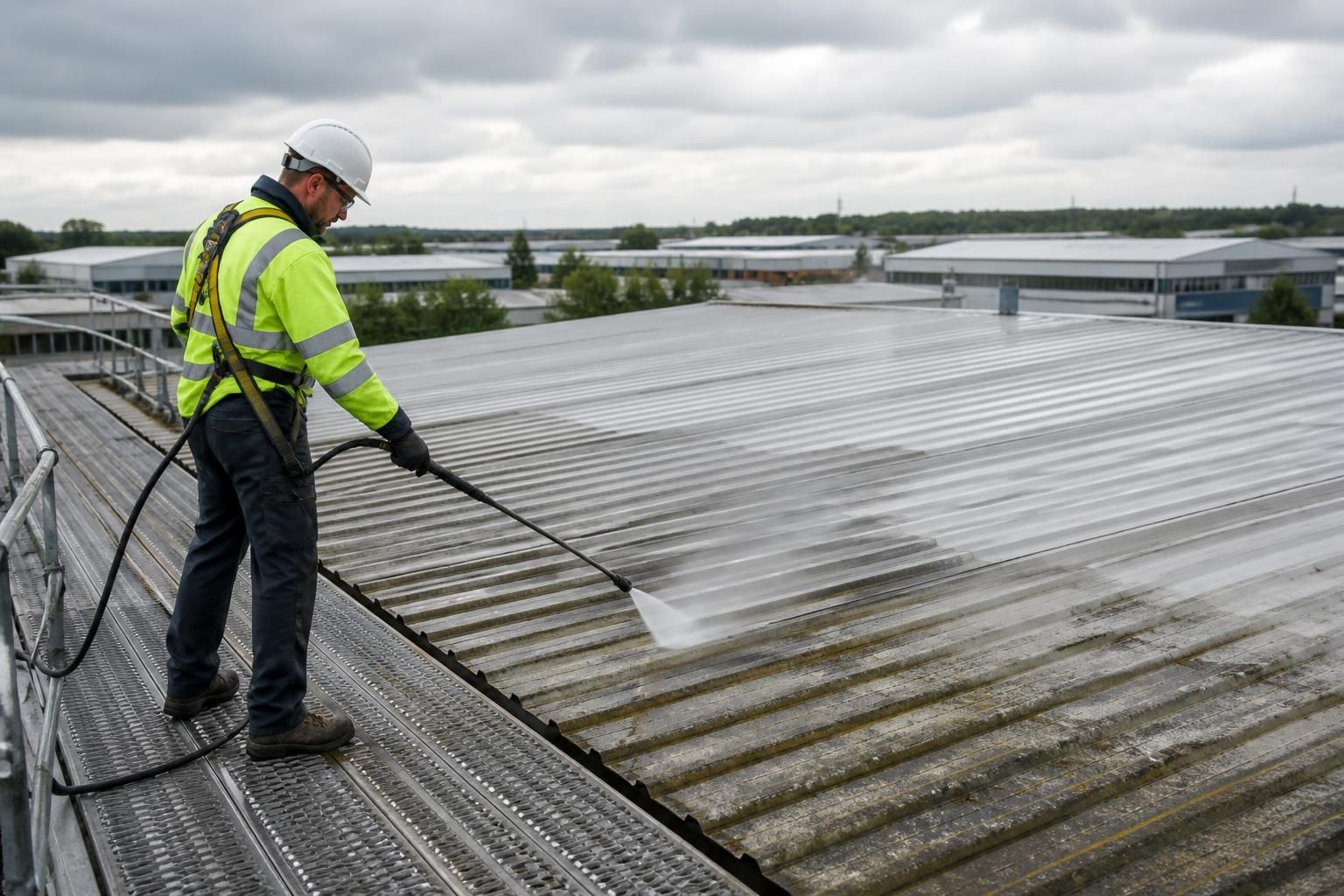
How often should commercial roofs undergo chemical and steam cleaning?
Commercial roofs should be inspected at least annually and undergo chemical or steam cleaning when moss, algae, lichen, staining or accumulated dirt returns, rather than on a fixed schedule. The appropriate interval depends on the roofing material, surrounding environment, weather exposure and level of biological growth, so a professional assessment should determine whether chemical treatment, steam cleaning or routine maintenance is required.
Commercial roofs should be inspected at least annually and cleaned when moss, algae, lichen, staining, bird fouling or accumulated dirt begins to affect drainage, appearance or the roof surface. Chemical, biocide or steam cleaning should not be carried out simply because a fixed date has been reached. The suitable interval depends on the roofing material, surrounding environment, weather exposure, drainage performance and the rate at which biological growth returns.
For many commercial premises, an annual inspection provides the right basis for planning maintenance. This does not necessarily mean the roof needs a full chemical or steam clean every year. A sound roof may only require localised treatment and routine removal of debris, while a building in a shaded, damp or tree-lined setting may need more frequent cleaning attention. A professional inspection can distinguish between light surface soiling, established biological growth and defects that require roofing repairs rather than cleaning.
Factors that influence the cleaning interval
- Roof material: Metal cladding, coated steel, concrete, clay tiles, slate, single-ply membranes and other systems have different tolerances for chemicals, heat, agitation and moisture. The cleaning method must be compatible with the manufacturer’s requirements.
- Exposure and location: Buildings beneath trees, close to waterways or in shaded areas generally retain more moisture, encouraging moss, algae and lichen. Industrial pollution, dust and airborne debris can also cause faster visible soiling.
- Drainage: Leaves, moss and sediment can obstruct gutters, outlets and valleys. Where drainage is being restricted, cleaning and clearance may be needed promptly, regardless of the roof’s appearance.
- Roof pitch and surface condition: Low-slope roofs may retain water and organic debris for longer. Weathered, porous or damaged surfaces can also hold contamination more readily than intact, well-maintained materials.
- Building use: Food, manufacturing, logistics and public-sector sites may have stricter requirements for appearance, hygiene, access or operational continuity. These requirements can justify a planned maintenance programme rather than reactive cleaning.
- Previous treatments: A properly applied biocide may reduce the speed at which biological growth returns, although it is not a permanent barrier. The roof should still be inspected and monitored after treatment.
When chemical or biocide cleaning is appropriate
Chemical or biocide treatment is generally considered where moss, algae, lichen or organic staining has established across a substantial area and requires treatment beyond simple debris removal. The product must be selected for the roof material and applied at a controlled concentration, with suitable protection for surrounding surfaces, drainage systems and vegetation. In some cases, the treatment is allowed to work over time rather than being removed through aggressive mechanical cleaning.
Biocide treatment is often useful as part of a maintenance plan because it can address biological contamination in surface pores and joints that may be difficult to remove without unnecessary abrasion. It is not suitable for every roof or every site. Run-off controls, weather conditions, safe collection or diversion of wastewater and the manufacturer’s instructions must be considered before work begins. Repeat treatment should be based on inspection findings and regrowth, not applied automatically.
When steam cleaning is appropriate
Steam cleaning uses heated water at controlled pressure to remove dirt, staining and some biological growth while limiting the mechanical force applied to the roof. It can be suitable where a lower-pressure approach is preferred, where surface appearance is important or where chemical use needs to be minimised. The equipment settings still need to be matched to the material, coating, joints and condition of the roof.
Steam cleaning may be selected for a targeted clean, a sensitive surface or a site where immediate removal of contamination is required. It may not eliminate the underlying cause of recurring moss or algae on its own, particularly where moisture, shade or poor drainage remains. A compatible biocide or follow-up maintenance measure may therefore be recommended, subject to the roof specification and environmental controls.
Typical maintenance planning
A practical commercial roof maintenance plan usually combines routine visual checks, formal inspections and condition-led cleaning. Facilities teams should monitor gutters, outlets, roof edges, access routes, areas beneath trees and locations where water ponds. Cleaning can then be scheduled during suitable weather and planned around the building’s operations, rather than being commissioned after contamination has become severe.
- Inspect the roof, drainage and accessible elevations for biological growth, debris, staining, ponding and visible defects.
- Confirm the roof construction, surface coating, previous treatments and any applicable manufacturer or warranty requirements.
- Identify whether the requirement is debris clearance, localised treatment, chemical or biocide cleaning, steam cleaning, or a combination of services.
- Assess access, edge protection, fragile areas, electrical equipment, skylights and the risk of run-off affecting people, vehicles or landscaping.
- Complete the work using controlled methods and record any areas requiring repair or future monitoring.
- Review the roof after cleaning and set the next inspection according to the rate of regrowth and the site’s exposure.
Cleaning should be brought forward if moss or lichen is spreading, algae is causing persistent discolouration, gutters are filling quickly, water is not draining correctly or debris is accumulating around roof penetrations. Internal signs such as damp patches, leaks or unexplained moisture should be investigated urgently; cleaning alone will not correct failed seals, damaged coverings, blocked outlets or defective flashing.
Conversely, cleaning may not be advisable until repairs have been completed. Loose coatings, brittle tiles, exposed insulation, damaged membranes and defective joints can be worsened by water, heat, chemicals or foot traffic. A roof survey should therefore establish its condition before a method and frequency are agreed.
How to determine the right interval for a particular property
The most reliable approach is to establish a baseline after an initial inspection and cleaning, then record how quickly contamination returns. The next visit can be timed around observable changes in growth, drainage and surface condition. This condition-led approach avoids unnecessary cleaning while reducing the risk of allowing contamination to become difficult or costly to manage.
For commercial sites in Birmingham, the West Midlands and elsewhere in the UK, weather, shade, nearby vegetation and building use can vary significantly between properties. A warehouse, retail unit, office block and public building may therefore require different arrangements even when their roofs appear similar. The cleaning frequency should be documented in the property’s planned preventative maintenance schedule, with additional checks after severe weather, building works or changes to surrounding vegetation.
In summary, plan at least an annual commercial roof inspection, but arrange chemical, biocide or steam cleaning when inspection evidence shows it is needed. Select the method according to the roof material, contamination, environmental controls, access requirements and any warranty conditions. Regular monitoring, prompt drainage clearance and early treatment generally provide better protection than waiting until heavy growth, blocked outlets or staining has become established.
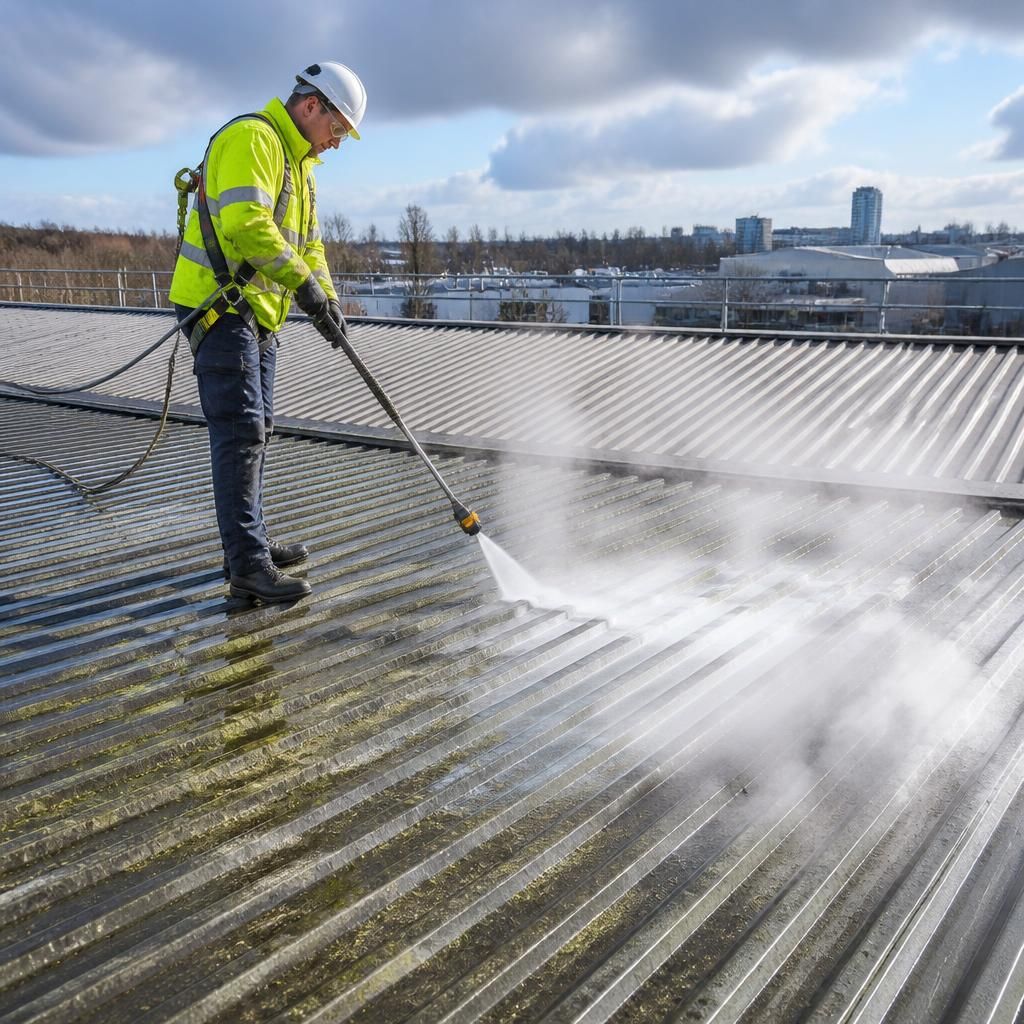
Commercial roofs should be inspected at least annually, but chemical or steam cleaning should be scheduled according to the roof’s condition rather than a fixed calendar date. The correct interval depends on the roofing material, moisture levels, shade, nearby vegetation, drainage performance and how quickly moss, algae, lichen or surface staining returns.
A roof in a shaded or tree-lined location may need more frequent attention than one on an exposed industrial building. Cleaning should be brought forward if biological growth is spreading, gutters are filling with debris, outlets are draining slowly or staining is becoming established. An inspection can also identify damage or failed seals that require repair before any cleaning takes place.
After an initial clean, record the roof’s condition and monitor the rate of regrowth. This provides a practical basis for the next treatment and helps avoid unnecessary chemical or steam cleaning while keeping drainage, appearance and roof surfaces properly maintained.