
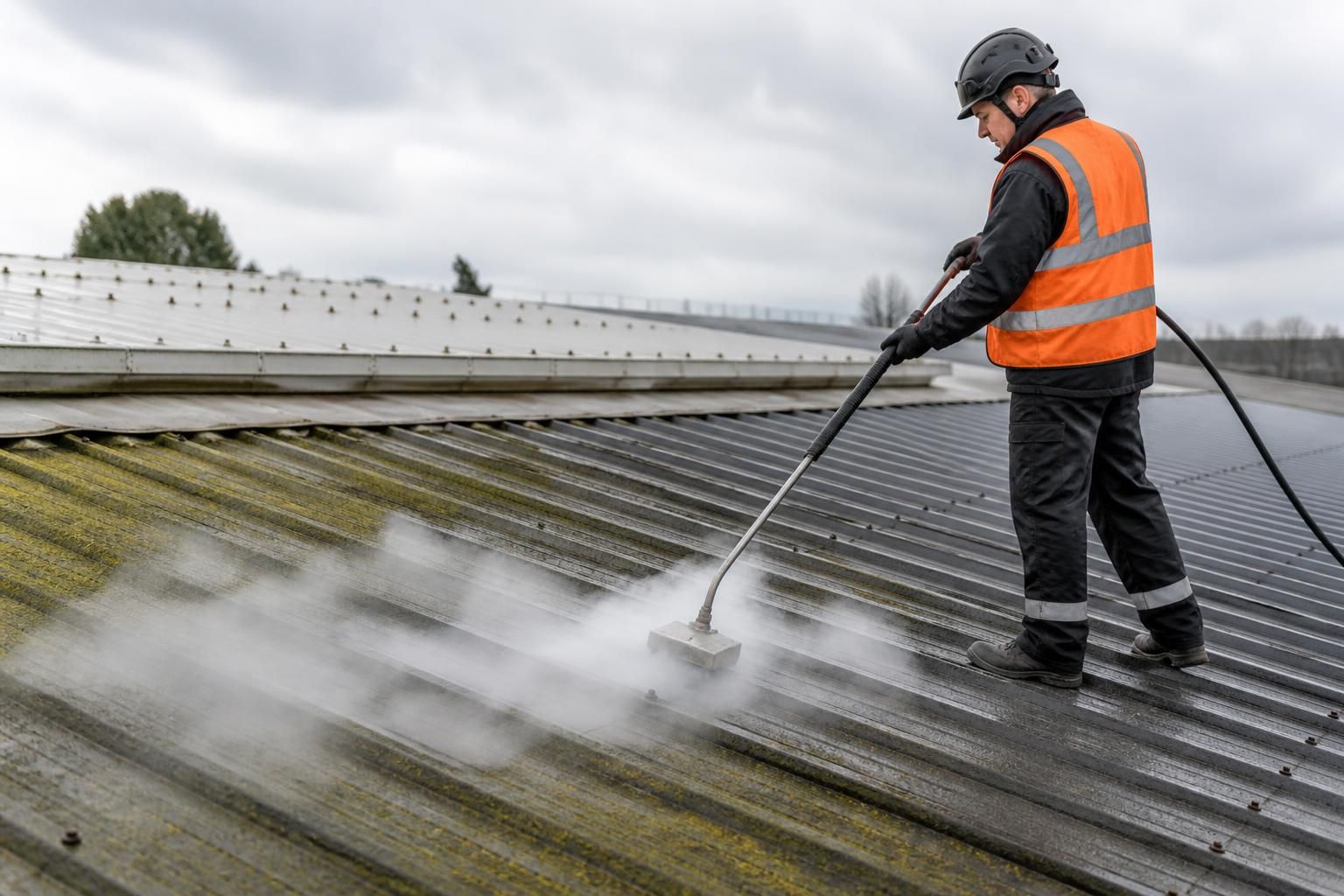
How is steam roof cleaning different from traditional pressure washing?
Steam roof cleaning uses controlled low-pressure steam to loosen moss, algae, dirt and organic growth with less force on the roofing surface, whereas traditional pressure washing relies on high-pressure water to remove contamination mechanically. Steam is generally better suited to delicate or weathered roof materials, while pressure washing may be appropriate only where the roof covering can safely withstand the water pressure and runoff.
Steam roof cleaning differs from traditional pressure washing mainly in how contamination is removed. Steam cleaning uses heated water, usually applied at controlled low pressure, to soften and loosen moss, algae, lichen, dirt and other organic growth. Traditional pressure washing uses a concentrated jet of water at much higher pressure to remove contamination by force. The difference affects the risk of surface damage, the amount of runoff produced, the treatment of organic growth and the types of roof where each method is suitable.
How steam roof cleaning works
During steam cleaning, heat helps break down the bond between organic growth and the roof surface. The operator can then remove the softened material with controlled rinsing and suitable tools, rather than relying on a powerful water jet. This approach is particularly useful where the roof covering is weathered, fragile, textured or vulnerable to water penetration.
Steam cleaning does not mean that every roof can be cleaned without pressure or that heat removes every form of contamination on its own. The equipment settings, working distance, temperature and cleaning technique must be adjusted to the roof material and its condition. Persistent moss, algae or lichen may also require an appropriate biocide treatment after physical cleaning to reduce regrowth. Any treatment should be selected and controlled with regard to the roof, surrounding surfaces, drainage and environmental requirements.
How traditional pressure washing works
Pressure washing removes contamination mechanically. Water is forced through a nozzle at pressure sufficient to break away dirt, moss, algae, loose coatings and surface deposits. It can be effective on robust, sound surfaces where the roof construction, covering and drainage arrangements have been assessed as suitable.
Its main limitation is that the cleaning force can be greater than the roof surface can safely tolerate. A high-pressure jet may dislodge protective surface finishes, strip away granules, open existing defects or drive water beneath overlapping tiles, flashings and joints. It can also break up moss and debris rapidly, increasing the risk of blocked gutters, downpipes or drainage systems if runoff is not properly controlled.
Key differences in roof safety
- Force on the surface: steam cleaning generally relies more on heat and controlled application, while pressure washing relies primarily on water impact.
- Risk to coatings and finishes: pressure washing can damage fragile coatings, aged finishes and exposed aggregate or granule surfaces if the pressure or nozzle is unsuitable.
- Water ingress: forceful water can be driven under tiles, sheets, laps, seals and flashing details. Controlled steam or low-pressure cleaning reduces this risk but does not remove the need for careful technique.
- Runoff: both methods generate dirty water and loosened material. Pressure washing may create a faster, heavier flow, whereas steam cleaning can allow more controlled removal and collection.
- Organic growth: both methods can remove visible growth, but physical cleaning alone may not prevent it returning. A suitable follow-up treatment may be required.
Which method suits different commercial roofs?
The correct choice depends on the roof covering, its age and condition, the type of contamination, the presence of existing defects and the consequences of runoff. Sound concrete tiles, some robust industrial roof surfaces and certain hard-wearing areas may tolerate carefully controlled pressure washing. This should never be assumed solely from the roof type, because deterioration, previous repairs and local weak points can change the assessment.
Older clay tiles, weathered slates, coated metal roofing, fragile sheet materials and roofs with delicate details often need a gentler approach. Steam or another low-pressure method may be preferable where preserving the surface is more important than achieving rapid mechanical removal. The roof should be inspected before work begins, including flashings, laps, penetrations, gutters, seals, coatings and areas of ponding or visible damage.
Effectiveness and appearance
Pressure washing can produce a rapid visual result because it removes contamination aggressively. However, a clean appearance does not confirm that the roof has been cleaned safely or that organic growth will not return. Excessive pressure may leave a surface roughened or stripped, making it more susceptible to future contamination.
Steam cleaning is usually more controlled and can be effective where contamination has bonded firmly to the surface. It may take more care and preparation, particularly on a large commercial roof with restricted access, sensitive drainage or multiple roof coverings. The objective should be to remove contamination without removing sound roofing material or compromising protective finishes.
Environmental and operational considerations
Neither method is automatically environmentally harmless. Removed moss, dirt, coatings and treatment residues must be prevented from entering unsuitable drainage systems or nearby watercourses. Commercial work should include runoff controls, protection of adjoining façades and equipment, and safe collection or disposal of waste where necessary.
Steam cleaning may reduce the need for aggressive mechanical force and can limit water use in some applications, but the actual environmental impact depends on the equipment, access arrangements, fuel or electricity used, treatments applied and waste-management process. Pressure washing may be efficient on appropriate surfaces, but its greater water flow and rapid generation of contaminated runoff require careful control.
How the choice affects maintenance and warranties
A suitable cleaning method should form part of a wider roof-maintenance plan rather than being selected only for the immediate appearance. Gentle cleaning can help preserve coatings and surface integrity, while inappropriate pressure washing may shorten the service life of roofing materials or affect a manufacturer’s warranty. Warranty conditions should be checked before work, particularly where the roof is coated, recently installed or maintained under a planned contract.
After cleaning, the roof should be checked for displaced or damaged materials, clear drainage, remaining defects and areas likely to encourage regrowth. The recommended inspection and cleaning interval will depend on the roof’s exposure, surrounding vegetation, moisture levels, contamination and use of the building.
In practical terms, traditional pressure washing is a force-based method that can be effective on suitable, durable surfaces but carries a higher risk when used on fragile or weathered roofs. Steam roof cleaning provides a lower-force alternative that is often better suited to sensitive materials and controlled commercial maintenance. The safest choice is determined by a site inspection, not by the presence of moss alone or by selecting the method that produces the quickest visible result.
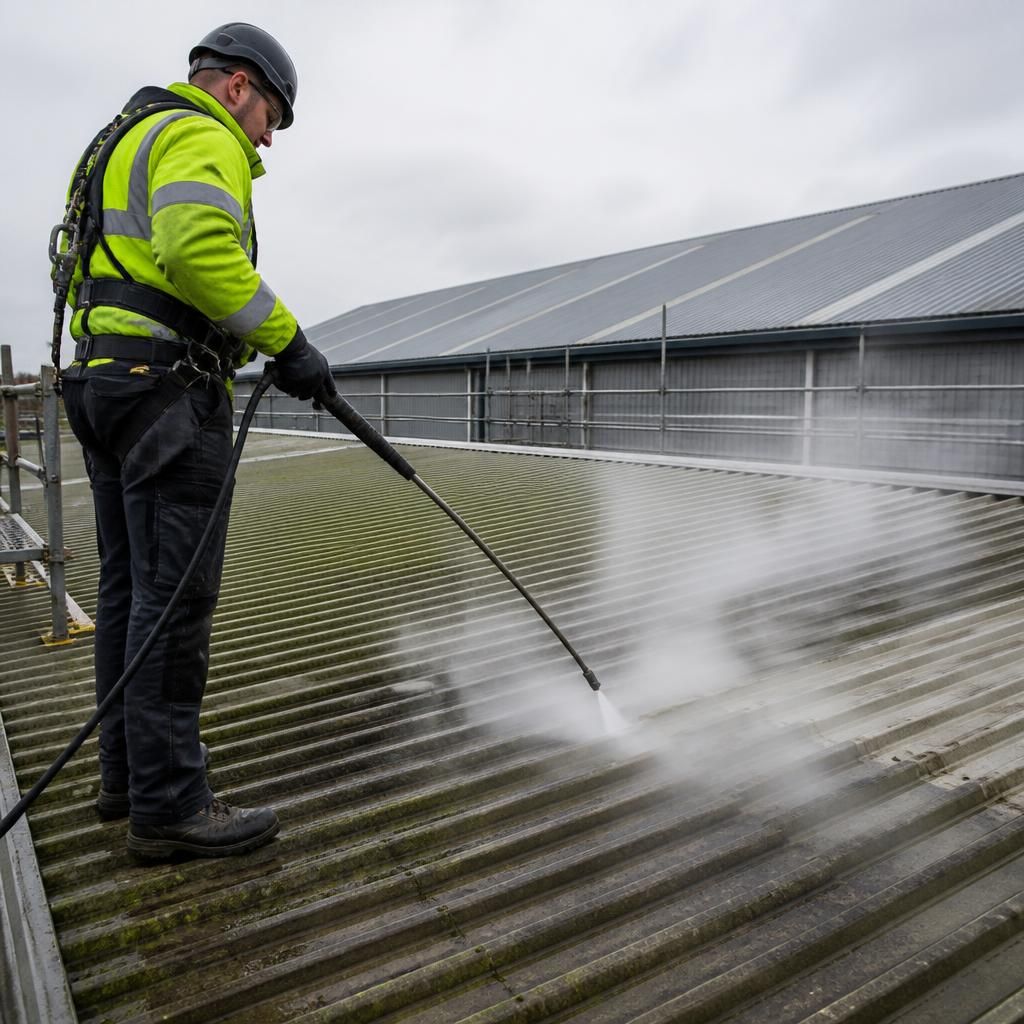
Steam roof cleaning differs from traditional pressure washing because it uses heat and controlled, lower-pressure application to loosen moss, algae, lichen and dirt, rather than relying mainly on the impact of a powerful water jet. This can reduce the risk of stripping coatings, dislodging granules or forcing water beneath tiles, laps, flashings and seals.
That does not make steam suitable for every roof or remove the need for careful preparation. The roof covering, age, condition, existing defects and drainage arrangements should be assessed before cleaning. Pressure washing may be suitable for some sound, durable surfaces, while steam or another low-pressure method is generally more appropriate for fragile, weathered or coated materials. In either case, loosened debris and contaminated runoff must be controlled so that gutters, downpipes, façades and nearby drainage are protected.