
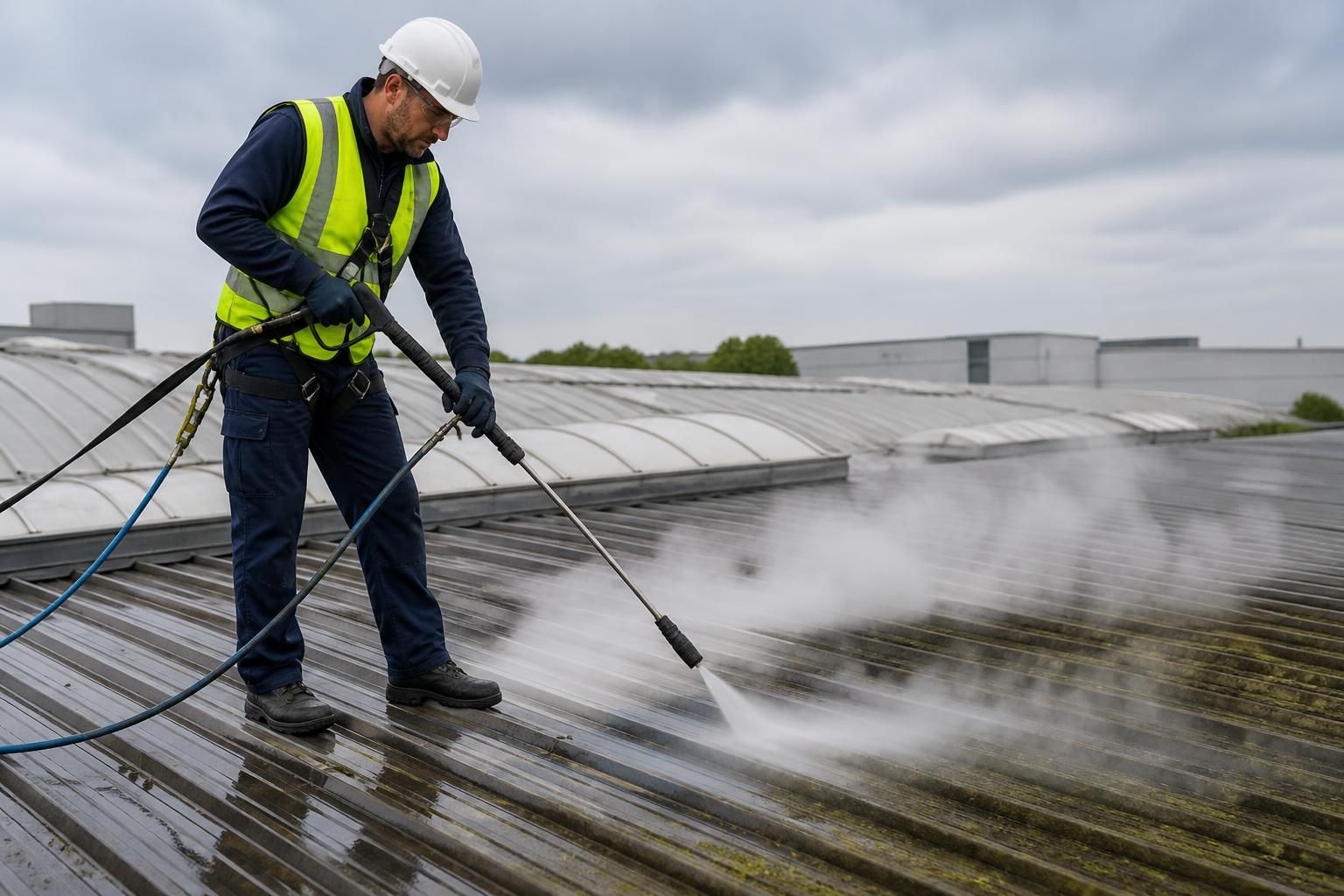
How does the choice of cleaning method affect the overall cost and maintenance schedule for commercial roofs?
The cleaning method affects both the initial cost and how soon the roof will need further treatment. Chemical or biocide cleaning may provide longer-lasting control of organic growth, while steam cleaning can offer a lower-impact option for sensitive surfaces; the most suitable schedule depends on the roof material, contamination, access requirements and site conditions.
The choice of commercial roof-cleaning method affects both the immediate project cost and the timing of future maintenance. Chemical or biocide treatments may control moss, algae and lichen for longer between visits, whereas steam cleaning can provide effective surface cleaning with lower chemical use and reduced pressure. The most economical option is determined by the roof material, level and type of contamination, access requirements, drainage arrangements, environmental controls and the maintenance standard required by the site.
Initial cost is only one part of the comparison. A quotation should account for preparation, access equipment, protection of the building, containment and collection of run-off, treatment application, rinsing where required, waste handling and any follow-up inspection. A method that appears cheaper as a single visit may require more frequent cleaning or additional spot treatments. Conversely, a more controlled or technically demanding method may cost more initially but reduce the need for repeat work.
Chemical and biocide cleaning is often selected where organic growth has established across a large roof area. The treatment is applied to the affected surfaces and, depending on the product and specification, may be allowed to work over time rather than being removed with aggressive pressure. This can reduce the risk of abrading coatings or forcing water beneath laps, seals and flashings. Biocidal treatment may also suppress regrowth after the visible contamination has been removed.
The cost of chemical cleaning is influenced by the condition of the roof, the amount of product required, application time and the controls needed to protect gutters, rainwater systems, planted areas, watercourses and neighbouring property. Run-off must be managed in accordance with the site and product requirements. Where contamination is heavy or widespread, preparation and follow-up work can add to the overall cost.
Chemical treatment does not remove every type of contamination in the same way. Oil, soot, cement residue, bird fouling and deeply bonded deposits may need a different cleaning process or additional treatment. The roof should also be inspected before application, as damaged coatings, exposed substrates and defective seals may require attention before cleaning takes place.
Steam cleaning uses heated water at controlled pressure to loosen and remove dirt, organic growth and some surface deposits. It can be suitable for roof materials and coatings that should not be subjected to high-pressure washing or extensive chemical application. Steam cleaning may involve more operative time, water management and careful access planning, particularly where the roof has complex details or where the work must be carried out without interrupting business operations.
Steam cleaning can be cost-effective where the priority is immediate physical removal and a low-chemical process. However, it does not automatically prevent moss, algae or lichen from returning. If spores or organic residues remain, or if the roof stays damp and shaded, further treatment may be needed sooner than after a correctly specified biocide programme. A maintenance plan may therefore combine steam cleaning with targeted treatment, subject to the roof manufacturer’s guidance and the requirements of the site.
High-pressure washing may have a lower apparent starting cost, but it is not suitable for every commercial roof. Excessive pressure can damage coatings, dislodge protective finishes, drive water into joints or create problems around flashings, skylights and roof penetrations. Any saving can be outweighed by remedial work if the method is not matched to the roof construction. Pressure, nozzle selection, distance and water volume should be controlled by an operative who understands the material being cleaned.
The main cost and scheduling factors include:
- Roof construction and material: Metal cladding, coated profiled sheets, concrete tiles, slate, membranes and other systems have different tolerances and cleaning requirements.
- Contamination: Light surface soiling normally requires less preparation than established moss, lichen, algae, industrial deposits or bird fouling.
- Access: Height, roof pitch, fragile areas, plant, restricted ground access and the need for mobile elevating work platforms or other equipment can affect both price and programme.
- Site controls: Occupied premises may require phased work, exclusion zones, traffic management, out-of-hours working or protection of vehicles, stock and pedestrians.
- Water and run-off management: Drainage protection, collection, filtration and lawful disposal can be significant parts of the work, particularly where chemicals or contaminated sediment are involved.
- Roof condition: Blocked gutters, defective sealants, loose fixings, damaged coatings and failed flashings may need to be reported or addressed separately.
- Required finish: A visual improvement, removal of hazardous growth, preparation for coating or a documented planned-maintenance standard may each require a different specification.
The maintenance schedule should be based on the roof’s exposure and performance rather than on a fixed interval applied to every building. Roofs beneath trees, in shaded areas or close to industrial activity may need more frequent inspections than exposed roofs with good drainage. A commercial site should normally include roof and gutter inspections within its planned maintenance programme, with cleaning scheduled when contamination is beginning to affect drainage, access, appearance or the roof surface.
After chemical or biocide cleaning, the interval before further treatment may be extended where the treatment has been applied correctly and the conditions that encourage growth have not changed. This should not be assumed to be permanent control. Organic growth can return if moisture, shade, leaf accumulation or blocked drainage persists. Steam-cleaned roofs may require earlier visual checks where no residual biocidal control has been specified.
Inspection is particularly important after severe weather, building works and any event that may introduce debris or damage. Gutters, outlets, valleys, rooflights, laps, trims and penetrations should be checked because cleaning alone will not correct a drainage defect or failed waterproofing detail. Early reporting can prevent a small maintenance issue from becoming a more disruptive repair.
For budgeting purposes, compare methods using the expected cost over the planned maintenance period, not simply the cost of the first visit. This should include likely repeat cleaning, inspections, access, run-off controls, minor preparation and any restrictions on operating hours. A written method statement and maintenance recommendation should explain why the selected process is appropriate, what level of regrowth or staining can reasonably be expected, and which conditions would trigger a further visit.
Where the roof is under warranty, the proposed method should also be checked against the manufacturer’s cleaning and maintenance requirements. Keeping records of inspections, products, application areas, photographs and reported defects provides useful evidence for facilities management and helps maintain a consistent schedule. The correct balance is a method that removes the relevant contamination without compromising the roof system, followed by inspections and targeted cleaning before growth or debris becomes difficult and costly to manage.
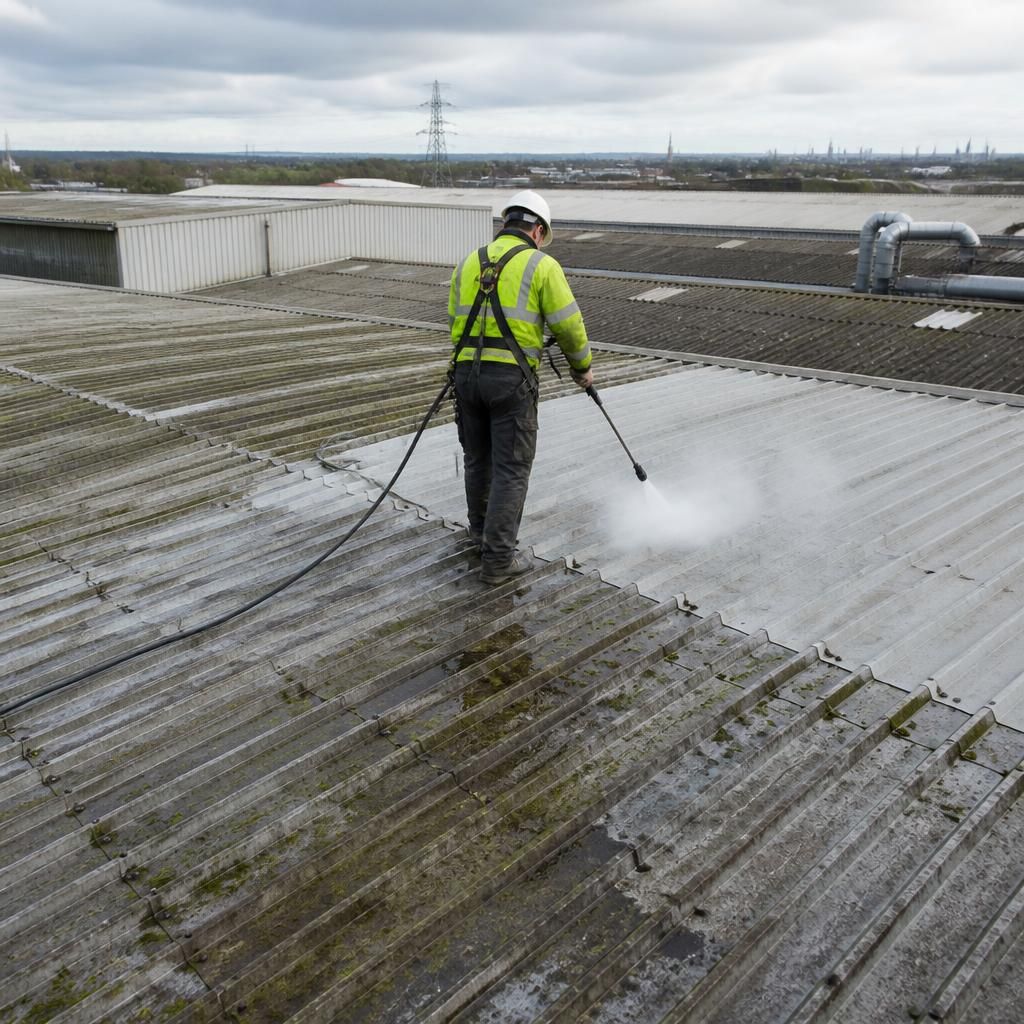
The most useful cost comparison is the total maintenance cost over the planned service period, not the price of the initial roof-cleaning visit. A lower-cost method may require earlier repeat cleaning, while a more controlled chemical, biocide or steam process may reduce later work when it is matched to the roof material and contamination.
When comparing options, allow for access equipment, preparation, run-off controls, waste handling, inspections and any follow-up treatment. Chemical or biocide cleaning may provide longer control of moss, algae and lichen, whereas steam cleaning physically removes contamination with limited chemical use but may need closer monitoring for regrowth. The maintenance schedule should then reflect shade, moisture, nearby trees, industrial deposits, drainage and the condition of the roof.
Plan Your Commercial Roof Cleaning and Maintenance Schedule
Ask us to assess your commercial roof and recommend a cleaning method and maintenance schedule based on its material, condition, contamination and site requirements. We can provide a clear scope of work covering access, run-off controls, treatment and planned follow-up.