
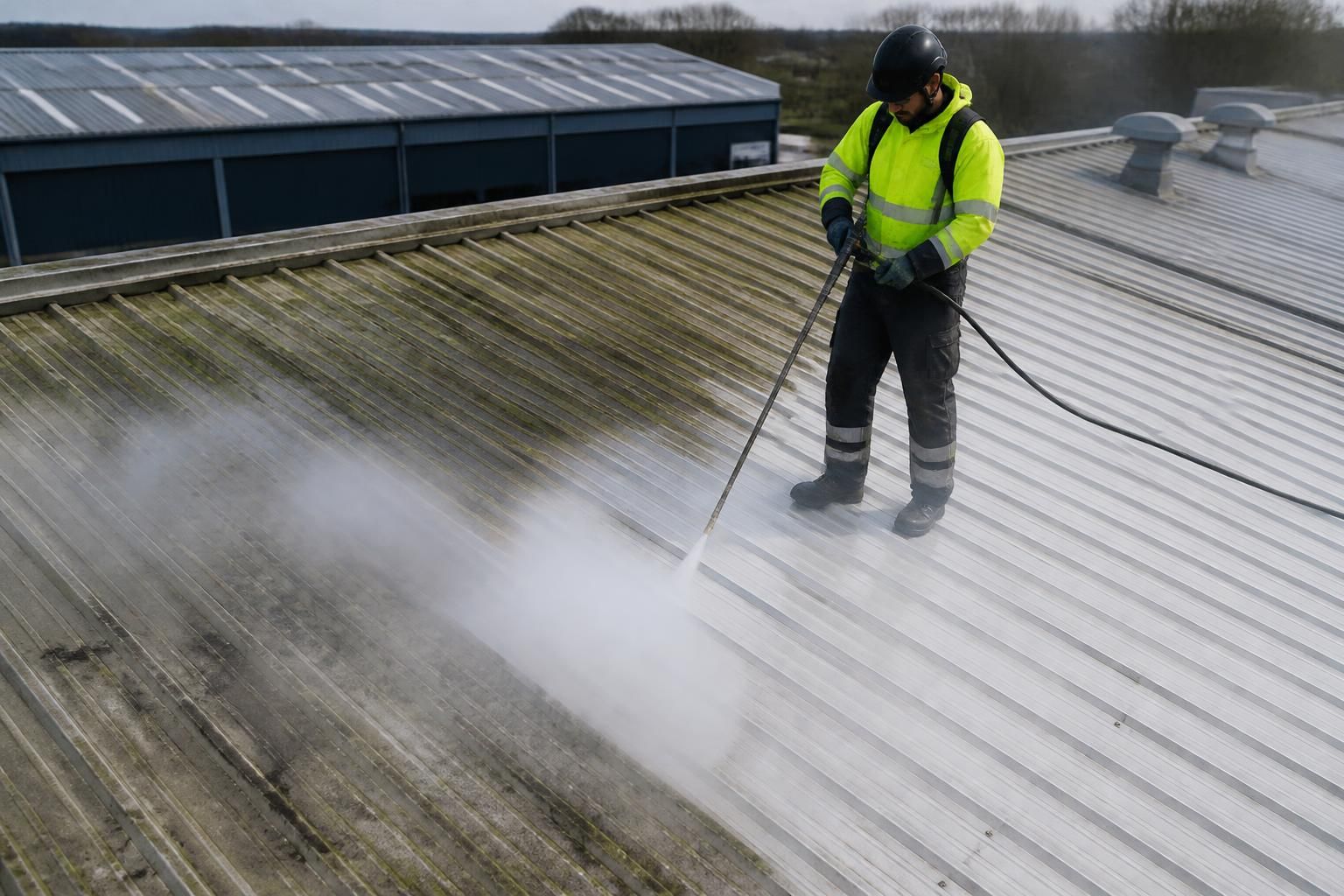
How does steam cleaning compare to chemical cleaning in terms of safety and effectiveness for commercial roofs?
Steam cleaning generally reduces chemical exposure and runoff risks, while chemical cleaning can provide effective treatment for organic growth when carefully selected and controlled. The safest and most effective method depends on the roof material, contamination, drainage arrangements and the controls used by the contractor.
Steam cleaning is usually the lower-chemical-risk option for commercial roofs, while chemical cleaning can be more effective for treating established moss, algae, lichen and other biological growth when the product, application and runoff controls are appropriate. Neither method is automatically safe or suitable for every roof. The correct choice depends on the roof covering, its condition, the type and extent of contamination, drainage arrangements, surrounding occupants and the controls used by the contractor.
How the methods work
Steam cleaning uses heated water, generally applied at controlled pressure, to loosen and remove dirt, staining and organic contamination. It can reduce reliance on detergents, biocides and other treatment products. The process is particularly useful where the client wants to minimise chemical use or where drainage and environmental controls make chemical application more complicated.
Chemical cleaning uses a selected detergent, biocide or specialist treatment to break down contamination or inhibit its return. Some products work on surface dirt, whereas others target biological growth and continue working after application. Chemical treatment is not simply a stronger form of cleaning: the product must be compatible with the roof material, applied at the correct concentration and prevented from entering unsuitable drainage systems or adjacent areas.
Safety considerations
Steam cleaning can reduce risks associated with chemical handling, storage, splashes and contaminated runoff. It does, however, involve hot water, pressurised equipment, hoses and work at height. Operators must control the risk of burns, slips, falling equipment, damaged surfaces and water entering the building. Steam and hot water can also affect sealants, membranes, coatings and delicate details if the temperature or pressure is unsuitable.
Chemical cleaning introduces additional controls. The contractor should assess the product under the Control of Substances Hazardous to Health requirements, follow the manufacturer’s instructions, use suitable personal protective equipment and prevent exposure to workers, building users and members of the public. Roof outlets, gutters and downpipes may need to be isolated or protected, and runoff may require collection, neutralisation or disposal in accordance with the site’s drainage arrangements and applicable environmental requirements.
For both methods, safe access is fundamental. A suitable plan should address roof fragility, fragile rooflights, edges, access routes, weather conditions, electrical equipment, plant movement and emergency arrangements. A method statement and risk assessment should explain the proposed process rather than relying on the cleaning method alone to make the work safe.
Effectiveness against different contamination
Steam is effective at removing surface grime, traffic-related deposits, algae staining and some loose or established organic growth. Its cleaning action is immediate, which makes it useful where the visual condition of the roof must be improved without leaving a treatment on the surface. It may be less effective where moss or lichen has deeply attached to a porous or weathered covering, particularly if roots or residues remain after washing.
Chemical treatments can penetrate or loosen biological growth that is difficult to remove mechanically. A suitable biocide may also help suppress regrowth after the visible contamination has been removed. This can be advantageous on textured, porous or delicate surfaces where aggressive mechanical action could cause damage. Chemical cleaning is not necessarily an immediate solution: some treatments need dwell time, controlled rinsing or a follow-up visit, and dead growth may still need to be removed separately.
Neither approach will correct defective roofing. Persistent staining, ponding, blocked outlets, failed sealants, damaged coatings or inadequate falls should be reported and addressed through the appropriate roofing maintenance process. Cleaning can expose these issues, but it should not be presented as a repair or as a permanent cure for the cause of contamination.
Impact on roofing materials
Material compatibility is more important than choosing steam or chemicals in isolation. High heat or excessive pressure can mark coatings, dislodge aggregate, open laps, damage pointing or force water beneath flashings. Chemical products can soften, discolour or degrade certain membranes, paints, coatings, sealants and metal finishes. Even apparently mild products may become problematic if they are left on the surface too long, mixed incorrectly or allowed to dry in concentrated form.
A competent assessment should identify the roof covering and any vulnerable components before work begins. Where the material, coating or treatment history is uncertain, a small test area can help establish whether the proposed temperature, pressure, product and dwell time are acceptable. The test should include a visual inspection after rinsing and drying, because some damage or colour change is not immediately obvious.
Runoff and environmental control
Steam cleaning may produce contaminated water containing silt, biological residues, oils or existing roof coatings, so it still requires runoff management. Chemical cleaning requires additional attention because residues may affect vegetation, watercourses, drainage systems and adjacent materials. Gutters and downpipes should not be used as a disposal route unless the discharge has been assessed and is permitted by the relevant site and drainage requirements.
Controls can include drain protection, temporary containment, collection of wash water, filtration, controlled discharge and appropriate waste handling. The chosen measures should reflect the roof size, the chemical involved, the drainage layout and the sensitivity of the surrounding environment. These arrangements should be agreed before cleaning starts, particularly on industrial sites, occupied premises and properties near surface water.
Which method is more effective?
Steam is often preferable when immediate removal, reduced chemical use and careful control of surface deposits are the main priorities. Chemical cleaning may be preferable when biological growth is firmly established, when a residual treatment is required or when mechanical cleaning could place too much stress on the roof covering. In some cases, the most effective approach is a controlled combination: remove the bulk of the contamination using a suitable low-impact process, then apply a compatible treatment only where it provides a clear maintenance benefit.
The safest choice is the method that achieves the required result with the least risk to people, the building, the roof and the environment. A contractor should therefore consider:
- the roof material, age, condition, coating and known warranty requirements;
- the type, depth and distribution of dirt or biological growth;
- the condition of rooflights, flashings, joints, membranes, gutters and outlets;
- the available access and the risk posed by fragile or steep areas;
- the location of workers, tenants, vehicles, air intakes and public areas;
- how wash water or chemical residue will be contained and managed; and
- whether the required finish is immediate cleaning, growth suppression or both.
Before work begins, request confirmation of the proposed equipment settings, product information where chemicals are involved, test-area findings, access arrangements, runoff controls and any restrictions affecting the roof warranty. Following completion, gutters and outlets should be checked, residues removed and any defects or areas unsuitable for cleaning recorded. Planned inspections and maintenance are then more valuable than choosing a method based on appearance alone, because they help identify renewed growth, blocked drainage and coating deterioration before they become larger problems.
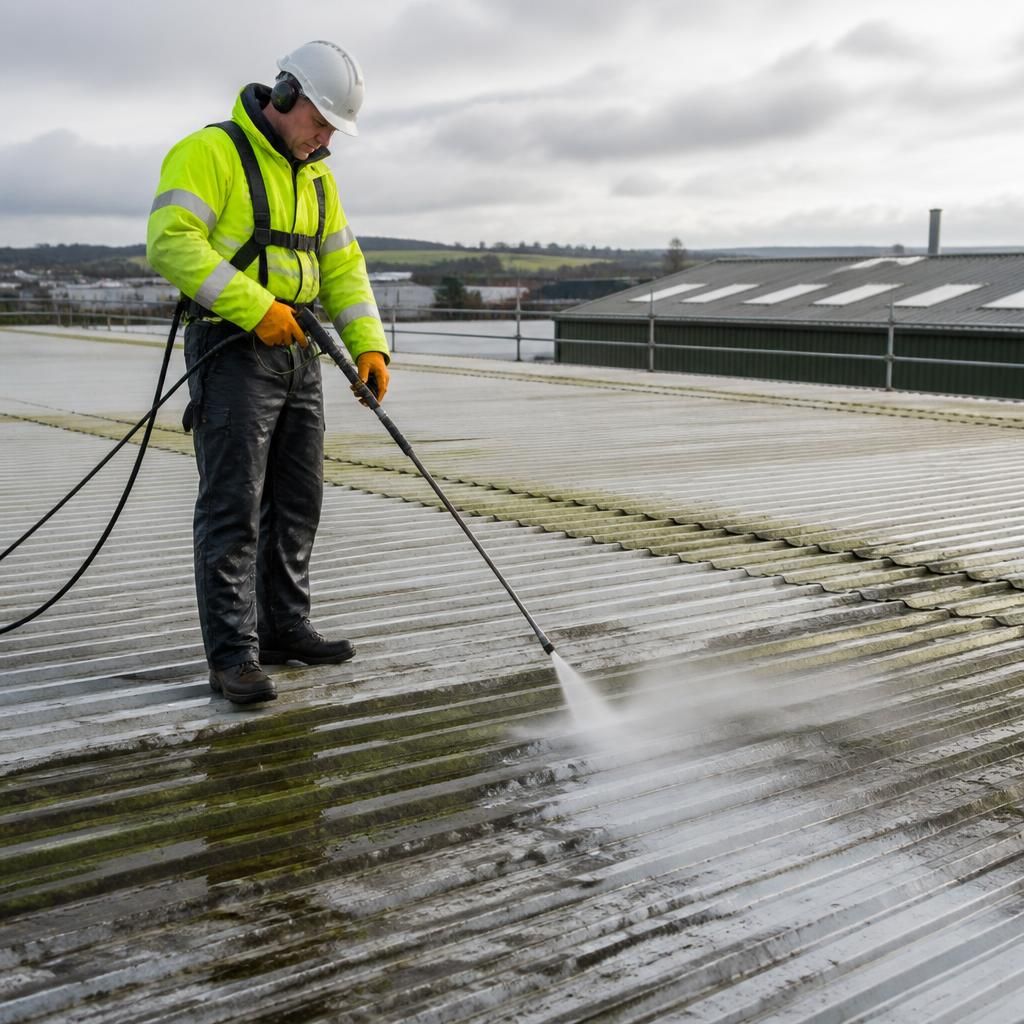
Roof material compatibility is the key factor when choosing between steam and chemical cleaning. Steam avoids many chemical exposure risks, but heat and pressure can still damage coatings, membranes, sealants or fragile roof details. Chemical products may control biological growth effectively, but an unsuitable formulation or excessive dwell time can discolour, soften or degrade the roof surface.
Before full cleaning, the proposed method should be assessed against the roof covering, coating history and warranty requirements. A controlled test area can show whether the selected temperature, pressure or treatment causes marking, colour change or surface deterioration. The area should be inspected after rinsing and drying, as some effects are not immediately visible. This practical check helps confirm that the chosen process will remove the contamination without creating a larger maintenance problem.