
How do the different roof cleaning methods impact the longevity and warranty of my roofing materials?
The effect on roof longevity depends on the cleaning method, the roofing material and how the work is carried out: controlled steam and compatible biocide treatments can remove contamination with limited abrasion, while excessive pressure or unsuitable chemicals may accelerate wear and damage protective coatings. Roof cleaning can also affect warranty cover, so the method should follow the manufacturer’s guidance and be documented by a competent commercial contractor.
The cleaning method can either support or shorten the service life of a roof, depending on the roofing material, the level of contamination and the way the work is controlled. Low-abrasion methods, such as carefully managed steam cleaning or a compatible biocide treatment, generally place less mechanical stress on roofing components than aggressive pressure washing. However, no method is automatically suitable for every roof. Incorrect pressure, temperature, chemical selection or runoff control can damage protective coatings, seals, fixings, membranes and surface finishes, and may affect the manufacturer’s warranty.
How the main methods affect roof longevity
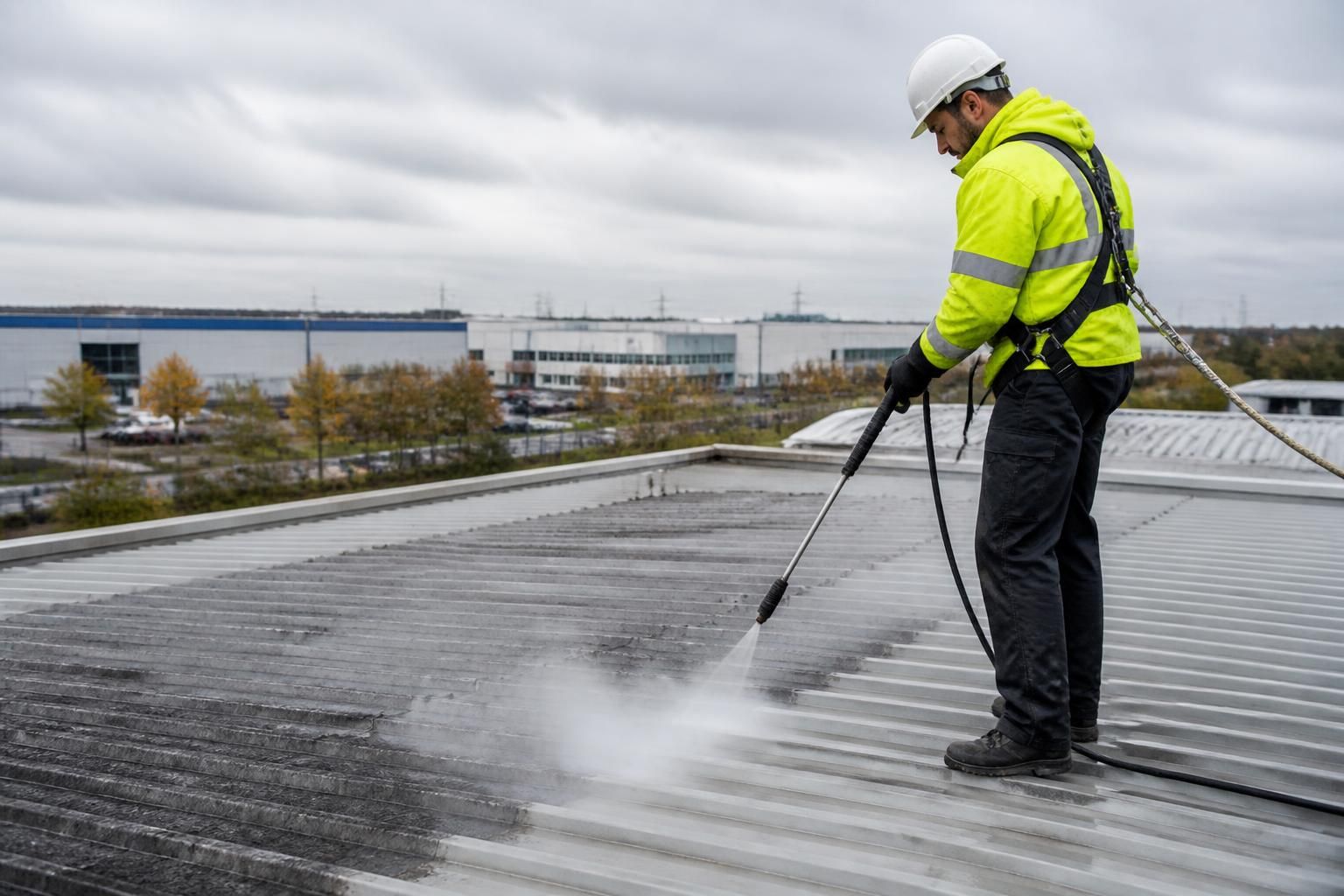
- Pressure washing: High-pressure water can remove dirt quickly, but it may also erode coatings, drive water beneath laps and joints, loosen tiles or slates, damage pointing and disturb fragile flashings. It can be particularly unsuitable for older roofs, coated metal, built-up systems and single-ply membranes unless the manufacturer has approved the pressure and technique. Even where pressure washing is permitted, controlled pressure, suitable nozzles and a safe working distance are essential.
- Steam cleaning: Steam uses heat and comparatively low mechanical force to soften and remove organic growth and surface contamination. This can reduce abrasion and help preserve sound coatings. It still requires careful control: excessive heat can affect some membranes, sealants, plastics, painted finishes and adhesive details, while prolonged application to one area can create localised thermal stress. Steam cleaning should therefore be adjusted to the roof construction and used by operatives who understand the material.
- Chemical cleaning: A suitable cleaning agent can break down staining, algae, moss and biological deposits without the same physical force as pressure washing. The chemical must be compatible with the roof covering, coatings, insulation interfaces, fixings and drainage system. Incorrect products, excessive concentrations or inadequate rinsing can discolour surfaces, attack protective finishes or accelerate corrosion.
- Biocide treatment: Biocides are used to control biological growth and help prevent rapid regrowth after physical cleaning. They are not a substitute for a proper roof assessment or for removing heavy deposits where these are obstructing drainage. Application must follow the product instructions, including dilution, contact time, weather conditions, protection of surrounding surfaces and management of contaminated runoff.
The roof material is as important as the cleaning method. Profiled and coated metal roofing can be affected by abrasion, corrosion at cut edges and damage to paint or protective layers. A compatible low-pressure or steam-based process may be preferable, but the condition of the coating and fixings must be checked first. Single-ply membranes and other synthetic roof systems can be vulnerable to punctures, stretching, harsh chemicals and heat, particularly at seams and details. Built-up felt roofs may have exposed or ageing mineral surfaces that should not be aggressively scrubbed or pressure washed.
Tiles and slate require attention to their condition rather than simply their appearance. Pressure can dislodge cracked or weathered units, remove surface material and disturb bedding, ridges or flashings. Clay and concrete tiles may also have coatings or finishes that are not designed to withstand aggressive cleaning. Natural slate varies in strength and condition, so a method suitable for one roof may be unsuitable for another. Asbestos-containing materials require a separate assessment and legally compliant handling approach; they should not be treated as ordinary roofing materials.
Cleaning does not automatically invalidate a roof warranty. Warranty terms commonly depend on the manufacturer’s maintenance requirements, approved products, authorised contractors and evidence that the roof has been inspected and maintained correctly. A warranty may exclude damage caused by unauthorised alterations, incompatible chemicals, excessive pressure, misuse of equipment or failure to follow maintenance instructions. It is also important to distinguish between a manufacturer’s product warranty and a contractor’s workmanship warranty: cleaning work may not cancel the former, but damage caused during cleaning may fall outside it.
Before work starts, the relevant warranty and maintenance documents should be reviewed. Some manufacturers specify prohibited chemicals, maximum pressures, acceptable cleaning techniques or requirements for post-cleaning inspections. Where the warranty is still active, written confirmation from the manufacturer, roofing system supplier or appointed warranty provider may be appropriate. If the roof is part of a newer construction project, the principal contractor, facilities manager or building owner should also confirm who is responsible for approving maintenance work.
A competent commercial roof cleaning process protects both the roof and the warranty position. The work should normally include:
- Reviewing roof plans, warranty information, previous maintenance records and known defects.
- Inspecting the roof covering, seams, laps, flashings, outlets, gutters, rooflights, plant areas and access routes.
- Identifying fragile, damaged or contaminated materials that need a different treatment or specialist referral.
- Testing the proposed method and product on a discreet area to check cleaning performance and compatibility.
- Preparing a method statement and risk assessment that specify equipment, pressure, temperature, chemical controls, access arrangements and protection of adjacent surfaces.
- Preventing cleaning solutions, loosened debris and contaminated water from entering rainwater systems or reaching occupied areas without suitable controls.
- Using trained operatives who can recognise defects and stop work if the roof responds unexpectedly.
- Inspecting the finished roof, clearing drainage routes and recording any defects or areas requiring separate repair.
Cleaning cannot repair failed seams, corrosion, cracked tiles, defective flashings or saturated insulation. Attempting to remove heavy growth from a structurally compromised roof can make the defect worse, so repairs or stabilisation may be required before cleaning. In some cases, gentle removal of loose growth and a compatible treatment is safer than trying to achieve a completely bare appearance.
The best method is therefore the least aggressive process that removes the relevant contamination while preserving the roof system. That may mean controlled steam for some sound surfaces, a carefully selected chemical or biocide treatment for biological growth, or a low-pressure approach where the material and manufacturer’s guidance allow it. The decision should be based on inspection findings rather than on the cleaning method alone.
For ongoing maintenance, keep records of inspection dates, photographs, products used, dilution instructions, application areas, weather conditions, defects identified and any manufacturer advice. This provides useful evidence that the roof has been maintained responsibly and helps future contractors select a compatible method. A planned maintenance schedule can also address moss, algae, staining and blocked drainage before they create moisture retention, corrosion or access problems. When cleaning is matched to the roof construction and supported by clear documentation, it can help preserve appearance, drainage performance and serviceable life without unnecessarily placing warranty cover at risk.
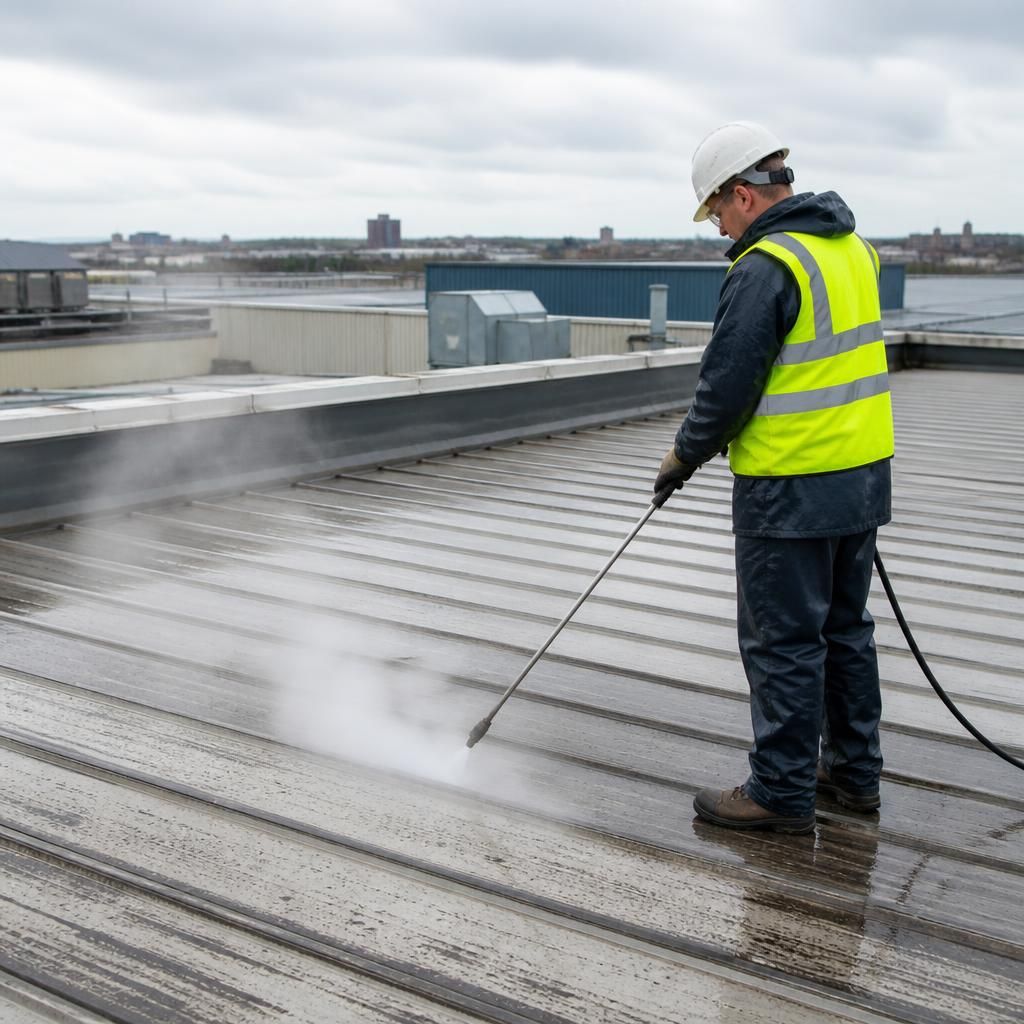
Roof cleaning can affect warranty protection when the method, chemical or equipment is not permitted for the roofing system. Before cleaning, check the manufacturer’s maintenance guidance and confirm any restrictions on pressure, heat, chemical products, rinsing and approved contractors.
A competent contractor should record the roof condition, test the proposed treatment in a discreet area and document the products and process used. This helps demonstrate that cleaning was carried out responsibly and provides useful evidence if warranty questions arise later. Cleaning cannot correct failed seams, corrosion or damaged tiles, so repairs may be needed before treatment begins.
Arrange a Roof Cleaning Assessment
Arrange a commercial roof cleaning assessment so we can inspect the roofing material, review warranty requirements and recommend a compatible cleaning method. Contact Encanto Exterior Cleaning to plan the work and identify any repairs or precautions needed before treatment.