
What safety precautions should I take when using biocide treatments on roofs to prevent harm to myself and the environment?
Before using a roof biocide, follow the product label and safety data sheet, wear suitable PPE, use safe roof-access and work-at-height controls, and avoid spraying in unsuitable weather. Prevent harm to the environment by protecting plants, people, pets and watercourses, controlling runoff, and collecting or diverting contaminated water in line with local requirements.
Safe roof biocide treatment requires control of three risks at the same time: exposure to the product, falling from height, and the release of contaminated solution into the surrounding environment. Before work starts, check that the product is authorised for the intended use, read its label and safety data sheet, assess the roof and access arrangements, and plan how spray drift, runoff and waste will be contained.
Use the product only as directed. The label is the primary source of information on permitted uses, dilution, application method, contact hazards, re-entry precautions, weather restrictions and disposal. Do not assume that a product suitable for one roof covering, surface or application method is suitable for another. Check compatibility with slate, tiles, metal, coatings, membranes, solar equipment, gutters and adjacent materials. If the label does not clearly permit the proposed use, obtain advice from the manufacturer or use a different treatment.
The safety data sheet provides further information for handling, storage, first aid, accidental release and waste management. Keep the current product label and safety data sheet available at the work location. Anyone mixing or applying the treatment should understand the instructions and have suitable training in chemical handling, roof access and emergency procedures. For commercial work, complete a documented risk assessment and method statement, and follow relevant UK requirements for hazardous substances, work at height, personal protective equipment and environmental protection.
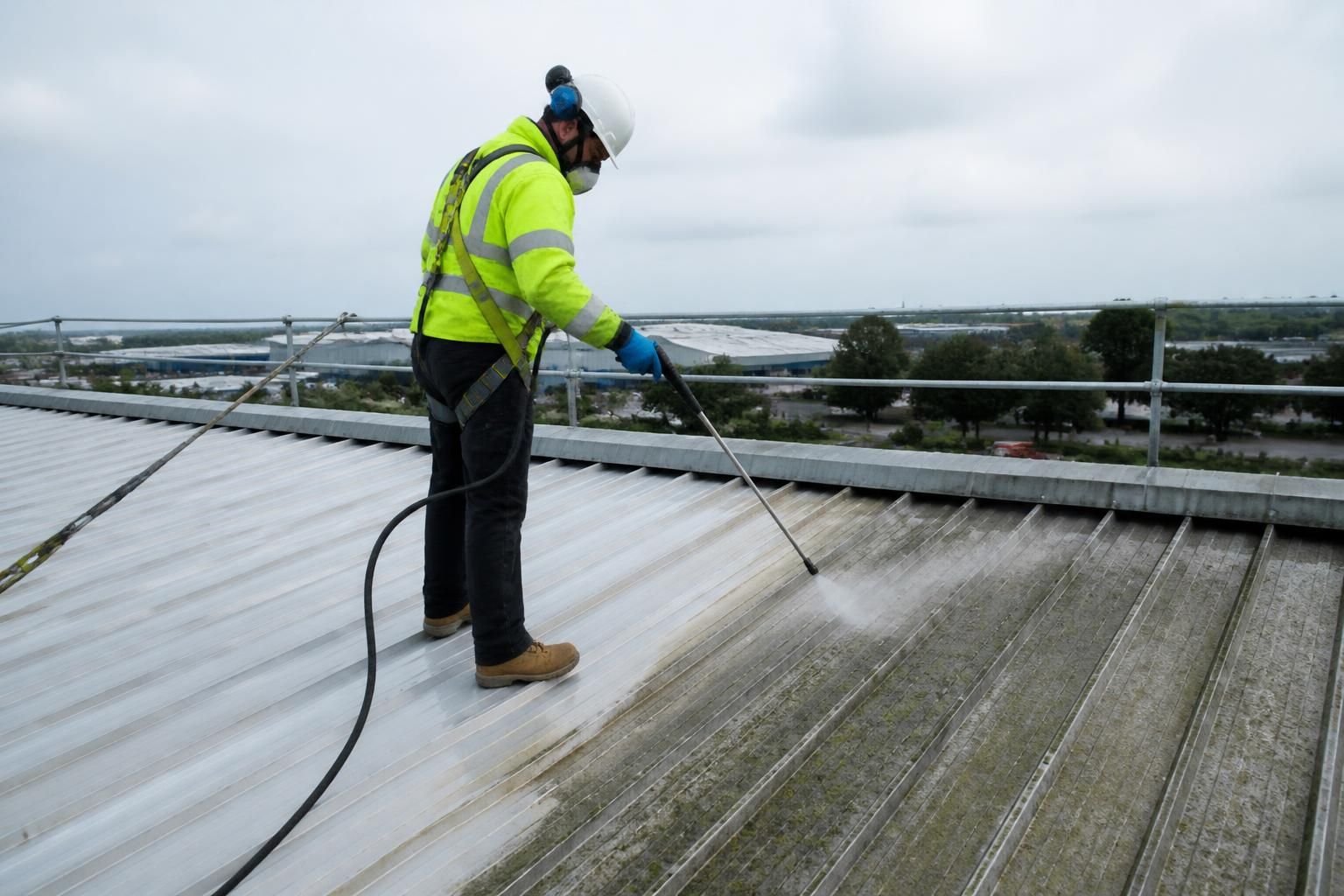
Control access to the roof. Biocide application should not begin until the roof has been inspected for fragile areas, steep slopes, loose coverings, skylights, rooflights, weak gutters and other hazards. Use a suitable access system, such as properly erected scaffolding, edge protection, a mobile elevating work platform or another assessed arrangement. Ladders should be used only where appropriate and within a safe system of work. Do not walk directly on fragile roof surfaces or rely on the roof covering, gutters or ridge tiles for support.
Keep people who are not involved in the work away from the roof, access equipment, mixing area and ground-level spray zone. Establish an exclusion area where falling materials, overspray or splashes could affect employees, visitors, vehicles or members of the public. Consider nearby windows, doors, air-intake systems, balconies and neighbouring properties. Stop work if the access equipment, weather or site conditions no longer provide adequate control.
Wear task-appropriate personal protective equipment. The product label and risk assessment should determine the exact specification, but protection may include chemical-resistant gloves, coveralls, suitable eye or face protection, and waterproof safety footwear with adequate grip. Use respiratory protective equipment only where the assessment and product information indicate that it is necessary; it must be suitable for the substance and correctly fitted. Facial hair can prevent some tight-fitting masks from working effectively.
PPE is the last line of defence, not a replacement for safe application and containment. Inspect it before use, replace damaged or contaminated items, and remove it carefully to avoid transferring product to skin, vehicles or clean surfaces. Wash hands and exposed skin thoroughly after handling the treatment and before eating, drinking or smoking. Do not take contaminated clothing home for ordinary washing; follow the product and workplace instructions for cleaning or disposal.
Mix and handle the biocide carefully. Prepare only the quantity needed for the planned work, in a controlled area away from drains, watercourses, plants, food, animal feed and public access. Use the correct measuring equipment and never mix products unless the manufacturer specifically permits it. Avoid creating spray mist, splashes or airborne droplets. Keep containers closed when not in use, label any transferred solution as required, and never use food or drink containers for storage.
Store the product upright, securely and in its original container, following the label’s temperature and segregation requirements. Prevent access by children, unauthorised people and animals. Keep incompatible substances apart and protect containers from damage. Do not leave concentrates or application equipment unattended on a roof, pavement or other exposed location.
Choose suitable weather conditions. Do not apply during rain or when rain is likely to wash the product from the roof before it has acted, unless the label expressly allows those conditions. Avoid strong or gusty winds because they increase spray drift and can carry treatment towards people, plants, vehicles, windows or water. Hot, rapidly drying conditions can also affect application and increase the risk of airborne droplets. Check the forecast and postpone work if conditions could compromise either the treatment or the containment plan.
Protect the surrounding environment before application begins. Identify surface-water drains, streams, ponds, ditches, soakaways, groundwater-sensitive areas, planted borders, lawns, hedges, vegetable beds and areas used by pets or livestock. Cover or isolate vulnerable plants and equipment where appropriate, but do not allow covers to create a trip hazard or prevent proper ventilation. Keep animals and people away until the label’s precautions have been met.
Control runoff and overspray. Do not allow concentrated product, diluted solution or contaminated wash water to enter surface-water drains, foul drainage systems, soil or watercourses unless the disposal route is specifically permitted. Use appropriate drain covers, temporary bunding, collection methods or diversion measures identified in the risk assessment. Keep application volumes controlled and avoid over-wetting the roof. Protect downpipes and plan where displaced water will go before treatment starts.
Any collected liquid, contaminated absorbent material, disposable PPE or residue must be managed according to the product instructions and applicable waste requirements. Never pour leftover treatment onto the ground, into a drain or into a watercourse. Do not wash equipment where the rinse water can reach a drain or unprotected soil. Use a suitable contained area and an approved disposal route, and retain records where your site procedures or legal requirements call for them.
Plan for accidental exposure or spillage. Keep clean water, first-aid equipment, spill-control materials and emergency contact details readily available. If product enters the eyes or contacts the skin, follow the label and safety data sheet immediately, usually by rinsing thoroughly with clean water and removing contaminated clothing. Seek medical advice when instructed by the product information or if symptoms persist, and provide the product label or safety data sheet to medical professionals.
For a spill, stop the source only if it is safe to do so, keep people away, prevent the material reaching drains and water, and use the planned containment materials. Do not hose the spill into the drainage system. Report significant releases through the appropriate site and environmental procedures. If anyone inhales spray, feels unwell or is exposed to an unknown quantity, move them to fresh air where safe and obtain urgent professional advice.
After treatment, inspect the roof and ground area for visible residue, leaks, damaged containers and uncontrolled runoff. Clean equipment using the approved method, remove warning barriers only when the area is safe, and observe any label instructions about keeping people, pets or contractors away. A competent specialist should be used where the roof is fragile, access is complex, the product is hazardous, runoff cannot be reliably controlled, or the site is close to a sensitive water or ecological area.
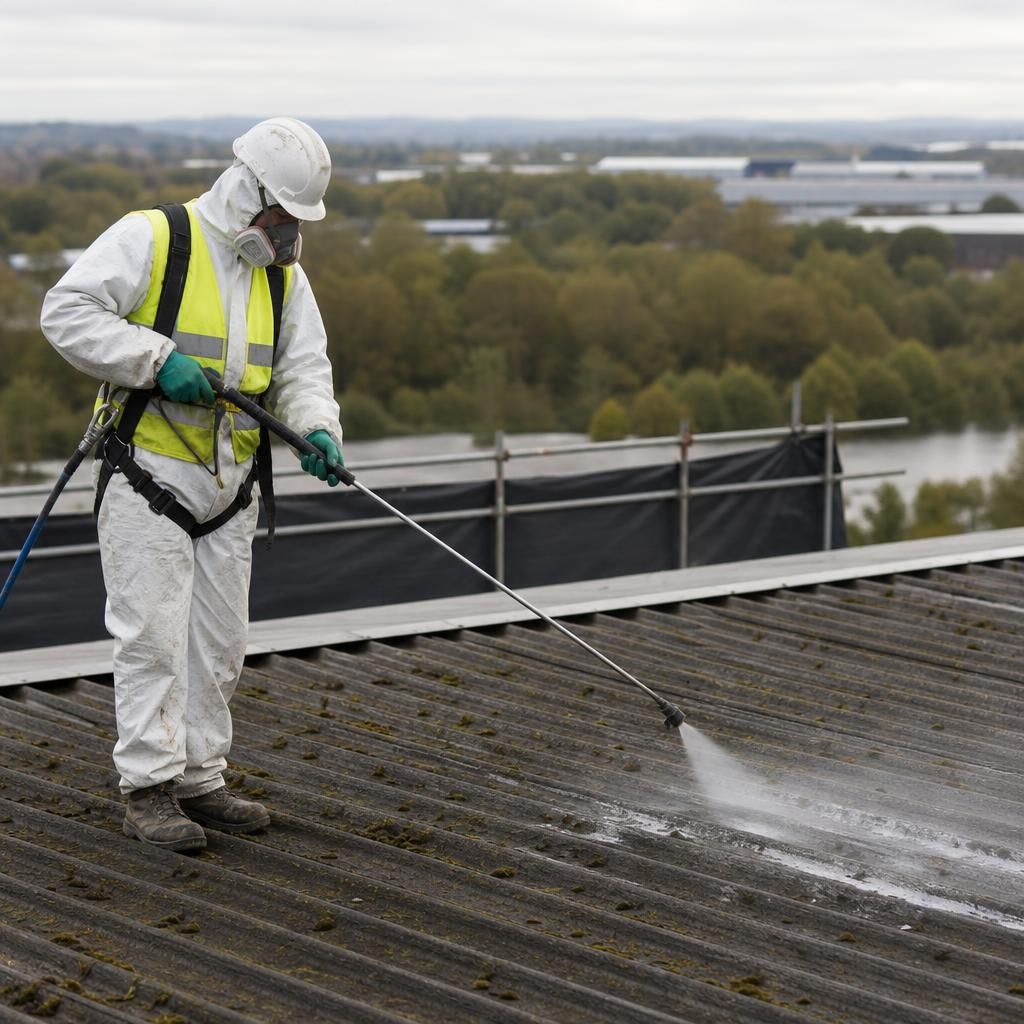
Environmental protection during roof biocide application means preventing treatment, overspray and contaminated runoff from reaching people, plants, drains, soil or watercourses. Before work begins, identify nearby surface-water drains, ponds, streams, planted areas, lawns and animal-accessible spaces, then include suitable protection and containment measures in the risk assessment.
- Check the weather and postpone work in strong winds or rain, which can increase spray drift and wash treatment from the roof.
- Control application volume and protect or divert downpipes so contaminated liquid cannot enter an unapproved drainage route.
- Keep people, pets and livestock away from the work area until the product label confirms it is safe to return.
- Never wash equipment or dispose of leftover solution into a drain, watercourse or unprotected ground. Follow the product label, safety data sheet and applicable waste requirements.