
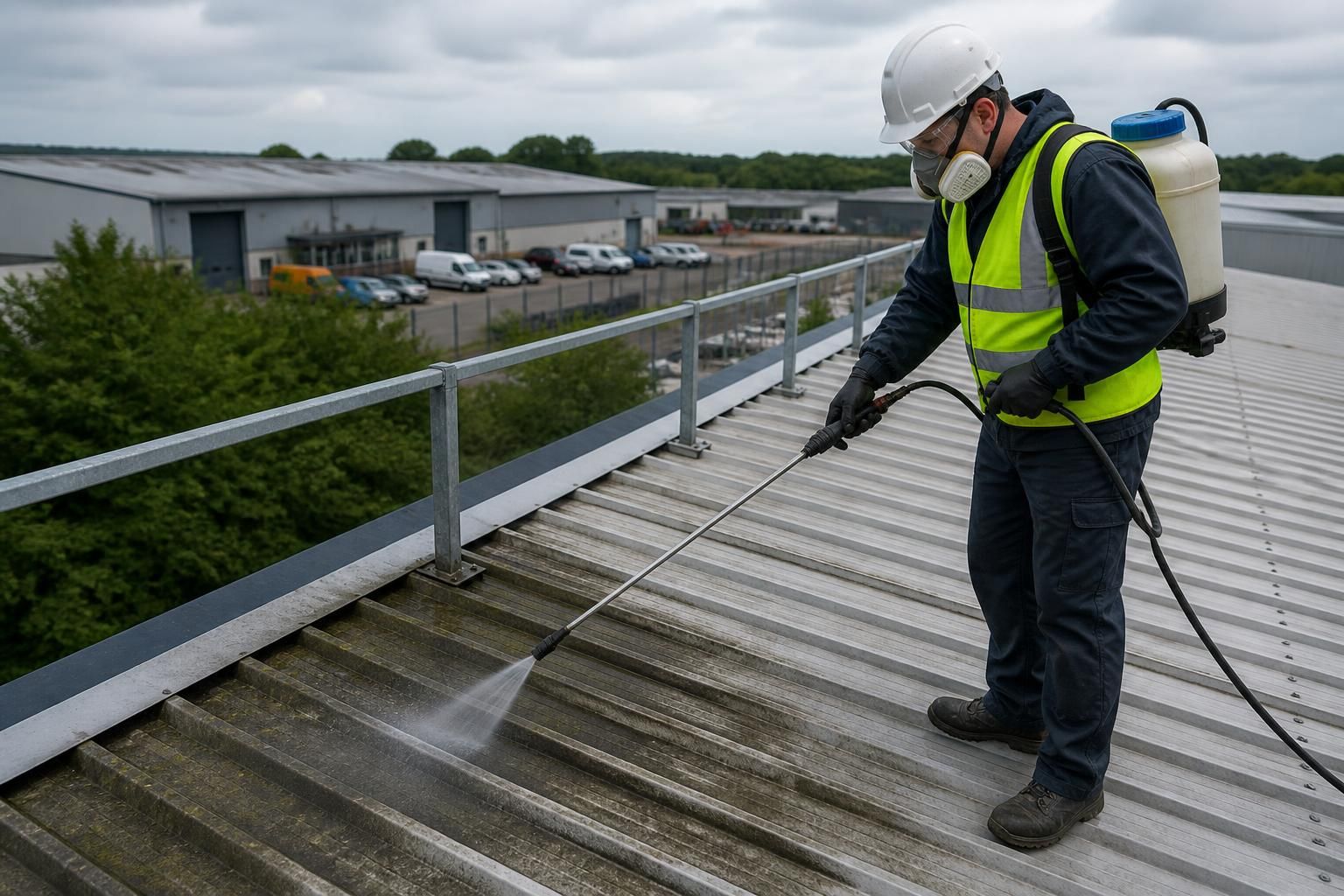
What safety precautions should be taken when applying biocide treatments to roofs?
When applying biocide treatments to roofs, use the correct personal protective equipment, control access to the work area, follow the product label and risk assessment, and use safe roof-access and application methods. Protect people, plants, wildlife, drainage systems and watercourses from contact or run-off, and ensure adequate ventilation, weather conditions and post-application controls before the area is reopened.
Biocide roof treatments should only be applied under a documented risk assessment and in accordance with the product label, safety data sheet and relevant UK requirements. The essential precautions are to use suitable personal protective equipment, prevent falls and unauthorised access, control spray and run-off, protect people, plants, animals and watercourses, and keep the treated area closed until it is safe to reopen.
Check the product and roof before work begins
- Confirm that the biocide is suitable for the roof covering and the intended use. Some products may be unsuitable for particular slate, tile, metal, membrane, coating or painted surfaces.
- Read the current product label and safety data sheet before mixing or applying the treatment. Follow the specified dilution, application method, contact requirements, storage instructions and disposal arrangements. Never assume that a stronger mix will produce a better result.
- Complete a site-specific risk assessment and method statement. This should address work at height, fragile surfaces, access routes, chemicals, spray drift, weather, electrical equipment, nearby occupants and environmental risks.
- Check whether a COSHH assessment, environmental permit, trade effluent approval or other site-specific control is required. Where the work is on a commercial or industrial property, coordinate the controls with the client’s site rules and permit-to-work arrangements.
- Inspect the roof and surrounding area for fragile sections, damaged coverings, skylights, roof lights, loose materials, overhead cables, plant, vents and drainage outlets. Mark or protect hazards before anyone accesses the roof.
Use safe access and fall-prevention measures
Biocide application is work at height when it is carried out on a roof, so access must be planned rather than improvised. Use suitable scaffolding, edge protection, roof ladders, mobile elevating work platforms or other appropriate equipment, selected for the building and surface. Follow the manufacturer’s instructions for all access equipment and ensure it is inspected and used by competent people.
- Do not walk directly on fragile roof coverings, roof lights or areas that have not been assessed as load-bearing.
- Use designated access routes and maintain three points of contact where appropriate. Keep hoses, lances and containers arranged so that they cannot create trip hazards or pull workers off balance.
- Do not rely on a harness as the sole control unless there is a suitable anchorage, a compatible system and a documented rescue plan. A harness does not prevent a fall by itself.
- Keep ground-level areas below the work zone clear of people, vehicles and equipment that could be affected by falling materials or treatment spray.
- Use a trained operator for powered access equipment and maintain communication between people working on the roof and those controlling equipment or the exclusion zone.
Wear and maintain appropriate PPE
PPE should be selected from the product assessment and the task risk assessment, not treated as a substitute for safer application controls. Depending on the product and method, this may include chemical-resistant gloves, protective coveralls, suitable safety footwear, eye or face protection and respiratory protection. Check the label and safety data sheet for the exact specification.
- Wear gloves that are rated for the chemical and replace them if they become damaged or contaminated. Wash hands thoroughly after handling the product, including after removing gloves.
- Use goggles or a face shield where splashing, mist or spray could reach the eyes or face.
- Use respiratory protective equipment only where the assessment requires it, and ensure it is suitable, correctly fitted and supported by the necessary face-fit testing, maintenance and wearer training.
- Keep contaminated workwear separate from everyday clothing. Remove PPE safely, prevent contamination of vehicles and welfare areas, and launder or dispose of items in accordance with the product instructions.
- Do not eat, drink or smoke while handling or applying biocide products.
Control mixing, decanting and application
Mix treatments in a controlled, well-ventilated area away from drains, watercourses, food, public access and unprotected surfaces. Use the correct measuring equipment and clean containers. Never mix biocides with other chemicals unless the product information specifically permits it, as incompatible mixtures can create dangerous reactions or reduce treatment control.
- Keep the original container clearly labelled and do not transfer product into unmarked bottles or containers that could be mistaken for drinks.
- Keep containers upright and secure during transport and application. Close them when not in use and store them away from heat, ignition sources, children, animals and incompatible materials.
- Use application equipment that limits unnecessary mist and overspray. Apply from a stable position and avoid directing spray towards people, occupied buildings, air intakes, vehicles, glazing, painted surfaces or neighbouring property.
- Do not use pressure or spray settings that could dislodge tiles, drive treatment beneath coverings or spread contaminated run-off beyond the controlled work area.
- Inspect hoses, lance connections, pumps and containers before use. Stop immediately if there is a leak, damaged equipment or loss of control.
Choose suitable weather conditions
Postpone application when weather could compromise safety or cause uncontrolled movement of the treatment. Wind can carry spray onto people, plants, vehicles and water; rain can wash product into drainage systems; and icy, wet or excessively hot conditions can increase the risk of slips, heat stress or rapid drying. Follow the product label and monitor conditions throughout the work, not only at the start.
Roof surfaces should also be assessed for dampness, algae, moss and loose deposits that may make access hazardous. If weather changes during application, stop, secure the area and review whether the work can continue safely.
Protect drainage systems, soil and water
Prevent biocide and contaminated wash water from entering surface-water drains, foul drainage, ponds, streams, rivers or groundwater. Before starting, identify the site drainage layout and protect or isolate vulnerable outlets using a method that is suitable for the location and will not create a trip or flooding hazard.
- Use controlled application rather than allowing excess product to run freely from the roof.
- Protect soil, planted areas, lawns, crops and permeable surfaces from spray and overspill. Keep the product away from ponds, rainwater harvesting systems and areas used by animals.
- Do not rinse equipment where the wash water can enter a drain or watercourse. Collect, contain and dispose of residues and contaminated water in accordance with the product instructions and site requirements.
- Never discharge chemical residues into a drain, onto soil or into a watercourse. If a release occurs, stop the source if it is safe to do so, contain the spread, protect drainage outlets and follow the spill procedure.
- Where there is a risk to a protected site, sensitive habitat or nearby watercourse, obtain appropriate environmental advice before work begins.
Control people, animals and nearby property
Set up a clearly defined exclusion zone and display suitable warning signs. Keep occupants, visitors, children, pets and livestock away from the roof, mixing point, equipment and any area that could receive spray or contaminated run-off. Tell the client when the treatment will take place and identify any access, ventilation or business operations that need to be temporarily restricted.
Close or protect windows, doors, air-conditioning intakes, ventilation openings, solar equipment and other vulnerable installations where spray or vapour could enter. Cover or move vehicles and outdoor equipment where appropriate, but do not create additional fall, fire or access hazards by using loose sheeting on a roof.
Have emergency arrangements in place
Keep the product label and safety data sheet available at the work location, together with clean water for emergency washing, a suitable first-aid kit, spill-control materials and a reliable means of communication. Workers should know how to respond to skin or eye contact, inhalation, ingestion, a fall, a chemical spill and exposure of members of the public.
- For eye or skin exposure, follow the product first-aid instructions and use emergency washing facilities immediately. Seek medical advice where required and provide the product information to medical professionals.
- If someone feels unwell, stop the task and move them away from the exposure only where this can be done safely.
- Do not attempt a rescue from a roof or access platform without suitable training and equipment. Call the emergency services where necessary and follow the planned rescue procedure.
- Record incidents, near misses, exposure and environmental releases, then review the controls before work resumes.
Complete the work safely
After application, secure leftover product and equipment, remove contaminated materials correctly and check that there is no uncontrolled run-off or residue affecting adjacent areas. Clean equipment in the approved manner and keep washings contained. Do not leave containers, hoses or warning barriers where they can be accessed by the public.
Maintain the exclusion zone for the period stated on the product label and until surfaces, access routes and surrounding areas are safe. Before reopening the area, inspect for slippery deposits, damaged materials, chemical residue and pooled liquid. Record the product used, batch information where required, application conditions, areas treated, incidents and any follow-up controls. A competent contractor should stop the job whenever the roof, chemical or environmental conditions fall outside the agreed safe system of work.
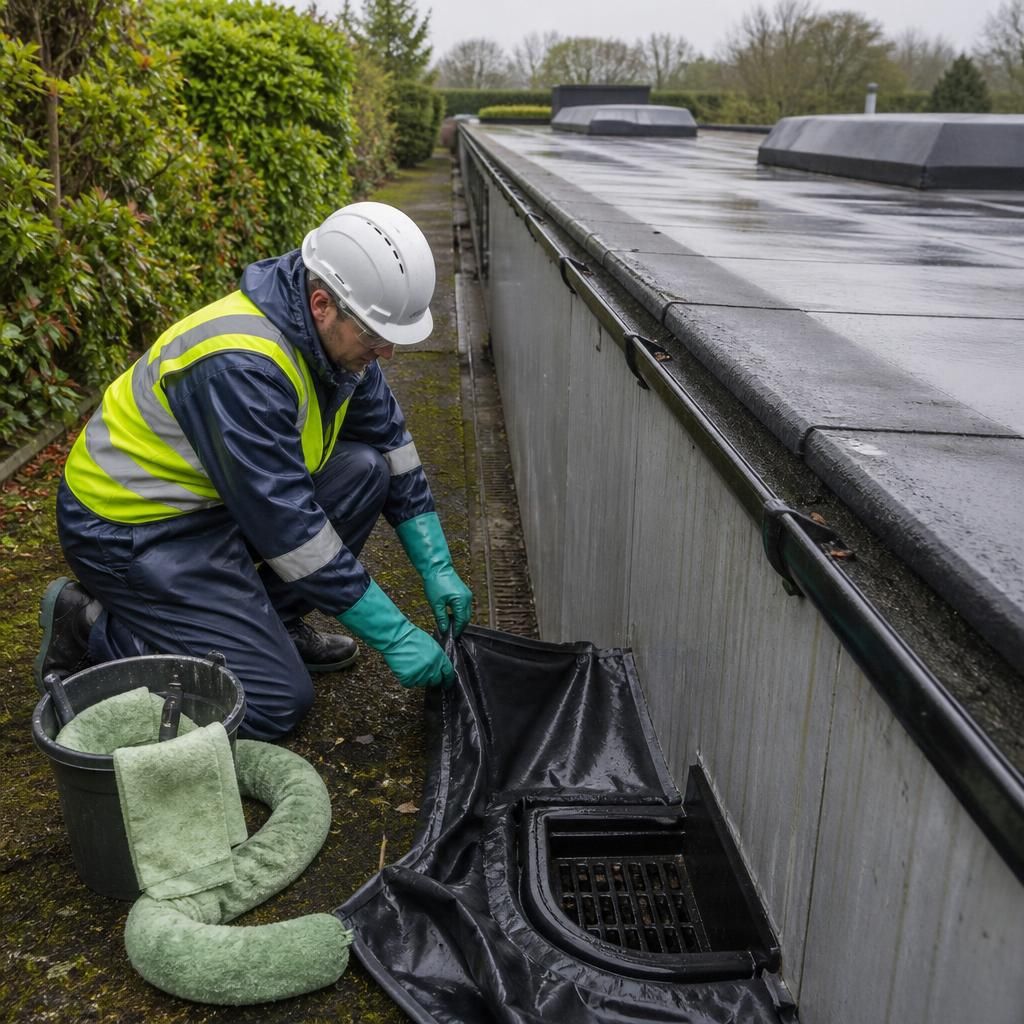
Protecting drainage systems and surrounding vegetation is a key safety precaution when applying a biocide roof treatment. Before work starts, identify nearby drains, watercourses, ponds, planted areas and permeable ground, then prevent spray, product and contaminated run-off from reaching them.
Use controlled application methods to avoid excessive run-off, shield vulnerable surfaces where appropriate, and keep spill-control materials available. Never rinse equipment into a drain or onto soil; collect and dispose of residues and wash water in line with the product instructions and site requirements.