
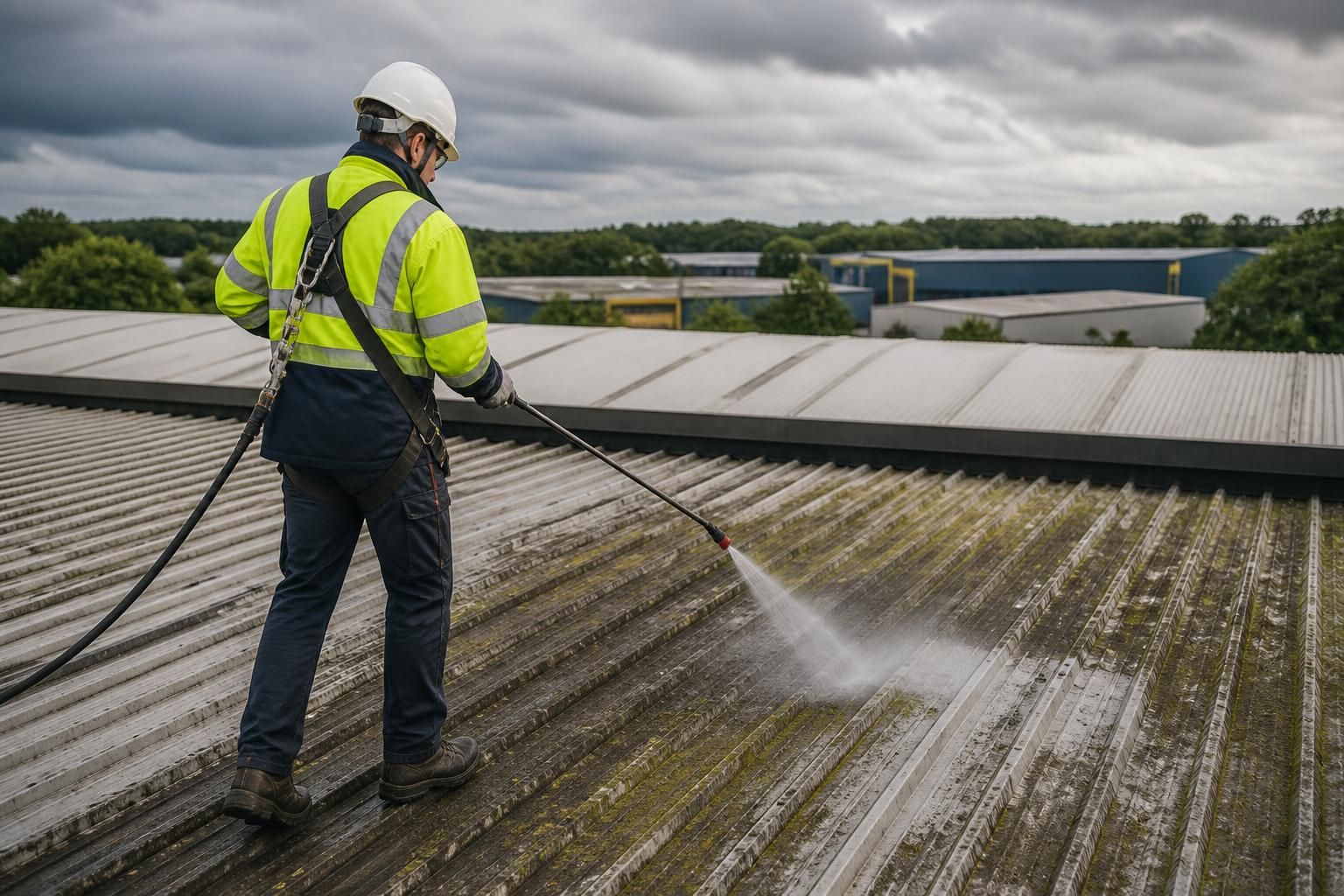
What factors should I consider when choosing a biocide treatment for my specific roof type?
Choose a biocide treatment based on the roof material, the type and extent of biological growth, the roof’s condition, and the treatment’s compatibility with nearby surfaces and drainage systems. A professional assessment should also consider application method, environmental precautions, required dwell time and the level of ongoing protection needed.
The right biocide treatment depends primarily on the roof material, its condition, the type of biological growth present and the surrounding drainage and surfaces. A treatment suitable for an aged, porous concrete-tiled roof may be unsuitable for coated metal, slate, a single-ply membrane or a roof with sensitive landscaping below it. Product approval, application instructions and a site assessment should therefore be checked before any treatment is selected.
Start with the roof material
Identify the roof covering and any protective finish before choosing a product. The material affects how readily the treatment is absorbed, how it should be applied and whether it could affect the surface or underlying layers.
- Concrete tiles: These are often porous and can retain moisture, allowing moss, algae and lichen to establish. A suitable biocide may be applied after loose growth has been removed, but the roof should be checked for surface erosion, exposed aggregate, cracked tiles and failing coatings.
- Clay tiles: Older clay tiles can be brittle, weathered or glazed. The treatment and application pressure must be appropriate for the tile’s finish. Aggressive cleaning or unsuitable chemicals may affect the surface or increase the risk of damage.
- Natural slate: Slate varies in porosity and condition. The fixings, overlaps and edges should be examined, as cleaning can disturb fragile or already loose slates. The selected treatment should be compatible with natural stone and applied without unnecessary abrasion or high pressure.
- Coated or galvanised metal: Check that the product will not attack the coating, promote corrosion or leave residues that affect the finish. Biological growth may be concentrated around joints, gutters and areas that remain damp, so the cause of the moisture should also be addressed.
- Flat-roof membranes and roof coatings: Single-ply membranes, felt, liquid-applied coatings and other synthetic systems require particular care. Some chemicals or solvents can affect the membrane, seams, adhesive or waterproof coating. The roof system manufacturer’s guidance should be followed where available, and standing water should be considered during both application and rinsing.
- Thatch or specialist coverings: These should not be treated using a standard roof biocide without specialist advice. The construction, fire considerations and moisture behaviour are different from those of tiled or sheeted roofs.
Assess the type and extent of growth
Moss, lichen, algae and general organic staining do not behave in exactly the same way. Moss forms a heavier, more three-dimensional layer that can retain moisture and obstruct drainage channels. Lichen may be firmly attached to the surface, while algae often appears as green, black or red staining on damp areas. A treatment should be selected for the organisms present and used as part of an appropriate cleaning process, rather than assuming that one product will produce the same result on every roof.
Where growth is extensive, removing it may require gentle manual methods before the biocide is applied. A treatment is not a substitute for repairing slipped tiles, clearing blocked gutters or correcting persistent water retention. If the biological growth is mainly on shaded elevations, beneath overhanging trees or beside defective drainage, those contributing conditions should be considered as part of the maintenance plan.
Check the roof’s age and condition
A sound roof can generally tolerate a carefully controlled treatment better than one with cracked tiles, open laps, degraded sealants or loose fixings. Before work begins, inspect for fragile areas, failed pointing, damaged ridge and verge details, exposed underlay, blocked outlets and signs of water ingress. The treatment may be technically compatible with the roof material but still inappropriate if the covering is too deteriorated to withstand access or cleaning.
Older roofs may also have accumulated residues from previous coatings or cleaning products. A small test area can help establish whether the surface changes colour, becomes tacky, loses its finish or reacts unpredictably. The test should be assessed after the relevant dwell and drying period, not only immediately after application.
Confirm chemical compatibility
Use only a product whose label and technical information support the intended roof surface and application method. Consider its active ingredients, dilution requirements, contact time, temperature limitations and any restrictions relating to nearby materials. Do not mix products unless the manufacturer expressly permits it. Combining a biocide with acidic cleaners, solvents, detergents or other treatments can create unwanted reactions or reduce performance.
Compatibility also includes ancillary components. Check the likely effect on leadwork, plastics, rubber seals, solar panel frames, rooflights, painted surfaces, masonry, render and guttering. Sensitive areas may need to be protected, separately cleaned or excluded from the treatment.
Consider the application method
The selected treatment must suit the way it will be applied safely and evenly. Low-pressure spraying is commonly used where the roof surface can be treated without forcing water beneath laps or tiles, but the correct method depends on the product and roof construction. Some roofs may require controlled manual application, while others may be unsuitable for direct access altogether.
Access arrangements are an important part of product selection. Fragile coverings, steep pitches and large commercial roofs may require specialist access equipment and defined exclusion zones. Applying too much product, allowing it to dry on sensitive surfaces or rinsing it into drainage systems can cause damage even when the chemical itself is suitable.
Plan for runoff and the surrounding environment
Before treatment, identify where rainwater and wash water will travel. Protect or isolate water butts, ponds, watercourses, planted areas, permeable paving, neighbouring façades and vehicle access routes where necessary. Gutters and downpipes should be managed so that concentrated treatment does not discharge into sensitive areas. Environmental precautions should follow the product label, relevant site controls and applicable UK requirements.
On commercial and industrial premises, the assessment should also consider occupants, pedestrians, vehicles, drainage infrastructure and nearby businesses. A method statement and COSHH assessment may be required, particularly where the work involves concentrated products, restricted access or public-facing areas.
Match the treatment to the required outcome
Some treatments are intended mainly to kill or suppress biological growth, while others are used within a wider cleaning system. A roof that needs immediate removal of heavy moss may require mechanical preparation followed by treatment. A relatively clean roof with recurring algae may need a maintenance application designed for ongoing control. In either case, the expected appearance and timescale should be agreed in advance: biological growth may die back gradually, and staining can remain until weathering or further cleaning removes it.
Review ongoing maintenance requirements
Choose a treatment that fits the roof’s exposure, shade, moisture levels and maintenance schedule rather than relying on a fixed application interval. Inspect the roof periodically for renewed growth, blocked outlets, overhanging vegetation and defects that hold moisture. Regular gutter clearance and repairs can reduce the conditions that encourage regrowth, potentially reducing the need for repeated chemical treatment.
For a reliable choice, record the roof covering, age and condition; identify the biological growth; check product compatibility and label directions; assess access and runoff; complete a controlled test area; and agree the cleaning and maintenance method before full application. Where the roof includes mixed materials, specialist coatings, fragile coverings or complex drainage, a professional assessment is the safest way to select a treatment that protects both the roof and its surroundings.
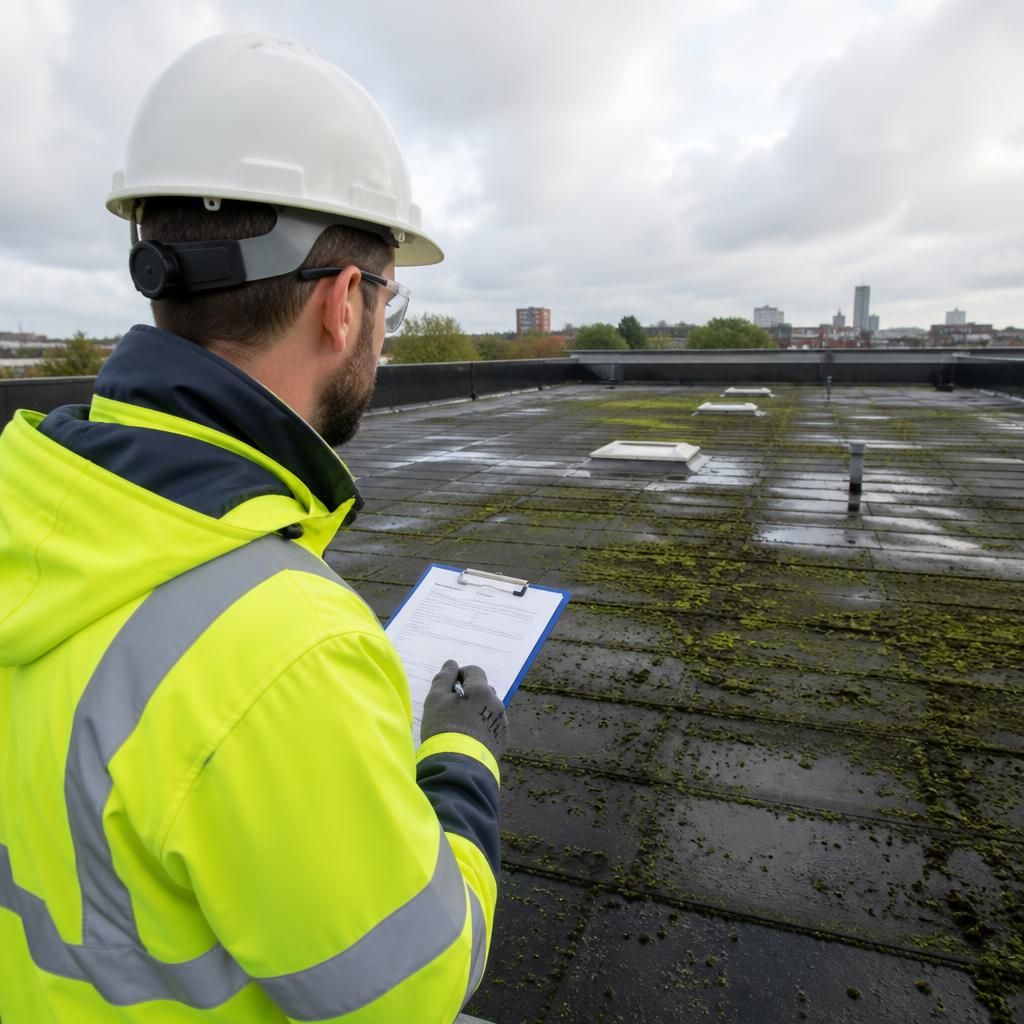
Roof material compatibility is a primary factor when choosing a biocide treatment. A product suitable for porous concrete tiles may be unsuitable for natural slate, coated metal, single-ply membranes or specialist coverings. Check the product label and roof system manufacturer’s guidance before application, including any restrictions affecting coatings, sealants, fixings, gutters and nearby surfaces.
The roof’s condition must also be assessed. Cracked tiles, loose slates, exposed underlay, degraded coatings and failed seals can make treatment or access unsafe, even when the chemical is technically compatible. A controlled test area should be checked after the recommended dwell and drying period to identify discolouration, softening or other unwanted reactions before treating the full roof.
Arrange a Roof Assessment for the Right Biocide Treatment
Arrange a roof assessment with Encanto Exterior Cleaning to confirm the roof material, condition, biological growth and drainage requirements before selecting a biocide treatment. We can recommend a suitable approach for your roof and ongoing maintenance needs.