
What factors should be considered when selecting a biocide treatment for roof maintenance?
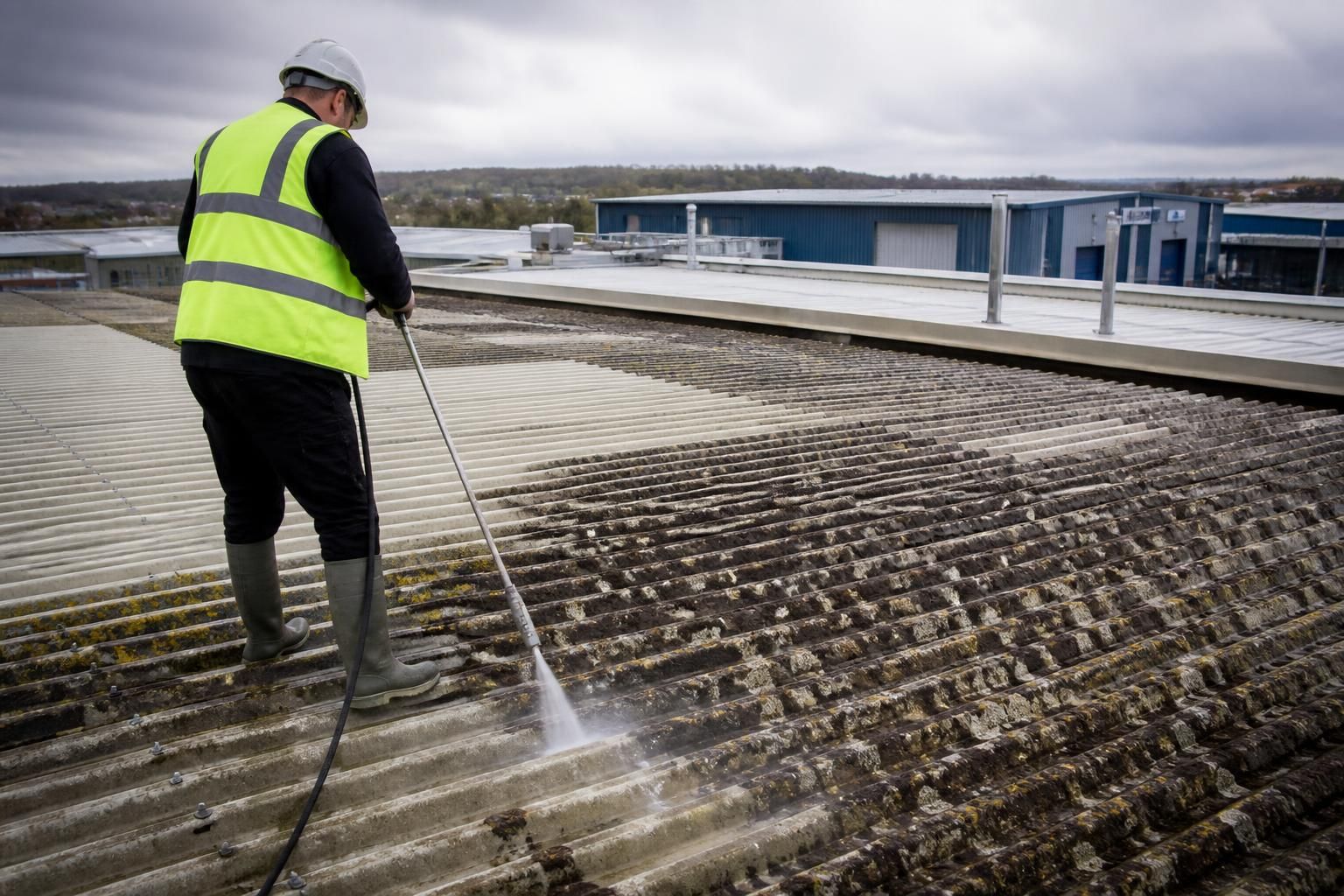
Select a biocide treatment based on the roof material and condition, the type and severity of moss, algae or lichen growth, the required treatment longevity, and the potential risks to people, plants and drainage systems. The product must be compatible with the roof and applied at an appropriate concentration and method, ideally following a professional assessment of the surface and surrounding environment.
Choosing a biocide treatment for roof maintenance depends on the roof material, its condition, the type and extent of biological growth, the surrounding environment and the intended duration of protection. The treatment must be compatible with the surface, suitable for the organisms present and capable of being applied safely without contaminating plants, drainage systems or adjacent areas.
Assess the roof material first. Concrete tiles, clay tiles, natural slate, fibre cement, metal cladding and coated roofing systems can respond differently to cleaning chemicals. A product that is suitable for one surface may stain another, affect a protective coating or worsen existing deterioration. Natural slate and older tiles require particular care because they may be porous, brittle or already weakened. Metal roofs and coated sheets also need a formulation that will not promote corrosion or damage the finish.
The roof’s age, previous treatments and manufacturer’s guidance should be considered before a product is selected. Where the material is unknown, samples are unavailable or the surface has a specialist coating, a small inconspicuous test area should be assessed before wider application. This helps identify discolouration, surface softening, run-off problems or an unexpected reaction with previous coatings.
Identify the type and severity of growth. Moss, algae, lichen and general organic staining do not behave in exactly the same way. Moss can retain moisture and may be established within tile laps or surface irregularities. Lichen can adhere firmly to porous materials, while algae often appears as broad dark or green staining. Light staining may require a different approach from dense, established growth, and heavily affected areas may need physical removal before or alongside chemical treatment.
It is also important to establish whether the growth is active and spreading or is mainly residual staining from an earlier problem. A biocide is intended to control biological growth; it is not necessarily a substitute for removing accumulated debris, repairing defective roofing or correcting persistent damp conditions. If blocked gutters, overhanging vegetation, poor ventilation or leaking details are contributing to the problem, those causes should be addressed as part of the maintenance plan.
Check the product’s purpose and formulation. Products may be designed for cleaning, growth control, preventative maintenance or post-cleaning treatment. The label and technical information should explain the surfaces for which the product is approved, the organisms it targets, any dilution or contact requirements, and the required application method. Selection should be based on the intended use rather than simply choosing the strongest available chemical.
Higher concentration does not automatically mean better performance. Excessive application can increase the risk of damage, harmful run-off and exposure without providing a proportionate benefit. The chosen formulation should be used exactly as directed, including any restrictions on mixing it with other substances. Different products must not be combined unless the manufacturer specifically confirms that this is safe and appropriate.
Consider the roof’s condition and construction. A treatment decision should account for cracked or slipped tiles, open joints, exposed underlay, damaged pointing, corroded fixings and areas where water can enter the building. Pressure, brushing and chemical application can all affect a roof that is already compromised. Loose moss should not be allowed to conceal defects, and cleaning should not proceed until fragile or unsafe areas have been identified.
Roof pitch, access routes, drainage details and nearby roof features also influence the appropriate method. Skylights, solar panels, ventilation equipment, rainwater goods and roof-mounted plant may need to be protected or treated separately. A professional survey can establish whether a treatment is suitable for the whole roof or only for selected sections.
Evaluate environmental and drainage risks. Before selecting a biocide, consider where spray, rinse water and loosened material could travel. Nearby planting, ponds, watercourses, soil, hardstanding, public areas and neighbouring properties may be affected by run-off or overspray. Rainwater outlets and surface-water drainage require particular attention because contaminated water can move away from the work area quickly.
The preferred treatment should allow the work to be controlled, contained and carried out in accordance with the product label and applicable environmental requirements. Weather conditions are part of this assessment: wind can carry spray beyond the roof, while rain can dilute the treatment or wash it into drainage systems before it has worked. A suitable weather window and a clear run-off management plan are therefore essential.
Match the treatment to the required longevity. Some treatments are selected to deal with existing growth, while others form part of a planned maintenance programme intended to reduce regrowth. The expected period of control depends on the roof’s exposure, shading, moisture levels, surrounding vegetation, surface porosity and the severity of the original contamination. No treatment provides permanent protection where the conditions supporting moss, algae or lichen remain unchanged.
For commercial and industrial premises, the selection should also reflect the maintenance schedule and operational requirements of the site. A treatment that can be applied during planned access works may be more suitable than one requiring repeated disruption or extensive rinsing. Records of the product used, application areas, roof condition and observed regrowth can help determine whether the maintenance interval is appropriate.
Review safety and compliance requirements. The product’s safety data and label should be checked before work begins. Consider exposure to operatives, building users, visitors, neighbours and members of the public, as well as the risks associated with roof access, wet surfaces and falling debris. Appropriate personal protective equipment, exclusion zones, access equipment and emergency arrangements should be established in advance.
Professional contractors should also consider the Control of Substances Hazardous to Health requirements, product-specific instructions and any site rules that apply to commercial premises or public buildings. The presence of vulnerable occupants, food-handling areas, livestock, pets or sensitive landscaping may affect product selection and the controls required during application.
Check whether treatment should be combined with another method. Biocide treatment can be used as part of a wider roof maintenance approach, but it should not be assumed that it is suitable alongside every cleaning method. Steam cleaning, low-pressure washing, soft brushing or manual removal may be appropriate depending on the surface and the growth. The sequence matters: physical cleaning may remove established deposits, while a carefully selected follow-up treatment can help control remaining biological contamination.
Combining methods without assessing the roof can increase abrasion, water ingress or chemical exposure. The approach should be based on the condition of the material, the desired finish and the manufacturer’s instructions for the treatment. A test area remains useful where a combined method has not previously been used on that roof.
Use a site-specific assessment before approval. A suitable product on paper may not be suitable for a particular building. The final decision should take account of the roof material, growth type, surface condition, access, weather exposure, drainage, adjacent land and the client’s maintenance objectives. For larger or more complex roofs, the specification should identify the preparation method, treatment areas, protection measures, application controls, inspection requirements and arrangements for managing run-off.
When there is uncertainty about compatibility, environmental risk or the condition of the roof, obtaining advice from a competent exterior cleaning contractor and checking the product manufacturer’s technical documentation is preferable to relying on general-purpose treatment. This approach helps ensure that the biocide is selected for the actual roof rather than applied solely because it is effective on a different surface or type of growth.
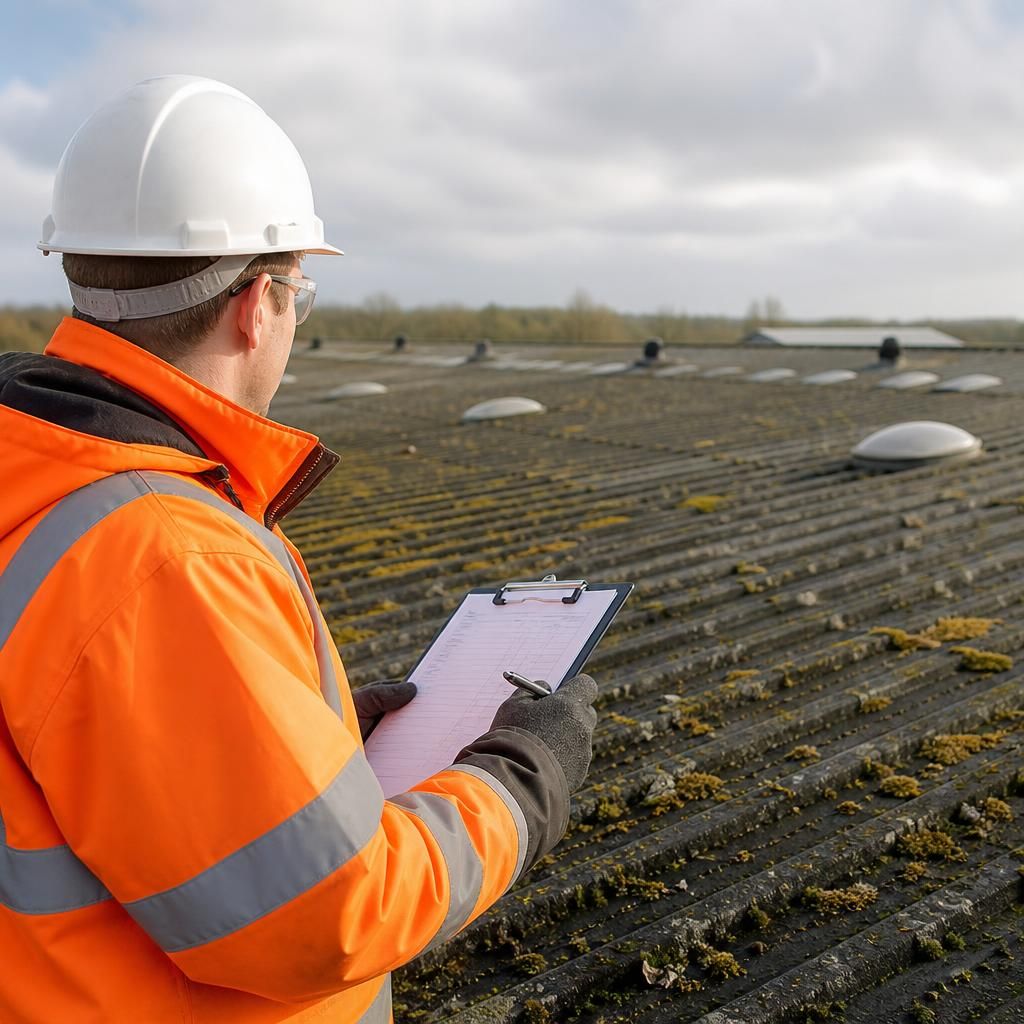
Selecting a roof biocide treatment requires a site-specific assessment, not simply choosing the strongest available product. The roof material, existing damage, type of biological growth, nearby planting, drainage routes and required maintenance interval should all be considered before application.
Product instructions must confirm compatibility with the roofing material and explain the correct dilution, contact time and application method. A small test area can help identify reactions on older tiles, natural slate, coated metal or previously treated surfaces. Run-off and overspray should also be controlled to protect gutters, soil, watercourses, landscaping and people using the building.