
What are the environmental impacts of using biocide treatments on roofs?
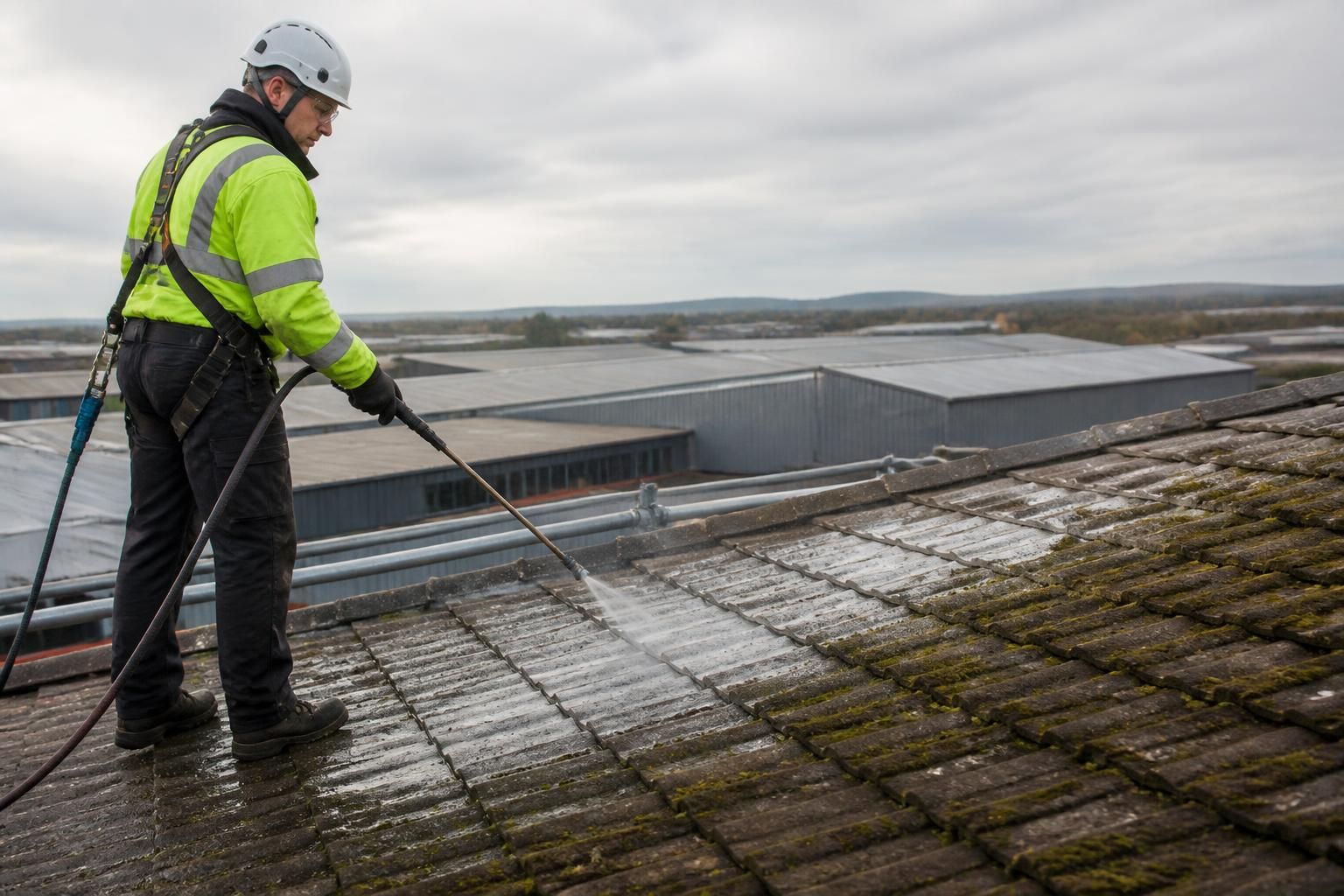
Biocide treatments on roofs can affect the environment if contaminated runoff reaches drains, soil, watercourses or surrounding vegetation, with potential harm to aquatic life and beneficial organisms. Using the correct product and dilution, controlling runoff, protecting nearby areas and following label and disposal requirements significantly reduces these risks.
Biocide treatments can affect the environment when their active ingredients, contaminated roof debris or wash water enter surface water, soil, drains or surrounding vegetation. The level of risk depends on the product, concentration, application method, weather conditions, roof contamination and how effectively runoff is contained. Used selectively and in accordance with the product label, a roof biocide can be applied with much less environmental impact than an uncontrolled treatment or discharge.
Biocides are designed to control living organisms such as moss, algae, lichen, mould and other microorganisms. That function means they are not environmentally neutral. The same active ingredients that damage unwanted growth can also affect non-target organisms if they reach areas where they are not intended to act.
Potential environmental impacts include:
- Harm to aquatic life: contaminated runoff entering surface-water drains, streams, ponds or rivers may affect fish, invertebrates, algae and other aquatic organisms. Even where a product is diluted by rain or flowing water, it should not be assumed to be harmless.
- Damage to soil organisms: overspray or discharged solution reaching soil can affect microorganisms and other organisms that support healthy soil. The persistence and severity of this effect vary between active ingredients and application conditions.
- Damage to plants and vegetation: nearby lawns, beds, hedges, trees and climbing plants may suffer if they receive spray drift, concentrated runoff or contaminated roof debris. Sensitive plants can be affected even where visible damage is not immediate.
- Effects on beneficial organisms: non-target microorganisms and other organisms may be exposed if treatment is poorly controlled. This is particularly relevant around gardens, wildlife habitats, ponds and planted areas.
- Pollution through drainage systems: roof outlets and paved surfaces can carry treatment residues directly towards surface-water drains. These systems may discharge to watercourses rather than to a sewage treatment works, so disposal through a drain is not automatically acceptable.
- Waste and packaging impacts: unused solution, empty containers, removed moss and contaminated absorbent materials require appropriate handling. They should not be abandoned, burnt or poured away.
The environmental risk is usually greatest during application and the first rainfall afterwards, particularly when the roof is heavily contaminated, the surface is steep or impermeable, or drainage cannot be isolated. Strong wind can carry fine droplets beyond the roof area, while heavy rain can wash active ingredients and loosened organic matter into gutters and drainage routes before the treatment has had time to work. Applying a product immediately before forecast rain can therefore increase both runoff and the likelihood of an ineffective treatment.
Runoff control is the main practical safeguard. Before work starts, the roof, gutters, downpipes, nearby surfaces and discharge points should be assessed. Where appropriate, downpipes and outlets can be temporarily disconnected, capped or redirected to a controlled collection point. Gutter residues and dislodged moss should be removed and managed as contaminated waste where necessary, rather than being allowed to wash into drains. Any collected liquid should be handled in accordance with the product label and applicable waste and drainage requirements.
Application should be limited to the affected roof areas and carried out using the lowest effective product concentration and volume permitted by the manufacturer. More chemical does not necessarily produce a better result and may increase the potential environmental burden. Low-pressure, controlled application is generally preferable to creating excessive spray drift or flushing large quantities of solution across the roof. Equipment should be checked for leaks, and overspray should be prevented from reaching adjacent property, vehicles, windows, air intakes, plants and water features.
Weather conditions should be considered before and during the work. Avoid application in strong winds, during rainfall or when rain is expected soon after treatment, unless the product instructions specifically allow it. Extreme heat can increase evaporation and spray drift, while frozen or saturated ground may make accidental contamination more difficult to contain. A competent contractor should also consider the roof pitch, access arrangements, drainage layout and the location of nearby watercourses before selecting the application method.
Product selection also matters. The chosen treatment should be authorised and suitable for the intended use in the UK, used only as directed and accompanied by current safety and environmental information. The label and safety data should be checked for instructions concerning dilution, personal protection, aquatic hazards, storage, spill response, disposal and restrictions near drains or water. Claims such as “eco-friendly” or “biodegradable” should not replace a proper assessment of the product’s active ingredients and application risks. A product that breaks down relatively quickly may still cause harm if it reaches a sensitive watercourse at a high concentration.
Where the roof condition allows it, non-chemical methods can reduce reliance on biocides. These may include careful manual removal of moss and lichen, soft brushing, controlled low-pressure cleaning, steam cleaning or improved removal of debris from gutters and roof valleys. Each method has its own risks: aggressive pressure can damage tiles, slates, pointing or coatings, while mechanical removal can release contaminated debris. The appropriate approach is therefore the one that achieves the required cleaning result with the least overall risk to the roof, people and the surrounding environment.
Biocide treatment is not always necessary for every roof. It may be appropriate where biological growth is extensive, likely to return quickly or difficult to remove without damaging the covering. Conversely, treating a lightly affected roof simply as a routine precaution may provide limited benefit while creating avoidable chemical exposure. A condition assessment should consider the roof material, extent of growth, drainage, nearby vegetation and the reason for treatment before work is specified.
To minimise environmental impact, the work plan should include:
- Identifying drains, watercourses, ponds, planted areas, soil and sensitive receptors near the work area.
- Checking the product label, approval status, dilution instructions and disposal requirements.
- Choosing a suitable weather window and postponing work if conditions could cause uncontrolled drift or runoff.
- Protecting or temporarily isolating drainage routes and covering vulnerable nearby surfaces where appropriate.
- Applying only the required amount, at controlled pressure and with equipment that limits overspray.
- Collecting or controlling contaminated debris, rinse water and spill materials rather than allowing them to enter drains.
- Inspecting the area after application and following the manufacturer’s instructions for any subsequent rinsing or maintenance.
- Recording the product used, concentration, application area, weather conditions and waste arrangements for commercial premises.
If a spill occurs, the source should be stopped if it is safe to do so, the affected area should be isolated and the product instructions and relevant emergency procedures followed. Do not wash a concentrated spill into a drain or watercourse. Significant pollution incidents should be reported through the appropriate UK environmental incident route, with the response based on the location and potential pathway to water or soil.
For commercial and industrial properties, environmental controls should form part of the method statement and risk assessment rather than being improvised on the day. The responsible contractor should explain how runoff will be managed, where waste will go, what weather restrictions apply and how nearby occupants, landscaping and drainage infrastructure will be protected. This provides a clear record that the treatment has been planned around the site rather than applied as a routine chemical wash.
In summary, roof biocides can present risks to aquatic life, soil, vegetation and non-target organisms, but those risks are substantially reduced by selecting a suitable product, avoiding unnecessary treatment, controlling spray and runoff, protecting drainage and disposing of waste correctly. For each roof, the safest option may be a carefully managed biocide, a mechanical or steam-based method, or a combination of techniques selected after assessing the roof and its surroundings.
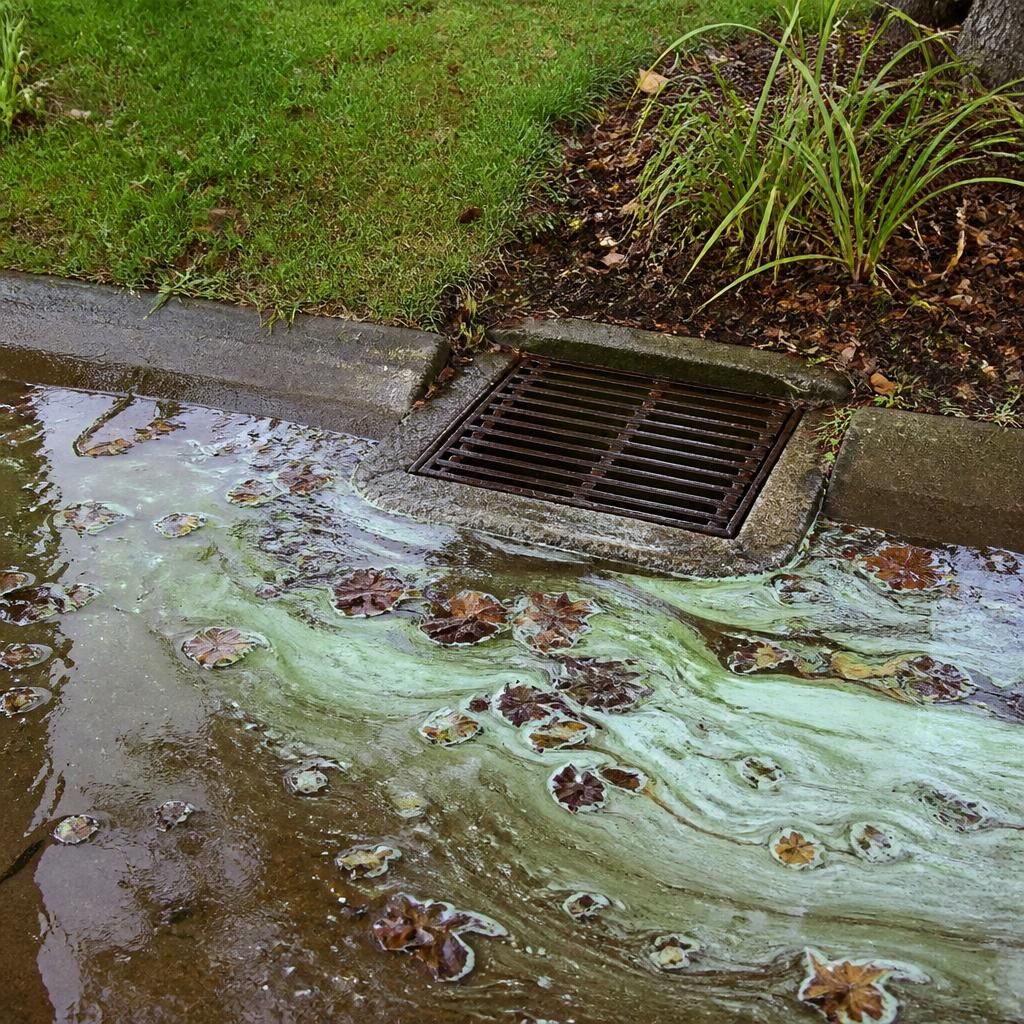
The main environmental risk from roof biocide treatments is contaminated runoff reaching surface-water drains, soil, vegetation or nearby watercourses. During application and the first rainfall afterwards, treatment residues and loosened moss or lichen can be carried from the roof through gutters and downpipes. This may expose aquatic life, soil organisms and surrounding plants to active ingredients that were intended for the roof surface.
Runoff should therefore be assessed and controlled before treatment begins. A competent contractor will identify drainage routes, protect vulnerable planting and water features, and use suitable measures to collect, redirect or isolate contaminated water where necessary. Application should be limited to the affected areas, using the lowest effective dilution and volume permitted by the product instructions. Treatment should also be postponed in strong winds or when rain is expected soon afterwards. Any collected liquid, roof debris or spill materials must be managed in accordance with the product label and applicable waste requirements rather than washed into a drain.
Discuss responsible roof biocide treatment for your property
Discuss your roof’s condition, drainage and surrounding environment with Encanto Exterior Cleaning before choosing a biocide treatment. We can help identify the most appropriate cleaning method and plan suitable runoff and waste controls for your property.