
What are the environmental impacts of using biocide treatments on roofs?
Biocide treatments can reduce moss, algae and lichen on roofs, helping extend cleaning intervals, but the active chemicals may harm aquatic life, plants, soil and drainage systems if they enter surface water or are used incorrectly. Their environmental impact can be minimised through the correct product and dosage, controlled application, suitable weather conditions, and responsible containment and disposal of run-off.
Biocide treatments can affect the environment when their active ingredients, contaminated roof debris or treatment run-off reach plants, soil, surface water or drainage systems. The level of risk depends on the product used, its concentration, the roof condition, weather, application method and how run-off is contained. When selected and applied in accordance with the product label, biocide treatments can control moss, algae and lichen with less frequent intensive cleaning, but they must not be treated as environmentally harmless.
Potential effects on aquatic life
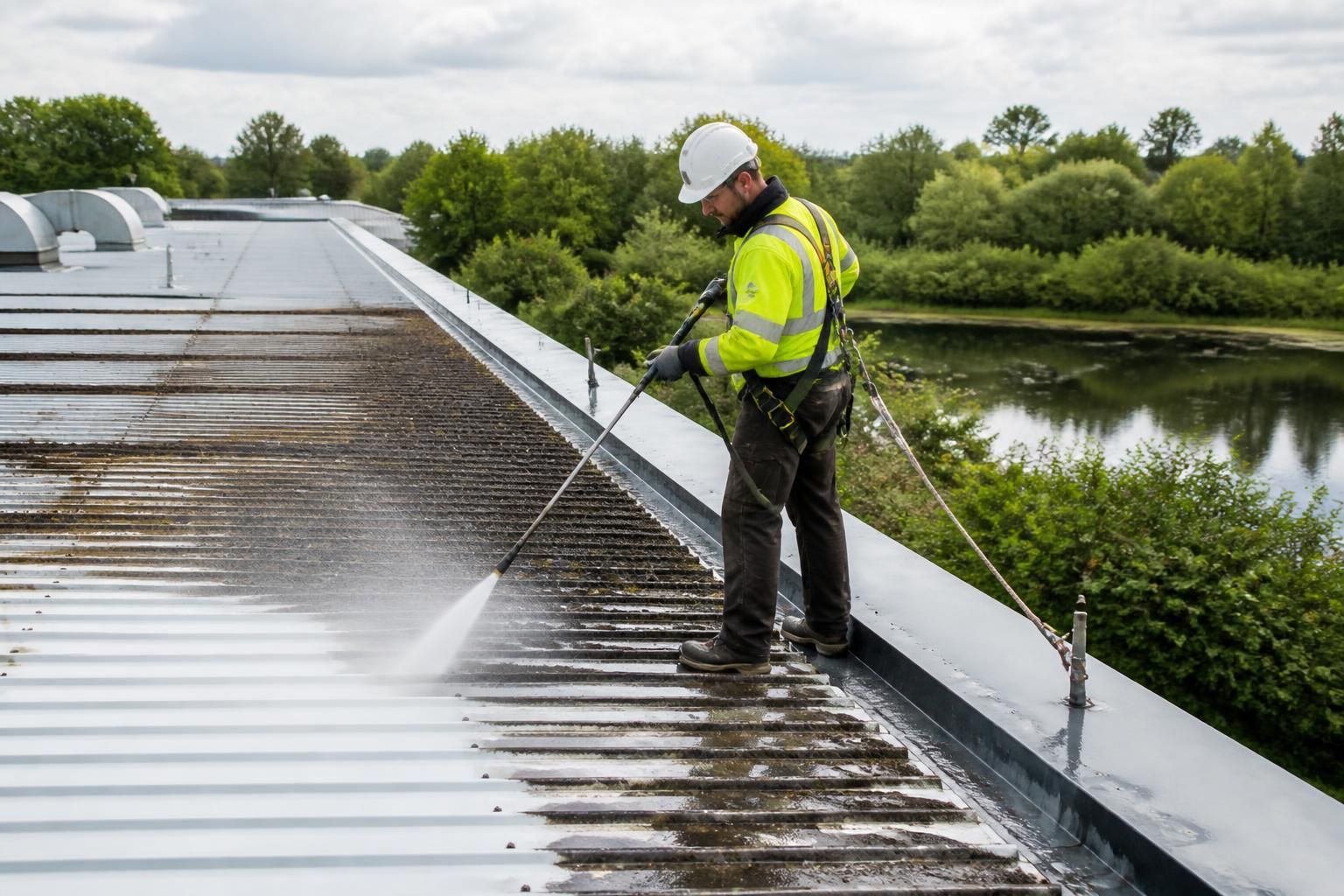
The most significant environmental concern is usually the movement of biocide residues into ponds, streams, rivers, ditches or other surface water. Some active ingredients can be toxic to aquatic organisms, even where the quantity applied to a roof appears small. Run-off may carry both dissolved chemical and organic material removed from the roof. Discharging it into surface-water drains, watercourses or adjacent ground can therefore create an avoidable pollution risk.
Contaminated water should not be allowed to enter a storm drain unless the relevant authority and product instructions specifically permit it. Storm drainage often leads directly to surface water rather than to a treatment works. Where run-off cannot be safely controlled, the treatment should be postponed until a suitable method of containment has been arranged.
Effects on plants, soil and surrounding areas
Overspray, splashes and uncontrolled run-off may damage vegetation near the building. Sensitive plants, lawns, hedges and landscaped areas can be affected if they are exposed to a strong solution or repeated residues. Soil microorganisms may also be disturbed by some products, particularly where concentrated liquid is allowed to collect in one location.
Risk is higher on sites with planted borders close to the roof edge, green spaces below access equipment, or sloping ground leading towards a drain or watercourse. Protective sheeting, temporary diversion of downpipes and careful positioning of application equipment can help prevent this exposure. Covering vegetation may be appropriate in some situations, but coverings should not trap chemical solution against plants or create additional run-off.
Airborne spray and non-target exposure
Fine spray can drift beyond the intended roof surface, particularly in windy conditions or when unsuitable equipment is used. This increases the possibility of exposure to people, vehicles, windows, neighbouring property and vegetation. Applying a treatment with controlled low-drift equipment, at the correct pressure and from a suitable distance reduces this risk.
Weather conditions are important. Rain soon after application can wash the product from the roof before it has worked and can increase contaminated run-off. Strong winds can carry spray away from the work area. Treatment should only proceed within the weather conditions permitted by the product instructions, with the forecast checked before work begins.
Effects on drainage and wastewater systems
Biocide residues, loosened moss and roof sediment can enter gutters, downpipes and drainage channels during or after treatment. This may cause blockages as well as introduce chemicals into a drainage system. A connection to the foul sewer does not automatically mean that disposal is acceptable; discharge requirements can depend on the substance, concentration, site and local water authority conditions.
Before work starts, drainage routes should be identified and the likely direction of run-off assessed. Gutters and downpipes may need temporary isolation, filtration, collection or controlled release. Collected liquid and contaminated solids should be handled as waste in accordance with the product safety data sheet and applicable waste requirements, rather than poured onto the ground or into a drain.
Environmental benefits of a well-managed treatment
Biocides can provide environmental benefits when they are used for a clearly defined maintenance purpose. Controlling moss and lichen can reduce repeated mechanical disturbance, limit the need for frequent pressure washing and help prevent organic growth from retaining moisture against roof materials. A suitable treatment may therefore reduce water use, access requirements and the amount of roof debris generated over the maintenance cycle.
These benefits depend on using the least intensive effective approach. A treatment should not be applied simply because growth is present if a lower-impact method is suitable. Nor should a stronger concentration be used to obtain faster results. The product label, roof material, growth type and condition of the surface should determine the treatment plan.
How environmental risk is minimised
- Use a product authorised for the intended application and follow its label, technical instructions and safety data sheet.
- Choose the least hazardous effective formulation and avoid unnecessary repeat applications or excessive concentration.
- Inspect the roof, gutters, downpipes, drains, nearby vegetation and watercourses before starting.
- Do not apply treatment when rain, strong wind or other conditions could cause uncontrolled movement of the product.
- Use controlled application equipment to minimise spray drift and avoid treating areas that do not require it.
- Protect or temporarily move vulnerable items, isolate suitable drainage routes and contain contaminated run-off where necessary.
- Prevent residues from entering surface water, storm drains, neighbouring land and planted areas.
- Keep people, animals and unauthorised personnel away from the treatment area for the period stated on the product instructions.
- Remove or manage loosened organic matter carefully so that it does not wash into drainage systems.
- Store, transport and dispose of unused product, containers, absorbents and collected waste in line with the label and relevant waste controls.
Choosing the right treatment
Environmental suitability should be considered alongside cleaning performance. The active ingredient, required dilution, persistence, restrictions near water, compatibility with the roof material and directions for disposal should all be reviewed before a product is selected. The presence of rainwater harvesting systems, open drains, ponds, watercourses, livestock, public areas or sensitive landscaping may change the method or make a particular treatment unsuitable.
For commercial and industrial premises, the assessment should be recorded within the site-specific method statement and risk assessment. Operatives should understand the product instructions, wear the specified personal protective equipment and know how to respond to a spill. Where the site has complex drainage or a high pollution risk, advice from the relevant water authority or environmental regulator may be needed before work proceeds.
Biocide roof treatments are not automatically damaging to the environment, but poor product selection, over-application and uncontrolled run-off can create genuine risks. A planned application using the correct product, weather conditions, dosage, equipment and containment arrangements provides effective roof maintenance while reducing exposure to aquatic life, vegetation, soil and drainage systems.
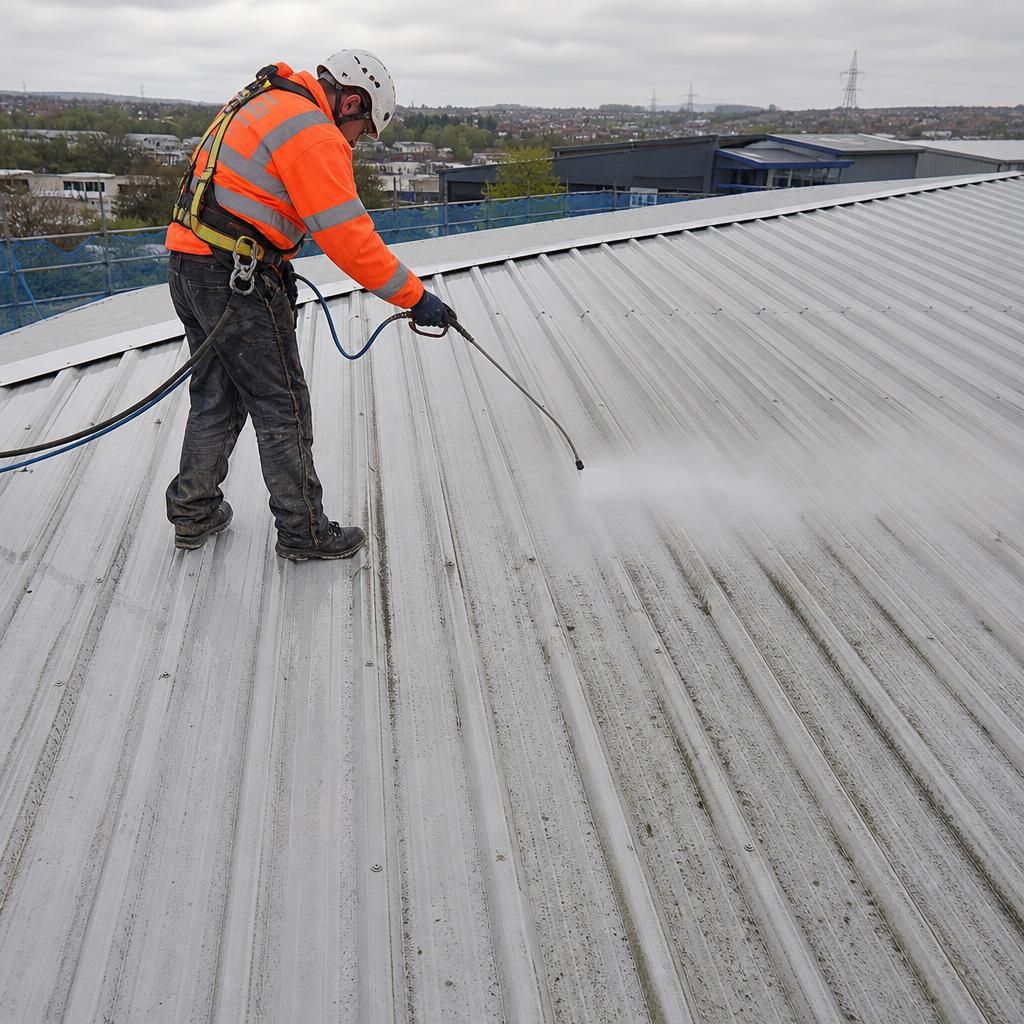
Biocide treatment run-off is an important environmental consideration because it can carry active chemical residues, loosened moss and roof sediment into gutters, storm drains, soil and surface water. Some biocides can harm aquatic organisms or nearby vegetation if they are discharged without control.
Before application, the roof, drainage routes, downpipes, planted areas and nearby watercourses should be assessed. Use the product at the labelled dilution, avoid windy or wet conditions, and apply it with equipment that limits spray drift. Where necessary, isolate or collect contaminated run-off and dispose of it in accordance with the product instructions and applicable waste requirements.
This controlled approach allows the treatment to manage moss, algae and lichen while reducing unnecessary exposure to aquatic life, soil, plants and drainage systems.
Discuss a Responsible Roof Biocide Treatment Plan
Speak to Encanto Exterior Cleaning about a responsible roof biocide treatment plan tailored to your roof, drainage layout and surrounding environment. We can assess the site, recommend suitable controls and explain how run-off and treatment waste will be managed.