
What are the benefits of using biocide treatments on roofs?
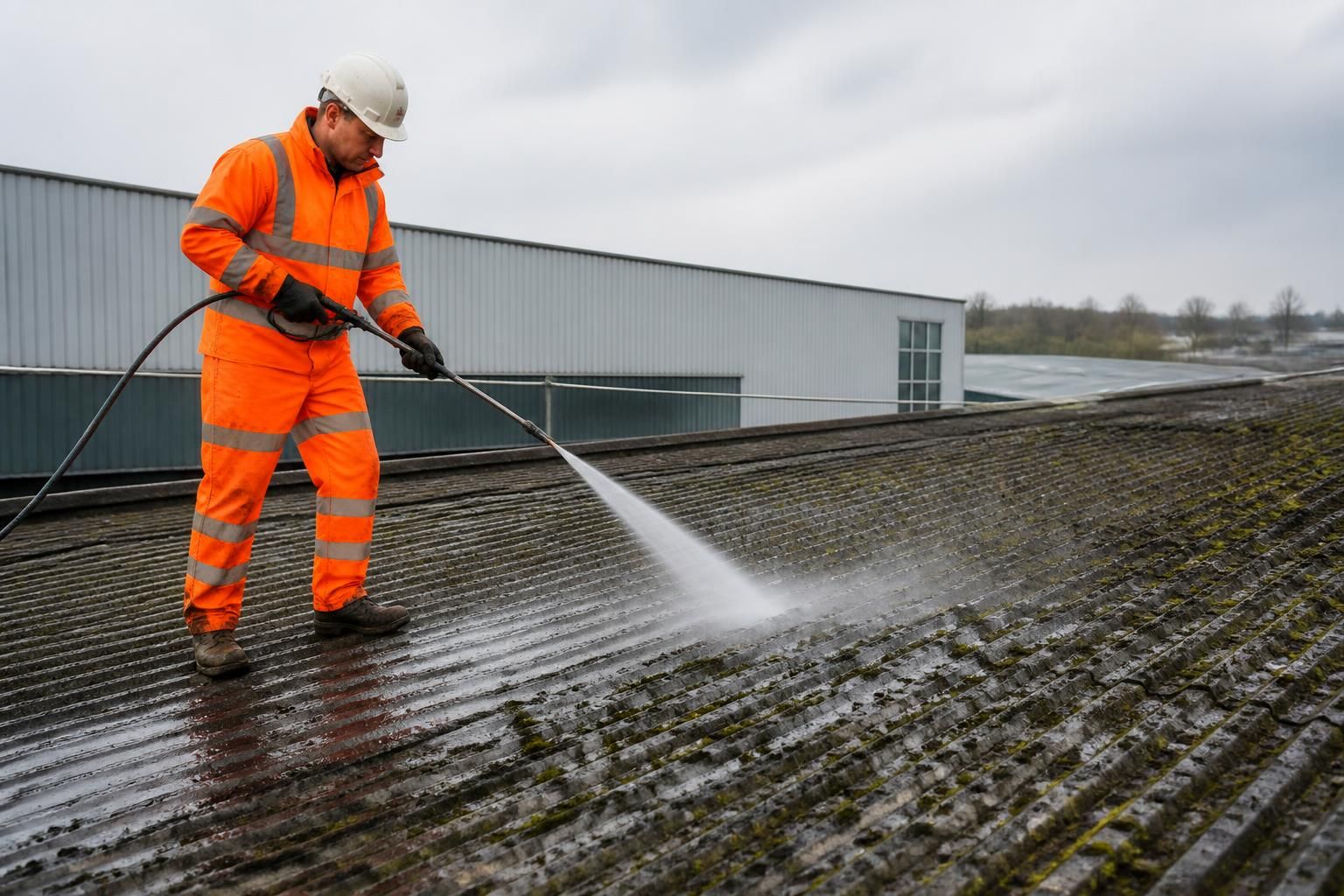
Biocide treatments help control moss, algae, lichen and other organic growth on roofs, reducing staining and limiting regrowth after cleaning. By protecting roof surfaces from moisture-retaining growth, they can help preserve the roofing material, extend its serviceable life and maintain a cleaner, more professional appearance.
Biocide treatments use carefully selected solutions to control moss, algae, lichen and other organic growth on roof surfaces. Their main benefits are reducing biological contamination, limiting regrowth after cleaning, helping the roof remain dry and presentable, and supporting the longer-term preservation of the roofing material when the treatment is suitable for the roof and applied correctly.
They help control moss, algae and lichen
Organic growth can spread across tiles, slates, membranes and other roof finishes. Moss can retain moisture against the surface, while algae and lichen can cause persistent green, black or weathered-looking staining. A biocide treatment targets this growth and helps break down the organisms that conventional washing may not remove completely.
On commercial premises, this can be particularly useful where large roof areas, restricted access or sensitive surfaces make aggressive mechanical cleaning unsuitable. Treatment may be used after physical removal of heavy growth, or as part of a planned maintenance programme where the roof requires controlled cleaning rather than high-pressure washing.
They can reduce regrowth after cleaning
Cleaning removes existing contamination, but spores and organic residues can remain on the roof. A suitable biocide treatment helps address these remaining organisms, reducing the likelihood of rapid regrowth. This means the roof can stay cleaner for longer between maintenance visits, although no treatment prevents biological growth indefinitely. Shade, nearby trees, damp conditions, roof orientation and local exposure all influence how quickly contamination returns.
They help protect roofing materials from moisture-related deterioration
Moss and lichen can hold moisture against roof coverings and may work their way into surface irregularities, joints and overlaps. Repeated wetting and drying can contribute to surface wear, frost-related damage and the deterioration of some finishes. By controlling organic growth, biocides can help reduce the conditions that encourage this type of deterioration.
A treatment is not a repair and cannot restore cracked tiles, defective flashings, failed fixings or damaged waterproofing. However, controlling biological contamination can form part of a preventative maintenance plan and may help preserve sound roofing materials for longer.
They can improve the appearance of commercial premises
Algae, moss, lichen and organic staining can make a roof appear neglected even when the underlying structure remains serviceable. Treating the contamination can improve the consistency and appearance of the roof, supporting the overall presentation of offices, retail units, industrial buildings, managed estates and public premises. A cleaner roof can also complement façade, cladding, gutter and hard-surface cleaning carried out elsewhere on the property.
They can be more suitable for sensitive roofs than aggressive cleaning
Some roof coverings may be damaged by excessive pressure, abrasive methods or unnecessary mechanical scraping. Depending on the material and its condition, a low-pressure or soft-wash approach combined with a compatible biocide may provide better control with less physical stress on the surface. This is particularly relevant to aged or fragile tiles, slate and coated materials.
Suitability must be assessed rather than assumed. The roof covering, coating, age, condition, drainage arrangements and surrounding surfaces should be considered before a product is selected. A small test area can help confirm compatibility and establish an appropriate application method.
They can support planned roof maintenance
Biocide treatments can be incorporated into scheduled maintenance rather than waiting until heavy moss or staining develops. Planned work allows roof areas to be inspected for defects, gutters and outlets to be checked, and access and runoff controls to be arranged properly. For property managers and facilities teams, this creates a more structured way to monitor the roof and identify repair requirements before they become more disruptive.
They may reduce the need for frequent intensive cleaning
When applied as part of a suitable cleaning and maintenance programme, a biocide can help reduce the frequency of heavy remedial cleaning. This may reduce disturbance to site users and limit the need for repeated aggressive intervention. The actual maintenance interval depends on the roof’s environment and the level of contamination, so it should be established through inspection rather than a fixed assumption.
Application must be controlled to achieve these benefits
- Inspect the roof and identify the covering, existing damage and areas of biological growth.
- Select a product approved and suitable for the intended surface and use.
- Follow the product instructions, including dilution, contact time and application requirements.
- Protect plants, watercourses, vehicles, façades and other nearby surfaces from overspray and uncontrolled runoff.
- Use appropriate access equipment and work at height controls.
- Remove loosened debris from gutters, outlets and surrounding areas where necessary.
- Review the roof after treatment and record any repairs or follow-up maintenance required.
Biocide treatments should therefore be viewed as one part of roof care, not a substitute for inspection, repair or sound drainage. They provide the greatest benefit when the product is matched to the roof, the application is carried out by trained operatives and environmental controls are in place. If the roof has fragile materials, extensive growth, water-management concerns or uncertain surface coatings, a professional assessment should be completed before treatment begins.
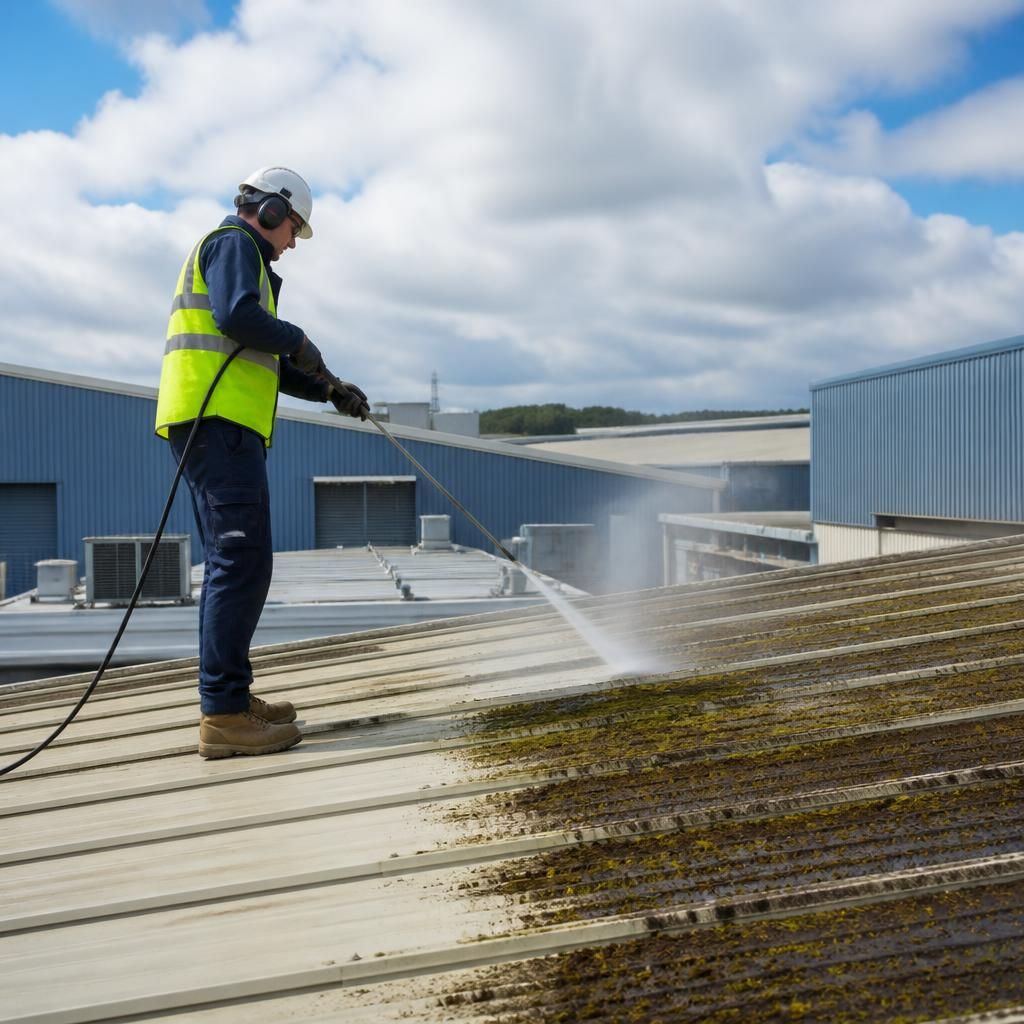
Biocide treatments help control moss, algae and lichen left on a roof after cleaning, reducing the organic growth that can retain moisture against the roof covering. This supports longer-lasting cleanliness without relying on aggressive pressure washing, which may be unsuitable for fragile, aged or coated surfaces.
The treatment must be compatible with the roof material and applied under controlled conditions. Proper protection of gutters, outlets, plants, vehicles and nearby surfaces is essential, as is following the product instructions for dilution, contact time and runoff management. Biocide treatment supports preventative maintenance, but it does not replace roof inspections or repairs to damaged tiles, slates, flashings or waterproofing.