
What methods are used to ensure the integrity of the slate roof during the cleaning process?
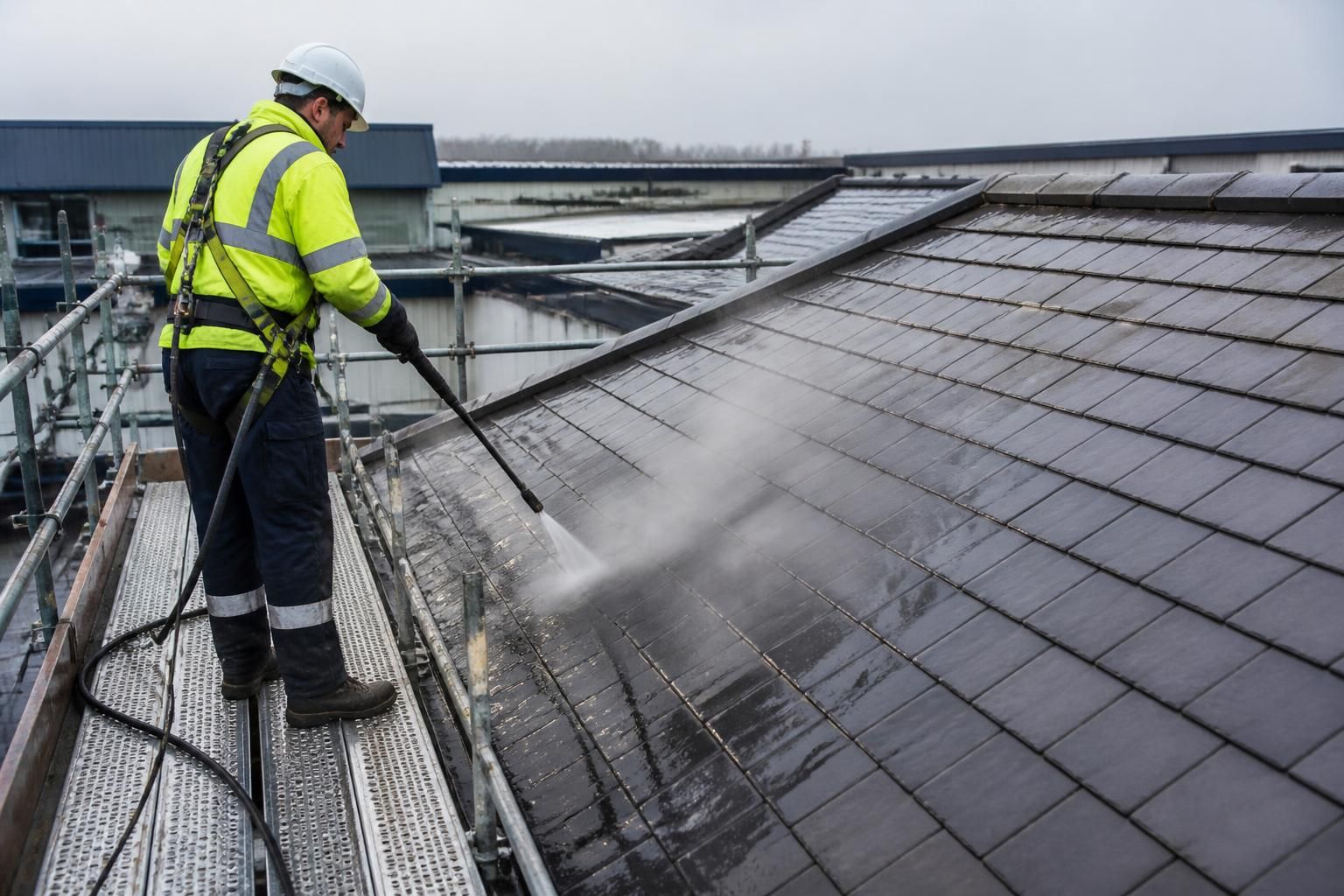
Professional slate roof cleaning protects the roof’s integrity through a pre-cleaning inspection, careful testing and low-pressure techniques such as gentle soft washing or controlled steam cleaning, rather than aggressive pressure washing. Operatives use suitable access equipment, protect flashings and surrounding materials, and monitor the slate, mortar and runoff throughout the work to prevent damage or water ingress.
The integrity of a slate roof is protected through careful inspection, controlled cleaning methods, suitable access equipment and continuous monitoring. Professional operatives avoid aggressive pressure washing and do not treat every roof in the same way. The cleaning method is selected according to the condition, age, type and fixing method of the slate, as well as the growth present on its surface.
Before cleaning begins, the roof is assessed for cracked, loose, delaminating or slipped slates. Particular attention is given to ridges, verges, valleys, abutments, flashings, roof windows, mortar joints and areas where previous repairs have been carried out. Gutters, downpipes and roof outlets are also checked so that they can be protected from dislodged debris and kept clear during the work. If defects indicate that cleaning could cause further damage or allow water ingress, they should be recorded and addressed before cleaning proceeds.
A small, representative area is normally tested first. This confirms how firmly the moss, algae, lichen or staining is attached and shows how the slate, coatings, mortar and adjacent materials respond to the proposed treatment. The test area also helps establish the lowest level of water flow, agitation or steam necessary to achieve a satisfactory result. Cleaning should not proceed at full scale until the method has been shown to be appropriate.
- Soft washing: Low-pressure water and a suitable cleaning solution can loosen organic growth without the force associated with high-pressure washing. The solution must be compatible with the slate and surrounding materials, applied in a controlled manner and thoroughly managed so it does not enter the building or damage vegetation and drainage systems.
- Controlled steam cleaning: Steam can remove biological growth and surface deposits using heat and relatively low water volume. It is useful where reducing water penetration or runoff is important, but the operator must still control temperature, dwell time and proximity to the slate, flashings and mortar.
- Gentle manual removal: Where growth is thick or firmly established, suitable hand tools may be used to lift it carefully. Tools and techniques should avoid scraping, levering or striking the slate, since slate can split or delaminate even when it appears sound.
High-pressure washing is generally unsuitable for slate roofs. Forceful water can lift or break slates, drive water beneath laps, erode mortar, damage leadwork and remove protective surface layers. It can also disturb fixings and create defects that are not immediately visible from ground level. A clean appearance is not evidence that the roof has been cleaned safely, so the absence of visible damage must not be used as the only measure of success.
Protecting the roof also depends on how operatives reach the working area. Slate should not be walked on unnecessarily, particularly where it is aged, weathered or already weakened. Scaffold, roof ladders, temporary platforms, edge protection or suitable access equipment may be used to distribute weight and provide controlled access. The access plan should account for fragile areas, conservatories, skylights, gutters and nearby structures rather than relying on unsupported ladders or direct foot traffic across the slate.
During the clean, operatives work in manageable sections and observe the slate as deposits are removed. They look for movement, cracking, flaking, exposed fixings, open joints and signs of water tracking. Flashings, valleys, ridge materials and pointing are treated as vulnerable details, not as surfaces to be cleaned with the same pressure or equipment as the slate. Surrounding walls, windows, render, cladding and roof-mounted equipment are protected from spray, heat and cleaning residues.
Runoff is controlled throughout the process. Gutters and downpipes may be temporarily protected or cleared, and loose moss and debris are collected rather than allowed to accumulate on the roof or enter drainage systems. Cleaning solutions and contaminated water must be handled responsibly, with appropriate precautions for people, plants, watercourses and adjacent surfaces. This is especially important on commercial premises where pedestrian routes, vehicles and neighbouring properties may be close to the work area.
Weather conditions are considered before and during cleaning. Strong wind can carry spray or debris, while heavy rain can increase runoff and make access unsafe. Excessive heat or rapid drying may affect the performance of a treatment, and cold conditions can create additional risks for water-based work. Work should be paused if conditions prevent safe access, controlled application or reliable inspection.
After cleaning, the roof is inspected from suitable access points and, where practical, compared with the initial condition report. Any slates that have become loose or have revealed pre-existing defects should be identified rather than concealed by further treatment. A professional cleaning process is complete only when the roof, flashings, drainage and surrounding areas have been checked and left free of avoidable debris and runoff.
In practice, preserving slate roof integrity is less about one particular product and more about controlling the entire process: accurate assessment, minimal mechanical force, appropriate treatment, safe access, protection of vulnerable details and careful post-cleaning inspection. These controls reduce the likelihood of broken slates, displaced coverings, damaged mortar and water ingress while allowing the roof to be cleaned effectively.
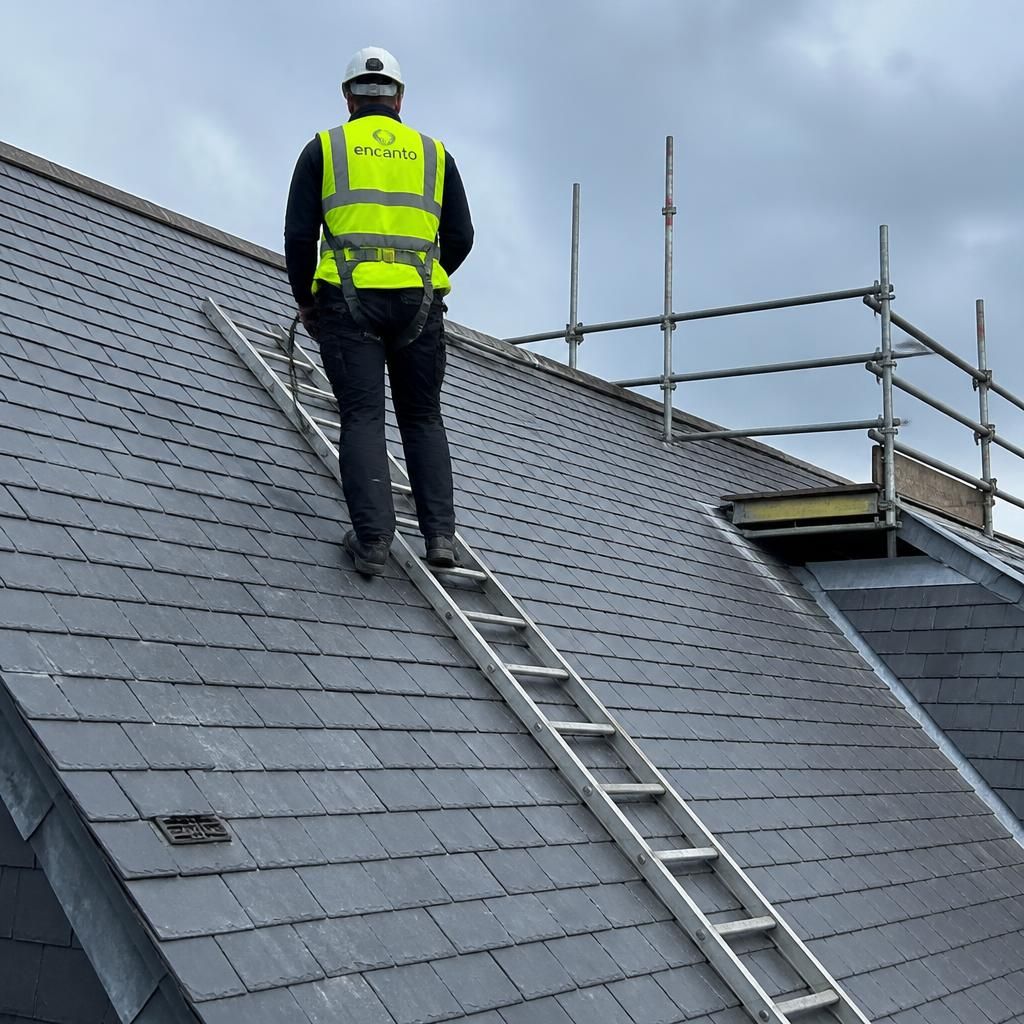
Controlled access is essential to protecting slate during cleaning. Operatives should avoid unnecessary foot traffic across the roof, as even sound-looking slates can crack, split or become displaced under concentrated weight.
Suitable equipment, such as roof ladders, scaffold, temporary platforms or other planned access systems, helps distribute load and provides a stable working position. The access plan should also protect fragile areas around roof windows, valleys, verges, flashings, gutters and adjoining structures. This allows the cleaning method to be applied accurately without placing avoidable stress on the slate or its fixings.