
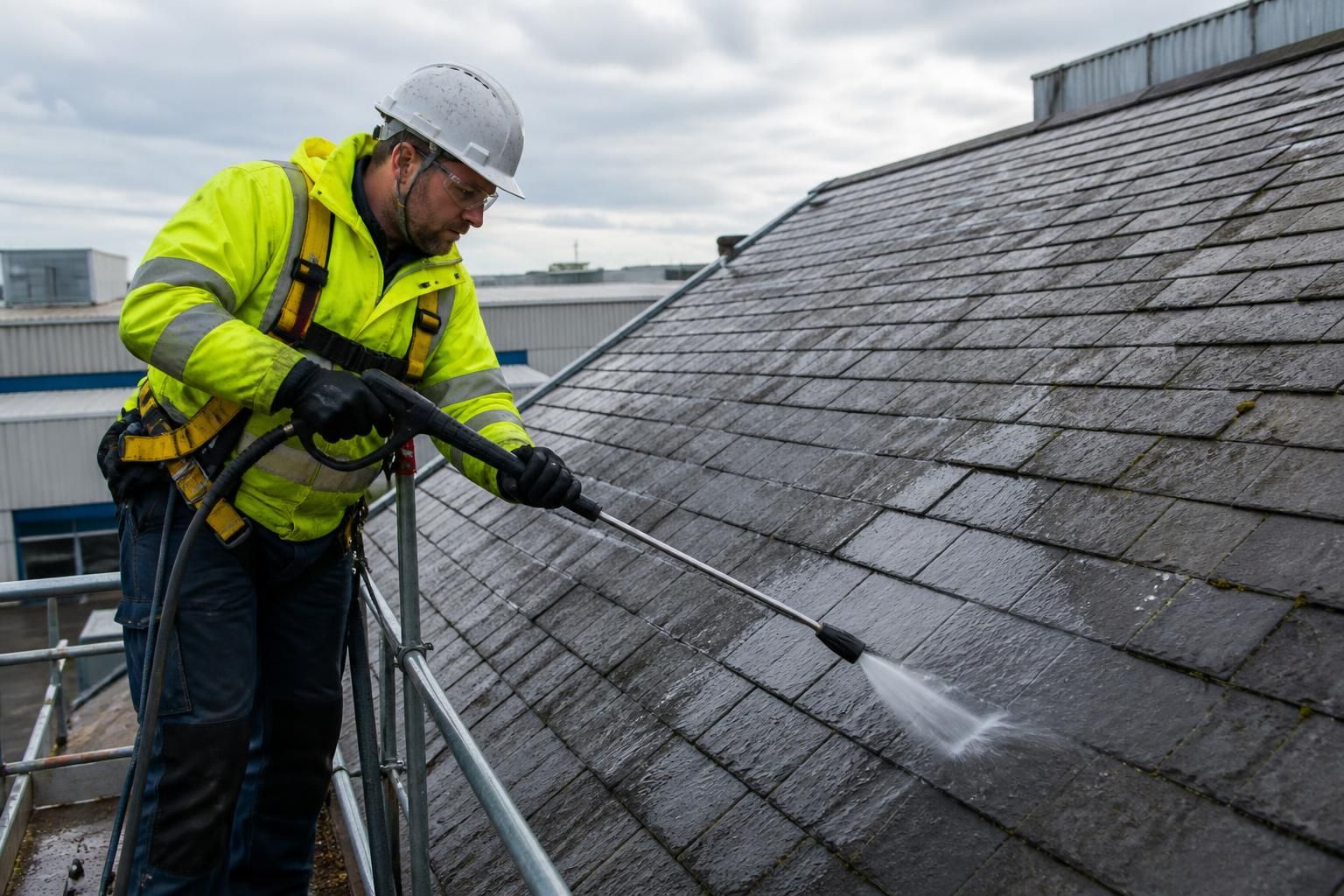
What is the best method for cleaning slate roofs?
The best method for cleaning slate roofs is a careful, low-pressure clean combined with manual removal of moss and debris, followed where appropriate by a slate-safe biocidal treatment. This approach removes organic growth without the excessive pressure, abrasion or aggressive chemicals that can damage slate, fixings, mortar and underlying roof components.
The best method for cleaning slate roofs is a controlled, low-pressure process that combines a roof condition assessment, careful manual removal of moss and debris, a gentle rinse and, where appropriate, a slate-compatible biocidal treatment. The objective is to remove organic growth without forcing water beneath the slates or damaging the slate, fixings, battens, mortar, flashing or roofline components.
Slate is durable, but it can be brittle, delaminate or crack when handled incorrectly. The most suitable cleaning method depends on the type and condition of the slate, the roof’s pitch, the extent of moss and lichen growth, access arrangements and the condition of the underlying roof structure. A method that is suitable for a modern, sound slate roof may be inappropriate for an older or weathered one.
A suitable slate roof cleaning process usually includes the following stages:
- Inspection before cleaning: The roof should be assessed for cracked, loose, delaminating or missing slates, failed mortar, deteriorated flashings, blocked gutters and signs of water ingress. The cleaner should also establish whether the roof is natural slate or slate-effect or asbestos cement sheeting, as these materials require different controls and methods.
- Safe access planning: Operatives should avoid walking directly on slate wherever possible. Suitable scaffold, roof ladders, towers, mobile access equipment or other load-distributing systems may be required, particularly on steep, fragile or difficult-to-reach roofs. Access should be planned around the roof’s construction rather than relying on unsupported foot traffic.
- Manual removal of heavy growth: Thick moss, leaves and accumulated debris are generally removed by hand using non-aggressive tools. Growth should be worked away carefully in the direction of the slate laps, rather than levered upwards, pulled against the overlaps or forced beneath the tiles. This reduces the risk of lifting slates or disturbing fixings.
- Controlled low-pressure rinsing: Once the heavier growth has been removed, a low-pressure water application can clear remaining residue. Pressure should be sufficient for the particular surface but kept well below levels that could drive water under the laps, strip surface material or damage mortar and flashing. High-pressure jet washing is not normally an appropriate method for slate roofs.
- Biocidal treatment where justified: A suitable treatment may be applied to remaining spores and organic contamination after physical cleaning. It should be compatible with the slate and surrounding materials, used in accordance with its product instructions and applied with appropriate controls for people, plants, drainage systems and watercourses. Biocide is not a substitute for careful removal of thick moss.
- Final inspection and site clean-up: Gutters, outlets, valleys and downpipes should be cleared of loosened debris, and the roof should be checked for displaced or damaged slates. Any defects identified during cleaning should be recorded and reported rather than concealed by the cleaning process.
Why high-pressure washing is usually unsuitable
High-pressure washing can appear to produce a fast result, but it creates avoidable risks on slate roofs. The jet can crack or chip brittle slates, remove the surface layer from weathered material and force water under the slate courses. It may also dislodge ridge tiles, damage pointing, erode leadwork or loosen fixings. Water entering beneath the slates can affect felt, battens, insulation and internal finishes, even when no immediate leak is visible.
Pressure washing can also remove visible moss without addressing the conditions that allowed it to grow. If organic contamination remains in joints, laps or shaded areas, regrowth may occur. A slower combination of manual removal and carefully selected treatment is generally more effective and places less stress on the roof.
Why abrasive cleaning and harsh chemicals should be avoided
Wire brushing, aggressive scraping, sanding and other abrasive techniques can mark the slate and remove its weather-resistant surface. Strong acids, caustic products, chlorine-based mixtures or unapproved household chemicals can stain slate, corrode metalwork, damage mortar and harm plants or drainage systems. Cleaning products should only be used when their suitability for the roof and surrounding materials has been established.
Some slate roofs have metal fixings or flashings that are particularly vulnerable to chemical exposure. Runoff may also reach painted walls, paving, planted areas, ponds or surface-water drains. Appropriate containment, controlled application and rinsing procedures are therefore part of responsible roof cleaning, not optional extras.
When a dry cleaning method may be preferable
For a fragile, highly weathered or lightly contaminated roof, the safest approach may be limited dry removal using hand tools and carefully positioned access equipment, with no routine pressure washing. This can reduce the amount of water introduced to the roof and may be appropriate where the slate, mortar or supporting structure is in poor condition. However, dry removal still requires care: pulling established moss away from laps can lift slates, and loose debris must be prevented from entering gutters or falling onto people and property below.
How to choose between cleaning methods
The condition survey should determine the level of intervention. Light surface contamination may only require gentle manual removal and a suitable treatment. More established moss may require staged removal, allowing the roof to be checked between stages rather than applying excessive force in one operation. A roof with loose, cracked or delaminating slates may need repairs or partial replacement before cleaning. In some cases, cleaning may not be advisable until underlying defects have been addressed.
Weather conditions also matter. Strong wind, heavy rain, frost and extreme temperatures can affect access, product performance and runoff control. Treatments should not be applied where they may be washed into uncontrolled drainage or where drying conditions are unsuitable. Work should be paused if conditions make safe access or controlled application impossible.
What a professional service should be able to explain
- What type of slate or slate-effect material is present and whether any specialist survey is needed.
- How operatives will access the roof without placing unnecessary loads on individual slates.
- What pressure range and equipment will be used, and why it is suitable for the roof’s condition.
- Whether a biocide is necessary, what material compatibility has been considered and how runoff will be controlled.
- How gutters, downpipes, planted areas, windows, walls and other nearby surfaces will be protected.
- How cracked or displaced slates and other defects will be identified and reported.
For most sound slate roofs, the preferred approach is therefore a low-impact clean: inspect first, remove growth manually, rinse only with controlled low pressure, and use a suitable biocidal treatment when it provides a clear benefit. This method is more considerate of the roof structure than high-pressure or abrasive cleaning and gives a reliable basis for ongoing maintenance. Slate roof cleaning should be treated as a specialist access and surface-care task, not as a standard pressure-washing job.
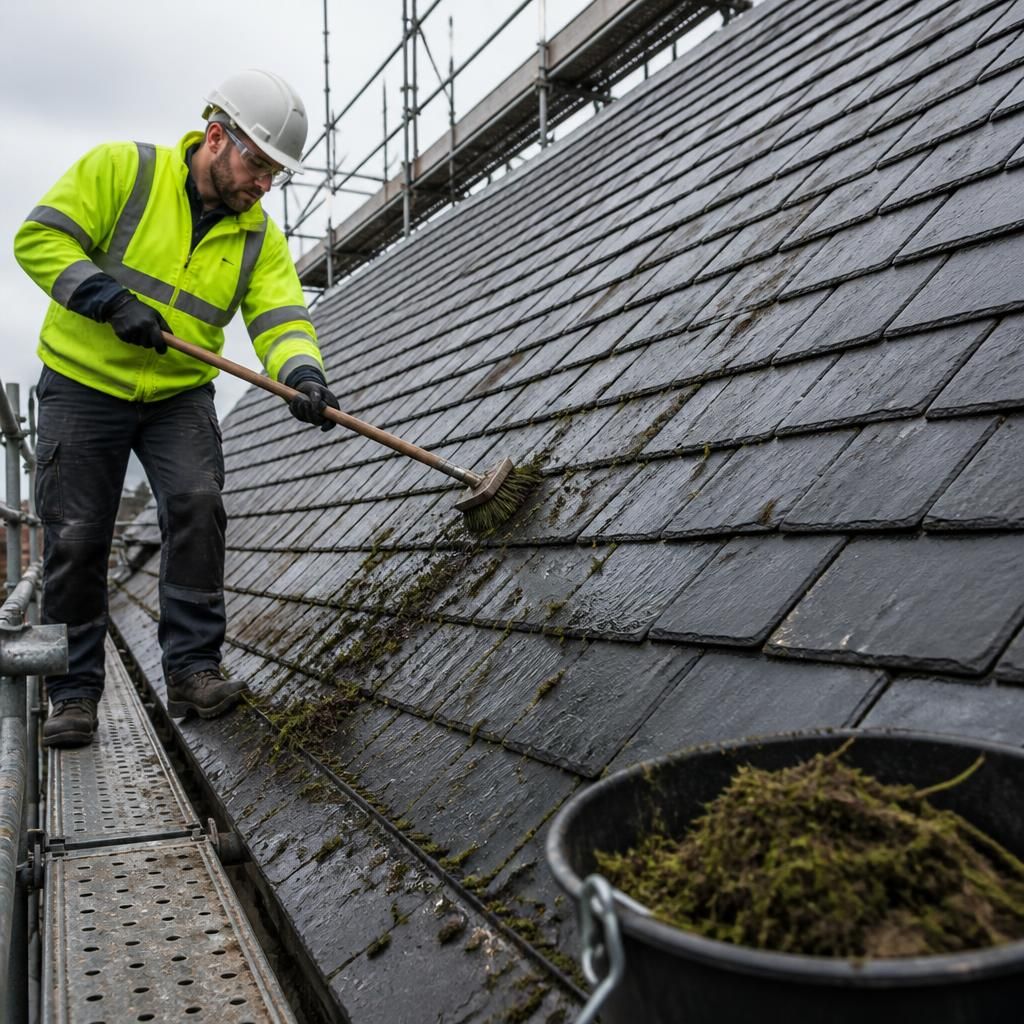
The safest method for cleaning a slate roof is careful manual removal of moss and debris, followed by a controlled low-pressure rinse where the roof condition allows it. This removes organic growth without forcing water beneath slate laps or damaging brittle, weathered surfaces.
Operatives should avoid walking directly on the slates and work with the direction of the overlaps, rather than lifting or pulling against them. Heavy moss should not be removed with high-pressure jets, wire brushes or aggressive scraping, as these methods can crack slates, disturb fixings and damage flashing or mortar. A compatible biocidal treatment may then be used to address remaining spores and slow regrowth, with suitable protection for gutters, plants, drainage and surrounding surfaces.