
What factors impact the cost of slate roof cleaning?
The cost of slate roof cleaning depends mainly on the roof’s size, pitch, condition and accessibility, along with the amount of moss, algae or dirt present. The cleaning method, need for access equipment, protective measures and any additional repairs or treatments can also affect the final price.
The cost of slate roof cleaning is determined by the amount of work required to clean the roof safely and achieve an appropriate result. The main influences are the roof area, pitch and layout, access arrangements, the quantity and type of contamination, the condition of the slates, the cleaning method, and any additional protection, treatment or remedial work required.
A reliable price should therefore be based on an assessment of the roof rather than its size alone. Two roofs with a similar surface area can have very different costs if one is easy to access and lightly soiled while the other is steep, heavily overgrown or difficult to protect during cleaning.
- Roof size and layout: A larger roof generally requires more labour, water, cleaning solution and collection or control of removed material. The layout also matters. Multiple roof levels, dormers, valleys, rooflights, parapets and adjoining structures can make the work slower and require more careful detailing than a simple roof plane.
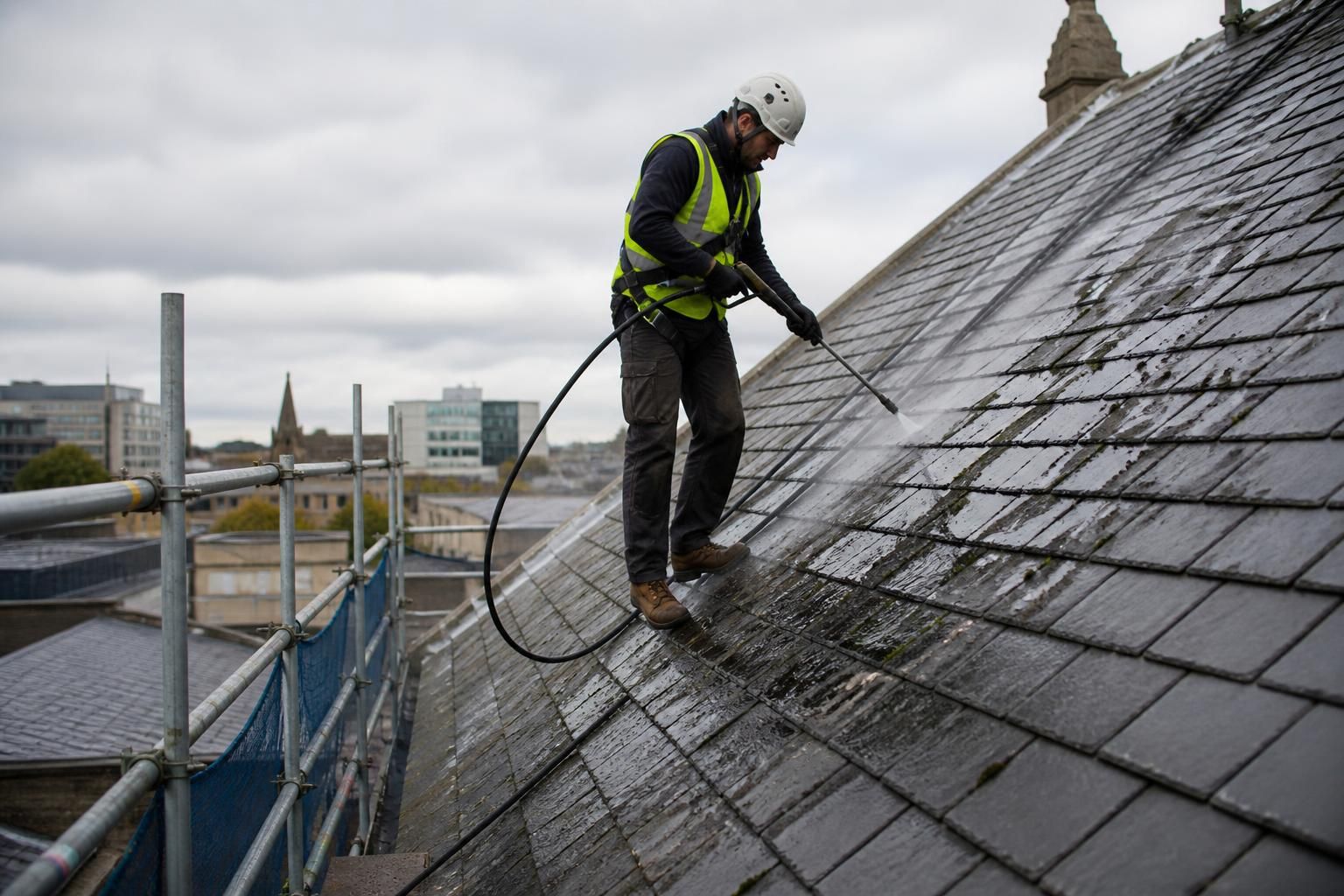
- Pitch and working conditions: Steeper slate roofs present greater fall risks and may require additional safety systems, specialist access equipment and slower working techniques. Fragile or uneven areas may need temporary walkways, edge protection or carefully planned rope access rather than direct foot traffic on the slates.
- Ease of access: The distance between a suitable parking or loading area and the building can affect setup and handling time. Restricted yards, enclosed courtyards, busy public areas and neighbouring properties may require additional planning. If the roof cannot be reached safely from existing access points, scaffold, a mobile elevating work platform or another access solution may be needed.
- Amount and type of contamination: Light surface dust and limited organic growth usually require less work than thick moss, embedded lichen, algae, bird fouling or long-established staining. Dense growth may need to be removed gradually to avoid lifting or cracking slates. Where contamination has accumulated in gutters, valleys or drainage outlets, those areas may need separate clearing and inspection.
- Condition of the slate roof: Cracked, slipped, delaminating or loose slates require a more conservative approach. Cleaning may expose defects that were hidden by moss or debris. A professional quotation should distinguish between cleaning and repairs, as replacing slates, securing flashings or repairing pointing is normally additional work unless expressly included.
- Cleaning method: The selected method affects labour, equipment and preparation. Low-pressure soft washing, controlled steam cleaning and manual removal each have different applications. High pressure is generally unsuitable for slate because it can drive water beneath laps, damage the slate surface, disturb mortar or force contamination into vulnerable areas. A gentler method may take longer but reduce the likelihood of damage and subsequent repair costs.
- Biocide or other treatment: Where moss, algae or lichen is present, a suitable treatment may be recommended after physical cleaning. The price can include the product, controlled application, dwell time and measures to prevent contact with sensitive surfaces. Treatment is not automatically appropriate for every roof, so its use should reflect the contamination, slate condition and drainage arrangements.
- Protection of surrounding areas: Slate cleaning can affect gutters, walls, windows, roof-mounted equipment, planting, vehicles and pedestrian routes. Sheeting, gutter protection, temporary barriers, controlled runoff and post-cleaning rinsing may be needed. Properties beside public footways or occupied premises often require more extensive protection and coordination.
- Water, waste and environmental controls: The availability of a suitable water supply, the need to manage dirty runoff and the disposal of removed moss or other waste can influence the work plan. Where wash water could enter surface-water drainage, additional containment or collection measures may be necessary. These controls are particularly important on commercial and industrial sites.
- Roof-mounted features: Solar panels, satellite equipment, vents, lightning protection, aerials and other roof fixtures need to be protected or worked around. Their position can restrict access and may require coordination with the relevant installer or maintenance contractor.
- Building use and scheduling: Schools, offices, retail premises, housing developments and industrial sites may require work outside normal operating hours or in stages. Traffic management, tenant notifications, exclusion zones and coordination with other contractors can add to the planning and labour involved.
- Location and mobilisation: The distance to the site, local access restrictions, parking arrangements and the equipment needed for the particular building can affect mobilisation. For work across multiple properties, arranging the programme efficiently may reduce duplicated setup and travel requirements.
Access equipment is often one of the most significant variable costs. A roof that can be reached safely from an existing scaffold or suitable platform may need less preparation than a roof requiring a specialist platform, scaffold tower, temporary roof access system or rope-access arrangement. The correct option depends on the height, pitch, surrounding ground, obstructions and the duration of the work. It should be selected for safe, controlled access rather than simply the lowest apparent hire cost.
The roof survey also helps separate cleaning from repair work. If slates are already failing, cleaning may not be appropriate until the roof has been made safe. Common additional items include replacing broken or slipped slates, clearing gutters, securing loose flashings, renewing defective pointing and repairing damaged ridge or verge details. These items should be recorded separately so the cleaning price remains clear and the property owner can decide which work is required.
A detailed quotation should explain what is included, such as preparation, access, cleaning, biocide application, protection, waste handling, final inspection and removal of equipment. It should also identify exclusions and assumptions, including repairs, difficult access, concealed defects, water supply, out-of-hours working and any follow-up treatment. This makes it easier to compare quotations on the scope and method rather than on the headline price alone.
Before pricing the work, the survey should consider the slate type, the roof’s age and condition, previous coatings or treatments, drainage routes, nearby surfaces and the safest access method. Photographs and site notes are useful, but some roofs need closer inspection to identify loose slates or fragile areas. If conditions change once moss is removed, any extra work should be discussed and agreed before it proceeds.
To obtain an accurate slate roof cleaning cost, provide the property address, available roof plans or photographs, details of known access restrictions, information about roof-mounted equipment and any preferred working times. A site assessment remains important where the roof is steep, heavily contaminated, difficult to reach or part of a larger commercial property. The resulting price should reflect the actual risks, controls and cleaning requirements rather than relying on a simple area-based calculation.
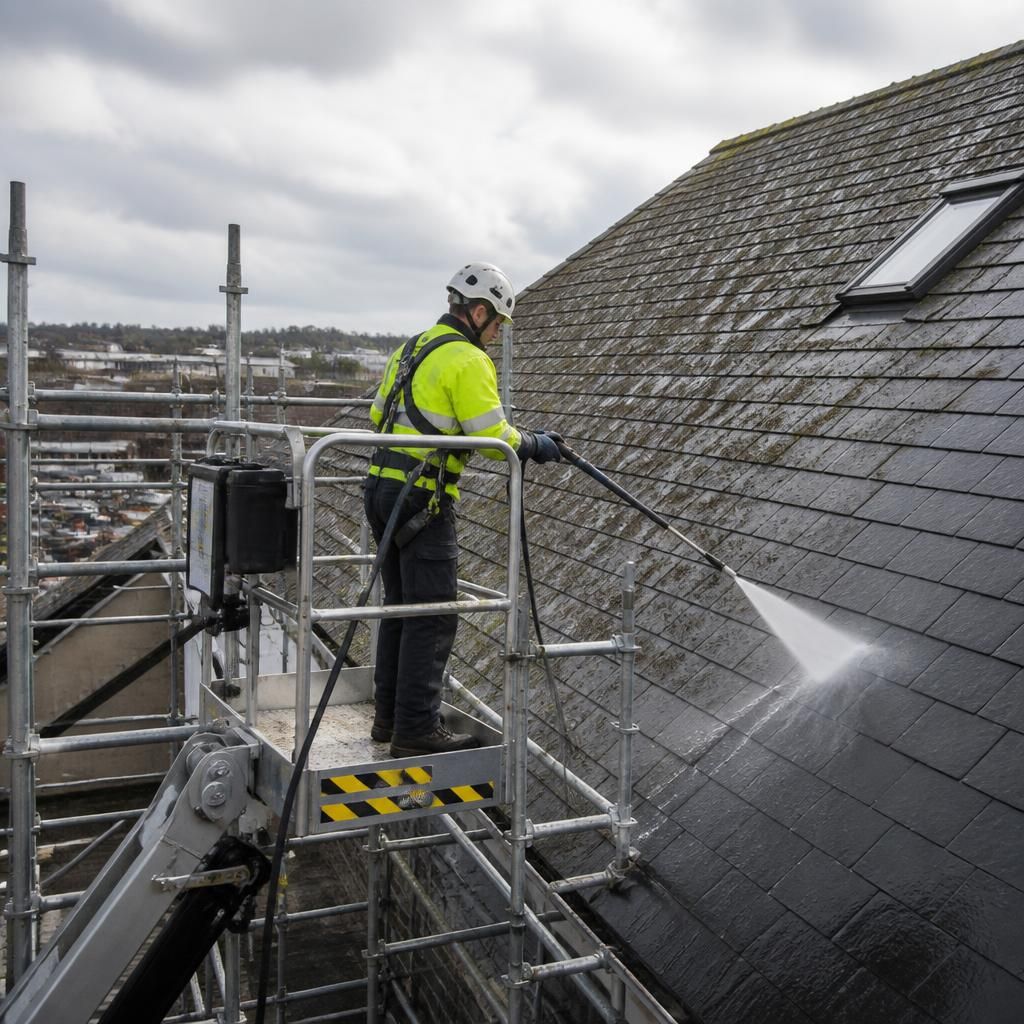
Access requirements can have a significant effect on slate roof cleaning cost because safe work at height may require more than the cleaning equipment itself. A steep roof, limited ground access, nearby buildings or fragile slate areas can necessitate scaffold, a mobile elevating work platform, temporary edge protection or a carefully planned rope-access system.
The correct access method depends on the roof’s height, pitch, layout, surrounding ground and the condition of the slates. It should allow operatives to work without placing unnecessary pressure on the roof and provide suitable protection for people, vehicles and nearby property. A quotation should therefore identify access equipment, setup and removal separately, so the price reflects the actual safety controls required rather than an assumed roof area alone.