
What are the potential risks of improper slate roof cleaning techniques?
Improper slate roof cleaning can crack or loosen tiles, strip protective surface layers, damage flashings and force water beneath the slates, leading to leaks and costly structural repairs. Aggressive pressure washing, unsuitable chemicals and unsafe access methods can also shorten the roof’s service life and create risks to people, surrounding property and drainage systems.
Improper slate roof cleaning can crack, loosen or dislodge slates, damage flashings and underlay, and drive water beneath the roof covering. These failures may result in leaks, damp insulation, timber decay and expensive remedial work. The main causes are excessive pressure, unsuitable cleaning chemicals, abrasive tools, walking directly on fragile slates and using unsafe access methods.
Slate is durable, but it is not immune to damage. Its performance depends on the condition and type of slate, the fixing method, the roof’s age, the surrounding details and the way contamination is removed. Cleaning should therefore begin with an assessment rather than a standard pressure-washing treatment.
Damage caused by excessive pressure
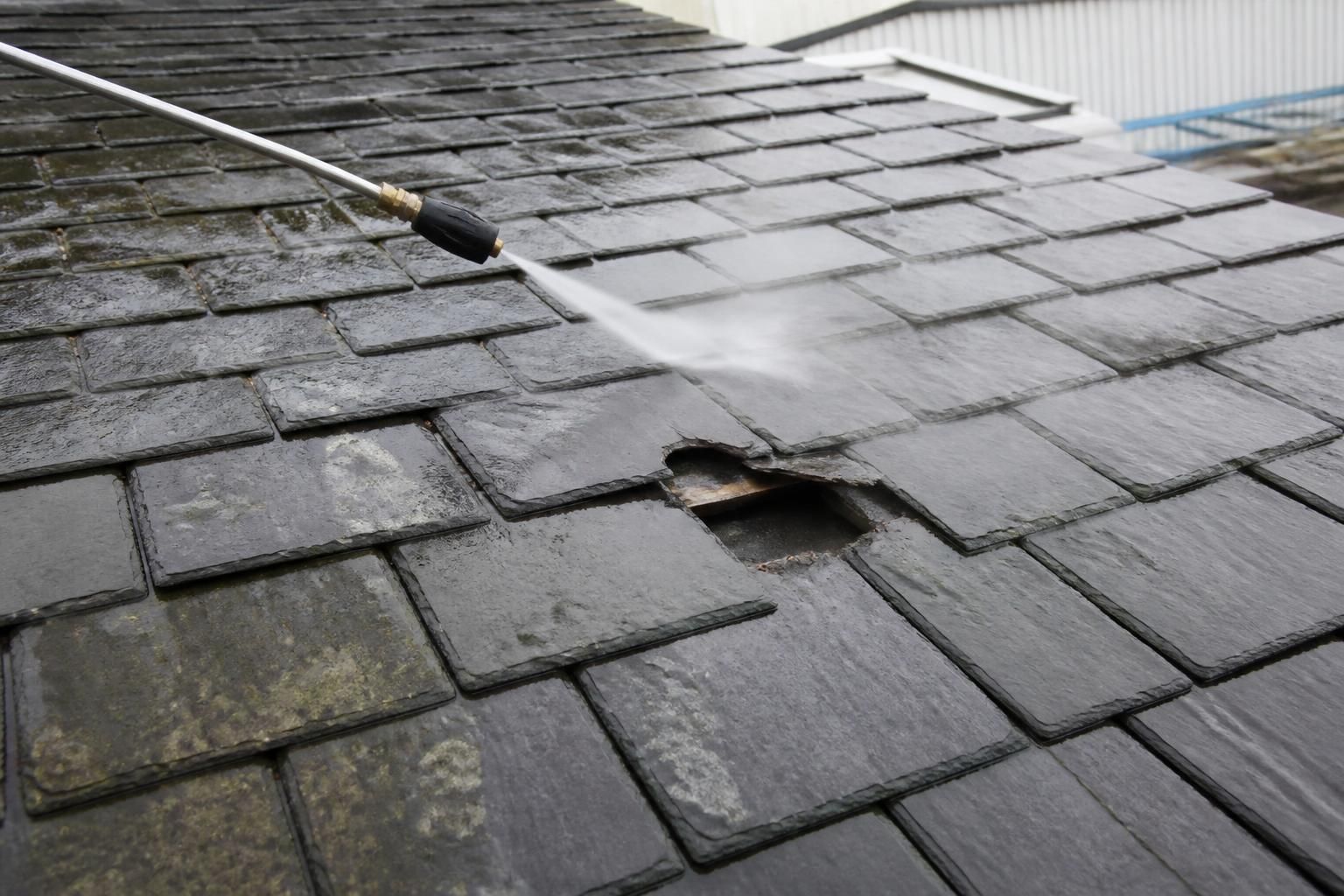
High-pressure water can fracture slate, enlarge existing defects and loosen nails or fixings. Even where the slates appear intact immediately after cleaning, forceful water can disturb laps and joints, allowing moisture to enter beneath the covering. Water directed upwards or beneath slate edges is particularly hazardous because it works against the roof’s designed drainage path.
Pressure can also damage mortar fillets, ridge details, leadwork, sealants, pointing and vulnerable edges around rooflights, chimneys and abutments. Once these areas have been disturbed, water may reach the roof timbers or internal finishes. A clean surface is not a successful result if the process has reduced the roof’s weather resistance.
Cracking, breakage and displacement
Slate can have natural laminations, hidden weaknesses or previous impact damage. Applying concentrated pressure, levering tiles with tools or walking across the roof can turn minor defects into full breaks. Individual slates may split, slide out of position or fall from the roof, creating immediate hazards below and leaving exposed areas vulnerable to rain.
Walking on slate is especially risky because loads are transferred through relatively small contact points. Stepping between the supporting battens can break the slate or damage the roof structure beneath it. Where access is required, suitable equipment and a planned method should be used instead of relying on the roof covering as a working platform.
Problems caused by unsuitable chemicals
Some strong acids, alkalis, solvents and unapproved cleaning products can stain or etch slate, corrode metalwork and weaken adjacent materials. Chemical residue may affect lead, zinc, copper, painted surfaces, membranes, sealants, render and masonry. Products that are safe for one roof material are not automatically suitable for slate or its associated components.
Incorrect dilution, excessive application or inadequate rinsing can leave residues that continue reacting after the work is complete. Run-off may also damage plants, contaminate surface water or affect vehicles and other property below. Any treatment should be selected for the particular contamination and roof construction, applied in accordance with the product guidance, and controlled so that it does not spread beyond the intended area.
Damage to protective surface characteristics
Abrasive brushing, scraping and aggressive jetting can remove weathered surface material or alter the texture of the slate. This may make the surface more prone to water retention and accelerated weathering. Cleaning should remove organic growth and soiling without unnecessarily wearing away sound slate or disturbing its natural surface.
Moss should not be forcibly ripped from the roof where its roots have grown around slate edges or fixings. Pulling it away can lift tiles and expose gaps. In many cases, controlled removal followed by an appropriate treatment is safer than trying to achieve an immediately bare surface through mechanical force alone.
Leaks and concealed structural deterioration
The most serious consequence of improper cleaning is often not visible on the day of the work. A displaced slate, damaged flashing or punctured underlay may allow intermittent water entry during wind-driven rain. Moisture can then affect battens, rafters, insulation, ceilings and internal finishes before the source is identified.
Cleaning can also hide the difference between a roof that needs maintenance and one that needs repair. If cracked slates, failed fixings or defective flashing are simply washed over, the underlying issue remains. A proper inspection should identify defects before cleaning and record any areas that require repair or specialist assessment.
Gutter, drainage and surrounding-property risks
Dislodged moss, slate fragments and chemical-laden wash water can block gutters, outlets and downpipes. Blockages may cause overflow against fascias, walls and eaves, while loose debris can fall onto paths, parked vehicles or neighbouring property. Uncontrolled run-off may also enter drains or planted areas.
Good practice includes protecting vulnerable surfaces, controlling debris and run-off, checking that drainage routes remain clear, and inspecting gutters after the work. Where the site has shared access, public areas or occupied premises below, exclusion zones and suitable precautions are needed to protect people from falling material and slippery surfaces.
Unsafe access and work-at-height consequences
Slate roof cleaning involves risks beyond damage to the roof itself. Wet slate, moss and cleaning solutions create slippery conditions, while unsuitable ladders, unstable access equipment and poor positioning increase the likelihood of a fall. Falling tools, slate fragments and contaminated water can endanger people at ground level.
Access should be planned around the roof geometry, height, edge protection, fragile areas and the condition of the slates. Equipment must be appropriate for the building and used by people with the necessary competence. Where a roof cannot be reached safely without placing loads on fragile areas, an alternative access arrangement should be considered.
How improper cleaning can be avoided
- Inspect the slate, fixings, ridges, valleys, flashings, abutments, rooflights, gutters and visible roof structure before work begins.
- Identify loose, cracked or delaminated slates and agree whether repairs are required before cleaning.
- Use the least aggressive effective method, avoiding water pressure that could force water beneath the slate laps.
- Do not use abrasive tools or walk directly on the slate unless the access system and method specifically protect the roof covering.
- Select any biocidal or cleaning treatment for compatibility with slate and surrounding materials, following the manufacturer’s instructions.
- Control run-off, collect loose debris and protect drains, landscaping, vehicles, façades and pedestrian areas.
- Carry out a post-clean inspection to check for displaced slates, damaged details, blocked drainage and residual contamination.
If slate becomes cracked, loose or wet internally after cleaning, the roof should be assessed promptly rather than repeatedly treated. Early repair of a slipped slate or damaged flashing is generally more straightforward than addressing prolonged water ingress and timber or interior damage.
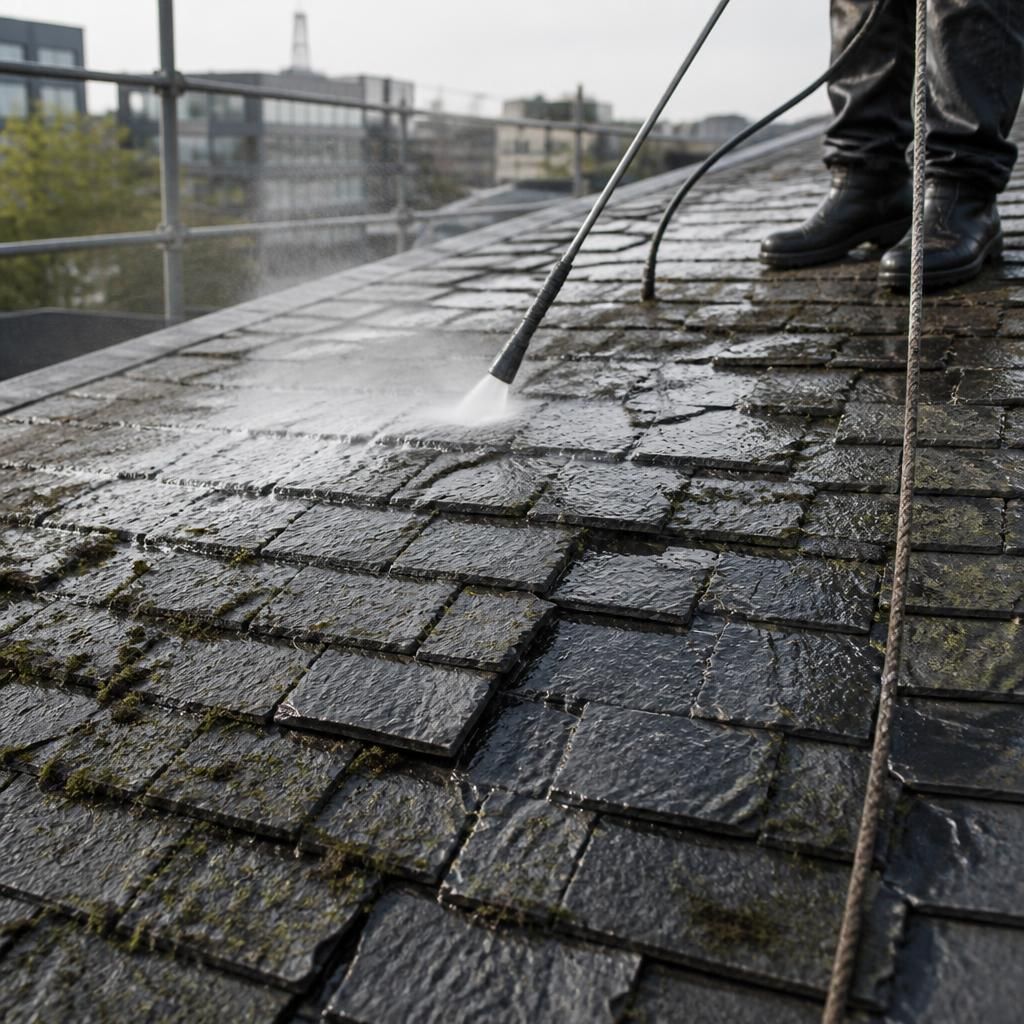
One of the most serious risks of improper slate roof cleaning is forcing water beneath the slate laps. High-pressure jetting, particularly when directed upwards or too close to the edges, can bypass the roof’s intended drainage path and wet the underlay, battens and insulation. The resulting leak may not appear immediately, especially after dry weather.
Pressure can also loosen slates, fixings, flashings and ridge details, allowing wind-driven rain to enter around already vulnerable areas. A safer approach is to inspect the roof first and use the least aggressive effective cleaning method, with controlled run-off and a post-cleaning check for displaced slates, damaged details and blocked gutters.