
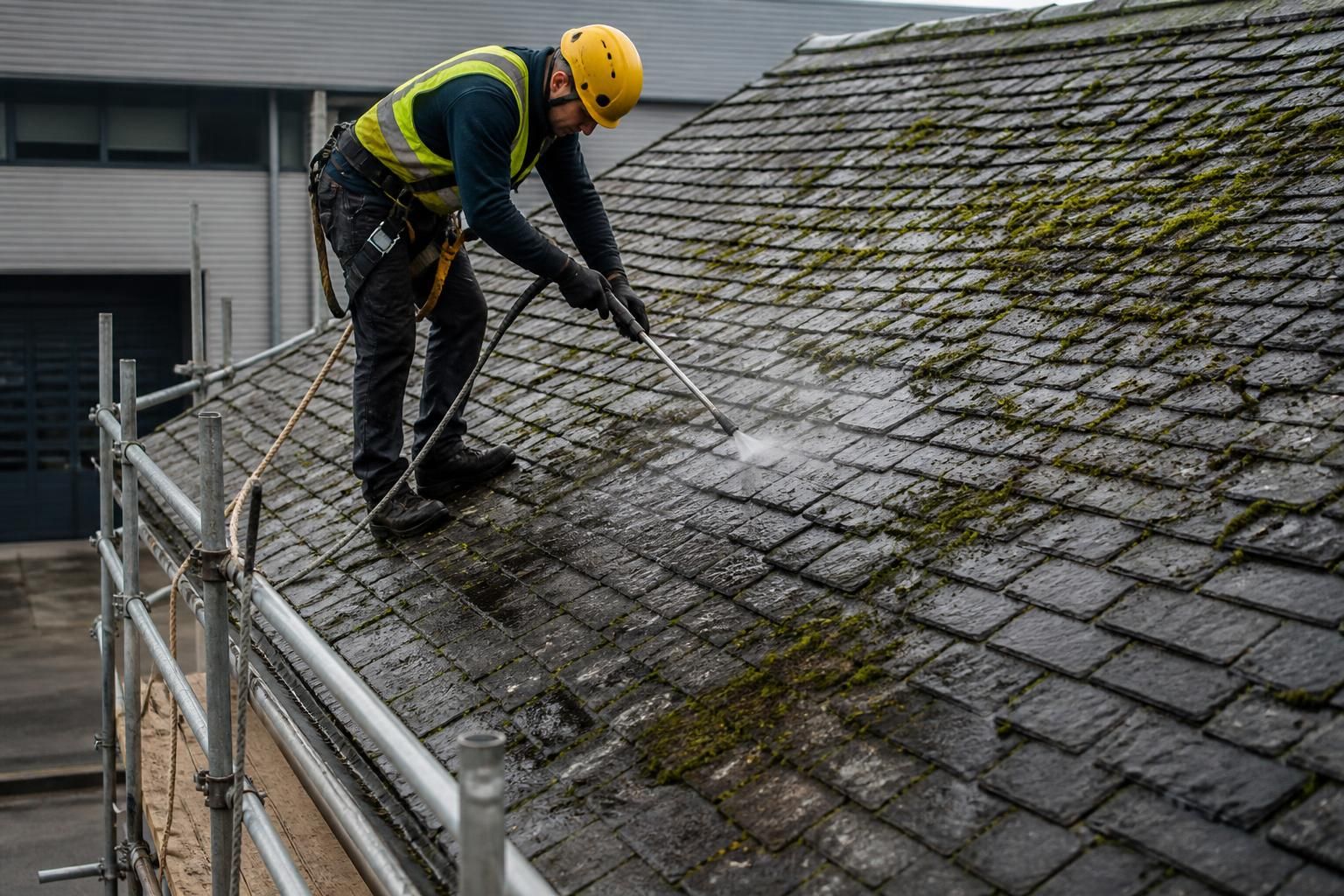
What are the potential risks associated with DIY slate roof cleaning efforts?
DIY slate roof cleaning can cause cracked or displaced slates, damaged flashing, blocked gutters and water ingress, while working at height creates a serious risk of falls. Without suitable access equipment, low-pressure techniques and experience handling fragile roofing, professional cleaning is usually the safer way to protect both the roof and the person carrying out the work.
DIY slate roof cleaning can damage fragile roofing materials and create significant safety risks. The main hazards are falls from height, cracked or displaced slates, damaged flashings, water penetration and ineffective treatment of moss, algae or lichen. Slate is durable in service but can fracture under concentrated pressure, impact or the weight of someone walking on unsupported areas. Cleaning work should therefore be planned around the condition and construction of the roof, not treated as a routine pressure-washing task.
Falls and unsafe access are the most serious risks. Slate roofs are steep, uneven and often slippery, particularly where moss and algae are present. A ladder alone does not provide a stable working platform, and stepping directly on the slates can cause both loss of footing and breakage. Safe work at height may require correctly positioned access equipment, edge protection, roof ladders, suitable footwear and a method for handling tools and hoses without creating trip hazards. Domestic fall-arrest arrangements are also easy to misuse if they are not properly selected, installed and anchored.
Even a roof that appears accessible from a loft window or extension may contain fragile sections, concealed rooflights, weak valleys or areas affected by previous water damage. Wind, rain, frost and changing weather conditions increase the risk. If safe access cannot be established before cleaning begins, the work should be stopped rather than continued from an improvised position.
Slate breakage is another common problem. Direct foot traffic can snap slates, loosen fixings or disturb overlapping courses. Scrapers, stiff brushes and unsuitable tools may chip exposed edges or remove the surface of softer slate. Damage is not always visible immediately; a hairline fracture or displaced slate can allow water into the roof during later rainfall. Replacing individual slates may also disturb adjacent tiles, especially on older roofs where fixings and battens have deteriorated.
High-pressure washing presents additional hazards. A powerful jet can lift slate edges, force water beneath laps, erode mortar at abutments and damage leadwork, sealants, pointing and protective coatings. It may also drive water into roof voids, insulation or internal finishes. Pressure that is suitable for a robust hard surface is not automatically suitable for natural slate. Cleaning should normally use the least aggressive method capable of removing the growth, with careful control of water, spray direction and runoff.
Flashing, valleys, ridges and roof penetrations can be damaged during DIY cleaning. Lead flashing may be bent or torn, mortar fillets may be dislodged and sealant around vents, chimneys or skylights may fail. These details are responsible for keeping water out at changes in roof level, so a small disturbance can result in damp patches, staining, timber decay or insulation damage. Blocked or poorly protected gutters can cause dirty water to overflow onto walls, windows and lower roof areas.
Cleaning products introduce separate risks. An unsuitable acid, solvent, detergent or concentrated biocide can stain slate, corrode metalwork, harm surrounding vegetation or damage painted surfaces and masonry. Applying chemicals without checking the roof material can also affect sealants and fixings. Runoff must be controlled so that treatment residues, loosened moss and contaminated water do not enter drains, watercourses or neighbouring property. Product labels, control measures and any applicable environmental requirements should be followed precisely.
DIY cleaning can also conceal or worsen existing defects. Moss may be attached to loose slates, damaged mortar or failing ridge details. Removing it aggressively can expose weaknesses without addressing the underlying cause. Conversely, leaving roots or organic growth in joints can allow moisture to remain against the roof. A proper inspection should identify slipped or cracked slates, defective flashings, blocked valleys, deteriorated battens and signs of internal damp before the cleaning method is selected.
There is also a risk of using the wrong method for the type and age of slate. Natural slate varies in strength, porosity and surface condition, while older roofs may have fragile fixings or historic details that need particular care. Fibre-cement or artificial slates require different handling from natural slate, and some older roofing products may contain hazardous materials. If the material cannot be identified confidently, it should not be cut, drilled, aggressively brushed or disturbed until it has been assessed.
A safer approach is to arrange an inspection before any cleaning. The contractor should assess the slate, roof pitch, access requirements, surrounding surfaces, drainage and likely causes of biological growth. Cleaning can then be carried out using controlled access, non-abrasive techniques and low-pressure rinsing where appropriate. Any biocide should be selected for the surface, applied in accordance with its instructions and kept away from people, animals, plants and drainage systems as necessary.
Homeowners should not proceed if the roof is wet, icy or windy, if slates are already loose, or if there is no suitable access and fall-protection arrangement. It is also unwise to rely on a pressure washer from ground level: this can still damage slates and force water beneath them while leaving the operator unable to inspect the roof properly. If cleaning has already caused a broken slate, displaced flashing, blocked gutter or internal leak, the affected area should be protected where possible and inspected by a competent roofing or exterior-cleaning professional.
Professional slate roof cleaning reduces these risks by combining roof inspection, appropriate access equipment, controlled cleaning methods and careful protection of adjoining surfaces. It does not remove every risk—work at height always requires proper planning—but it helps prevent avoidable damage and identifies defects that a quick DIY wash may miss.
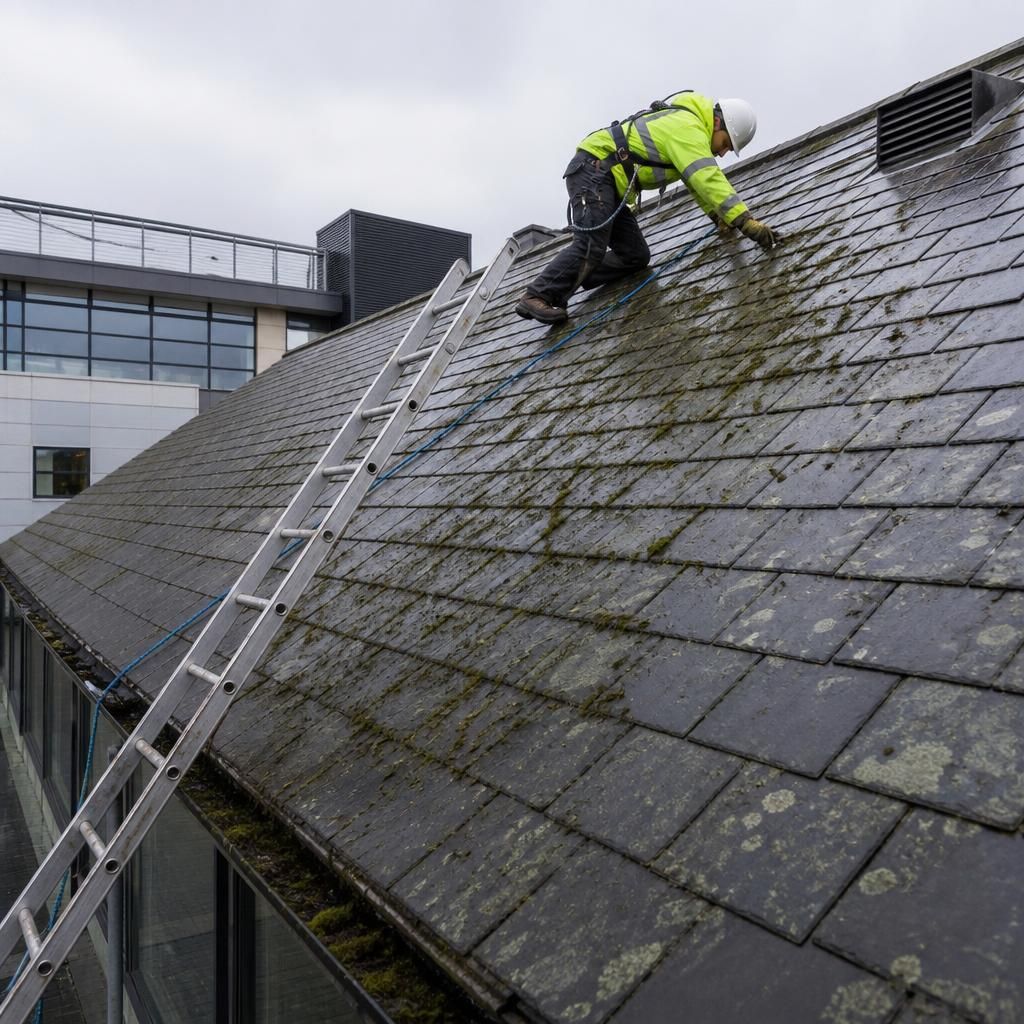
DIY slate roof cleaning presents two linked risks: unsafe work at height and damage to fragile roofing. Moss and algae can make slates slippery, while walking on unsupported areas may crack slates, loosen fixings or disturb flashing. A ladder alone is not a suitable working platform for cleaning a pitched roof.
Professional cleaning starts with assessing the roof condition and access requirements. Suitable access equipment, controlled low-pressure methods and careful protection of gutters, walls and roof details help reduce the chance of falls, water ingress and avoidable slate damage.
Arrange a Professional Slate Roof Cleaning Assessment
Arrange a professional slate roof cleaning assessment with Encanto Exterior Cleaning to identify access requirements, existing defects and the safest cleaning method for your roof. Contact our team to plan the work across Birmingham, the West Midlands or elsewhere in the UK.