
How does the use of biocides impact the environment and safety during slate roof cleaning?
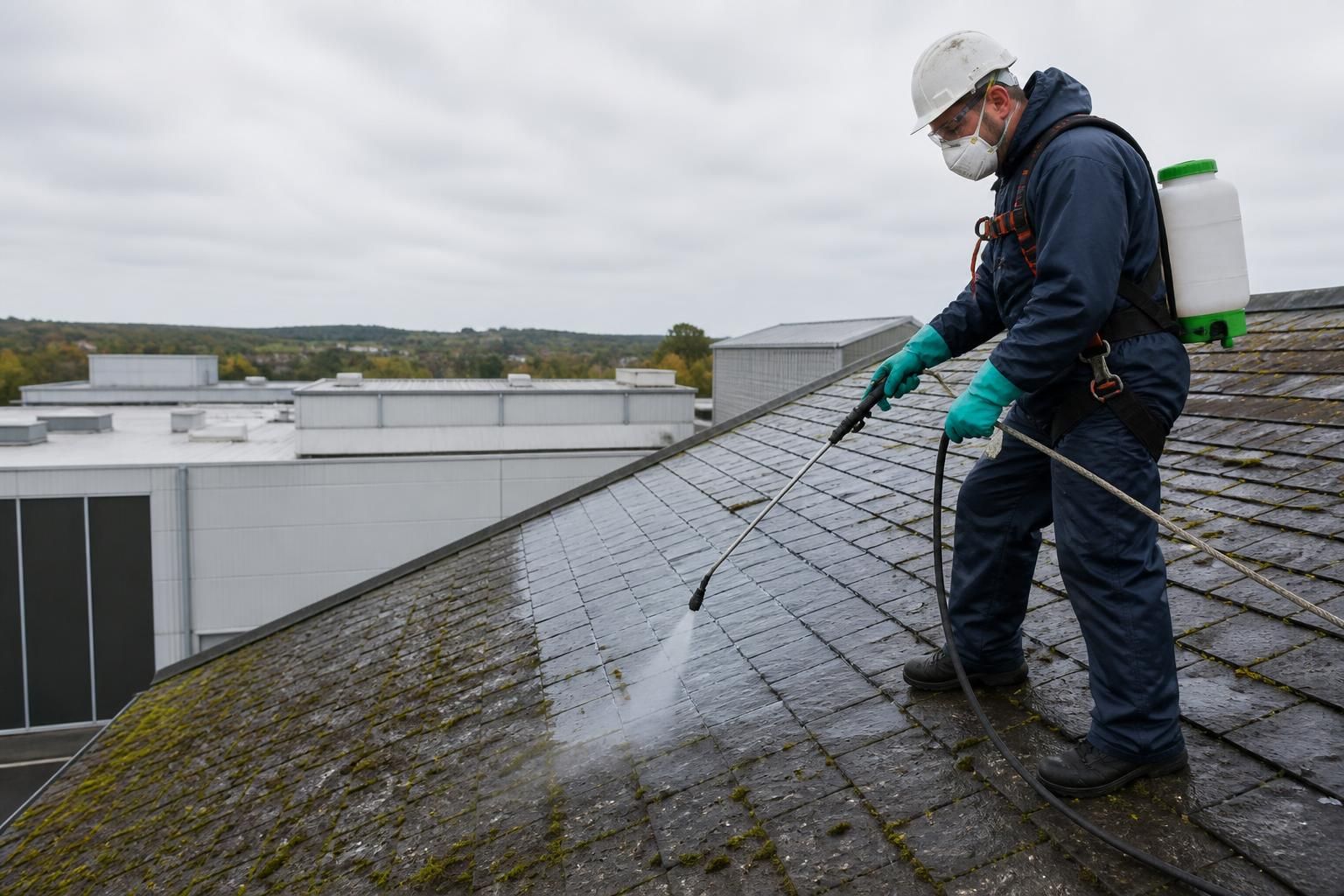
Biocides used in slate roof cleaning can control moss, algae and lichen, but may harm aquatic life, surrounding plants and people if incorrectly selected, applied or allowed to enter surface water. Responsible use requires a suitable product assessment, controlled application, protective equipment and measures to contain runoff in line with UK regulations.
Biocides can improve the control of moss, algae and lichen on slate roofs, but they also create environmental and safety risks if they are chosen, mixed, applied or rinsed incorrectly. The main concerns are contamination of drains and watercourses, damage to nearby vegetation, exposure of workers or occupants, and chemical runoff affecting roof materials and surrounding surfaces. Responsible use depends on selecting an authorised product for the intended application, following its label and safety data, and preventing uncontrolled discharge.
How biocides affect the environment
Biocidal products are designed to kill or inhibit living organisms. That action is useful on organic growth, but it is not limited to the moss, algae or lichen on the slate. A solution carried by rain, overspray or washing water can affect garden plants, soil organisms and aquatic life. Even a relatively small quantity entering a surface-water drain, stream, pond or river may cause pollution.
- Water pollution: runoff containing biocide can harm aquatic organisms and may be prohibited from entering surface-water drainage systems or watercourses.
- Plant damage: overspray, drift or splashes can scorch or kill lawns, shrubs, planted areas and other vegetation.
- Soil effects: repeated or poorly controlled discharge may affect organisms in the soil and leave residues around the building.
- Airborne drift: spraying in windy conditions can carry droplets beyond the roof area, increasing exposure and the risk of damage to neighbouring property.
- Unnecessary chemical loading: applying a biocide where physical removal and suitable maintenance would be sufficient increases environmental exposure without a clear benefit.
Roof drainage must be assessed before work starts. Rainwater goods may discharge directly to a soakaway, surface-water drain, garden, neighbouring land or watercourse. They do not necessarily connect to foul drainage, where treatment processes may be available. A contractor should never assume that a downpipe is safe for chemical runoff simply because it disappears below ground.
Product selection and UK compliance
Only a product suitable for the intended use should be considered. In Great Britain, biocidal products and their active substances are subject to the applicable UK biocides regulatory requirements; Northern Ireland may also be affected by EU biocides requirements under the Northern Ireland Protocol framework. The product label, authorisation or approval information and safety data sheet should be checked before use. A product intended for one surface or application method may not be appropriate for a slate roof.
Label instructions are part of the control measures, not optional guidance. They can specify the permitted surface, dilution, application method, contact time, weather conditions, protective equipment, storage, disposal and restrictions near drains or water. Products must not be mixed unless the manufacturer expressly permits it. Stronger is not automatically better: over-concentration can increase risk to people, plants, drainage systems and roof components while offering no proportionate cleaning advantage.
Controls used during professional application
A suitable risk assessment should consider the roof construction, access method, weather, surrounding landscaping, drainage layout, nearby water, public access and the condition of the slate. Controls commonly include:
- checking the product instructions and safety data before bringing chemicals to site;
- protecting or temporarily relocating vulnerable plants, containers, furniture and other nearby items;
- covering or isolating outlets where appropriate, without creating a hazard or allowing gutters to overflow;
- using controlled, low-drift application equipment rather than spraying in strong wind;
- avoiding application before rain or when forecast conditions could wash the treatment from the roof;
- keeping the treatment within the intended roof area and preventing splashes onto walls, windows and neighbouring property;
- collecting, diverting, filtering or otherwise managing contaminated runoff in accordance with the product instructions and environmental requirements; and
- storing containers securely and disposing of unused product, contaminated absorbent materials and packaging through the correct waste route.
Runoff should not be allowed to enter a surface-water drain or watercourse unless this is specifically permitted and controlled. Where drainage cannot be safely isolated or managed, the cleaning method may need to be changed. A responsible contractor will explain the proposed controls rather than treating runoff as an afterthought.
Protection of workers, occupants and the public
Biocides can irritate or damage the skin and eyes, and inhaling spray or vapour may be harmful depending on the formulation. The product safety data sheet and risk assessment determine the required controls. These may include chemical-resistant gloves, eye or face protection, protective clothing, suitable respiratory protection where assessed as necessary, hand-washing facilities and controlled access below the work area.
People, pets and building users should be kept away from the treatment zone for the period stated on the product instructions. Windows, air intakes and ventilation openings may need to be closed or protected. Warning signs and exclusion zones are particularly important where roof work is carried out above entrances, pavements, car parks or occupied premises. Work at height controls remain essential: using a biocide does not remove the risks associated with ladders, scaffolds, access platforms, fragile areas or falling debris.
In a workplace, the Control of Substances Hazardous to Health requirements may apply, alongside work-at-height, personal protective equipment and environmental obligations. COSHH controls should cover handling, dilution, application, storage, accidental release, first aid and disposal. The team should know how to respond to a spill and should have suitable absorbent materials and emergency contact information available.
Biocides and slate roof condition
Biocides do not compensate for aggressive cleaning. Slate can be split, delaminated or displaced by excessive pressure, harsh brushing, repeated foot traffic or poorly managed access. Mortar joints, flashings, leadwork, roof membranes and painted or rendered surfaces may also be vulnerable to chemicals or runoff. The treatment should therefore be compatible with the roof and followed by a cleaning method that respects the slate’s condition.
On some roofs, the safest approach is to remove loose growth manually and use a carefully controlled treatment only where residual spores or regrowth justify it. On others, a biocide may be unnecessary. The correct decision depends on the type and extent of growth, the roof’s condition, access constraints and the environmental sensitivity of the site. Any treatment should be tested or assessed on a discreet area where appropriate, with attention to staining, colour change and runoff behaviour.
When a lower-impact approach may be preferable
Physical removal, gentle brushing or controlled low-pressure cleaning may reduce chemical use, although these methods still require care to avoid slate damage and uncontrolled debris. Steam cleaning can be suitable for some surfaces and conditions, but it is not universally appropriate and does not remove the need to manage contaminated water. A lower-impact method is not automatically safe; the roof material, access system and drainage arrangements must still be assessed.
Where a biocide is used, targeted application is generally preferable to blanket spraying. It should be applied only to the areas requiring treatment, at the label rate and in conditions that minimise drift and wash-off. Follow-up inspections can establish whether further treatment is needed instead of scheduling repeated applications automatically.
What customers should expect from the cleaning plan
Before work begins, the method statement should identify the product or treatment type, the reason it is required, the principal hazards, the weather limitations and the controls for plants and drainage. It should also explain how access, falling debris, public protection and waste will be managed. If the site has ponds, sensitive planting, shared drainage, public footways or neighbouring properties, these factors should be recorded specifically rather than covered by a generic statement.
After cleaning, any protective coverings should be removed promptly, affected areas checked and equipment decontaminated safely. The roof and rainwater goods should be inspected for displaced slate, blockages or residue. If chemical has entered an unintended drain or watercourse, the incident should be reported and managed immediately through the appropriate environmental and emergency procedures.
In summary, biocides can be a useful part of slate roof cleaning, but they are not risk-free and are not required for every roof. The safest practice is to use the least chemically intensive effective method, select a product approved and labelled for the intended use, control exposure and runoff, protect people and vegetation, and comply with UK health, safety and environmental requirements. This approach helps control organic growth without transferring the problem to the surrounding environment or compromising the slate roof.
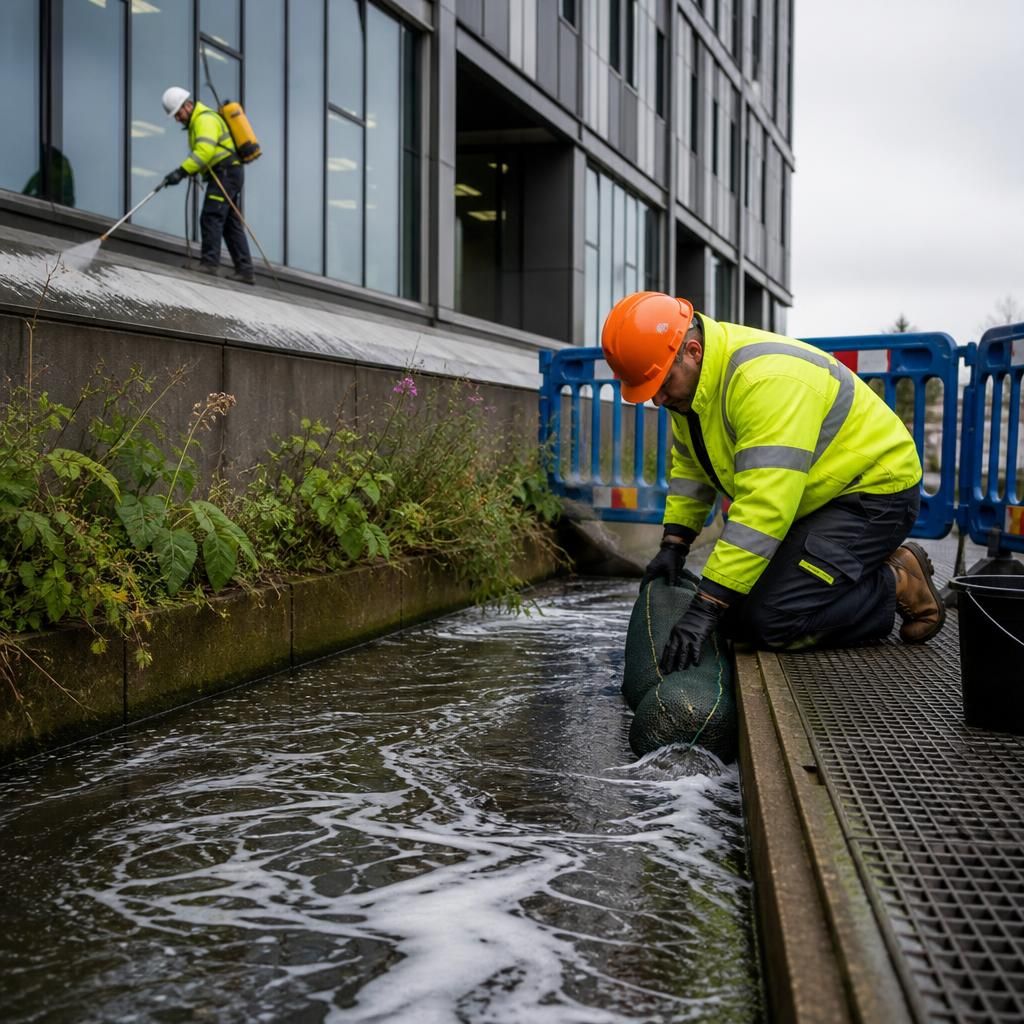
Biocide runoff is one of the main environmental risks during slate roof cleaning because treatment water can carry active chemicals into gutters, surface-water drains, soil, ponds or watercourses. Before application, the drainage layout should be checked and suitable controls put in place to prevent contaminated water leaving the work area.
Professional controls may include isolating or diverting downpipes where appropriate, protecting nearby plants, avoiding windy or rainy conditions, and applying the product at the manufacturer’s stated dilution and rate. Runoff must not be discharged into a surface-water drain or watercourse unless this is specifically permitted and safely controlled. These measures protect aquatic life, vegetation, building users and the slate roof itself while ensuring that biocide treatment is used only where it provides a clear benefit.