
How do professional slate roof cleaning services handle hard-to-reach areas?
Professional slate roof cleaning services handle hard-to-reach areas by combining a detailed roof assessment with suitable access equipment, such as scaffold towers, roof ladders or powered access platforms. They use controlled, low-impact cleaning methods and carefully positioned equipment to reach difficult sections without putting unnecessary pressure on the slate, tiles, fixings or surrounding surfaces.
Professional slate roof cleaning services reach difficult areas by planning access before cleaning begins, then combining suitable access equipment with low-impact cleaning techniques. The method depends on the roof’s pitch, height, condition, surrounding buildings and the location of fragile or obstructed sections. The aim is to clean the slate without walking directly on vulnerable tiles or placing damaging loads on the roof structure.
A detailed inspection is the first stage. The contractor assesses the roof from ground level and, where safe, from an access platform or roof-level position. This identifies areas hidden behind parapets, chimneys, roof plant, dormers, valleys and abutments. The inspection also checks for cracked or loose slates, deteriorated fixings, damaged flashings, blocked gutters and weak roof edges. Any defects that could affect safe access or cleaning should be recorded before work starts.
Access equipment is selected to suit the building rather than relying on one standard approach. Depending on the site, this may include:
- Scaffold towers or fixed scaffolding, providing stable working platforms and edge protection.
- Roof ladders or crawling boards, positioned to spread the operator’s weight and avoid loading individual slates.
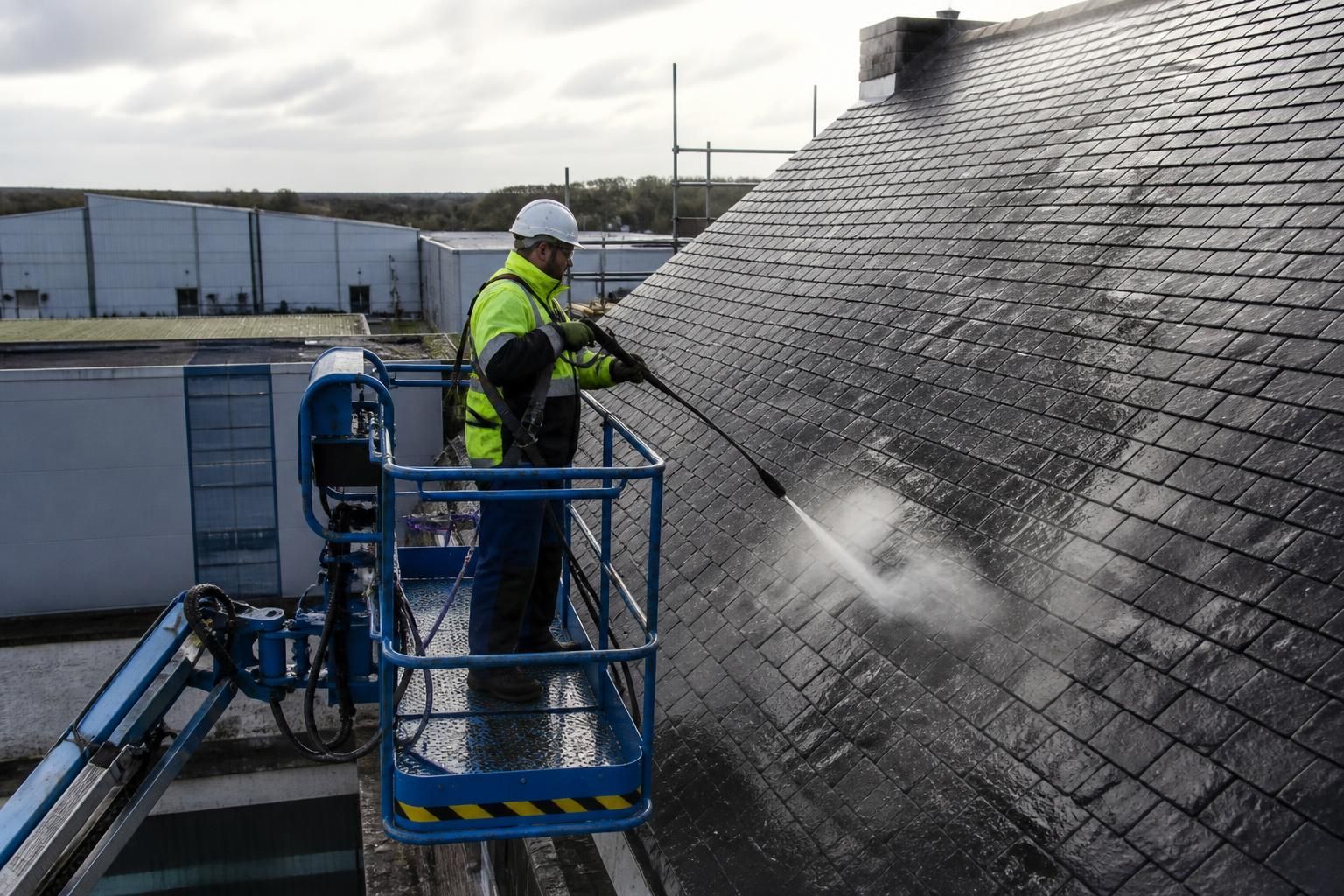
- Mobile elevated work platforms, such as boom or access platforms, where ground conditions and available clearance allow safe positioning.
- Telescopic cleaning equipment, which can reach sections from a secure platform or from ground level without requiring personnel to stand on the slate.
- Rope-access systems for suitable structures where conventional access is impractical, subject to a specific assessment, trained operators and an appropriate rescue plan.
Roof ladders and crawling boards must be placed carefully because slate is brittle and can crack under concentrated pressure. A competent contractor does not treat the slate surface as a normal walkway. Where access over the roof is unavoidable, weight is distributed across suitable structural points and the route is planned around vulnerable areas, rooflights, valleys and damaged slates.
For high or restricted sections, a powered access platform may allow operatives to work from a controlled position alongside the roof. The platform must be placed on suitable ground, clear of overhead hazards and protected from vehicle or pedestrian movement. On a busy commercial site, exclusion zones and temporary controls may also be needed to prevent people entering the area beneath the work.
Cleaning equipment is chosen to match the condition of the slate. High-pressure washing is generally unsuitable for delicate or weathered slate because excessive pressure can lift edges, drive water beneath overlapping slates, damage pointing and affect flashings or adjacent surfaces. Professionals will normally use controlled low-pressure rinsing, softwashing, steam cleaning or carefully applied biocidal treatments where appropriate. Telescopic lances can help reach recessed areas while keeping the operator and heavier equipment away from the roof surface.
Hard-to-reach growth is usually treated in stages rather than attacked aggressively. Moss may need to be loosened carefully, while lichen and biological staining may require a suitable treatment and dwell period before controlled removal. Around chimneys, parapets and roof junctions, the operative adjusts the technique to avoid forcing water into gaps or disturbing leadwork. Water flow is also managed so that debris does not wash into gutters, downpipes or drainage systems.
Where a section cannot be reached without creating an unacceptable risk of slate damage or a fall, it should not be cleaned by forcing access. A professional may recommend cleaning from an alternative position, using longer-reach equipment, arranging additional access or leaving a small area untreated until safe access is available. This is preferable to breaking slates, disturbing roof coverings or exposing workers and the public to unnecessary hazards.
Safe work planning normally covers:
- Access and egress routes, ground conditions and the stability of platforms or ladders.
- Weather conditions, including wind, rain, frost and poor visibility.
- Fragile roof areas, overhead services, rooflights and nearby structures.
- Fall prevention, exclusion zones and protection for people below.
- Collection or controlled discharge of dirty water and removed vegetation.
- Emergency arrangements, including recovery from access equipment where relevant.
After cleaning, the roof and surrounding areas should be inspected from the available access positions. This allows the contractor to check for remaining deposits in concealed locations, displaced slates, exposed defects, clean gutters and any impact on walls, windows, paving or landscaping. A final review is particularly important on complex roofs because inaccessible junctions may not be visible from ground level.
For larger commercial or industrial properties, the access plan can be incorporated into scheduled maintenance. Combining periodic inspections with gutter clearance and controlled biological treatment helps identify problems before moss, lichen or debris become established in difficult areas. The appropriate interval depends on the roof’s exposure, surrounding vegetation, drainage and condition, rather than a fixed schedule that suits every building.
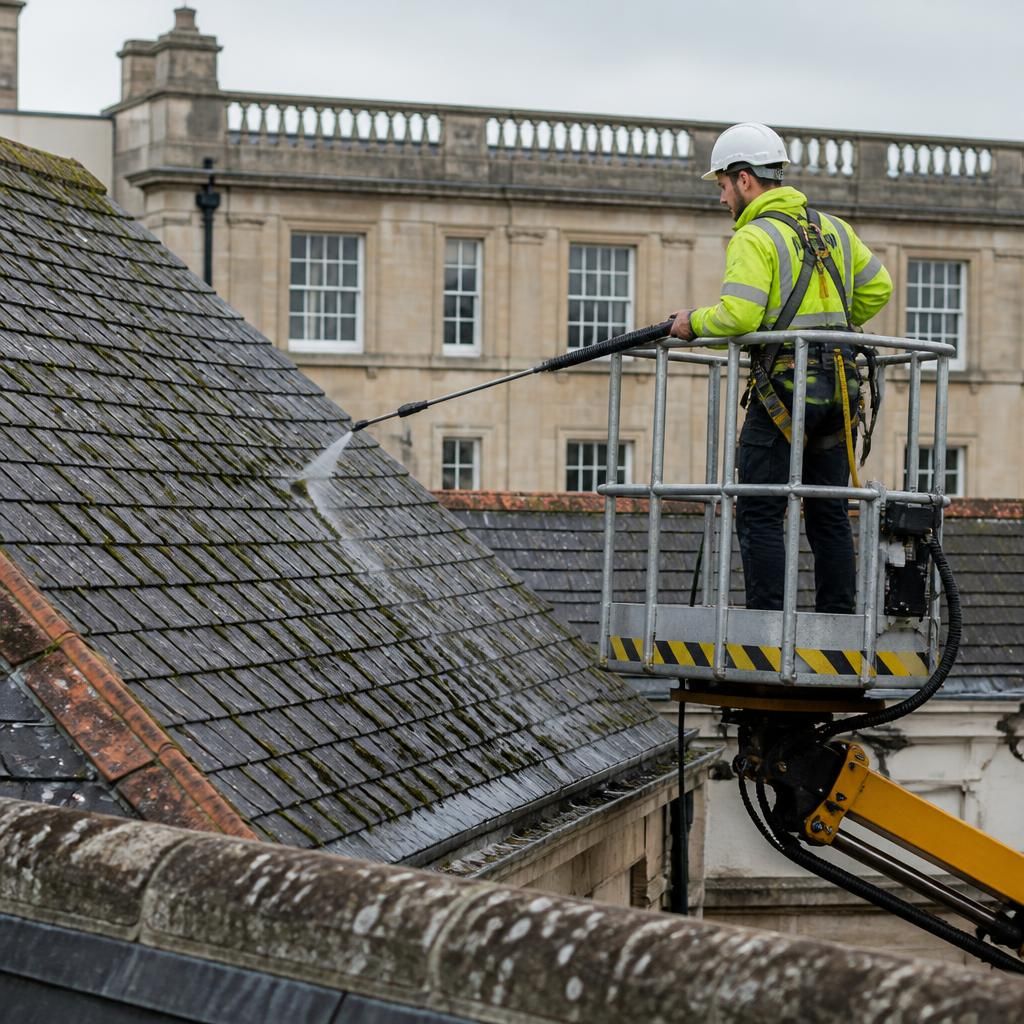
Specialist access equipment allows hard-to-reach slate roof areas to be cleaned without treating the slate as a walkway. Depending on the building and roof layout, operatives may use scaffold towers, roof ladders, crawling boards, powered access platforms or telescopic cleaning equipment. These options provide a stable working position while reducing concentrated pressure on brittle slates, flashings and roof junctions.
Before work begins, the access route is assessed for fragile areas, rooflights, chimneys, parapets, overhead hazards and suitable ground conditions. If a concealed section cannot be reached safely, professionals should change the access method or leave it untreated rather than risk cracked slates, water ingress or falls.