
Are biocides necessary for effective slate roof cleaning?
Biocides are not always necessary for effective slate roof cleaning, but they can be useful where moss, algae, lichen or other biological growth is established. Their use should be based on the roof’s condition and followed by a slate-safe cleaning method, as unsuitable chemicals or application techniques can damage the slates and surrounding environment.
Biocides are not essential for every slate roof cleaning project, but they can be an effective part of the treatment where moss, algae, lichen or other biological growth is firmly established. Their purpose is to kill or suppress living growth rather than simply remove surface dirt. Whether they are appropriate depends on the condition of the roof, the type and extent of contamination, the slate and pointing, and the cleaning method that can be used safely.
A slate roof with light organic staining may be cleaned effectively without a biocide. Loose moss and debris can often be removed using careful manual techniques, followed by a suitable low-pressure rinse where the roof construction and slate condition allow it. In other cases, particularly where lichen has attached itself to the slate or biological growth is present within joints and laps, a carefully selected biocidal treatment can help deal with contamination that physical cleaning alone may not fully remove.
What biocides do
Biocidal roof treatments contain active ingredients intended to control organisms such as algae, moss, fungi and lichen. They are generally applied after loose material has been removed, although the exact sequence depends on the product and the condition of the roof. The treatment may loosen or kill remaining growth over time, allowing weathering and subsequent maintenance to remove the residue. It is not usually an instant substitute for cleaning, and a roof may continue to shed dead or weakened growth after the work is complete.
Biocides are therefore best viewed as one part of a controlled cleaning system, not as a guaranteed solution on their own. The product must be compatible with the roof and used according to its label, including the required dilution, contact time, application method and rinsing or run-off precautions.
When a biocide may be appropriate
- There is widespread moss, algae or lichen that cannot be removed without applying excessive mechanical force.
- Lichen is attached firmly to the slate and aggressive scraping could mark, crack or dislodge the tiles.
- Organic growth is present in roof joints, overlaps or other difficult-to-reach areas where a physical clean would be incomplete.
- The roof requires a treatment designed to reduce the likelihood of rapid regrowth after the visible contamination has been removed.
- The roof survey shows that the slate, fixings, flashings and surrounding materials can tolerate the proposed treatment.
A biocide is less likely to be necessary where the roof is structurally sound, lightly soiled and accessible for gentle manual cleaning. It should also be reconsidered where there is significant slate delamination, loose or brittle slates, failing mortar, exposed underlay, defective flashings or other conditions that make liquid application unsafe.
Why slate roofs require particular care
Slate is durable, but it is not immune to damage. Some slates become laminated, brittle or friable with age, weathering and repeated freeze-thaw exposure. Excessive pressure, hard scraping and inappropriate chemicals can cause surface loss, breakage or premature failure. Treatments can also affect adjacent materials, including leadwork, metal flashings, roof membranes, render, painted surfaces, gutters and downpipes.
For this reason, the presence of moss does not automatically justify chemical treatment. The roof should be assessed before cleaning, including the slate type and condition, fixing security, areas of lichen attachment, drainage arrangements and the potential routes for contaminated run-off. Any visible defects should be recorded and, where necessary, referred to a roofing professional before cleaning proceeds.
How professional application should be controlled
- Inspect the roof and identify fragile slates, open joints, damaged flashings, blocked gutters and nearby surfaces that need protection.
- Choose a product specifically suitable for the intended exterior surface and follow the manufacturer’s instructions. Stronger is not necessarily safer or more effective.
- Remove loose moss and debris using a method that avoids unnecessary pressure, impact and walking on the slates.
- Protect or manage vulnerable surrounding areas, including planted ground, water collection points, vehicles, walls and glazed surfaces.
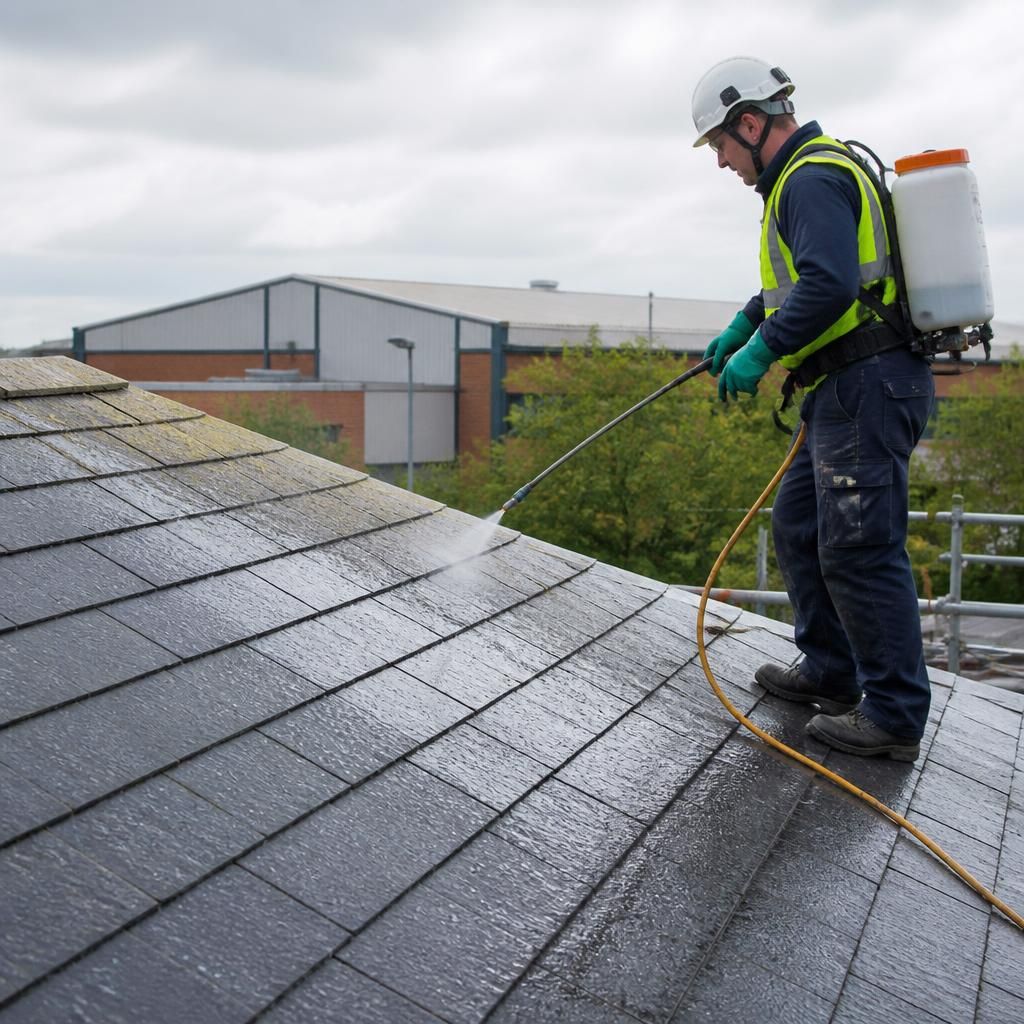
- Apply the treatment evenly and only to the required areas, controlling overspray, drift and run-off.
- Allow the stated contact time rather than rinsing prematurely or leaving the product on the roof longer than instructed.
- Rinse or remove residues using a slate-appropriate method where required, and check gutters and drainage channels afterwards.
- Inspect the finished roof and arrange any follow-up treatment or maintenance only when it is justified by the remaining growth.
Application should take account of weather conditions. Heavy rain can dilute a treatment or carry it into drainage systems before it has worked, while strong wind can increase drift onto neighbouring surfaces. Very hot, dry or unsuitable conditions may also affect the product’s performance. The work should be postponed when the manufacturer’s instructions or site risk assessment indicate that application cannot be controlled safely.
Can biocides prevent moss from returning?
They can reduce biological contamination and may help delay regrowth, but they do not permanently make a slate roof resistant to moss or algae. Organic growth is encouraged by shade, moisture, overhanging vegetation, trapped debris, poor drainage and nearby environmental conditions. If these factors remain, regrowth can occur regardless of the treatment used.
Long-term control is more reliable when cleaning is followed by practical maintenance. Gutters should be kept clear, overhanging branches should be managed where appropriate, and the roof should be checked periodically for slipped or damaged slates. Any later treatment should be based on the roof’s condition rather than applied routinely without inspection.
Environmental and safety considerations
Biocides should be treated as controlled chemicals, even when they are intended for external building maintenance. Incorrect use can expose operatives, damage non-target surfaces and allow contaminated liquid to enter soil, drains or watercourses. Particular care is needed around ponds, planted areas, rainwater harvesting systems and properties with shared or sensitive drainage.
A suitable risk assessment should identify the product hazards, personal protective equipment, access arrangements, weather limitations, run-off controls and emergency procedures. Wastewater, empty containers and contaminated materials should be handled in accordance with the product instructions and applicable waste requirements. A professional contractor should also explain any precautions that the building owner needs to take before, during and after treatment.
Biocide versus pressure washing
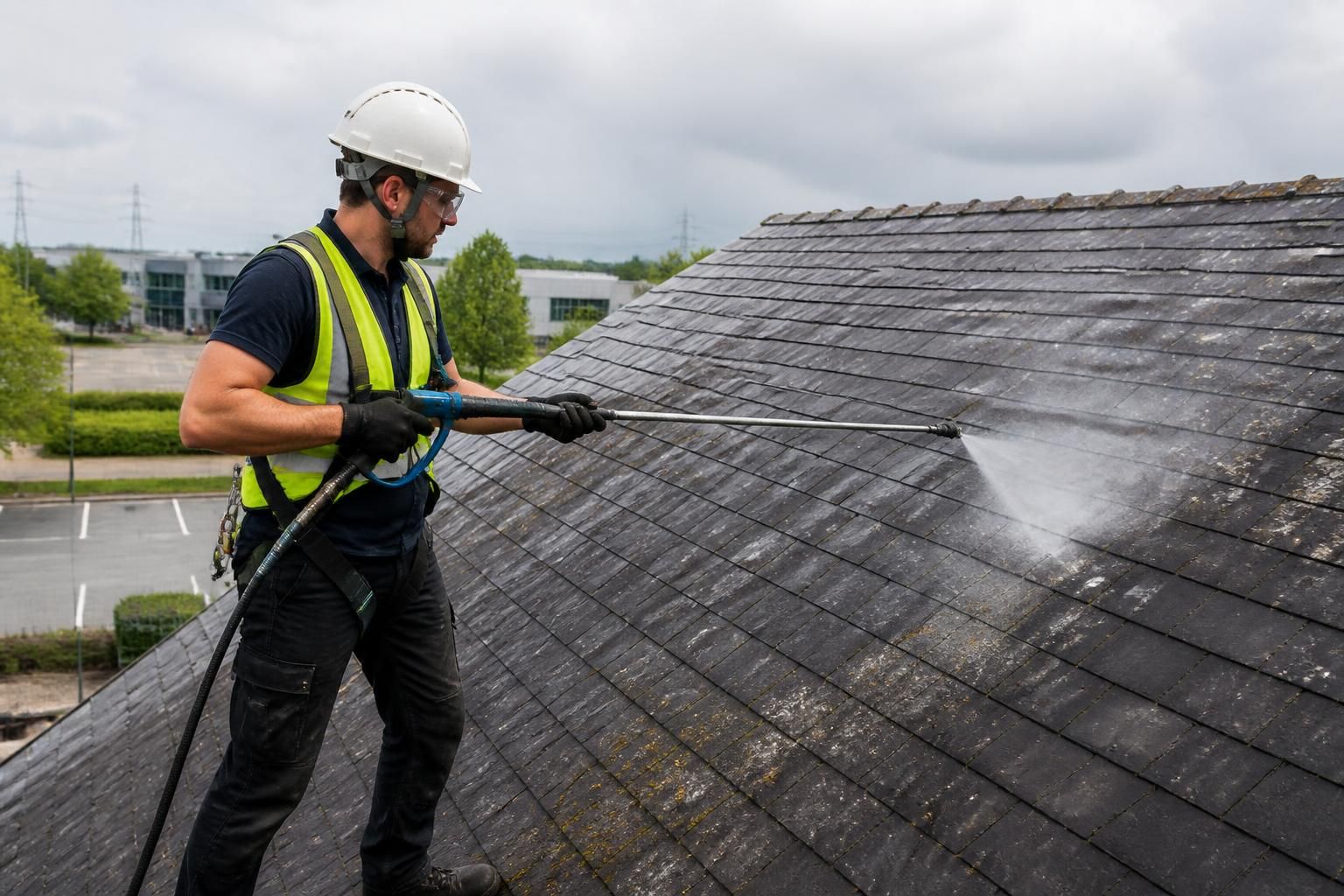
Using a biocide does not make high-pressure cleaning safe for slate. Pressure that is excessive for the roof can still drive water beneath slates, damage the surface, disturb fixings or affect the roof’s weatherproofing. Conversely, avoiding all chemical treatment does not automatically make a cleaning method suitable if aggressive scraping or pressure is used to compensate.
The appropriate approach is determined by the least damaging method that can achieve the required result. This may involve manual removal, a controlled low-pressure rinse, a biocidal treatment, or a combination of methods. The decision should be made after inspecting the roof rather than selecting a standard process for every property.
In summary, biocides are useful when biological growth is established and cannot be removed safely or completely by physical cleaning alone, but they are not a compulsory step for every slate roof. Correct product selection, controlled application, protection of surrounding areas and careful management of run-off are as important as the treatment itself. A slate-safe inspection and method statement should establish whether a biocide is genuinely needed and how it can be used without compromising the roof, the building or the surrounding environment.
Biocides are not necessary for every slate roof cleaning project. They are targeted treatments used to kill or suppress moss, algae, lichen and other biological growth when careful physical cleaning alone would leave contamination behind or risk damaging the slates.
Where growth is light and loose, gentle manual removal may be sufficient. A biocide may be more appropriate when lichen is firmly attached or growth has entered slate overlaps and joints, provided the roof, fixings, flashings and surrounding surfaces have been assessed first. The product must be suitable for the roof and applied according to its instructions, with overspray and contaminated run-off controlled to protect gutters, planted areas, soil and watercourses.
Biocidal treatment does not make high-pressure washing suitable for slate, nor does it permanently prevent regrowth. Ongoing maintenance, including clear gutters, controlled vegetation and periodic roof inspections, remains important after cleaning.